
20 min 33 sec
Conscious Business: How to Build Value Through Values
By Fred Kofman
Fred Kofman explores how personal values and self-awareness drive organizational success. This guide provides a framework for integrating ethics, responsibility, and emotional intelligence into the modern corporate landscape for lasting fulfillment.
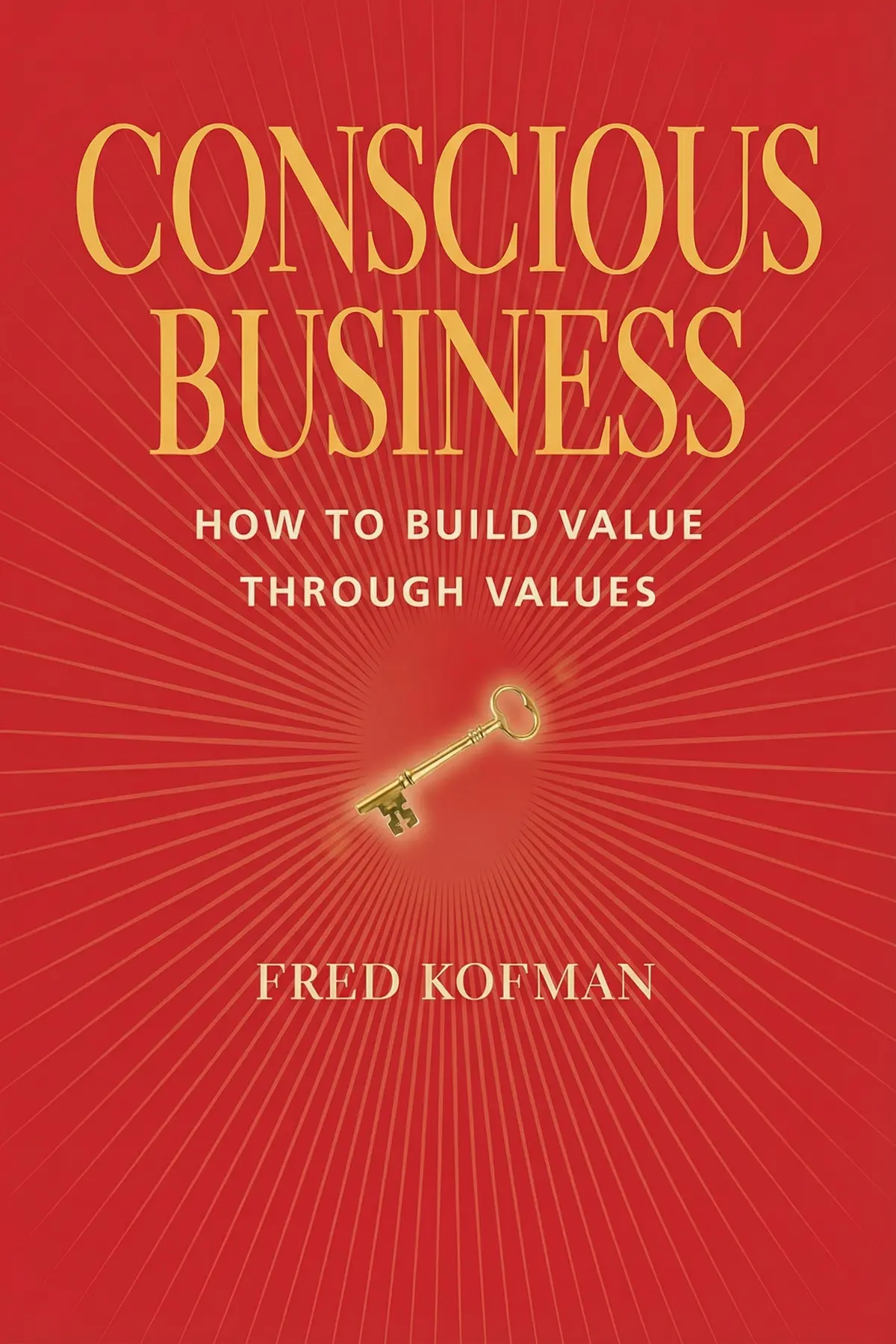
Table of Content
1. Introduction
1 min 47 sec
In the standard narrative of corporate success, we are often told that business is a cold, calculated game of numbers. We’re taught to check our personal values at the door and focus solely on the bottom line. But Fred Kofman, a former MIT professor and a leader in organizational development, argues that this approach is not only soul-crushing—it’s actually a recipe for long-term failure. In his work, Conscious Business, Kofman challenges the notion that profit and principles are mutually exclusive. Instead, he proposes that the most resilient and profitable companies are those built on a foundation of awareness, integrity, and deep human connection.
Think about the way you navigate your private life. Most of us strive to be honest, to take responsibility for our mistakes, and to treat our loved ones with respect. Yet, the moment we step into an office or log onto a corporate call, those foundational human qualities often take a backseat to competition and self-protection. This summary explores how to bridge that gap. We will look at why a ‘conscious’ approach to work involves balancing three distinct dimensions of existence: the technical goals of the company, the quality of our relationships, and our own inner peace.
By the end of this journey, you’ll understand how to shift from being a ‘victim’ of your circumstances to a ‘player’ who drives results. We’ll explore how to communicate in a way that actually solves problems rather than creating new ones, and how to stay true to your values even when the pressure is on. This isn’t just about feeling good at work; it’s about a fundamental shift in how we define success. It’s an invitation to bring your whole self to your career and, in doing so, help build an organization that thrives because of its values, not in spite of them. Let’s dive into the core principles of becoming a conscious professional.
2. The Three Dimensions of Business Success
2 min 28 sec
True organizational health requires a delicate balance between technical results, social cohesion, and individual fulfillment to avoid the trap of mindless, mechanical productivity.
3. Moving from Victimhood to Personal Empowerment
2 min 17 sec
Stop blaming circumstances for your stalled career. Discover how taking ownership—even for problems you didn’t create—unlocks the power to actually change your outcome.
4. Redefining Success Through Integrity and Process
2 min 07 sec
True achievement isn’t found in reaching a goal at any cost, but in the integrity of the journey and the alignment of actions with one’s deepest core values.
5. The Power of Perspective and Ontological Humility
2 min 11 sec
Conflict often arises from the belief that our view of the world is the only objective reality; learning to value diverse viewpoints is essential for collaboration.
6. Communicating with Clarity and Productive Expression
1 min 58 sec
Productive communication requires moving beyond monologues to create a shared space where facts are separated from opinions and personal identities feel secure.
7. Resolving Conflict Through Mutual Learning
1 min 48 sec
Ignoring or smoothing over disagreements only leads to toxicity; true resolution comes from a commitment to cooperative negotiation and shared growth.
8. Mastering Emotions and the Power of Forgiveness
2 min 07 sec
Emotional intelligence involves observing one’s feelings without being ruled by them, allowing for more conscious choices and the freedom to forgive.
9. The Evolution Toward a Spirit-Centric Business
2 min 08 sec
As consciousness grows, the focus of business shifts from narrow self-interest toward a holistic view that sees work as a platform for human excellence.
10. Conclusion
1 min 42 sec
In our journey through the principles of Conscious Business, we’ve seen that the path to true success is paved with more than just technical expertise and market data. It requires a fundamental commitment to being a ‘player’ in your own life—someone who takes full responsibility for their actions and responses, even when the circumstances are challenging. We’ve explored the importance of ontological humility, the simple but radical idea that our perspective is not the only truth, and that by listening to others, we can unlock greater creativity and fewer conflicts.
Fred Kofman’s message is ultimately a hopeful one: you don’t have to sacrifice your humanity to be a leader in the business world. In fact, it is your humanity—your ability to communicate clearly, manage your emotions, and act with integrity—that will make you a truly effective and respected professional. By balancing the technical ‘It,’ the social ‘We,’ and the personal ‘I,’ you can contribute to a culture that values excellence over mere winning and process over mindless outcomes.
As you move back into your daily professional life, try to notice the language you use. Are you speaking like a victim of your schedule, or a player choosing your priorities? Can you find a moment of stillness before reacting to a stressful email, acting from your ‘observing self’ rather than an emotional impulse? By making these small, conscious shifts, you begin to transform your workplace into a community of purpose. A conscious business isn’t a final destination, but an ongoing practice of bringing your highest values to everything you do. When we align our work with our spirit, we don’t just build a better business; we build a better life.
About this book
What is this book about?
Conscious Business offers a transformative perspective on professional life, arguing that the most successful organizations are those that prioritize human values alongside financial results. Fred Kofman suggests that traditional business models often focus too heavily on technical outcomes, neglecting the vital interpersonal and personal dimensions that make work meaningful. The book provides a roadmap for leaders and employees to move from a passive, 'victim' mindset to an empowered, 'player' mentality. By mastering constructive communication, ontological humility, and emotional awareness, individuals can resolve conflicts and build high-trust environments. The ultimate promise of the book is a path to 'success beyond success'—a state where professional achievements are a natural expression of one’s deepest integrity and conscious commitment to the collective good.
Book Information
About the Author
Fred Kofman
Fred Kofman is a prominent leadership expert and the cofounder and president of the global consulting firm Axialent. A respected academic, he served as a professor at the Massachusetts Institute of Technology Sloan School of Management, where he was honored as the Teacher of the Year in 1992. In addition to his work on consciousness in the workplace, he is the author of the influential book Metamanagement.
Ratings & Reviews
Ratings at a glance
What people think
Listeners consider this business title a must-read, full of actionable tips and useful communication methods. They also value its depth, with one listener mentioning it acts as an excellent resource for understanding organizational values. The text is praised for being clear and motivating, with one review calling it a journey into the heart of trust. Nevertheless, listeners have conflicting views on its readability; some find it straightforward to comprehend, whereas others say it's not easy to follow.
Top reviews
Hunter
Finally got around to reading this, and it’s a masterclass in how to build trust within a team through conscious communication and radical honesty. The way Kofman breaks down a request into specific components—identity, standard, and deadline—is incredibly practical for daily operations. Genuinely, this book shifted my entire approach to management by highlighting how we often avoid clear commitments just to be 'nice.' It’s an inspiring journey into what business could look like if we treated each other as humans rather than cogs. If you’re tired of the usual corporate jargon, this offers a much more soulful path to success. The clarity here is outstanding, making it a must-read for anyone in a leadership position.
Show moreSin
Rarely does a business text force you to stare into space for twenty minutes just processing a single paragraph about your own ego. This is less of a 'how-to' manual and more of a mirror that reflects the awkward truths about how we interact with others. The author doesn't shy away from the hard stuff, like the fact that our desire to be 'right' is usually the biggest obstacle to our own growth. I appreciated the holistic view of employees as more than just production machines. It’s clear, challenging, and filled with the kind of wisdom that lingers long after you’ve closed the back cover. This book is a rare treasure in a sea of superficial leadership advice.
Show moreSamuel
Wow, the way Kofman integrates ancient wisdom with modern corporate structure is nothing short of brilliant. This book provides a clear roadmap for anyone wanting to move from being a 'knower' to a 'learner' in their professional life. Frankly, the advice on how to handle commitments when you know they are at risk saved my reputation on a recent project. It’s rare to find a business book that feels this authentic and grounded in real-world psychology. While it’s true that some points are repeated, the reinforcement helped the concepts really stick in my mind. Highly recommended for any conscious leader who wants to go deeper than just the bottom line.
Show moreDarawan
After hearing so much about Kofman's philosophy, I finally dove in and found the 'unconditional responsibility' concept to be a game-changer. It’s a bit jarring to be told that you are responsible for situations that aren't your fault, but the perspective shift from being a victim of circumstances to a player in the game is powerful. The author manages to weave organizational values into a journey that feels both personal and professional. My only complaint is that the structure can be a bit dense, making it a slow read for a busy executive. That said, the practical advice on sharing truth effectively is worth the effort. It really challenges your ego in a way most business books are too afraid to do.
Show morePichaya
Fred Kofman offers a rigorous framework for what most managers dismiss as 'soft skills,' turning them into actionable strategies that drive results. Not gonna lie, I expected another fluffy leadership book, but this actually provides a deep source of understanding regarding trust and accountability. I particularly enjoyed the section on 'showing your work' when expressing opinions to avoid unnecessary conflict. It's the kind of book that requires you to sit with it, reflecting on past failures, rather than just racing to the final chapter. A few of the anecdotes felt a bit dated, but the core principles remain remarkably relevant for today's complex work environment. This is a solid pick for anyone looking to build a more conscious organizational culture.
Show moreJong
As someone who has navigated toxic office environments for years, the section on diffusing toxic comments was an absolute revelation. Instead of reacting emotionally, Kofman teaches you to inquire and lead the other person toward a more productive dialogue. Personally, I found the blend of business logic and spiritual references—like the Bhagavad Gita—to be a refreshing change of pace. Some might find the 'mindful' approach a bit too airy, but the results in my own team's communication speak for themselves. It’s not an easy read by any means, but it is a necessary one for anyone looking to lead with more awareness and less ego. I wish my previous bosses had read this before they opened their businesses.
Show moreMeen
Picked this up because of a recommendation from Lean In, and while it's a bit repetitive, the insights on integrity are genuinely profound. The book’s central premise is simple but not easy: you must take ownership of your life and your work even when it’s uncomfortable. I loved the 'Death’s whisper' analogy as a way to regain perspective when things get stressful at the office. To be fair, the imaginary dialogues can feel a bit staged and unrealistic, which breaks the immersion occasionally. Nevertheless, the framework for giving and receiving feedback is one of the clearest I’ve ever encountered in business literature. It provides a much-needed bridge between being a high-performer and being a decent human being.
Show moreSavannah
Is this book just common sense wrapped in spiritual paper, or is there something deeper here? Truth is, I struggled with the tone initially because it feels like every other self-help manual on the market. However, the chapter on the 'Player vs. Victim' mindset eventually won me over by forcing me to look at my own excuses. My main gripe is the repetition; Kofman explains a simple concept and then rehashes it in five different ways until the point feels bludgeoned to death. It's a good read for those in toxic work cultures who need a reminder to 'clean their side of the street,' but be prepared for some cringey business slang along the way. I'll say this: the ideas are great, but the delivery is a slog.
Show moreAubrey
I’ve been torn between finding this book incredibly insightful and wanting to throw it across the room for its pedantic explanations. For instance, do we really need several pages defining the difference between a fact and an opinion in a book written for professionals? In my experience, the communication models Kofman presents are actually quite effective once you strip away the fluff. The focus on making 'commitments with integrity' has already changed how I handle my weekly project syncs and managed my expectations of others. Still, the writing is uneven and often feels like a transcript of a seminar that went on a little too long. It is a valuable source of understanding, provided you have the patience to filter out the filler.
Show moreChatchai
Look, while the core message of radical responsibility is vital, the execution here is frustratingly repetitive for a three-hundred-page volume. Frankly, most of the content could have been an insightful ten-page essay rather than a book stuffed with asinine imaginary dialogues between corporate caricatures. It’s hard to ignore the lazy sourcing when the author admits he isn’t sure if a study actually happened before using it to anchor a point. To be fair, the distinction between a 'Learner' and a 'Knower' is brilliant, but you have to wade through far too many Sun Tzu quotes and pointless anecdotes to find the gold. If you have any common sense regarding human decency, you’ll find yourself skimming the middle hundred pages out of sheer boredom. It is simple common sense disguised as profound spiritual revelation.
Show moreReaders also enjoyed
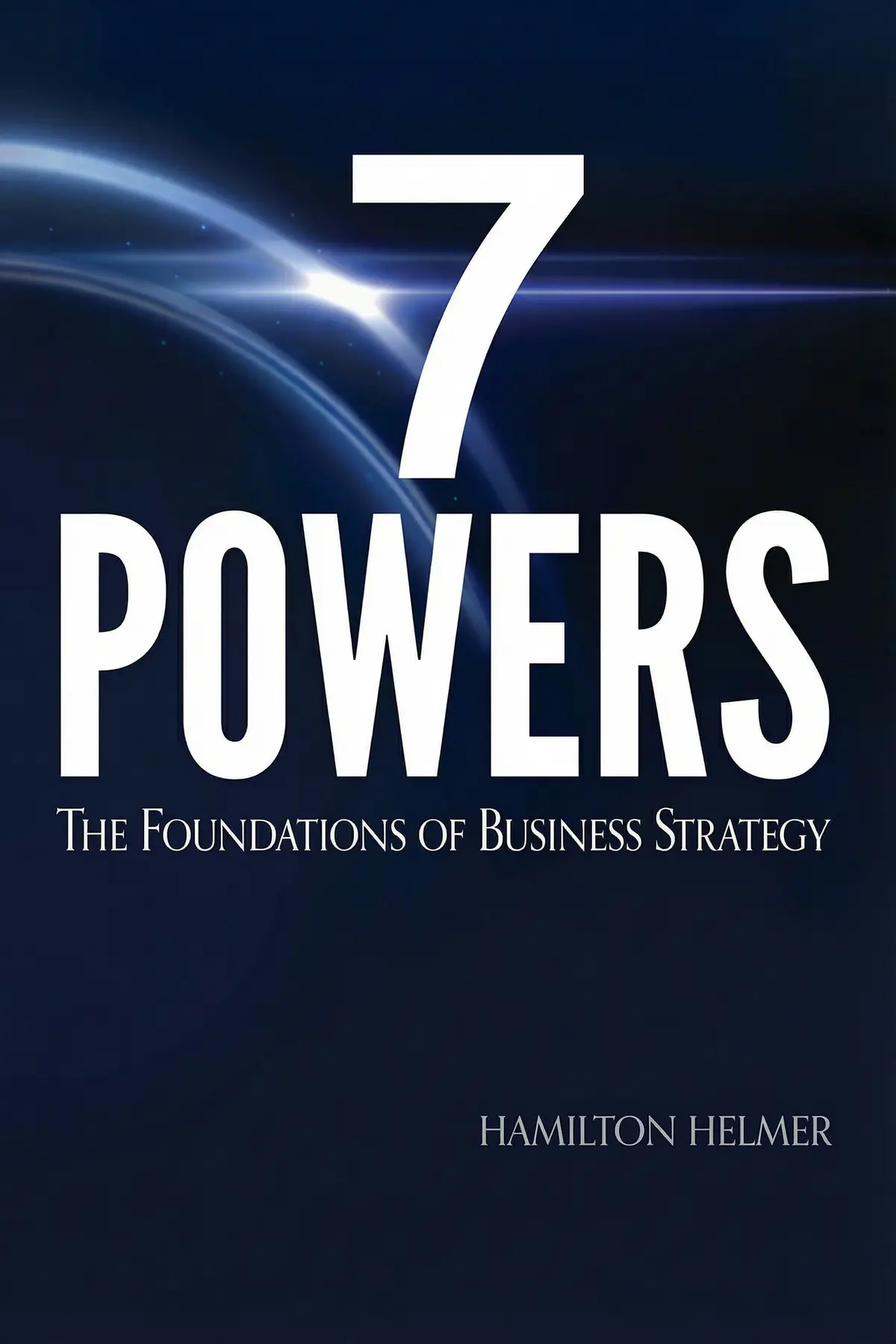
7 Powers: The Foundations of Business Strategy
Hamilton Helmer

A Bigger Prize: How We Can Do Better Than the Competition
Margaret Heffernan
A Year with Peter Drucker: 52 Weeks of Coaching for Leadership Effectiveness
Joseph A. Maciariello
AUDIO SUMMARY AVAILABLE
Listen to Conscious Business in 15 minutes
Get the key ideas from Conscious Business by Fred Kofman, plus 5,000+ more titles in English and Thai.
- 5,000+ titles
- Listen as much as you want
- 7-day free trial
- Cancel anytime







