


16 min 51 sec
Conversational Intelligence: How Great Leaders Build Trust and Get Extraordinary Results
Conversational Intelligence explores the intersection of neuroscience and communication, offering leaders practical strategies to build trust, foster collaboration, and transform organizational culture through the power of intentional, brain-aware dialogue.
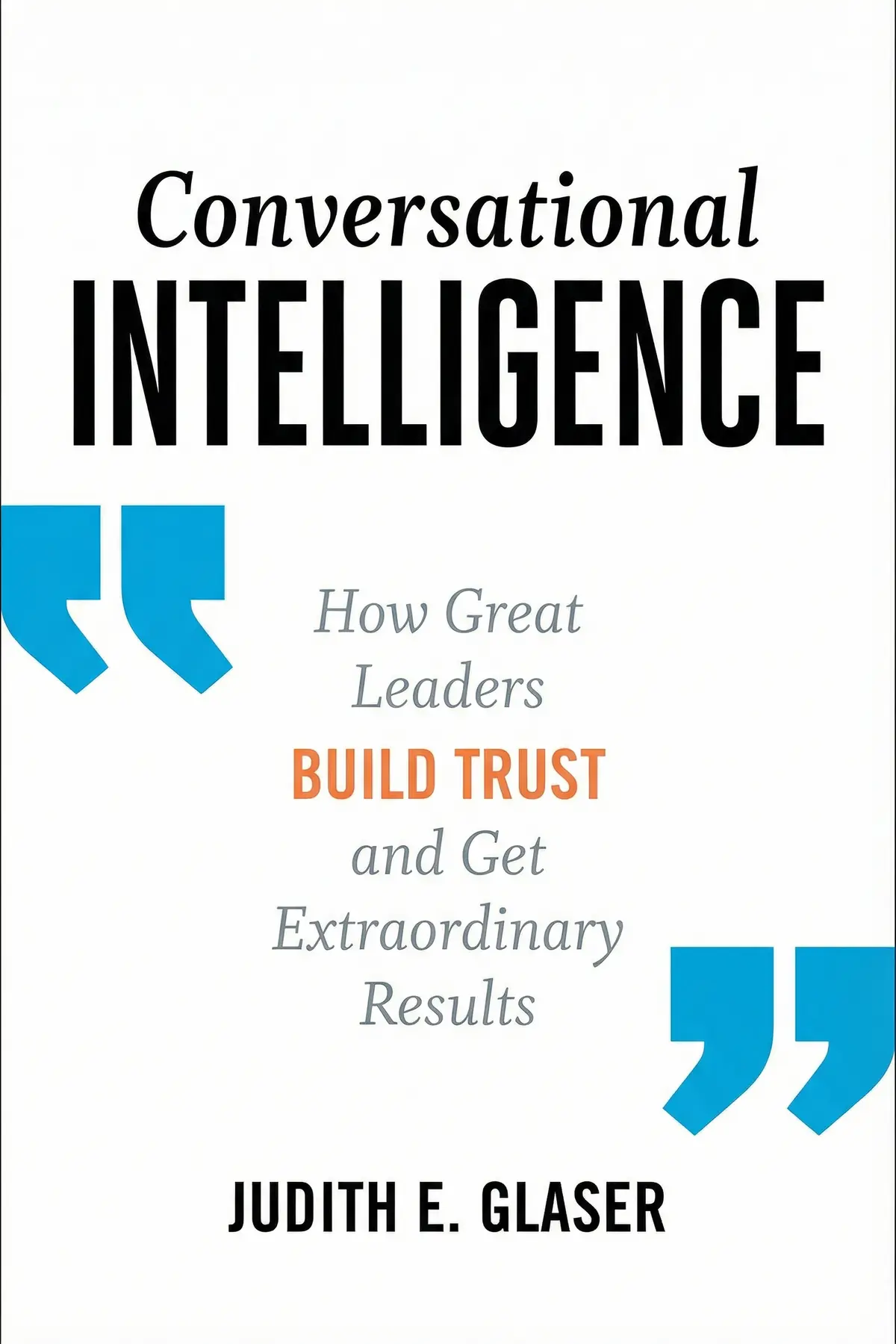
Table of Content
1. Introduction
1 min 51 sec
Every time you open your mouth to speak, you are doing much more than just vibrating the air with sound waves. You are essentially acting as a chemist, triggering a complex series of biological reactions in the brain of the person across from you. If that sounds like a heavy responsibility, it is—but it is also a tremendous opportunity. This is the core premise of Judith E. Glaser’s work. She suggests that our traditional understanding of communication is far too narrow. We often focus on the logic of our arguments or the clarity of our instructions, but we ignore the underlying neurochemistry that determines whether our message is actually received or immediately rejected.
Think about a recent meeting where things went off the rails. Perhaps a colleague made a sharp comment, and suddenly, the room felt tense. You might have felt your heart race or your mind go blank. That wasn’t just a bad mood; it was a physiological response. On the flip side, think about a brainstorming session where ideas were flowing, and everyone felt energized. In that moment, your brains were being flooded with chemicals that promote creativity and connection. The difference between these two scenarios is what Glaser calls Conversational Intelligence.
In this summary, we are going to explore how you can take control of these chemical exchanges. We will look at why our brains are hardwired to protect us from perceived verbal threats and how we can shift our interactions into a state of ‘co-creation.’ We will break down the three distinct levels of conversation and identify the common blind spots that prevent us from seeing the world through other people’s eyes. By the end of this journey, you’ll have a roadmap for building deep, lasting trust in any environment. The goal is to move from a world of ‘I’ and ‘You’ to a world of ‘WE.’ Let’s begin by looking at the biological foundation of every word we speak.
2. The Chemical Impact of Our Words
2 min 43 sec
Every interaction triggers a cocktail of hormones that either shut down the brain’s creative centers or open them up for connection and trust.
3. Navigating the Three Levels of Conversation
2 min 54 sec
Understand the three distinct gears of communication to move from simple data exchange to transformative, collaborative breakthroughs.
4. Cultivating a Landscape of Trust
2 min 32 sec
Trust isn’t just a feeling; it’s a living environment that requires constant nurturing through transparency and mutual respect.
5. Identifying and Overcoming Conversational Blind Spots
2 min 25 sec
The biggest barriers to effective communication are the things we don’t even know we’re doing, from assuming intent to the ‘Reality Gap.’
6. A Toolkit for Transformational Interaction
2 min 57 sec
Equip yourself with practical techniques like ‘double-clicking’ and ‘linguistic tai chi’ to shift the dynamic of any conversation.
7. Conclusion
1 min 29 sec
The journey through Conversational Intelligence brings us to a simple but life-changing realization: your words are the most powerful leadership tool you possess. We have seen how the chemistry of the brain is the invisible hand guiding every interaction, and how we have the choice to either trigger a state of protection or a state of connection. By moving from Level One transactions to Level Three co-creations, you don’t just get better results; you build a more resilient, innovative, and human-centric organization.
As you move forward, keep the ‘garden of trust’ in mind. Be the person who provides the nutrients of transparency and appreciation. Be the person who is brave enough to look for their own blind spots and humble enough to ‘double-click’ on someone else’s ideas rather than dismissing them. The shift from ‘I’ to ‘WE’ doesn’t happen overnight, but it begins with the very next conversation you have.
Remember, you are the chemist in the room. In every meeting, every email, and every difficult feedback session, you have the opportunity to foster the safety that allows greatness to emerge. Choose curiosity over judgment. Choose partnership over persuasion. By mastering the science and art of conversation, you unlock the extraordinary potential that lies within yourself and everyone you lead. Thank you for exploring the power of Conversational Intelligence. Now, go out and start a conversation that truly matters.
About this book
What is this book about?
Have you ever wondered why some conversations leave you feeling inspired while others leave you defensive and drained? This summary explores the groundbreaking work of Judith E. Glaser, who reveals that our words do more than just convey information—they actually change our brain chemistry. By understanding the biological impact of our interactions, we can move away from transactional exchanges and toward transformational dialogues. The promise of this book is a complete overhaul of how you view communication. You will learn to identify the three levels of conversation, from basic information sharing to high-level co-creation. The text provides a toolkit for recognizing conversational blind spots, neutralizing the 'threat' response in others, and using specific techniques like 'double-clicking' to ensure deep understanding. Whether you are leading a large corporation or navigating personal relationships, mastering conversational intelligence allows you to build a foundation of trust that unlocks collective potential and creates a 'WE' culture rather than an 'I' culture.
Book Information
About the Author
Judith E. Glaser
Judith E. Glaser was a pioneering organizational anthropologist and business executive who founded the Creating WE Institute and served as CEO of Benchmark Communications for over three decades. She authored several influential books, including Creating WE (2005) and 42 Rules for Creating WE (2009), while serving as an executive coach and consultant to Fortune 500 companies. Before her passing in 2018, Glaser received numerous accolades for her work, including Drexel University's Distinguished Author Award and was recognized as one of Leadership Excellence's Top 20 Thought Leaders of Leadership Development.
Ratings & Reviews
Ratings at a glance
What people think
Listeners find this book to be an essential read that provides deep insights by blending scientific research with stimulating concepts. They also value its hands-on methodology, specifically the coaching instruments and the focus on cultivating trust and interpersonal bonds. Furthermore, the discussion on conversational intelligence is well-regarded, with listeners noting its instructional value and power to restore relationships. They appreciate the inclusion of neuroscience as well, with one listener emphasizing its potent techniques for bridging brain science and communication. The text is composed in a clear, common-sense manner.
Top reviews
Woramet
Ever wonder why some meetings leave you energized while others just drain your soul? This book finally explains the neurochemistry behind those interactions, showing how we can accidentally trigger a 'cortisol spike' in others just by using the wrong tone. Glaser’s focus on building trust through what she calls 'Level III' conversations is a game-changer for anyone leading a team. I particularly loved the practical tools like the 'ARC of Engagement' and the way she breaks down the 'Five TRUST criteria' for better collaboration. Some might find the science a bit simplified, but in my experience, that makes it much easier to teach to a team. This isn't just a book about talking; it’s a manual for creating a culture where people feel safe enough to actually innovate. Truly a must-read for modern leaders who want to move beyond surface-level management.
Show moreArm
After hearing Judith Glaser speak, I had to grab the book, and it did not disappoint. The way she bridges the gap between brain chemistry and daily office interactions is nothing short of brilliant. For anyone who has ever felt like they were 'hitting a wall' in a conversation, the explanation of how the amygdala takes over during conflict is a revelation. I’ve started implementing the 'Listening to Connect' strategies, and the results have been immediate in terms of de-escalating tensions. Frankly, this should be required reading for anyone in a management position. It gives you the tools to transform a toxic culture into one of co-creation and mutual respect. The diagrams are incredibly helpful for visualizing these complex social dynamics. I’ll be revisiting the 'STAR skills' section regularly as I coach my own team through upcoming changes.
Show moreEthan
Glaser manages to bridge the gap between hard science and soft skills in a way that feels incredibly relevant for today's remote and hybrid work world. I loved the emphasis on 'priming' for trust; it’s a concept that is often overlooked in busy corporate environments where we just dive straight into the agenda. By setting a positive intention first, you can actually shift the neurochemistry of the room. The book is full of common-sense wisdom that somehow feels revolutionary when backed by her neurological explanations. I’ve recommended it to several colleagues who were struggling with team engagement. It's not just about being 'nice'—it’s about being smart with how we use language to drive results. A powerful tool for anyone looking to heal relationships and build lasting partnerships.
Show moreMuk
As a corporate coach, I'm always looking for frameworks that my clients can actually use, and the concept of 'Conversational Intelligence' fits the bill perfectly. Glaser does a fantastic job of illustrating how our brains are hardwired for connection, and how the right dialogue can unlock the prefrontal cortex for better problem-solving. The 'Conversational Dashboard' provided a very helpful visual for my team to identify when we were being too positional versus being collaborative. My only real complaint is that the writing can be a bit repetitive, often hammering home the same points about the 'Heart Brain' multiple times. Still, the core message about moving from a 'power over' to a 'power with' mindset is invaluable in today’s work environment. It’s a solid resource that has already helped me facilitate much smoother conflict resolution sessions.
Show moreKrisada
Finally got around to reading this after seeing it on several 'best of' lists for leaders, and I found the insights on psychological safety to be spot on. The way Glaser explains the transition from 'Transactional' to 'Transformational' conversations gave me a new vocabulary for the friction I was seeing in my own department. It’s quite practical; I’ve already started using her 'priming for trust' techniques before my weekly one-on-ones, and the shift in openness is palpable. Gotta say, the book is a bit wordy and could have been fifty pages shorter without losing much substance. However, the underlying science—even if simplified for a general audience—makes a compelling case for why we need to be more intentional with our words. It’s a great pick if you want to understand the 'why' behind successful team dynamics.
Show moreWyatt
Picked this up because I wanted to improve my rapport with my team, and the 'Three Levels of Conversation' framework alone was worth the price. I never realized how much time we spent in Level 1 transactional mode, which basically just exchanges data without building any real connection or trust. By intentionally moving toward Level 3 'Transformational' talks, I've noticed a significant shift in how my colleagues respond to challenges. The book can be a bit repetitive at times, and some of the science feels a little 'pop-neuroscience' rather than hard data, but the practical tools are there. In my experience, if you can get past the corporate jargon, there’s a lot here that can actually help heal strained professional relationships. It’s a solid resource for anyone who feels like they're hitting a wall with their communication style.
Show moreMarasri
The chapter on 'double-clicking' was a total lightbulb moment for me, as it’s such a simple way to uncover what people actually mean during a heated debate. However, I struggled with how repetitive the rest of the text felt, often circling back to the same points about oxytocin and cortisol without adding much new depth. It’s a strange mix of genuinely brilliant communication hacks and fluffy corporate speak that feels a bit too much like a sales pitch. Truth is, the 'Conversational Dashboard' is a great visual tool, but I wish the author had spent more time on the ethics of 'priming' instead of just breezing past it. It’s a decent read for coaches or managers, but be prepared to skim the parts where she just lists her corporate successes. I’d recommend it with some reservations for those who enjoy business frameworks.
Show morePetch
To be fair, there is some gold buried in these pages, but you have to dig through a lot of repetition to find it. I appreciated the distinction between the three levels of conversation, especially Level 2, where we often get stuck just defending our own positions. That said, the book feels very 'consultant-heavy' with its constant mentions of high-level clients and proprietary models. I was hoping for more academic citations to back up some of the more grandiose claims about the 'heart brain' and energetic connections. It’s an interesting read for someone brand new to communication theory, but if you’ve read any other books on the subject, you might find this one a bit redundant. It’s helpful, but I’m not sure it’s the 'extraordinary' resource the subtitle promises.
Show moreDaranee
Look, the core message about empathy is solid, but the execution here is a mess. I found the constant repetition of 'lizard brain' concepts to be pretty outdated from a neuroscience perspective, and the lack of proper citations really hurts its credibility. Glaser spends way too much time coining trademarked terms instead of providing clear, actionable steps for the first half of the book. While the 'Conversational Dashboard' eventually offers some value, you have to slog through pages of buzzwords to find it. Personally, I think there are better resources out there that don't feel like a 200-page brochure for a consulting firm. It’s a shame because the idea of how neurochemistry affects our trust levels is fascinating, but it’s buried under layers of corporate fluff. I wouldn't recommend this if you're looking for a rigorous, research-backed study.
Show moreArjun
This book is essentially a bloated marketing pamphlet designed to get the author hired for Fortune 500 keynote speeches. The writing is incredibly circular, often defining terms using the terms themselves, which makes for a frustrating reading experience. My biggest gripe is the constant stream of new acronyms and trademarked phrases that don’t actually add much depth to the conversation. To be fair, the basic advice—listen more, be empathetic, ask open questions—is sound, but it’s certainly not worth the price of a hardcover book. It felt like she was trying to dress up common sense in 'neuroscience' clothes without doing the actual work of citing modern research. If you're looking for a rigorous look at communication, skip this one and read something like 'Supercommunicators' instead. A major disappointment.
Show moreReaders also enjoyed
A Year with Peter Drucker: 52 Weeks of Coaching for Leadership Effectiveness
Joseph A. Maciariello


Acting with Power: Why We Are More Powerful Than We Believe
Deborah Gruenfeld

AUDIO SUMMARY AVAILABLE
Listen to Conversational Intelligence in 15 minutes
Get the key ideas from Conversational Intelligence by Judith E. Glaser, plus 5,000+ more titles in English and Thai.
- 5,000+ titles
- Listen as much as you want
- 7-day free trial
- Cancel anytime







