



A Year with Peter Drucker: 52 Weeks of Coaching for Leadership Effectiveness
Joseph A. Maciariello
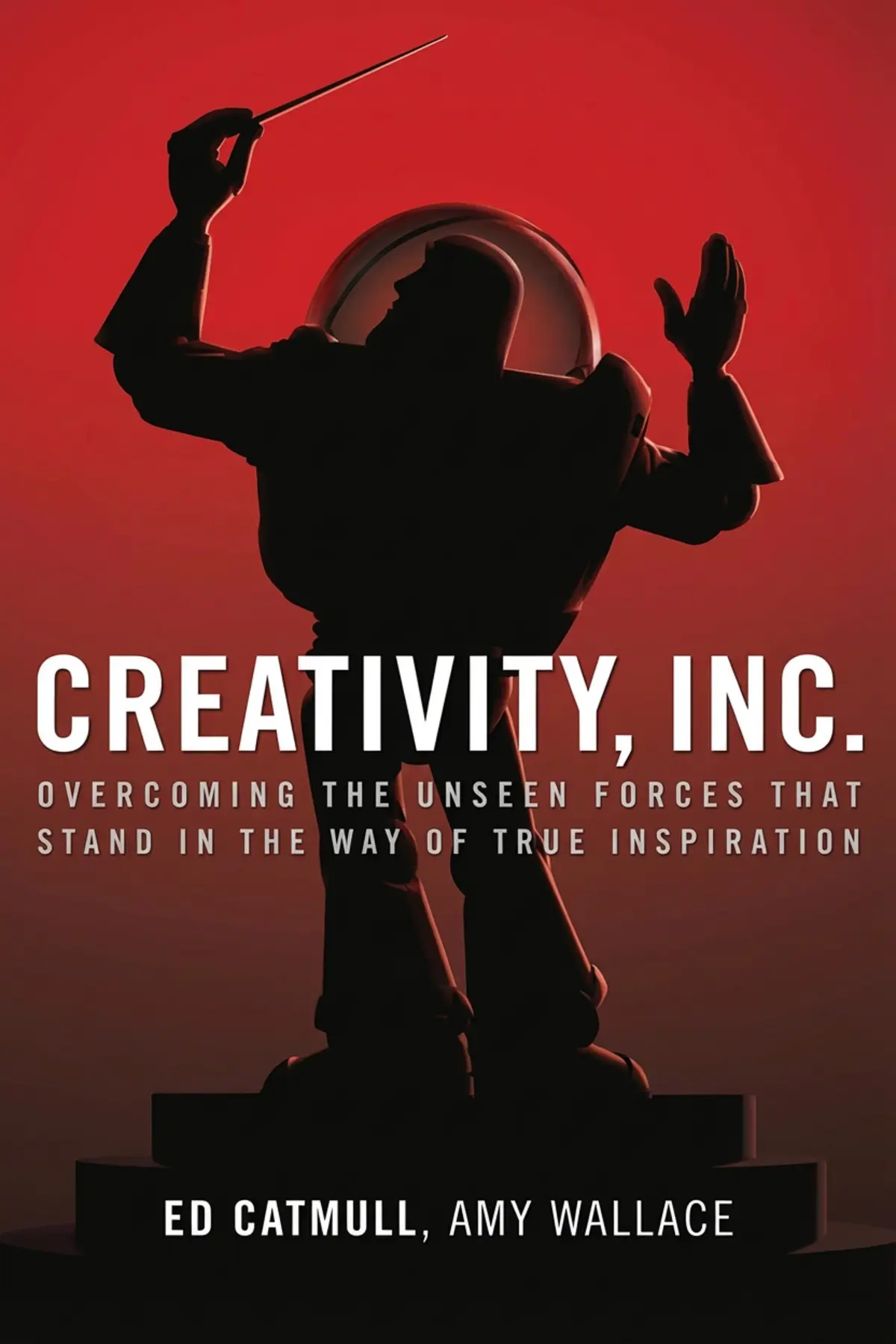
Creativity, Inc. explores the leadership philosophies behind Pixar’s unprecedented success, offering a blueprint for building a resilient, innovative culture where every voice is empowered to pursue excellence and overcome the fear of failure.
1 min 47 sec
Imagine standing at the intersection of two very different worlds. On one side, you have the world of business, which often demands predictability, rigid schedules, and a constant eye on the bottom line. On the other side, you have the world of creativity—a place that thrives on spontaneity, messiness, and the willingness to fail spectacularly in pursuit of something beautiful. For most people, these two worlds are in constant conflict. But for Ed Catmull, the co-founder of Pixar and the president of Disney Animation Studios, this tension isn’t a problem to be solved; it’s the very engine that drives success.
Catmull’s journey began with a childhood dream of creating the world’s first computer-animated feature film. It was a goal many thought was impossible, yet he and his team at Pixar eventually achieved it, changing the landscape of cinema forever with movies like Toy Story. However, Catmull soon realized that achieving success was only half the battle. The real challenge was maintaining a culture where creativity could continue to thrive long after the initial excitement of a new company had faded.
In the coming sections, we are going to explore the core philosophies that make Pixar unique. We will look at why the structure of your organization might be silencing your best ideas and how a simple change in furniture can fundamentally shift the way your team communicates. We will delve into the psychology of failure and why the safest path is often the most dangerous one for an innovative company. This isn’t just about making movies; it’s about understanding the unseen forces that stifle inspiration in any workplace. By the end, you’ll see how to foster a team that is not only talented but also brave enough to tell the truth, experiment with the unknown, and pursue a level of excellence that stays true to its original vision.
2 min 26 sec
Traditional corporate hierarchies often create a wall of silence that keeps critical information from reaching the top. Discover how Pixar breaks these barriers to ensure every voice is heard.
2 min 20 sec
The fear of making mistakes often forces teams to play it safe, leading to stale ideas. Learn why flexibility and a healthy relationship with failure are vital for growth.
2 min 32 sec
Our brains are wired to favor information that supports what we already believe. Discover how to identify your blind spots and welcome dissenting opinions.
2 min 21 sec
A common goal is the glue that holds a team together during a crisis. Explore how a collective pursuit of excellence can drive workers to achieve the impossible.
2 min 17 sec
Success isn’t born from a single great idea, but from the right combination of people. Learn why team dynamics and diversity are the real secrets to innovation.
2 min 09 sec
Micromanagement is the enemy of creativity. Discover how to step back and let the experts you hired do what they do best without unnecessary interference.
2 min 11 sec
Since mistakes are unavoidable, the real strength of a company lies in its ability to bounce back. Learn why iterative processes are the key to managing risk.
2 min 26 sec
The environment you work in has a direct impact on how you think. See how Pixar uses architecture and office design to spark creativity and break down walls.
1 min 42 sec
As we look back at the lessons from Ed Catmull’s time at the helm of Pixar and Disney, a clear throughline emerges: creativity is a delicate thing that must be actively protected from the forces of fear, hierarchy, and complacency. It isn’t enough to simply hire talented people; you must create a culture that is worthy of that talent. This means building a foundation of radical honesty, where feedback flows freely across all levels. It means embracing the messiness of failure as an essential part of the journey toward excellence. And perhaps most importantly, it means prioritizing the human beings in the room over the systems and plans you’ve put on paper.
The real secret to Pixar’s success isn’t a magical formula or a secret technology. It is a commitment to staying flexible and staying curious. It is the realization that the most dangerous thing a company can do is become so focused on protecting its past success that it stops taking the risks necessary for its future. Whether you are leading a massive animation studio or a small startup, the principles remain the same. Trust your team, empower them to speak their truth, and never let the fear of making a mistake stop you from pursuing something truly great.
As you move forward, take a look at your own ‘assembly line.’ Is there a cord that anyone can pull if they see a problem? Is your office layout encouraging collaboration or enforcing a silent hierarchy? Are you hiring people who challenge you or people who just agree with you? The unseen forces that stand in the way of inspiration are always there, waiting to take hold. But by staying vigilant and keeping your focus on the pursuit of excellence, you can build a culture where creativity isn’t just an occasional visitor, but a permanent resident.
Creativity, Inc. is a deep dive into the unique management style that propelled Pixar Animation Studios to the top of the film industry. Co-authored by Ed Catmull, the co-founder of Pixar and president of Disney Animation, the book serves as a masterclass in fostering a workspace where creativity isn't just a buzzword, but a lived reality. It explores the delicate balance between commercial profitability and artistic risk, showing leaders how to protect the creative spark from the bureaucratic forces that often extinguish it. The promise of the book is simple yet profound: you can build a sustainable culture of excellence by prioritizing people over processes and honesty over hierarchy. Through a mix of personal anecdotes from Pixar’s history and philosophical insights, Catmull explains how to identify and remove the hidden barriers that stifle inspiration. Whether it is through rethinking how feedback is delivered or redesigning the physical office space, the book provides actionable strategies for any leader looking to tap into their team’s full potential and turn collective imagination into reality.
Ed Catmull is the former president of both Pixar and Disney Animation Studios, and was co-founder of Pixar in 1986. In addition to being a successful manager, he has also contributed many important tools in computer graphics and animation. Amy Wallace is an editor-at-large at Los Angeles magazine as well as a correspondent for GQ.
Listeners find this work captivating and skillfully composed, with many remarking that it is essential reading for those in leadership roles. The text offers superb perspectives on building and directing imaginative groups, while one listener pointed out its brilliant analytical framework. Listeners value the authentic accounts of Pixar’s evolution, the actionable management guidance, and the sincere narrative style.
Picked this up thinking it was just another corporate biography, but Ed Catmull delivers something much deeper. He frames management not as a series of spreadsheets, but as the act of protecting "ugly babies" until they can survive on their own. I loved the Braintrust concept where hierarchy is stripped away to focus entirely on the quality of the story. While some parts about the Disney merger get a bit technical, the heart of the book remains focused on human vulnerability and excellence. It’s rare to find a CEO who admits he doesn't know everything, and that humility makes the advice actually land. It is a must-read for any leader.
Show moreAs someone who has always admired the storytelling of Up and Coco, seeing the messy gears behind the clockwork was fascinating. Catmull explains that the goal isn't to prevent errors, but to build a team capable of recovering from them when they inevitably happen. This shift in perspective is massive for anyone working in a high-stakes environment where the "Beast" of production constantly demands more. The anecdotes about the early financial struggles and the technical hurdles of 3D animation are worth the price of admission alone. Truly, it’s a heart-felt look at what happens when you prioritize people over the process itself.
Show moreFinally got around to reading this and I’m struck by how much heart is in these pages. It’s not your typical dry, dusty business tome; it’s a genuine reflection on a life spent trying to solve the puzzle of human collaboration. The way Catmull describes the Notes Day as a way to give every employee a sense of ownership is genuinely inspiring. Truth is, most companies are too afraid of failure to ever reach the heights Pixar has, and this book explains exactly why that fear is so toxic. It’s a compelling mix of memoir and manifesto that I’ll likely revisit whenever I feel my own creative spark dimming.
Show moreCreativity, Inc. is arguably the best book on leadership I've read in a decade. Instead of offering "hacks" or shortcuts, Catmull focuses on the difficult work of maintaining candor within an organization. I was particularly moved by the stories of the Disney takeover and how they worked to revitalize a stale culture without destroying its soul. Look, it’s a long read and some of the technical history of computer hardware might bore some people, but the payoffs are immense. It teaches you to hold lightly to goals but firmly to intentions, which is a philosophy I've started applying to my own career with great results.
Show moreThis book is a masterclass in how to build a culture that doesn't just tolerate creativity but actively cultivates it. Catmull’s writing feels less like a boastful memoir and more like a sincere attempt to share the hard-won lessons from Pixar’s rocky early years. To be fair, some of the management "rules" at the end of the chapters feel a little like common sense when written out as bullet points. However, the context of those rules—like the story of nearly losing Toy Story 2 due to a server error—is what gives them weight. It’s an essential read for anyone leading teams, even if you don't work in animation.
Show moreThe chapter on Steve Jobs was the highlight for me, offering a much softer, more thoughtful look at his evolution during the Pixar years. Catmull manages to balance the technical aspects of computer graphics with the emotional weight of building a lasting legacy. I found the "ugly baby" metaphor particularly striking because it validates the messy, embarrassing middle stage of any creative project. My only real gripe is that the book leans heavily into the "Pixar is unique" narrative, making it hard to see how some of these ideas apply to a regular office without a swimming pool. Still, the analytical framework for candor is something every manager should study.
Show moreAfter hearing so many people rave about this, I finally dove in and I’m glad I did. The book provides a brilliant analytical framework for identifying the "hidden" problems that can sink a creative culture. Catmull emphasizes that a good team is more important than a good idea, which sounds counterintuitive until he explains how a great team can save a mediocre premise. The writing style is approachable, though it does occasionally veer into management-speak that requires a second read to fully digest. It’s not just for film buffs; it’s for anyone who wants to understand how to keep a group of smart people working together effectively.
Show moreNot what I expected, but in a good way. I thought this would be a "how to draw" or "how to write" book, but it’s actually a deep dive into the psychology of group dynamics. Personally, I found the discussion on "negative space" in art as a metaphor for management to be one of the most unique insights in the book. It’s a bit long-winded in places, and Catmull’s self-deprecating tone sometimes feels like a bit of a mask, but the substance is undeniable. If you’ve ever felt like your ideas were being stifled by a rigid hierarchy, this book will feel like a breath of fresh air.
Show moreEver wonder if a book can be both incredibly insightful and slightly repetitive at the same time? I enjoyed the behind-the-scenes look at Pixar and the complicated, nuanced portrait of Steve Jobs, which felt much more authentic than his usual "volatile genius" caricature. Yet, I found myself skimming the middle sections where the management philosophy started to loop back on itself. Not gonna lie, if you aren't in a leadership position, the Notes Day and organizational structures might feel a bit dry or irrelevant to your daily life. It’s a solid read for the history, but the "how-to" aspect felt a bit over-stretched for me.
Show moreWow, I really wanted to love this, but it felt like a 300-page PR pamphlet for Pixar’s West Coast perks. Most of the "revelations" about management are things any decent boss should already know: listen to your employees, don't be a tyrant, and let people take risks. Frankly, the tone felt a bit self-congratulatory, as if their success was purely due to these "Zen" management styles rather than just having a massive budget and the best talent in the world. If you're looking for a guidebook on how to actually be creative yourself, this isn't it. It's just a bunch of corporate anecdotes about how great they are.
Show moreJoseph A. Maciariello

Deborah Gruenfeld
Mike Michalowicz
Hamilton Helmer
AUDIO SUMMARY AVAILABLE
Get the key ideas from Creativity, Inc. by Ed Catmull, plus 5,000+ more titles in English and Thai.







