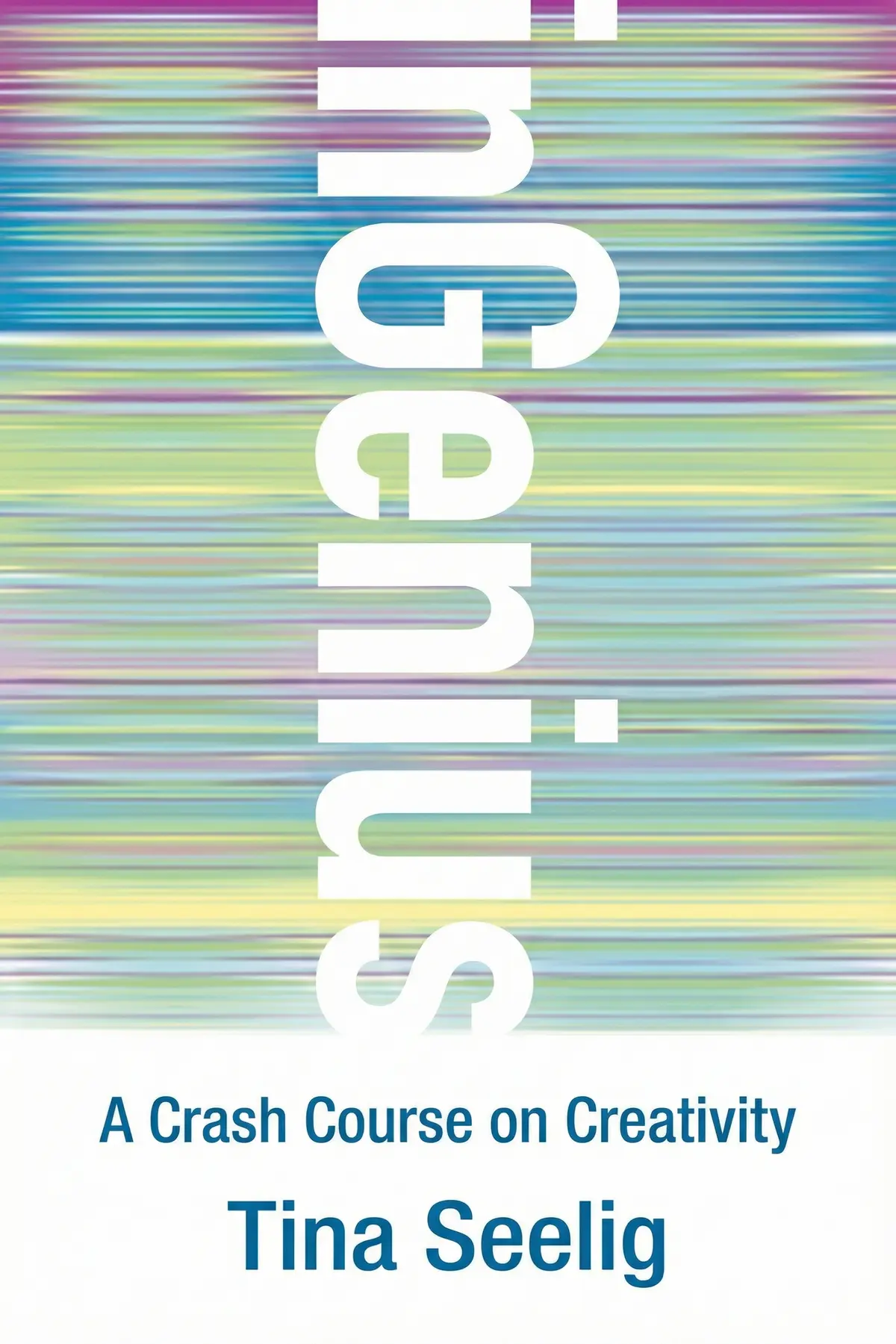
InGenius: A Crash Course on Creativity
Tina Seelig
Discover a systematic framework for transforming abstract ideas into tangible innovations. Tina Seelig provides a step-by-step roadmap to move from imagination and creativity to practical innovation and real-world entrepreneurship.
1 min 42 sec
Have you ever wondered why some people seem to be endless fountains of innovation? We see the finished products—the sleek devices, the life-saving medical breakthroughs, or the revolutionary services—and we often assume the creators possess a rare, magical talent that the rest of us simply lack. We call it a ‘spark’ or ‘genius,’ implying that it’s something you either have or you don’t. But what if that perspective is entirely wrong? What if the ability to bring a vision to life isn’t a mysterious gift, but a repeatable, learnable process?
In Creativity Rules, Tina Seelig argues that the distance between having a great idea and making it a reality is often just a matter of following a reliable roadmap. Many of us get stuck in the dreaming phase, unable to bridge the gap between our internal imagination and the external world. Others might be great at coming up with creative solutions but struggle to scale them or make them sustainable. The secret lies in understanding that creativity is a discipline. It requires a specific set of tools and a mindset that allows you to navigate the messy transition from ‘what if’ to ‘what is.’
This summary will walk you through the Invention Cycle, a four-part framework designed to take you from the very first glimmer of a concept all the way to a finished product that creates real value for others. You will learn how to shift your perspective to see problems as opportunities, how to design an environment that fuels your brain, and how to build the kind of confidence that lets you experiment without the paralyzing fear of failure. It is time to stop waiting for inspiration to strike and start building the skills to create your own lightning.
2 min 56 sec
Explore the four-stage framework that transforms abstract thoughts into impactful reality, guiding you from imagination to entrepreneurship.
2 min 42 sec
Learn how changing your perspective and asking the right questions can unlock solutions that were previously hidden in plain sight.
2 min 47 sec
Discover how your physical surroundings and your internal mindset work together to either stifle or stimulate your inventive potential.
2 min 30 sec
Unlock the secret to overcoming creative paralysis by focusing on small wins and the quantity of your attempts rather than perfection.
2 min 53 sec
Explore the critical transition from personal creation to public value, emphasizing the roles of prototyping, iteration, and support networks.
1 min 36 sec
The journey of creativity is not a straight line, but a vibrant cycle that anyone can learn to navigate. As we have explored through Tina Seelig’s framework, the transition from imagination to entrepreneurship is a disciplined process of expanding and then focusing your energy. You have seen how reframing a problem can reveal hidden solutions and how your environment—both physical and mental—acts as the soil in which your ideas grow. You have learned that confidence is a byproduct of action, built one small win at a time, and that the ultimate goal of any creative endeavor is to move beyond personal satisfaction toward creating genuine value for others.
Now, the challenge is to take these principles and apply them to your own life. Don’t wait for a perfectly formed vision to emerge. Start where you are. Identify a challenge you’ve been facing and try to reframe it in five different ways. Clear off your desk or reach out to a potential collaborator. Build a simple prototype of that project you’ve been putting off and show it to someone you trust.
Creativity is not a luxury reserved for a select few; it is a fundamental human capacity that is vital for solving the complex problems of our time. By following the Invention Cycle, you move from being a passive observer of the world to an active participant in its creation. Your ideas have the potential to change your life and the lives of those around you, but only if you have the courage to bring them out of your head and into the light. The world is waiting for what you have to offer. It’s time to start making.
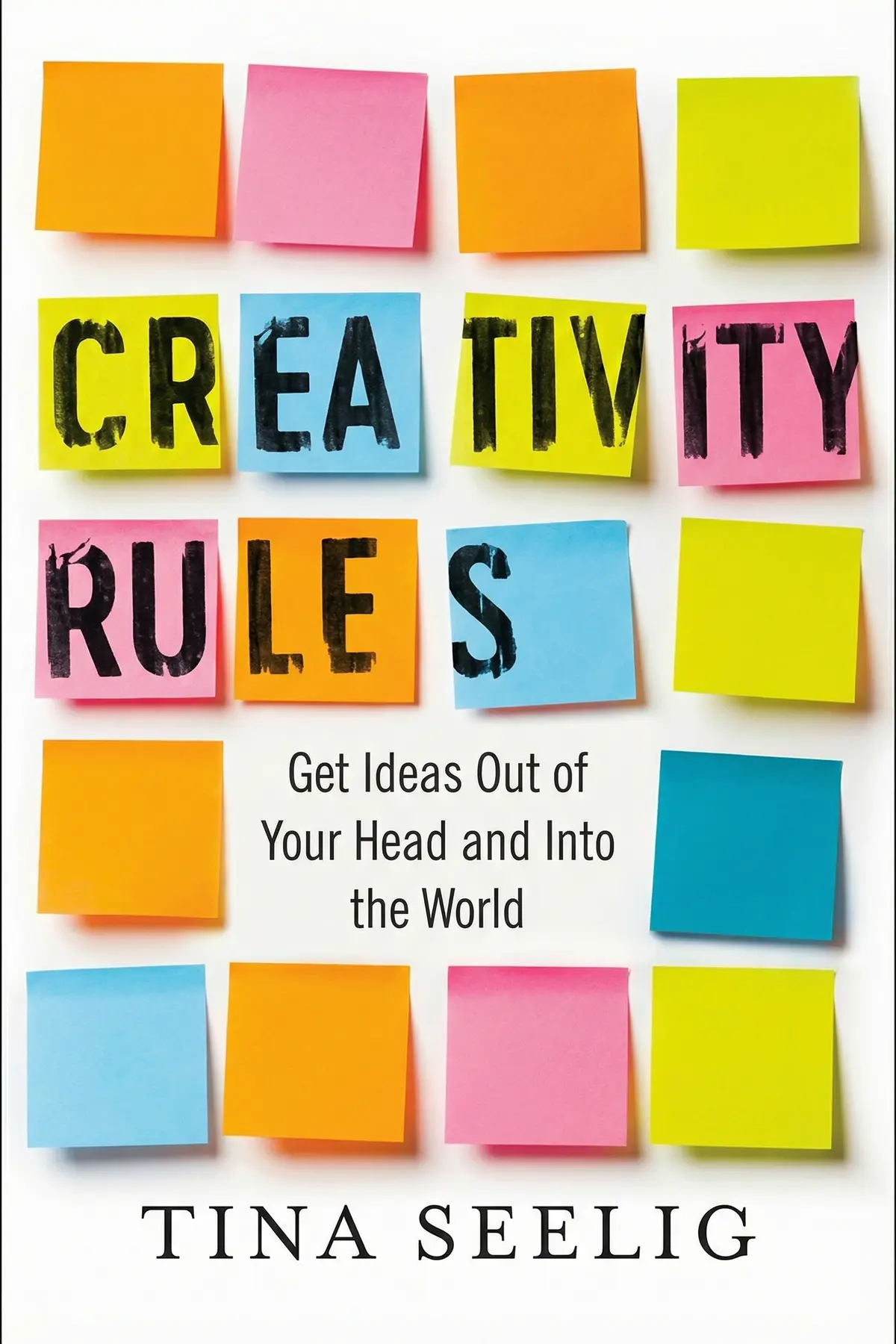
Creativity Rules explores the actionable steps necessary to bring new ideas to life. Rather than viewing creativity as a mysterious or unpredictable spark, author Tina Seelig presents it as a skill that can be developed through a structured process known as the Invention Cycle. The book promises to bridge the gap between thinking and doing. It breaks down the journey into four distinct stages: imagination, creativity, innovation, and entrepreneurship. By understanding these phases, readers learn how to reframe problems, optimize their physical and mental environments, and build the confidence required to launch their ideas. This is not just a book about art or design; it is a guide for anyone looking to make a meaningful impact in any field, from engineering to social activism.
Tina Seelig is a renowned expert in creativity, innovation, and entrepreneurship at Stanford University. She serves as the faculty director for the Stanford Technology Ventures Program and is a professor within the School of Engineering. With a background as a neuroscientist, she has successfully transitioned into the field of innovation education. Seelig has written several impactful books, including What I Wish I Knew When I Was 20 and inGenius: A Crash Course on Creativity. Her contributions to engineering education have earned her the prestigious Gordon Prize from the National Academy of Engineering.
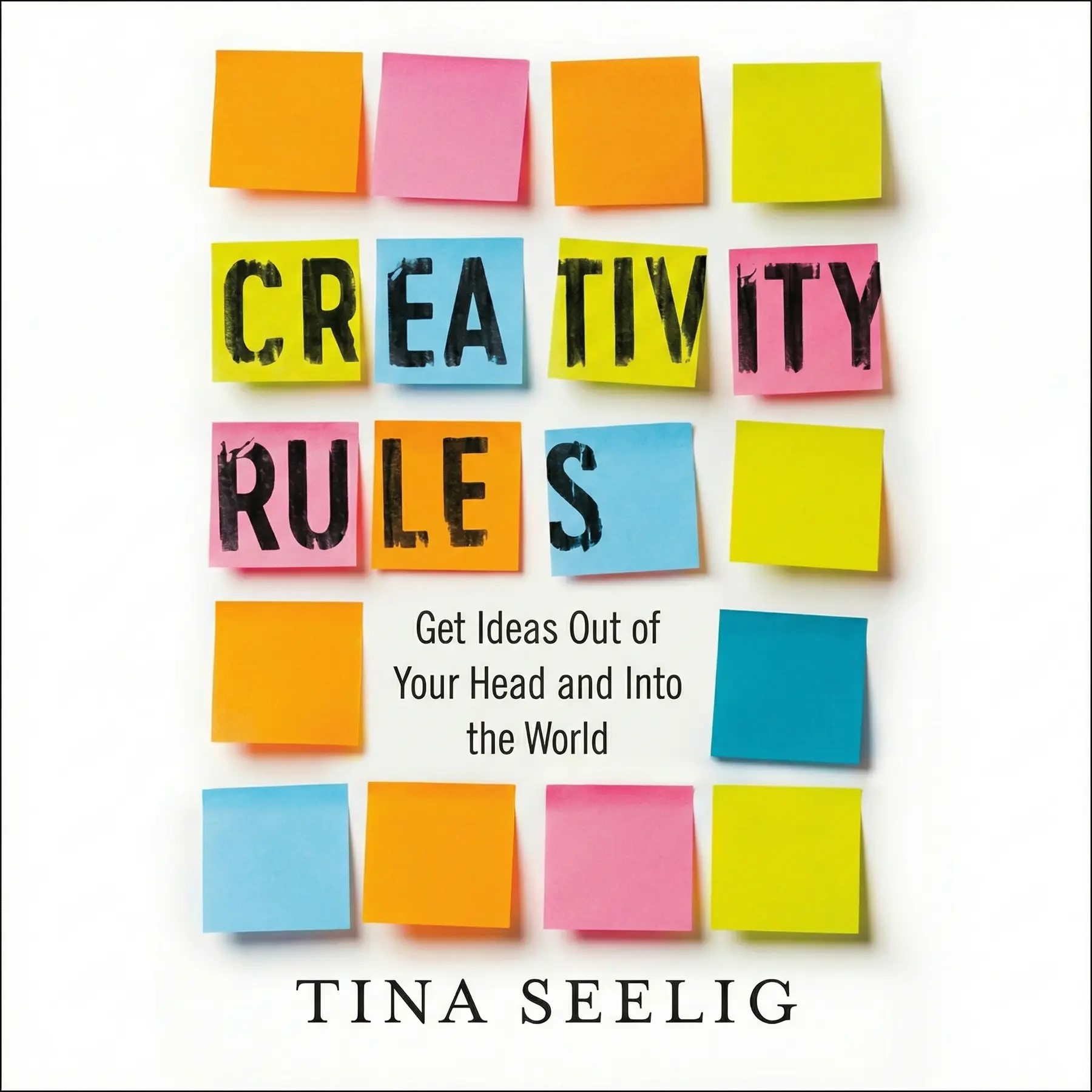
Listeners find that the book offers a well-defined, organized guide for transforming vague concepts into real outcomes using the specialized "Invention Cycle." Although some listeners believe the material can be redundant at times or too centered on business ventures, the majority value the hands-on suggestions for rethinking issues and questioning established beliefs. Additionally, they prize the author’s perspectives on how adjusting your physical surroundings and social circles can build creative self-assurance. They also highlight the utility of concrete, practical advice, such as one listener's mention that describing a problem in five different ways can reveal entirely new possibilities for exploration.
Tina Seelig has a way of demystifying the creative process that makes it feel accessible to everyone, not just 'artists.' This isn't just a book about dreaming; it’s a rigorous framework for execution. I loved the breakdown of the Invention Cycle and how it bridges the gap between a fleeting thought and a social impact. The section on the internal environment was especially powerful, highlighting how our own limiting beliefs are often the biggest barriers to innovation. By maintaining a growth mindset and building small wins, she shows how anyone can develop the confidence to share their work with the world. I found the advice on prototyping to be incredibly practical for my current projects. It’s a rare book that balances high-level theory with actionable steps you can take the very next day. This is definitely a must-read for anyone in a leadership position.
Show moreEver wonder why some people seem to innovate effortlessly while others just stay stuck in the dreaming phase? This book provides the answer by treating creativity as a skill that can be learned and practiced systematically. I found the concept of 'reframing' to be one of the most useful tools I've added to my professional toolkit this year. Instead of just trying to solve a problem, Seelig teaches you to question the problem itself, which often leads to much more interesting results. The focus on the social environment also reminded me to seek out diverse perspectives and constructive feedback early in the process. While it leans heavily into the entrepreneurial side of things, the lessons are universal. If you want a structured roadmap for turning your abstract ideas into something real, this is the book you need to read. It's insightful, encouraging, and deeply practical.
Show moreLooking back at my notes, the most powerful takeaway was definitely the emphasis on shaping your physical and social environment. We often think of creativity as a lightning bolt that strikes out of nowhere, but Seelig proves it’s actually a product of our surroundings and habits. I loved the suggestion to keep an innovation journal and to constantly challenge the 'invisible boundaries' we place around our problems. The writing is clear and concise, making complex concepts easy to grasp and even easier to implement. Even though it has a bit of a business bent, I think the lessons on building creative confidence through small risks are applicable to anyone. It’s about more than just starting a company; it’s about having the agency to change your world. I’ve already recommended this to several colleagues who are feeling stuck in their current roles.
Show moreFrankly, I think every aspiring entrepreneur should read the section on the 'Invention Cycle' before they start their next project. It provides such a clear, structured way to look at the progression from a simple idea to a full-scale innovation. The book emphasizes that the most brilliant ideas often fail simply because they never make it out of the creator's mind, which was a big wake-up call for me. I’ve started applying the 'five ways' reframing technique to my daily hurdles, and the results have been surprising. It’s also great to see a book that acknowledges the importance of the social environment and finding the right mentors. This isn't just fluff; it's a solid, actionable guide for anyone who wants to make an impact. It’s rare to find a book on creativity that is this focused on the actual work of execution.
Show moreFinally got around to reading this, and the chapter on reframing problems was actually a game-changer for my creative workflow. By deliberately challenging assumptions and changing the language used to describe a challenge, I found I could unlock solutions that weren't apparent before. Seelig does a great job of explaining how our physical and mental environments shape our output. I’ve already started decluttering my workspace and creating specific 'zones' for different types of thinking based on her advice. While some parts of the book felt a little bit like a Stanford syllabus, the practical tips on building creative confidence were worth the price of admission. It’s important to remember that everyone starts as a beginner, and this book gives you the permission to fail forward. It is a very structured approach to what is usually a messy process, which I personally found quite refreshing.
Show moreAs someone who often gets stuck in the 'imagination' phase, I appreciated the focus on turning ideas into tangible results. The book argues that imagination alone isn't enough; you need the innovation and entrepreneurship phases to actually create value for others. I particularly enjoyed the real-life examples of how companies like Pixar or Netflix used these principles to disrupt their industries. Not gonna lie, the writing is a bit dry and academic at times, which might put some readers off. But if you can get past the textbook feel, the insights on how to build a growth mindset are quite profound. The idea of 'creative confidence' being like a muscle you need to train resonated with me deeply. It’s a practical, no-nonsense guide for anyone who is serious about bringing their wildest ideas to life through systematic action.
Show moreThere is nothing inherently wrong with the writing, but the 'textbook' tone makes it hard to stay engaged for long periods. I appreciated the core concept of the 'Invention Cycle'—moving from imagination to entrepreneurship—but the execution felt a bit repetitive in places. To be fair, there are some interesting tidbits of information scattered through the chapters if you are willing to dig for them. One of the best parts was the section on reframing problems by describing them in five different ways. This simple shift in language can really reveal a different angle of approach for a stagnant project. However, the book feels like it’s trying too hard to be an academic resource while talking about a subject that should feel more vibrant. It's a solid 3-star read for a beginner, but seasoned professionals might find it a bit basic and underwhelming.
Show moreTo be fair, the 'Invention Cycle' provides a decent roadmap for anyone new to the concept of entrepreneurial thinking. I liked the distinction between imagination, creativity, innovation, and entrepreneurship, as it helps categorize where you might be getting stuck. However, I found the book's focus on business ventures to be a bit narrow for my taste. Look, if you’re trying to launch a startup, you will likely find the tips on gathering support and prototyping very useful. If you’re just looking to be more creative in your daily life, the 'business-first' mindset might feel a little alienating. The social environment section was a highlight, reminding me that the people around us can either nurture or stifle our best ideas. It’s a helpful enough guide, but I was expecting something a bit more magical and a lot less corporate.
Show moreMy mistake was picking this up right after reading more structured books like 'Inside the Box.' Compared to those, Seelig’s approach felt lackluster and lacked a clear procedural structure for someone wanting concrete steps. It’s not that the writing is bad, but the content is just very vague and feels like it didn't really need to be written as a full-length book. I struggled to find many actionable takeaways that I hadn't heard a thousand times before in business seminars. The focus is heavily skewed toward entrepreneurship and invention, which is fine, but it ignores the more soulful aspects of creativity. I was also disappointed that there were no workbook materials included to help guide the thinking process. It feels like a missed opportunity to provide something truly transformative. I would have trouble recommending this to anyone who has already done some reading in this genre.
Show moreThis felt more like a drawn-out TED talk than a manual for actual creative work. For a book that supposedly champions innovation, the writing style felt incredibly dry and textbook-driven throughout the entire experience. It focuses almost entirely on the entrepreneur, which was a massive letdown for me because I was looking for something more artistically inclined. The advice even felt a bit tone-deaf at times, like suggesting you take an underpaying job just for a 'creative opportunity.' Honestly, I’ve read much better books on the subject that don't feel this underwhelming or stilted. If you have ever taken a basic college course, you likely already know everything presented here. I regret spending the time listening to the audiobook version, even though the narrator was decent. It just lacks the 'magic' you expect from a deep dive into the creative mind.
Show moreAUDIO SUMMARY AVAILABLE
Get the key ideas from Creativity Rules by Tina Seelig, plus 5,000+ more titles in English and Thai.