
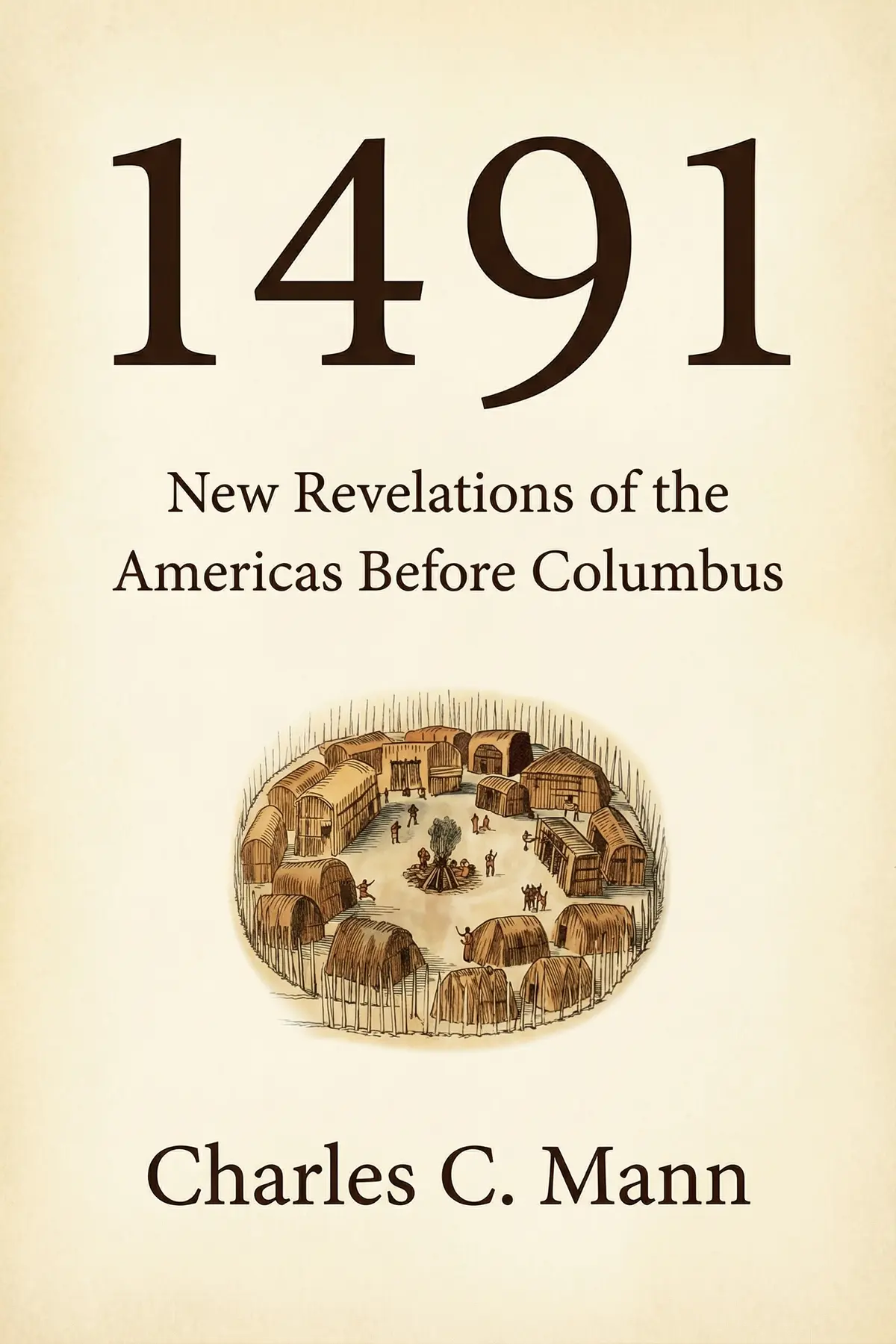
1491: New Revelations of the Americas Before Columbus
Charles C. Mann
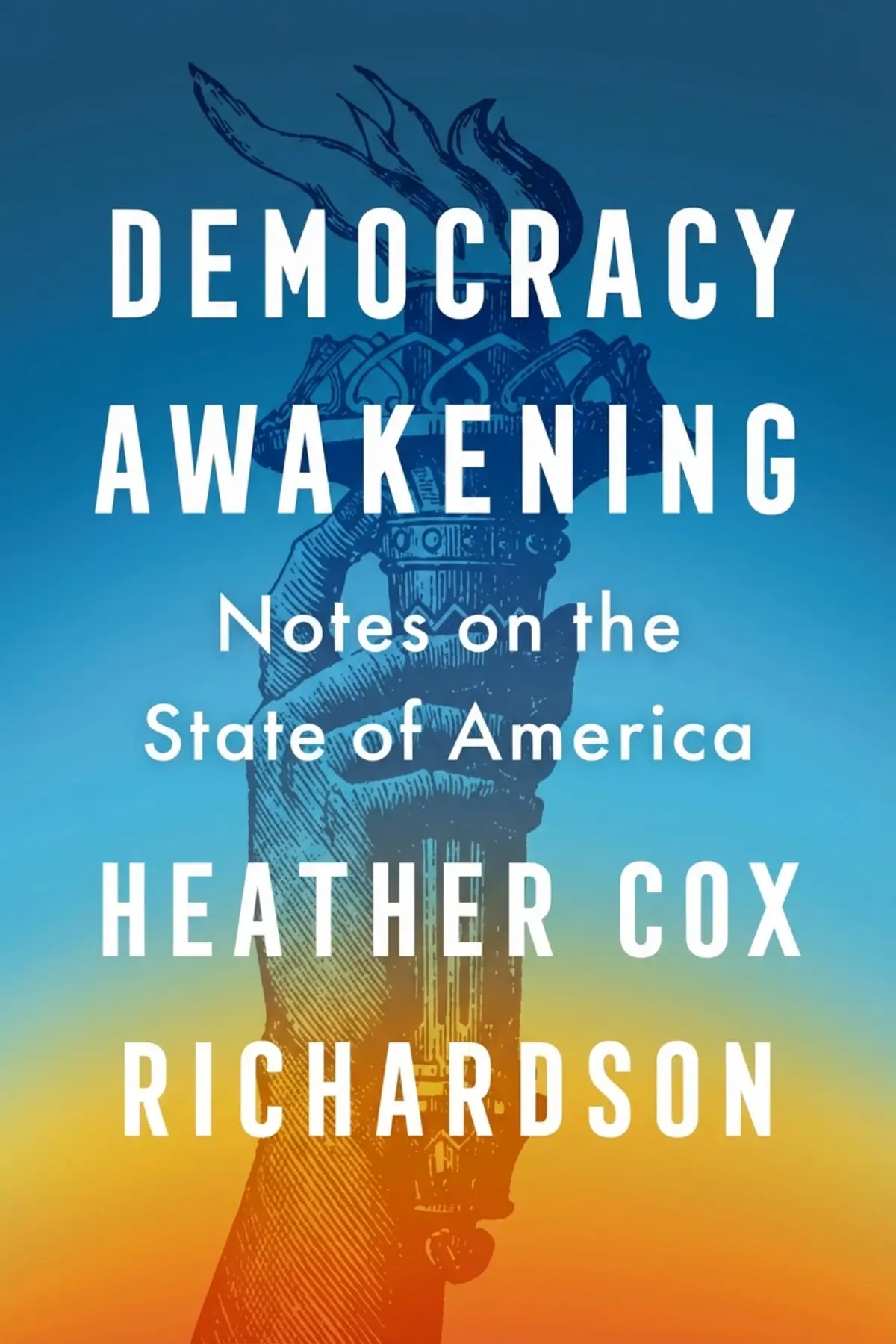
Democracy Awakening investigates the historical roots of the current threats to American democracy. Heather Cox Richardson explores how authoritarian rhetoric has evolved and why active civic participation is essential for the nation's survival.
1 min 47 sec
In recent years, many observers have looked at the American political landscape with a sense of growing unease. It often feels as though the ground is shifting beneath our feet, with norms that once seemed unshakeable now appearing increasingly fragile. While much of the recent conversation centers on the influence of Donald Trump and the events surrounding recent election cycles, history tells us that these developments didn’t happen in a vacuum. The tensions we see today are part of a much older and deeper story, one that spans the entire history of the United States.
Democracy Awakening provides a way to make sense of this complexity by looking backward. It explores how the threat of authoritarianism has frequently lurked beneath the surface of American life, occasionally rising to the forefront when political leaders use divisive language to consolidate power. To understand where we are going, we must first understand how we arrived at this moment of crisis. This involves looking at the twentieth century’s political realignments, the more recent erosion of democratic safeguards, and the foundational paradoxes that have defined America since its inception.
The throughline of this journey is the constant push and pull between two very different visions of America. On one side is the aspiration for a truly inclusive democracy where every citizen is treated as an equal under the law. On the other is a hierarchical vision that seeks to preserve power for a select few, often by manipulating historical narratives and exploiting social divisions. By examining these forces, we can begin to see how the current challenges to our institutions are rooted in historical patterns. This exploration isn’t just about identifying problems; it’s about uncovering the tools we need to reclaim a democratic future. Let’s dive into the history and the ideas that shape the ongoing battle for the soul of the nation.
3 min 16 sec
Discover how the term conservative was reshaped in the 1930s as part of a tactical alliance designed to resist government expansion and civil rights progress.
3 min 05 sec
Explore the transition from a period of shared prosperity to an era of widening inequality and the political strategies that fueled this division.
3 min 06 sec
Examine the rise of disinformation and the deliberate dismantling of political norms that have characterized the current challenge to democratic stability.
3 min 06 sec
Reflect on the deep-seated contradictions within the nation’s founding and how they continue to define the struggle for a more perfect union.
2 min 09 sec
The history of the United States is not a simple, linear path toward progress. Instead, it is a narrative defined by a persistent and intense tension between the vision of an inclusive democracy and the allure of hierarchical power. From the earliest days of the republic, through the fires of the Civil War and the transformative changes of the twentieth century, Americans have consistently had to choose which vision they would support. The challenges we face today, from the spread of disinformation to the undermining of voting rights, are modern manifestations of this old conflict. They represent an attempt to turn back the clock to a time when power was concentrated in the hands of a few and equality was a selective privilege rather than a universal right.
However, understanding this history also provides a source of hope. Time and again, when democracy has been threatened by those who would seek to dismantle it, the American people have found the resolve to protect and expand their freedoms. The “liberal consensus” of the mid-twentieth century and the transformative leadership of figures like Abraham Lincoln show that it is possible to reassert the power of the federal government to protect the rights of all citizens. These moments of progress were not inevitable; they were the result of active civic engagement and a refusal to accept a diminished version of the American promise.
To preserve our democracy today, we must engage with our history honestly. This means acknowledging the paradoxes of our founding while also embracing the tools for change that the Founders provided. It requires us to be vigilant against the manipulation of our national story and to demand accountability from those who seek to weaken our institutions. Democracy is not a self-sustaining machine; it is a living process that requires constant care and participation. By reclaiming the true history of the struggle for equality, we can find the inspiration and the guidance needed to ensure that the government remains of the people, by the people, and for the people. The future of the American experiment depends on our willingness to awaken to this responsibility and to work together for a more just and equal society.
Democracy Awakening offers a deep historical analysis of the political forces shaping the United States today. The book traces the development of American political thought from the founding era through the twentieth century, highlighting the recurring struggle between inclusive democratic ideals and hierarchical systems of power. Heather Cox Richardson demonstrates how modern challenges to the democratic process are not isolated incidents but part of a long-standing pattern of political maneuvering and rhetoric used to consolidate power. The promise of the book is to provide readers with a historical lens to interpret the current political climate. By examining the shifts from the New Deal to the rise of Movement Conservatism and the subsequent impact of the Trump presidency, Richardson illustrates how narratives are constructed to influence the electorate. Ultimately, the work serves as a call to action, reminding citizens that the preservation of equality and the rule of law requires a clear-eyed understanding of the past and a commitment to reasserting the nation's foundational values.
Heather Cox Richardson is a prominent American historian and author known for her expertise in nineteenth-century American history. Currently serving as a professor of history at Boston College, she’s gained widespread recognition for making historical narratives relevant and accessible to contemporary audiences. She’s also acclaimed for her public engagement, including her popular newsletter, “Letters from an American,” where she provides insightful analyses of current events through a historical lens.
Listeners find the work offers extensive historical background and deep research, ensuring it is simple to follow. The prose is highly knowledgeable, and listeners view it as vital reading for grasping today's political landscape. They value its lucidity, with one listener highlighting how it makes intricate topics reachable, and prize its significance in protecting democratic values.
Richardson has a gift for making dense political history feel as urgent as today’s headlines. Having followed her daily letters for years, I expected a deep dive, but this book connects the dots in ways that feel revolutionary. She masterfully traces the tension between the vision of the Declaration of Independence and the hierarchical push of authoritarianism. While some might find the historical compression a bit rapid, it serves the larger purpose of sounding a necessary alarm for our current constitutional crisis. It’s rare to find a scholar who can speak so clearly to the public without losing intellectual weight. Truly an essential guide for anyone who cares about the future of the American experiment.
Show moreWow, this was exactly the infusion of historical context I needed to stop feeling so overwhelmed by the 24-hour news cycle. Richardson doesn't just list grievances; she explains the 'why' behind the systematic dismantling of democratic norms over several decades. From the end of the Fairness Doctrine to the rise of talk radio, she shows how a small group of elites managed to manipulate public perception. The writing is incredibly accessible, moving quickly through the Civil War and the New Deal to land firmly in the present. Truth is, we are in a battle for the soul of the country, and this book clarifies what's at stake. Highly recommended for every citizen.
Show moreFinally got around to reading this, and it’s easily the most important book on my shelf this year. Richardson’s ability to explain how authoritarians use 'big lies' to cement loyalty among their followers is chillingly accurate to what we see today. She doesn't just look at the leaders, though; she looks at the social instability that makes people vulnerable to these tactics in the first place. The chapter on the 1930s business interests trying to dismantle the New Deal was eye-opening and provided a clear historical precedent for our current situation. This isn't just a book about Trump; it's a book about the recurring patterns of power and hierarchy in American life. It gave me a lot to think about.
Show moreLook, if you aren't already familiar with Richardson's work, this book is the perfect distillation of her brilliance as a public historian. She explores how the rejection of the Declaration of Independence’s principles has led us to the brink of authoritarianism more than once. The narrative is fast-paced and incredibly well-informed, making it hard to put down once you start connecting the historical dots. It’s a sobering look at how democracies can die at the ballot box when voters are fed a steady diet of propaganda and fear. Yet, she leaves the reader with a sense of responsibility rather than despair. This is the definitive guide for understanding the state of our union in the 2020s.
Show moreThe chapter on the Fairness Doctrine alone is worth the price of admission for this book. Richardson illustrates how the removal of balance in public information paved the way for the radicalization we see in modern media. She argues persuasively that democracy isn't a stagnant state but a constant, noble struggle that requires active participation from all of us. I loved how she highlighted the contributions of women and people of color as central to the democratic project, rather than just side notes. It’s a passionate, clear-eyed defense of the American ideal that manages to be both a warning and a source of hope. Genuinely essential reading for anyone who cares about the future of our government.
Show moreEver wonder how we actually got to this point in American politics? This book provides a much-needed roadmap through the last century, specifically focusing on the rise of Movement Conservatism since the 1930s. Richardson’s explanation of how language is weaponized to create false histories is both fascinating and terrifying. I was particularly struck by the parallels she draws between modern rhetoric and the psychological profiles of mid-century authoritarians. To be fair, the final section on reclaiming democracy felt a bit more optimistic than the current evidence might suggest, but the historical grounding is undeniable. It’s a thoughtful read for anyone trying to make sense of the chaos in the news today.
Show morePicked this up after hearing so much buzz, and I must say the research is genuinely impressive. Richardson manages to tie together disparate threads like the Nixon era, the Reagan revolution, and the MAGA movement into one coherent narrative. I especially appreciated the section on how marginalized groups have been the true keepers of the democratic flame throughout our history. However, I did feel that the book gave the Democratic party a bit of a pass on their own historical ties to the investor class. Even so, her central thesis about the fragility of democracy is one that every American needs to grapple with before the next election. It's a quick, punchy read that packs a significant punch.
Show moreAs someone who struggles to keep up with the constant shifts in our political landscape, this book was a godsend for clarity. Richardson breaks down complex topics like the Alien Enemies Act and constitutional crises into language that anyone can understand without feeling condescended to. I found the 'Reclaiming America' section particularly moving, as it focuses on community-building rather than the 'lone cowboy' mythos we often see in history books. My only minor gripe is that the middle section covering the Trump years felt a bit like a repeat of things I’d already read in the papers. Regardless, the way she frames these events within the longer arc of the American experiment is masterful and very grounded. It’s a solid four stars.
Show moreI really wanted to love this, but I found the analysis to be somewhat binary and lacking in real nuance. Richardson is clearly a brilliant historian, yet she frames the entire American story as a Manichean struggle between the 'side of the angels' and an authoritarian elite. While I agree with her concerns regarding the drift from democracy, the broad strokes she uses to paint Movement Conservatism felt a bit too simplified for a thorough academic study. The book is definitely readable and passionate, but it often feels like it's preaching to the choir rather than engaging with complex political realities. If you already agree with her Substack, you'll love it, but don't expect a balanced debate.
Show moreNot what I expected from a historian of this stature, as it reads more like an extended political op-ed than a serious work of history. The author makes no attempt to hide her bias, which is her right, but it makes the historical analysis feel cherry-picked to suit a specific modern agenda. By framing every conservative movement since 1937 as an inherent threat to democracy, she ignores a lot of the genuine policy debates that have shaped our nation. I am an independent voter looking for thoughtful discourse, but this felt more like a rallying cry for one side of the aisle. Frankly, if you want a balanced view of our current political divide, you might want to look elsewhere.
Show moreCharles C. Mann
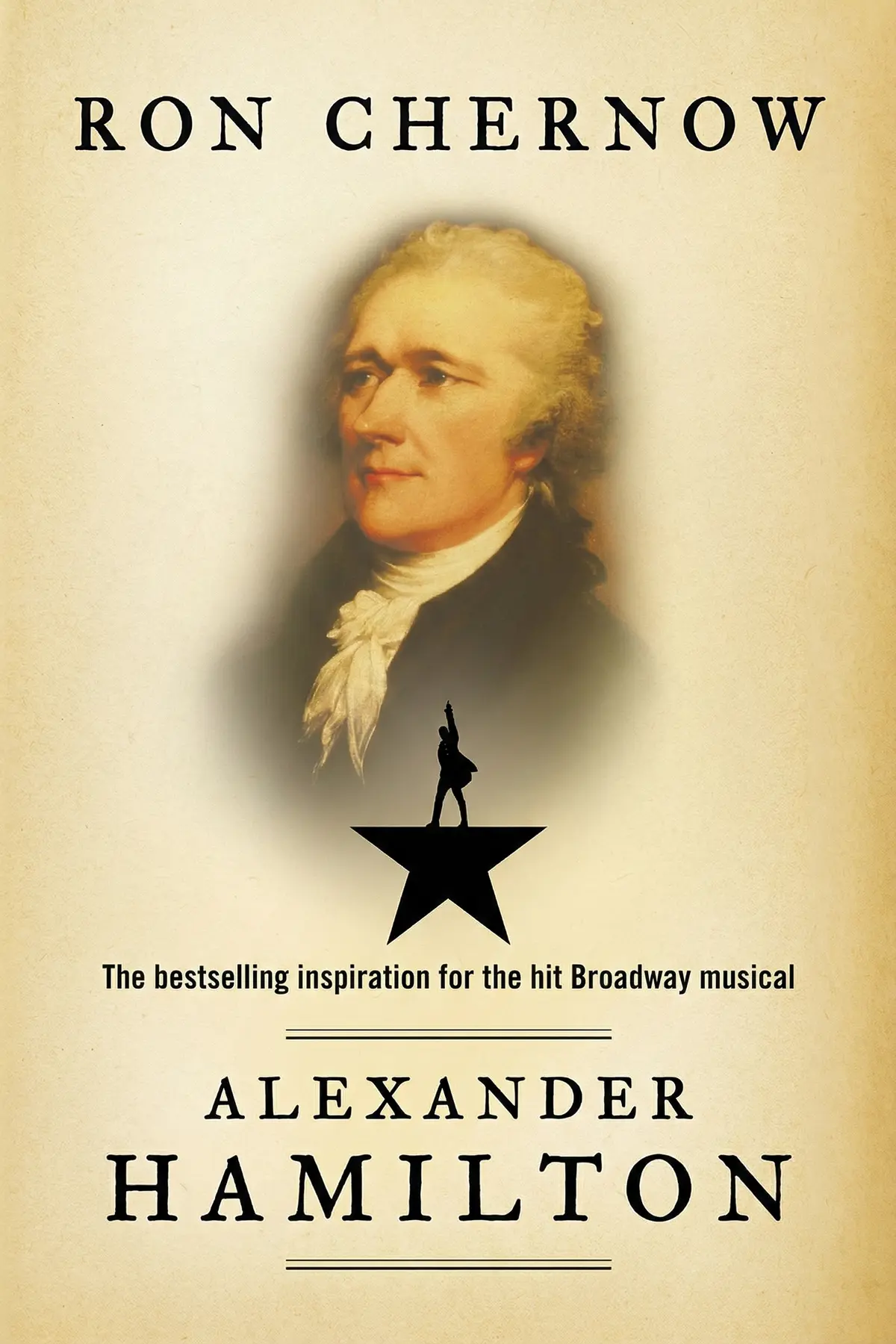
Ron Chernow
Andrew Ross Sorkin
Philip Freeman

Fay Bound Alberti
Tracy Rosenthal
Jessica Valenti
AUDIO SUMMARY AVAILABLE
Get the key ideas from Democracy Awakening by Heather Cox Richardson, plus 5,000+ more titles in English and Thai.







