
13 min 09 sec
Designing Your Life: How to Build a Well-Lived, Joyful Life
Apply the principles of design thinking to your personal and professional journey. This guide teaches you how to prototype, iterate, and build a meaningful life filled with joy and creative freedom.
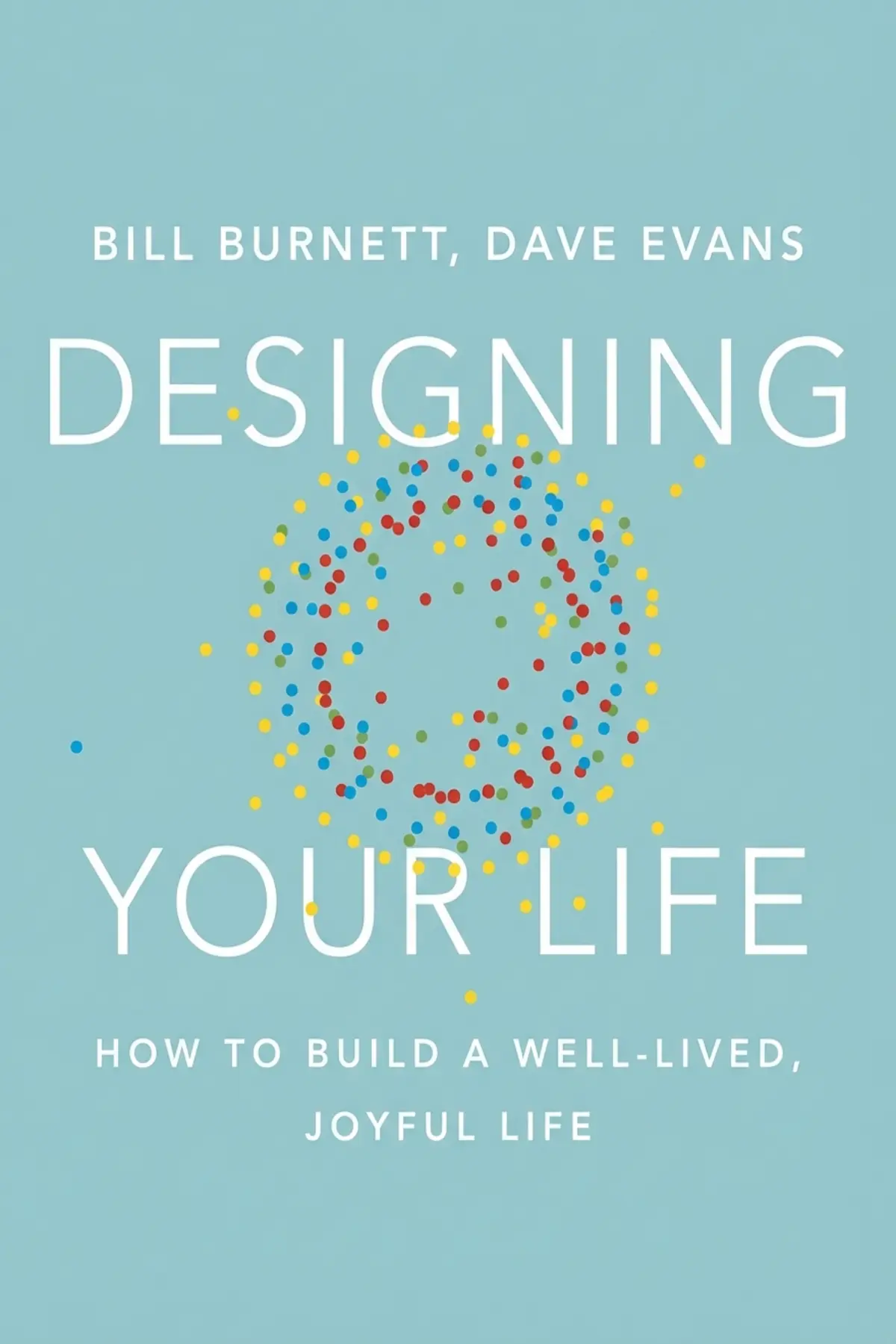
Table of Content
1. Introduction
1 min 25 sec
Look around you for a moment. Whether it is the device you are holding, the chair you are sitting on, or the architectural flow of the room you occupy, you are surrounded by the results of intentional design. Every object we use has been through a process of testing, refining, and problem-solving to make it functional and pleasant. But what if we applied that same rigorous, creative methodology to the one thing that matters most? What if we could design our lives with the same care and precision that engineers use to build smartphones or sports cars?
Many of us feel like we are drifting, or worse, that we are stuck in a version of life that doesn’t quite fit. We might have chosen a career path decades ago that no longer resonates, or we might feel a general sense of dissatisfaction without being able to point to the cause. This is where the concept of ‘designing your life’ comes in. It is an invitation to stop guessing and start building.
In the following segments, we will explore the toolkit used by designers at places like Stanford and Apple to help you move from a state of stagnation to one of creative possibility. We’ll look at how to balance the different dimensions of your daily existence, how to ensure your work aligns with your deepest beliefs, and how to prototype multiple futures so you never feel trapped by a single choice again. The goal isn’t to find a perfect, finished life—because design is never truly finished—but to build a well-lived, joyful life that evolves as you do.
2. Establishing Your Starting Point
2 min 02 sec
Before you can decide where you are going, you must determine exactly where you are standing right now by assessing four critical areas of existence.
3. Aligning Your Life and Work Views
2 min 08 sec
True satisfaction comes from coherence, which is the alignment between what you believe and what you do every day.
4. Tracking Flow and Energy Levels
2 min 01 sec
Pay close attention to which activities give you energy and which ones drain it to discover your natural state of flow.
5. Breaking Free from Stagnation
2 min 04 sec
When you feel stuck, use mind mapping to bypass your logical brain and access a wider range of creative possibilities.
6. Designing Multiple Paths for the Future
1 min 56 sec
Rather than trying to find one ‘perfect’ life, create three distinct five-year plans to explore the variety of your potential.
7. Conclusion
1 min 33 sec
As we wrap up this journey into the world of life design, it is important to remember that the most critical part of the process is action. Design is a ‘doing’ discipline. You cannot think your way into a new life; you have to build your way there. This means taking the data from your Good Time Journal, the insights from your compass, and the creative sparks from your mind mapping and turning them into real-world experiments.
One practical, actionable step you can take right now involves the way you present yourself to the world. If your design process has led you to realize you need a career shift, remember that the gatekeepers of the professional world often use automated systems. To help your new ‘designed’ self get noticed, look at the job descriptions for the roles you are interested in and identify the specific keywords they use—terms like ‘innovative,’ ‘collaborative,’ or technical certifications. Weave these keywords into your CV to ensure that your application passes through the initial digital filters and lands in front of a human who can see the value in your unique path.
Ultimately, designing your life is about moving from a mindset of ‘should’ to a mindset of ‘could.’ You don’t have to be trapped by your past choices or your current circumstances. By treating your life as a series of creative challenges, you open the door to a world of possibilities. You have the tools to assess where you are, align your actions with your values, and prototype a future that brings you continuous energy and joy. The design is in your hands—now go out and build it.
About this book
What is this book about?
Designing Your Life introduces a revolutionary approach to personal development by borrowing methodologies from the world of product design. Rather than waiting for a single moment of epiphany or feeling trapped by past educational choices, authors Bill Burnett and Dave Evans suggest that life is a project that can be intentionally built. This summary explores how to use design thinking to solve the most complex problem of all: your future. The promise of this approach is not a one-size-fits-all solution, but a set of tools to help you navigate uncertainty. You will learn how to assess your current standing across the pillars of health, work, play, and love; how to align your personal values with your career through a 'life compass'; and how to generate multiple creative paths forward using odyssey planning. By shifting from a mindset of 'finding' your passion to 'designing' your way forward, you can escape stagnation and start building a life that feels authentic and energized.
Book Information
About the Author
Bill Burnett
Bill Burnett holds a master’s degree in product design from Stanford University, where he currently serves as the Executive Director of the Design Program. With three decades of experience, he remains an active designer and builder. Dave Evans is also a faculty member at Stanford’s Product Design Program. His diverse professional background includes roles in marine biology and mechanical engineering, as well as leadership positions at Apple and co-founding Electronic Arts, where he continues to provide consulting services.
Ratings & Reviews
Ratings at a glance
What people think
Listeners find this guide very pragmatic, featuring effective exercises that aid in handling life shifts and career transitions. They value its eye-opening perspective and the way it retools their thinking, with one listener noting that it offers real clarity on their personal goals. The material is praised for its sound design principles and hands-on drills, making it a great resource for everyone from young adults to retirees.
Top reviews
Kom
Pick this up if you are currently feeling paralyzed by the 'what comes next' question. I bought this for my daughter who just graduated, but I ended up reading it myself first and was genuinely impressed by the 'Odyssey Plans' exercise. It forces you to map out three completely different five-year versions of your life, which is a fantastic way to realize you aren't trapped in one path. Personally, I think the authors could have toned down the academic lecturing, but the core message is vital: there is no one 'perfect' life, only the one you choose to build. The focus is definitely more on the professional side than the title suggests, yet the logic carries over. It turns the terrifying abyss of the future into a series of manageable, low-stakes experiments.
Show moreNatchaya
Finally, a framework that doesn’t demand I find my 'one true passion' before I’m allowed to take a single step forward. The authors argue that passion is the result of a well-designed life, not the starting point. This hit me hard. I’ve spent years waiting for a lightning bolt of inspiration that never came. By using their 'Try Stuff' mentality, I’ve started making small moves in my current job that make it feel much more aligned with my values. Not gonna lie, some parts of the book felt like they were written specifically for people with six-figure salaries and zero debt. But if you focus on the underlying logic of design thinking, there is a lot of gold to be found here. It’s about taking action instead of overthinking.
Show moreLek
After thirty years in the same industry, I felt completely stuck and unable to imagine a different version of myself. This book was exactly the wake-up call I needed. I particularly loved the 'Life 1, 2, and 3' exercise. It gave me permission to imagine a life where I pursued my hobbies as a career without feeling like a failure for leaving my current path. The authors' background in design really shines through in how they structure the prototyping phase. It’s not about making a massive, scary change all at once. It’s about having conversations and taking tiny steps to see if a new path actually fits. For retirees or people facing a second act, this is a must-read. It’s enlightened, practical, and incredibly encouraging.
Show moreCharlotte
As someone who typically loathes the self-help genre, I found the methodology here surprisingly grounded and actionable. Instead of the usual 'manifest your dreams' fluff, Burnett and Evans treat life like an engineering problem that requires iterative testing. The 'Good Time Journal' was an eye-opener for me because it helped me identify exactly which tasks were draining my energy versus which ones were giving me a spark. I’ll admit, the writing style can be a bit dry, and it feels like you're sitting in a university lecture hall at times. However, if you can get past the occasionally snooty tone, the toolkit provided is genuinely useful for anyone feeling stagnant. It's less about finding 'passion' and more about building curiosity. That’s a distinction more people need to hear.
Show morePong
Truth is, I almost gave up on this because of the constant references to Stanford and the authors' somewhat lecturing tone in the audio version. If you are going to consume this, buy the physical book so you can actually do the worksheets without hearing the authors' voices. Once I switched to the hardcopy, the value became much more apparent. The 'Work/Life/Play/Love' dashboard is a simple but effective way to see where you are out of balance. I’m currently mid-career and felt like I was running on a treadmill. This book didn't give me the answers, but it gave me a better set of questions to ask. It’s a solid toolkit for anyone who feels like they’re just 'muddling through' without a plan. Just ignore the bragging.
Show moreMaja
The central thesis—that we should 'prototype' our lives the way engineers test products—is a total game changer for the indecisive. Instead of agonising over a single choice, you just go out and collect data. I’ve already used the AEIOU method to evaluate my daily meetings, and the results were immediate. I’m spending less time in environments that drain me and more time on high-energy interactions. To be fair, the book is a bit 'tech-bro' in its delivery. There’s a lot of focus on efficiency and optimization that might not resonate with everyone. But if you’re looking for a logical, step-by-step way to navigate a transition, this is it. It’s a solid 4-star experience that I’ll likely revisit when I hit my next crossroads.
Show moreDome
Ever wonder why you feel drained by 3 PM every Tuesday despite having a job you supposedly love? This book helps you figure that out. The exercises are the real star of the show here. I found the 'Good Time Journal' to be incredibly revealing about my own habits and energy levels. While the authors can be a bit repetitive about their Stanford credentials, the actual tools they share are top-tier. I wish I had read this in my early twenties before I made so many 'safe' choices based on what I thought I 'should' do. It's a great gift for anyone feeling restless or unfulfilled. It’s not a magic wand, but it’s a very good map. Just be prepared to do the actual work, or the book is useless.
Show moreAraya
Is this book life-changing or just a collection of common sense repackaged with corporate buzzwords? Frankly, it’s a bit of both. I appreciated the concept of 'gravity problems'—the idea that some things are just facts of life you can’t change and therefore aren’t actually problems to be solved. That reframe alone saved me a lot of mental energy. On the downside, the authors seem to forget that not everyone has the luxury of 'prototyping' a career in a new city on a whim. The book is heavily skewed toward the professional world, almost ignoring the complexities of family, health, or deep personal relationships. It’s a 3-star read for me because while the exercises are great, the perspective feels narrow. Use the workbook, but take the Stanford-centric optimism with a grain of salt.
Show moreRuangrat
Don’t let the title fool you into thinking this is a holistic guide to every facet of human existence. It is, for better or worse, a career book. If you go into it with that expectation, you’ll find some of the most practical job-seeking advice currently on the market. The section on the 'hidden job market' and why traditional applications are a waste of time is worth the price of admission alone. Still, I found the tone a bit condescending. The authors speak from a place of immense security, and their advice sometimes ignores the systemic barriers that many people face. It’s a useful manual for the 'one-percenters' or the over-educated, but it lacks a certain degree of empathy for those in survival mode. Decent, but flawed.
Show moreRungtip
Maybe it’s just the jaded pragmatist in me, but this felt less like a life manual and more like a brochure for a high-end Silicon Valley consulting firm. To be fair, the 'design thinking' framework is robust, but it clearly caters to a very specific demographic of highly mobile, urban professionals. If you aren't already sitting on a comfortable cushion of societal privilege, some of these suggestions—like just 'trying stuff'—feel incredibly out of touch with reality. I found the constant name-dropping of Stanford to be grating and elitist. It assumes you have the time, money, and mental bandwidth to prototype five different lives simultaneously. Look, the career advice is solid if you're a mid-level manager looking to pivot. For anyone else struggling with actual 'gravity problems' like debt or location constraints, it’s mostly just noise.
Show more
Readers also enjoyed
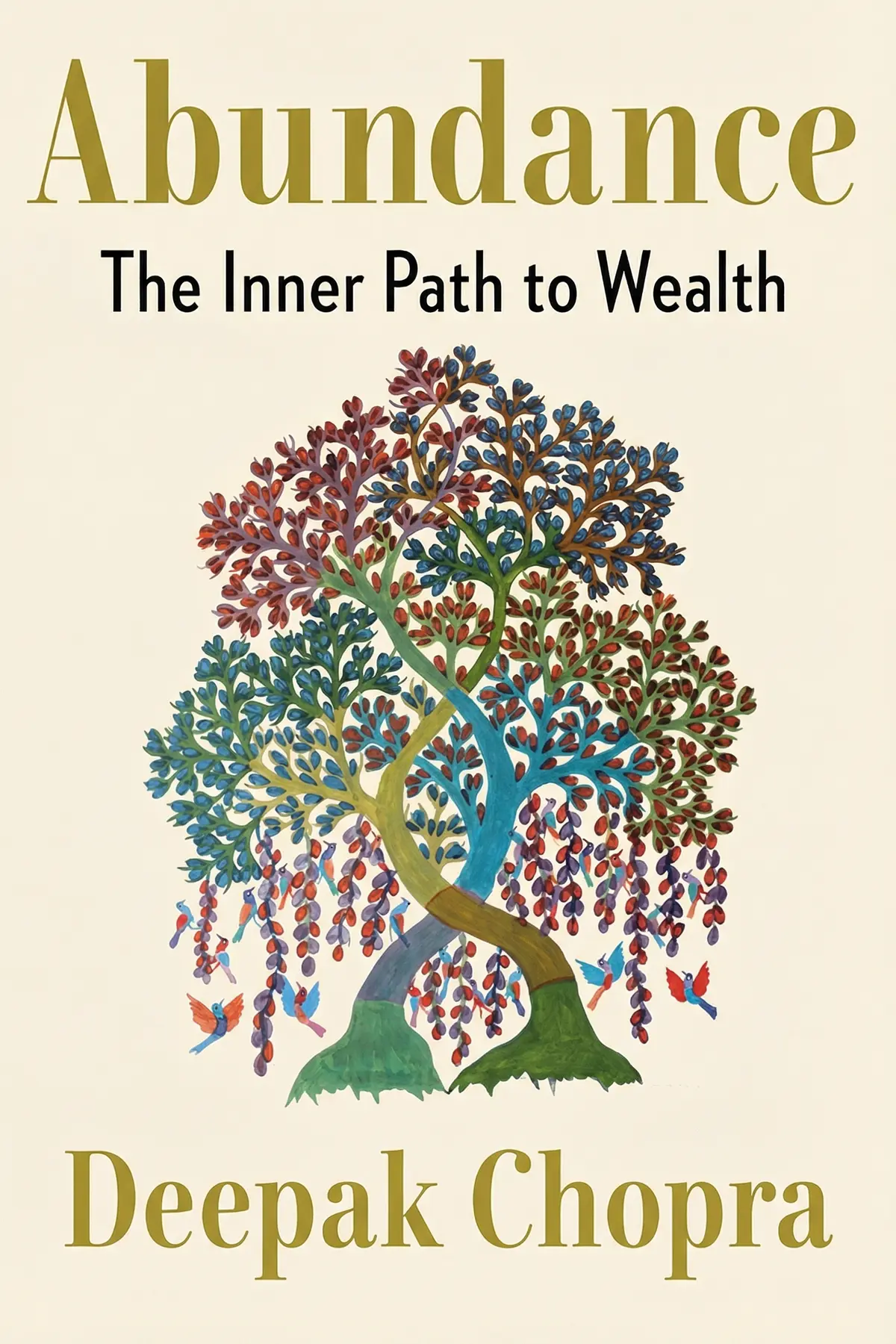
Abundance: The Inner Path to Wealth
Deepak Chopra
60 Seconds & You’re Hired!
Robin Ryan
59 Seconds: Change Your Life in Under a Minute
Richard Wiseman
AUDIO SUMMARY AVAILABLE
Listen to Designing Your Life in 15 minutes
Get the key ideas from Designing Your Life by Bill Burnett, plus 5,000+ more titles in English and Thai.
- 5,000+ titles
- Listen as much as you want
- 7-day free trial
- Cancel anytime







