

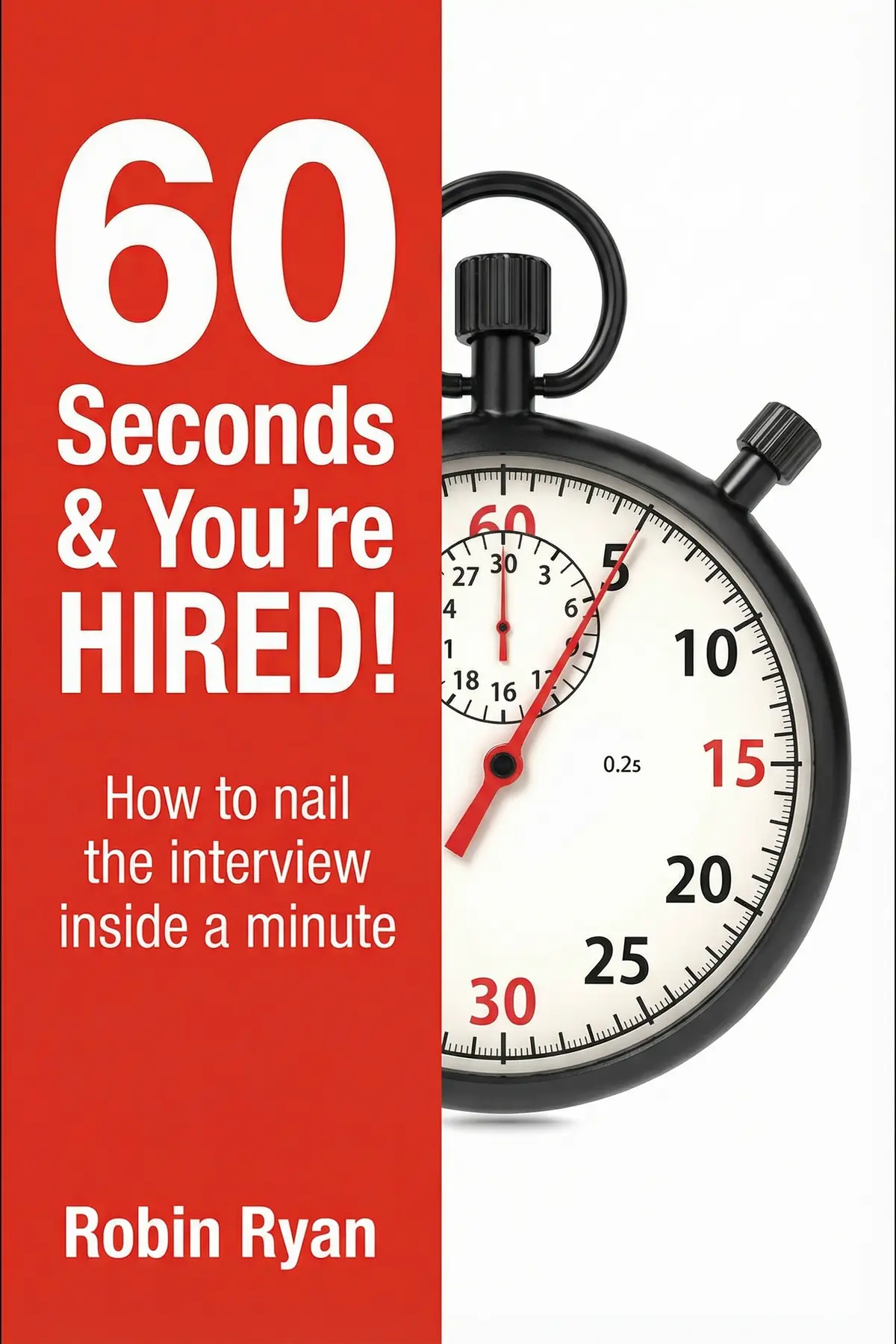
60 Seconds & You’re Hired!
Robin Ryan
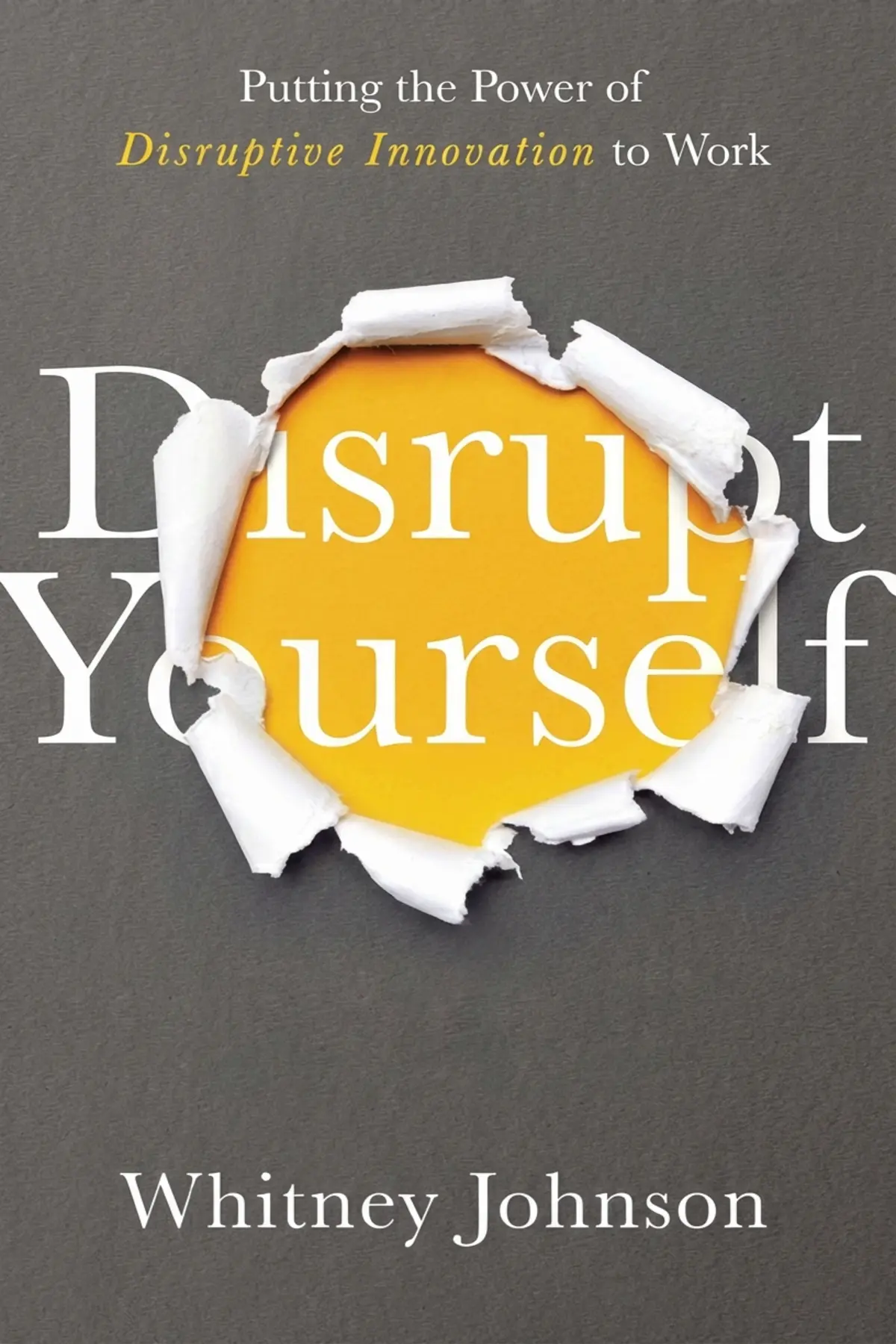
Disrupt Yourself explores how the principles of disruptive innovation, typically applied to tech startups, can be used to accelerate personal growth, navigate career pivots, and unlock hidden professional potential through calculated risk-taking.
1 min 42 sec
In the modern world, we often talk about disruption as something that happens *to* us. We see massive corporations that once dominated the landscape suddenly vanish, replaced by nimble startups that changed the rules of the game. Think about the mobile phone industry. There was a time when Nokia was the undisputed king, a name synonymous with reliability and market share. Yet, almost overnight, the ground shifted, and today, they are a cautionary tale of what happens when a giant fails to innovate. We tend to view these shifts with a sense of trepidation, fearing that our own careers might be the next to be disrupted by a new technology or a younger competitor.
But what if we flipped the script? What if disruption wasn’t a threat from the outside, but a tool we could wield ourselves? This is the core premise of our journey today. Disruption is the engine of all innovation, and it doesn’t have to be limited to the boardroom or the tech laboratory. You can apply these same principles to your own life and career to achieve a level of success that traditional, linear paths simply cannot provide.
Over the next few minutes, we are going to explore a framework for self-disruption. We’ll look at why taking the ‘unmarketed’ risk is often safer than competing in a crowded field, how your perceived limitations might actually be your greatest assets, and why the most successful people are often those willing to take a strategic step backward to leap forward. We’ll discover how a lawyer navigated a path to partnership by finding a void in the market, and why a lack of capital can actually be a blessing for a new business. By the end, you’ll see that disruption isn’t just about changing what you do; it’s about changing how you think about your potential and the path to reaching it. Get ready to challenge your assumptions and learn how to disrupt yourself for a more fulfilling and successful life.
2 min 28 sec
Not all risks are created equal, and understanding the difference between competing for market share and creating a new market is the first step toward successful personal disruption.
2 min 23 sec
Finding your competitive edge requires looking inward to identify the skills that come naturally to you but are difficult for others to replicate.
2 min 32 sec
Limitations like a lack of money or experience are often viewed as hurdles, but they can actually be the primary drivers of innovation and efficiency.
2 min 30 sec
Success can breed a sense of intellectual and cultural entitlement that blinds leaders to new ideas and looming threats.
2 min 23 sec
Progress isn’t always a straight line upward; sometimes, the most effective way to reach a higher peak is to intentionally move to a lower one.
2 min 17 sec
Developing resilience requires a shift in how we process failure, moving away from a focus on inherent intelligence toward a focus on effort and learning.
2 min 23 sec
The most successful career paths are rarely linear; they are driven by curiosity and the flexibility to adapt to unexpected opportunities.
1 min 31 sec
As we wrap up our exploration of personal disruption, the overarching message is clear: the same forces that reshape industries can also reshape your life. You have the power to be the disruptor rather than the disrupted. By choosing to take market risks, you move away from the noise of competition and into a space where you can truly shine. By embracing your unique, distinctive strengths, you become an innovator in your own right. And perhaps most importantly, by viewing your constraints and your failures as essential parts of the process, you build the resilience needed to sustain long-term growth.
Remember that progress isn’t a ladder you climb in a straight line; it’s a series of curves that you jump between. Don’t be afraid to take that strategic step back if it puts you on a better path. Don’t let your past successes make you feel entitled or blind to new ideas. And never lose that spirit of discovery that allows you to pivot when life throws you a curveball.
Your actionable takeaway for today is to start listening to your inner voice—that quiet hunch about a talent or an interest that you’ve perhaps dismissed as ‘not a real career.’ Whether it’s a fascination with a niche subject or a unique way of solving problems, that hunch is often your intuition pointing toward your next disruptive move. Stay curious, stay humble, and don’t be afraid to wipe the slate clean when it’s time for a fresh start. The world is always changing, and by disrupting yourself, you ensure that you are always growing right along with it.
This book takes the concept of disruption—the force that allows small companies to topple industry giants—and applies it to the individual. Whitney Johnson argues that personal growth often requires us to intentionally step out of our comfort zones and embrace the unknown. By understanding the mechanics of the 'S-curve' of learning, readers can identify when they have plateaued and when it is time to leap into a new challenge. The promise of the book is a practical framework for self-reinvention. It covers how to leverage personal constraints as creative tools, why failure is a necessary part of the discovery process, and how to identify unique strengths that the market hasn't yet fully utilized. Whether you are an employee looking for a promotion or an entrepreneur starting a new venture, the book provides a roadmap for turning disruption into a deliberate strategy for success rather than a chaotic force to be feared.
Whitney Johnson is the influential co-founder of Rose Park Advisors and a strong advocate for using disruption as a way to move forward, both in life and in work. She is also a contributor to the Harvard Business Review and the author of multiple best-selling books, including Dare, Dream, Do.
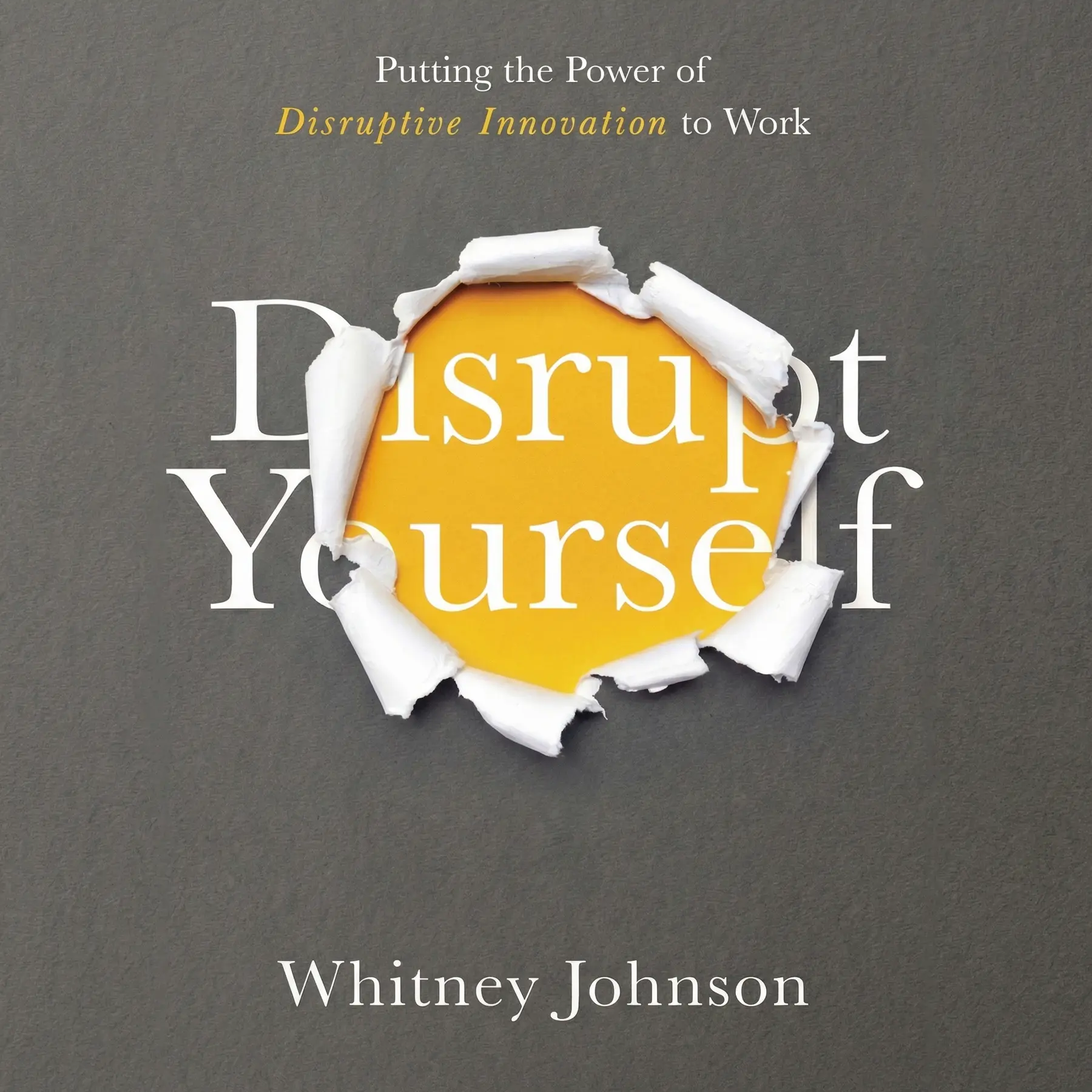
Listeners find this work both thought-provoking and encouraging, with one listener describing it as an excellent tool for growth in both life and career. They enjoy how easy it is to digest, with one listener calling it essential for anyone looking to innovate, and they find the moving content connects strongly with the audience. The writing is backed by solid research and includes numerous memorable quotes; one listener mentions its relevance across all age groups. They particularly like the series of stories about risk-takers and the author’s straightforward prose.
Whitney Johnson has hit a home run with this guide to intentional career growth. I’ve always been an "oddball" in my professional circles, but this book helped me realize that being different is actually a distinctive strength that can be leveraged. The section on "embracing constraints" blew my mind because it reframes lack of resources as a catalyst for creativity rather than a roadblock. I love how she discusses the "dopamine" of the learning curve—it explains why the struggle at the beginning of a new project can actually be the most rewarding part. The writing is incredibly clear, and the stories she shares are both relatable and deeply motivational. Truly, this is a must-read for anyone who feels like they’ve hit a plateau and needs a roadmap for their next big leap.
Show moreAfter hearing the author speak, I knew I needed to dive into the full text, and it did not disappoint. This isn't just a "business" book; it's a deeply human look at how we deal with transition and the "grief" that often comes with failure. Johnson’s vulnerability about her own career pivots makes the advice feel authentic rather than preachy. The S-curve model provides a sense of comfort during those times when you feel like you’re working hard but seeing no results. "Momentum creates momentum," as she says, and this book definitely gave me the push I needed to start my next chapter. It’s short enough to finish in a weekend but contains enough wisdom to keep you thinking for months. It has definitely earned a permanent spot on my shelf.
Show moreEver wonder why you feel so restless once you’ve finally mastered a job? According to Whitney Johnson, it’s because you’ve reached the top of your S-curve and it’s time to jump. This book provides a brilliant framework for identifying when to make that move and how to do it without losing your mind. I loved the "six dynamite questions" for finding your distinctive strengths; they actually forced me to look at my hobbies and "oddities" in a new light. The emphasis on "imposing constraints" to spark innovation is something I’ve already started applying to my daily workflow with great success. It’s an empowering, well-researched, and highly relatable book that I would recommend to anyone at any stage of their career. Truly inspirational content.
Show moreFinally got around to reading "Disrupt Yourself" and I'm pleasantly surprised by how well Whitney Johnson translates high-level corporate theory into actionable personal advice. The S-curve concept is the real star here; it gives a visual language to that uncomfortable feeling when you’re starting something new and progress feels invisible. I found the chapter on distinctive strengths particularly helpful, especially the idea that things that come easily to us are often our greatest assets. To be fair, some of the anecdotes felt a bit rushed, jumping from one high-achiever to the next without much breathing room. However, the core framework is solid. It’s a fast, punchy read that makes a compelling case for stepping sideways to eventually move up. If you're feeling stuck in your current role, this might be the nudge you need.
Show moreAs a middle-manager looking to pivot, I found the "discovery-driven planning" section in this book to be a total game-changer for my mindset. Instead of the standard A-to-B linear planning we are all taught, Johnson suggests a more fluid approach that accounts for the unknown. Her "reverse income statement" for personal happiness is a brilliant way to calculate the actual cost of a career change. The truth is, most of us are terrified of failure, but this book teaches you how to give failure its due and use it as "validated learning." I did find the layout a bit dense in certain chapters, making it hard to skim for specific advice later on. You really have to sit down with a highlighter and engage with the text to get the full value out of it.
Show morePicked this up on a whim after seeing it mentioned in a leadership webinar, and I’m glad I did. The book is packed with great quotes and "those-who-dared" stories that make the abstract theories of disruption feel much more tangible. I particularly resonated with the idea that our "hard-won skills" are what truly set us apart in a crowded market. It’s written in a very accessible style—nothing too academic or dry, which I appreciated. My only real complaint is that it ignores the systemic barriers that make "disrupting yourself" much harder for some people than others. Still, as a motivational tool and a way to reframe your career trajectory, it’s a very solid resource. It’s the kind of book you’ll want to share with friends.
Show moreWhile I appreciate the sentiment behind this work, I'm stuck somewhere in the middle on its actual utility. The author definitely provides a fresh perspective by applying business disruption to personal branding, and I liked the seven-point framework. The idea of "competitive risk" versus "market risk" was a standout moment for me. However, the book is incredibly short and lacks the depth I was hoping for in a professional development guide. It reads more like an introductory primer than a masterclass. Frankly, the constant hopping between examples—from J.K. Rowling to financial tech—felt a bit dizzying and left me wanting more detail on the how rather than just the who. It’s a good bedside read for inspiration, but don't expect a step-by-step manual.
Show moreTo be fair, the concept of "stepping back to move ahead" is something we don't hear often enough in our hyper-competitive culture. Johnson does a decent job of explaining why a lateral move or even a demotion can lead to long-term growth on a new S-curve. I found the advice on "battling entitlement" to be a necessary, if slightly uncomfortable, reality check for anyone who thinks they've already "paid their dues." That said, the book often feels like it's trying to cover too much ground in too few pages. It mentions dozens of other books, which is great for a reading list, but it makes the author’s own contributions feel a bit lost in the shuffle. It's a nice, quick read, but I wouldn't call it groundbreaking or original.
Show moreNot what I expected from a book with such a bold title. I was looking for a more rigorous, analytical deep dive into the mechanics of personal change, but what I got was mostly a collection of anecdotes and high-level observations. The "red ocean vs blue ocean" analogy is helpful, but if you've read any business strategy in the last decade, you’ve heard it all before. I think the book serves as a good introduction for someone who has never thought about their career in strategic terms. For more seasoned professionals, however, it might feel a bit repetitive. The chapter on "dissenting voices" as allies was probably the most unique part of the book for me. Overall, it’s a fine read, just not the revolutionary text I was hoping for.
Show moreThis book feels like a collection of blog posts that never quite coalesced into a meaningful, deep dive. While Johnson is clearly knowledgeable, the adaptation of Clayton Christensen’s disruption theory to individual careers felt forced and, at times, incredibly thin. My biggest gripe is the heavy survivorship bias throughout the text. We hear about the "legends" who took massive risks and won, but there’s almost zero mention of those who "disrupted" themselves right into unemployment or financial ruin. It’s a "take a chance" mantra masquerading as a strategic framework. Look, the S-curve is a fine metaphor, but there isn't much original thought here that you won't find in a dozen other business books. It's derivative, lacking the conceptual clarity needed to provide a real formula for success.
Show moreRobin Ryan

Marianne Cantwell
William Vanderbloemen
AUDIO SUMMARY AVAILABLE
Get the key ideas from Disrupt Yourself by Whitney Johnson, plus 5,000+ more titles in English and Thai.







