

A Liberated Mind: How to Pivot Toward What Matters
Steven C. Hayes
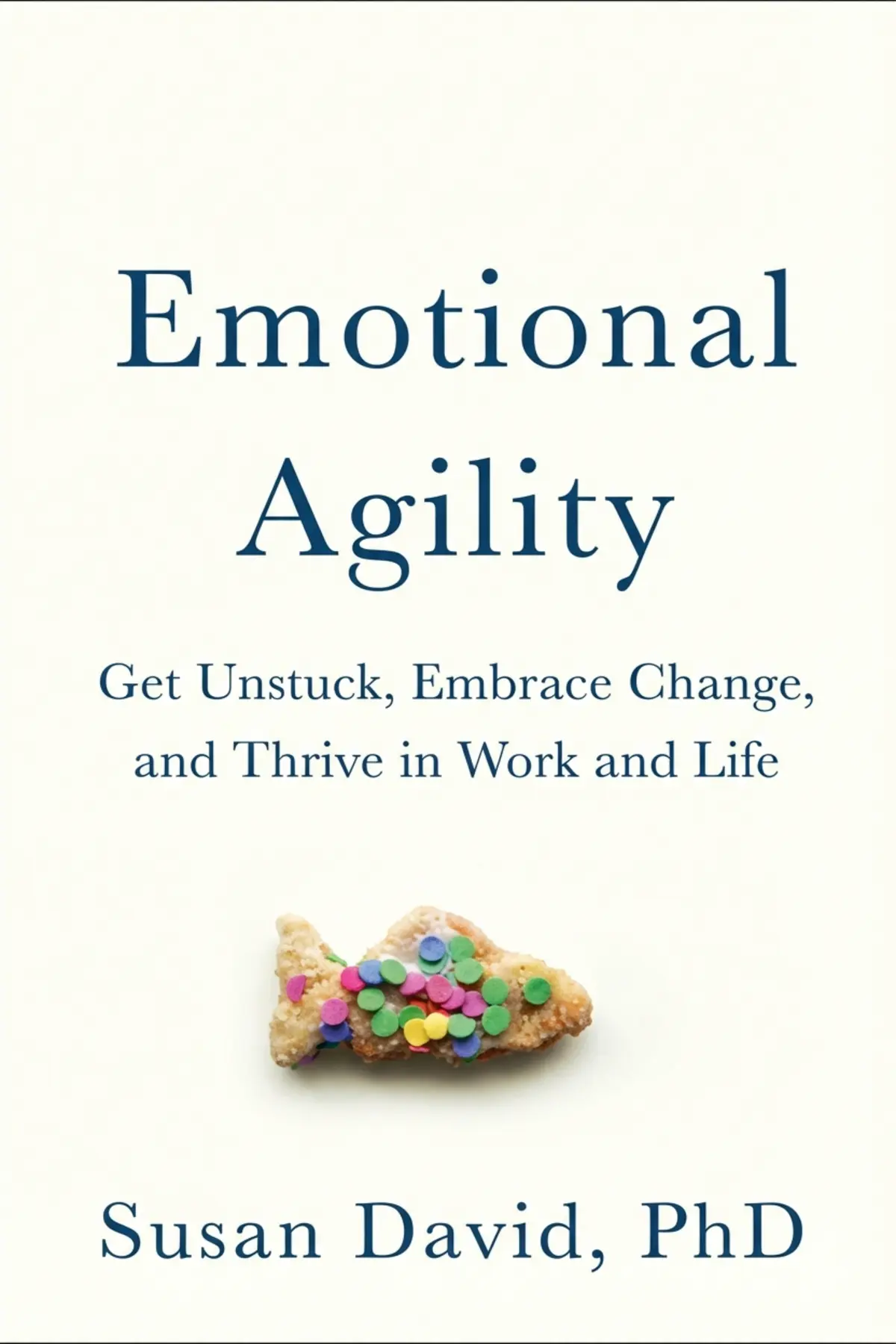
Emotional Agility provides a science-backed framework for navigating life’s twists and turns with self-acceptance and clear-headedness, helping individuals move past negative patterns and align their daily actions with their deepest personal values.
1 min 41 sec
We all have that internal narrator. It’s the voice that whispers—or sometimes screams—that we aren’t doing enough, that we aren’t good enough, or that we’re doomed to repeat the same failures forever. For many of us, this inner critic acts like a strict overseer, constantly judging our performance and weaving a web of anxiety. We find ourselves ‘hooked’ by these thoughts, reacting to life’s challenges with the same tired, rigid patterns. Whether it’s snapping at a loved one after a hard day at work or procrastinating on a dream because of a fear of inadequacy, these reactions keep us stuck.
But what if there was a way to change your relationship with these internal stories? That is the core promise of emotional agility. It isn’t about ignoring the voice or replacing every negative thought with a hollow affirmation. Instead, it’s about developing the psychological flexibility to experience your emotions without being controlled by them. It’s about learning to see these mental ‘hooks’ for what they really are—distortions of reality rather than absolute truths.
In this summary, we will explore a roadmap for navigating the complex landscape of the human psyche. We will look at why forced optimism often backfires and how our most difficult emotions can actually serve as our greatest teachers. By the end, you’ll understand how to ‘unhook’ from unhelpful narratives and start making choices that align with your true values. This journey is about more than just feeling better; it’s about living a life that is vibrant, authentic, and resilient, regardless of the circumstances. Let’s begin by looking at the stories our brains tell us and how they can lead us astray.
2 min 33 sec
Our brains are constantly piecing together sensory data to create a coherent story of our lives, but these mental scripts are often far from the objective truth.
2 min 34 sec
Attempting to suppress negative feelings with a smile can be surprisingly damaging to your long-term well-being and career success.
2 min 29 sec
Facing your inner monsters with kindness rather than judgment is the essential first step in ‘showing up’ for your emotional life.
2 min 35 sec
Learning to observe your feelings without being consumed by them allows you to ‘step out’ and find a fresh perspective on your problems.
2 min 41 sec
Breaking free from ‘social contagion’ and defining your own values is the key to making decisions that lead to genuine fulfillment.
2 min 30 sec
The secret to long-lasting happiness with others lies in how you respond to small, seemingly insignificant moments of emotional reaching out.
2 min 24 sec
True growth requires a delicate balance between the comfort of routine and the challenge of new, stimulating experiences.
2 min 30 sec
Courageous communication and the willingness to move through discomfort are the final keys to breaking free from emotional ruts.
2 min 10 sec
In the end, emotional agility is not about attaining a state of permanent happiness or eliminating all negative thoughts. Life is inevitably messy, and as long as we are alive and engaged with the world, we will experience loss, frustration, and fear. The goal of becoming emotionally agile is to change how we respond to that messiness. Instead of being a victim of your emotions—trapped by the ‘hooks’ of your past or the ‘social contagions’ of your present—you can become the architect of your own internal life.
We have explored how the brain weaves stories that aren’t always true, and why forcing a smile is often more harmful than simply being honest about our pain. We’ve seen that self-compassion is the foundation for change, and that mindfulness provides the necessary distance to choose our reactions rather than being driven by impulse. We’ve also learned that the most fulfilling lives are those lived in alignment with our own deeply held values, and that true growth happens when we dare to step toward the edge of our potential.
If there is one throughline to remember, it is this: your emotions are data, not directives. They are signals that tell you what you care about, what hurts, and what needs to change. But they do not have to be the boss of you. By practicing the skills of showing up, stepping out, walking your why, and moving on, you develop the flexibility to navigate any storm.
As you move forward from here, consider one actionable step you can take today. The next time you are with a loved one, put down the distractions and look for a ‘bid’ for connection. Instead of the usual small talk that we often use to avoid real depth, try to engage in a meaningful way. Ask a real question, and give a real answer. By choosing to be present and available in those small moments, you are practicing the very essence of emotional agility. You are choosing to be unstuck, you are choosing to be authentic, and you are choosing to thrive.
Many of us feel trapped by our own thoughts, reacting to stress with rigid habits or self-criticism. This book explores the psychological concept of emotional agility—the ability to be flexible with our thoughts and feelings so we can respond optimally to everyday situations. It challenges the common cultural push toward 'relentless positivity,' arguing that suppressing negative emotions actually makes us less resilient. Through the four-step process of showing up, stepping out, walking your why, and moving on, the narrative provides tools to handle inner turmoil without getting overwhelmed. By learning to view emotions as data rather than directives, listeners can close the gap between who they are and who they want to be. The promise is a more authentic life where challenges are met with curiosity and purpose rather than fear or avoidance.
Susan David is a renowned medical psychologist and a member of the faculty at Harvard Medical School. She serves as the co-founder and co-director of the Institute of Coaching at McLean Hospital in Massachusetts. Beyond her clinical and academic work, she is a highly sought-after consultant for major international companies. Her influential research and insights have been featured in premier publications such as the Harvard Business Review and the Wall Street Journal.
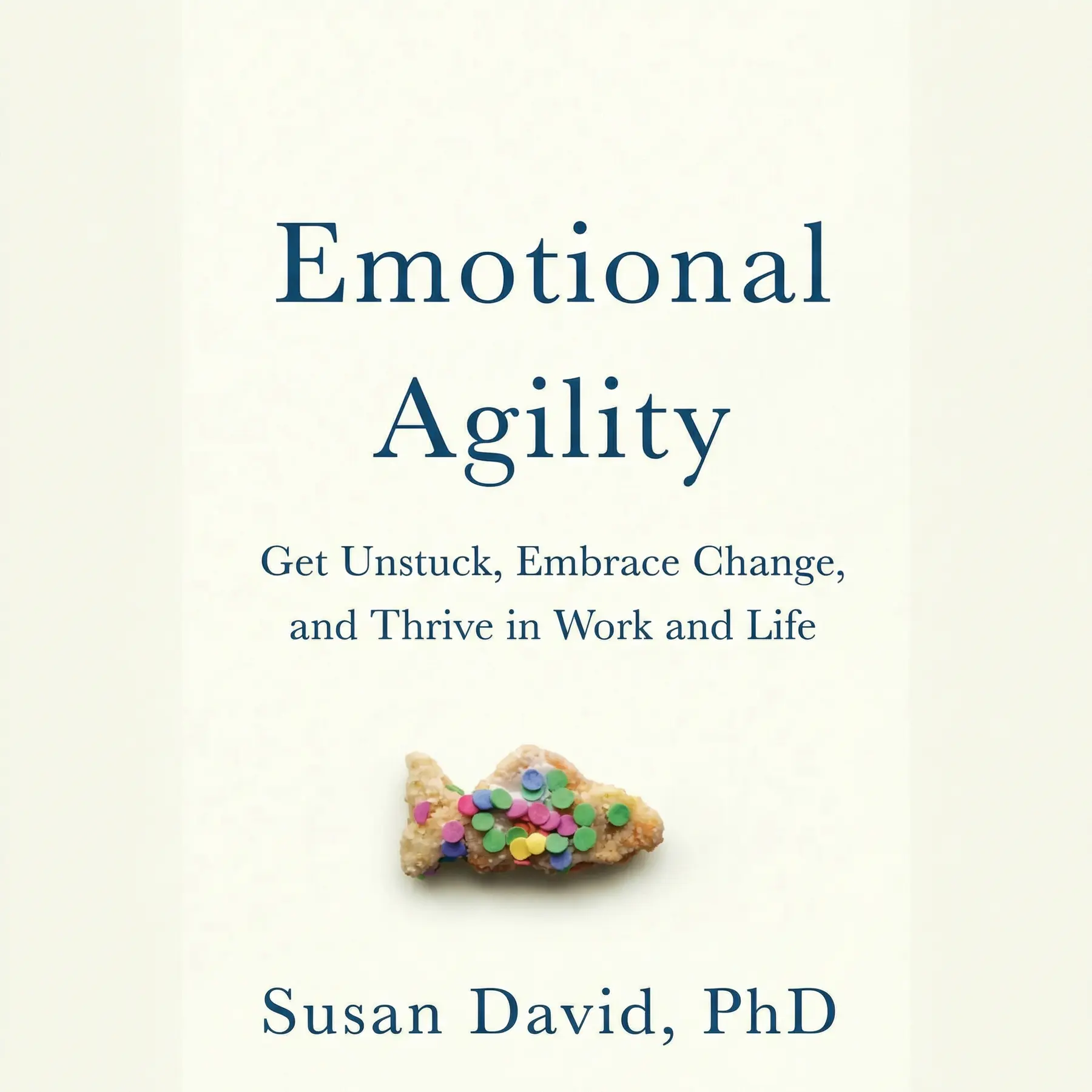
Listeners find this book to be a high-quality listen that presents an exceptional system for interpreting emotions alongside useful tips for everyday life. It acts as a continuous guide for emotional well-being, helping individuals enhance their self-perception to achieve greater life satisfaction. Additionally, listeners praise the polished prose and narrative style, regarding the title as a truly worthwhile investment.
Susan David offers a stellar framework that moves far beyond the typical, shallow "just think positive" platitudes found in most modern self-help. It’s practical. Instead of avoiding difficult feelings, she teaches you how to see emotions as data rather than directives, which has been a total game-changer for my psychological well-being. The core idea is that we shouldn't be controlled by our internal weather. Instead, we should use it to navigate toward our true values. I found the storytelling to be incredibly engaging and the research-backed advice provided an ongoing resource for my mental health. This isn't just a one-time read; it’s a manual for life fulfillment. If you are looking to cultivate deeper self-awareness and stop the cycle of self-sabotage, this book is a valuable expenditure of time and money.
Show moreWow, this book actually lived up to the massive hype and then some. Not gonna lie, I was skeptical because I’m tired of the 'toxic positivity' movement, but Susan David validates the struggle of being human. She explains that being emotionally agile isn't about being happy all the time; it’s about being able to handle the full spectrum of human experience with compassion. The chapter on 'walking your why' helped me align my daily habits with my core values in a way that felt authentic rather than forced. Her writing style is warm and accessible, making complex psychological concepts feel like a conversation with a wise friend. If you’re a fan of Brene Brown or have been looking for a way to grow stronger through your challenges, you need this on your shelf.
Show moreAs someone who has struggled with anxiety for years, finding a framework that doesn't just tell you to 'think positive' is incredibly refreshing. This book is a masterclass in emotional health. David explains that our emotions are like a compass; they point us toward the things we care about most, even when they feel painful. I loved the practical exercise of repeating a word until it loses its power—it’s a simple but effective way of 'stepping out' from under a heavy thought. The writing is clear, the research is fascinating, and the advice is genuinely life-altering if you actually put in the work to apply it. It has helped me become more resilient in the face of workplace stress. This is truly well worth the investment for your long-term fulfillment.
Show moreFinally got around to finishing this, and I can say it's an essential read for anyone interested in self-development. Personally, I found the idea that 'emotions are data, not directives' to be the most clarifying sentence I’ve read all year. It takes the pressure off. You don't have to 'fix' a bad mood; you just have to listen to what it’s trying to tell you about your needs. The book is filled with wonderful stories that make the abstract concepts feel very grounded and real. It’s helped me show more compassion toward myself and, by extension, to the people I work with every day. Susan David has provided a brilliant roadmap for navigating life with more grace and intentionality. Highly recommended for anyone who feels stuck in their own head.
Show moreEver wonder why you get 'hooked' by the same old arguments or self-sabotaging thoughts every single time? In my experience, most books on this topic are too wishy-washy, but David provides actual tools like journaling and the 'third-person' perspective to create space between the feeling and the reaction. To be fair, there is a bit of fluff to wade through, and the middle sections can feel slightly repetitive if you're already familiar with mindfulness. However, the distinction between 'bottlers' and 'brooders' was a massive wake-up call for me personally. I realized I’ve been a world-class brooder for years, obsessing over slights until they become my entire identity. Breaking that habit isn't easy, but the practical steps here make it feel possible. It's a solid, well-written guide for anyone wanting to be more resilient.
Show moreThe concept of being an 'observer' of your own thoughts is something I’ve heard before, but the way it’s framed here feels much more applicable to a busy, stressful life. David argues that courage is not the absence of fear, but rather 'fear walking,' which is a quote I’ve now taped to my desk. Gotta say, the section on parenting was particularly eye-opening. Learning how to help my kids label their emotions instead of just telling them to 'stop crying' has already changed the dynamic in our house for the better. The book is well-written and the storytelling makes the scientific concepts stick. My only minor gripe is that it leans a bit heavily on the author’s consulting experiences, which can feel a little self-promotional at times. Still, it’s a brilliant resource for anyone seeking more self-awareness.
Show morePicked this up because I wanted a better way to handle the constant 'ups and downs' of my career. It turns out that being emotionally agile is exactly what I was missing. The book is a great blend of research and real-life application, and it really helped me identify the habits that were tripping me up in meetings and high-pressure situations. I especially appreciated the advice on using third-person self-talk to gain perspective. It sounds silly until you try it, but it works. While some of the positive psychology experiments felt like ones I’ve read a dozen times in other books, David’s synthesis of the material is unique enough to keep it interesting. It’s a solid addition to the genre and a very helpful tool for personal growth.
Show moreAfter hearing so many people rave about this, I finally sat down with the copy I bought months ago. To be fair, the central premise—that we need to acknowledge and label our emotions—is deeply resonant and logically sound. However, the delivery felt quite long-winded for my taste. I struggled with the sheer volume of case studies and experimental data that seemed to bury the actual prescriptions for change. It took me a second read-through to really outline a plan for my own behavior because the 'how-to' segments were spread so thin across the chapters. There are definitely gems of wisdom in here, specifically regarding how we communicate our needs to others. But you really have to be willing to dig past the rhetoric to find the practical application. It’s a good book, just not the revolutionary experience I was expecting.
Show moreLook, if you’ve spent any time in the corporate world, you’ve likely seen the viral Harvard Business Review article this book was expanded from. Frankly, the article was enough. This feels like a classic case of taking a solid ten-page idea and stretching it into a full-length book to justify a consulting career. While the author writes confidently, much of the 'evidence' is based on correlational social science studies that often fail to replicate in the real world. It’s a corporate feel-good book designed to make you feel like you’re doing 'work' on yourself without actually providing a clear, actionable roadmap. I found the advice to be largely vague and shrouded in academic rhetoric. If you've never read a single self-help book, you might find a nugget of gold here, but for the rest of us, it’s mostly repackaged existential psychology.
Show moreThis is unfortunately just another pseudo-psychology book that takes a simple concept—mindfulness—and dresses it up in new terminology to sell books. The author fails to acknowledge her own lens of privilege, making several statements that come across as tone-deaf to anyone dealing with actual systemic issues or severe trauma. It’s easy to say 'choose your values' when you have a comfortable safety net, but for many, the 'big scary world' isn't just an internal feeling to be managed. Beyond the lack of self-awareness regarding her world view, the book is incredibly repetitive. It offers very scant details on how to actually achieve this 'agility' beyond some basic meditation and journaling tips you can find for free on any blog. It felt like a waste of several hours of my life.
Show moreSteven C. Hayes
Richard Wiseman
Leanne Maskell
AUDIO SUMMARY AVAILABLE
Get the key ideas from Emotional Agility by Susan David, plus 5,000+ more titles in English and Thai.







