
18 min 02 sec
Every Living Thing
By James Herriot
Every Living Thing explores the fierce 18th-century rivalry between Carl Linnaeus and the Comte de Buffon as they raced to catalog the natural world, forever changing our understanding of biology and race.
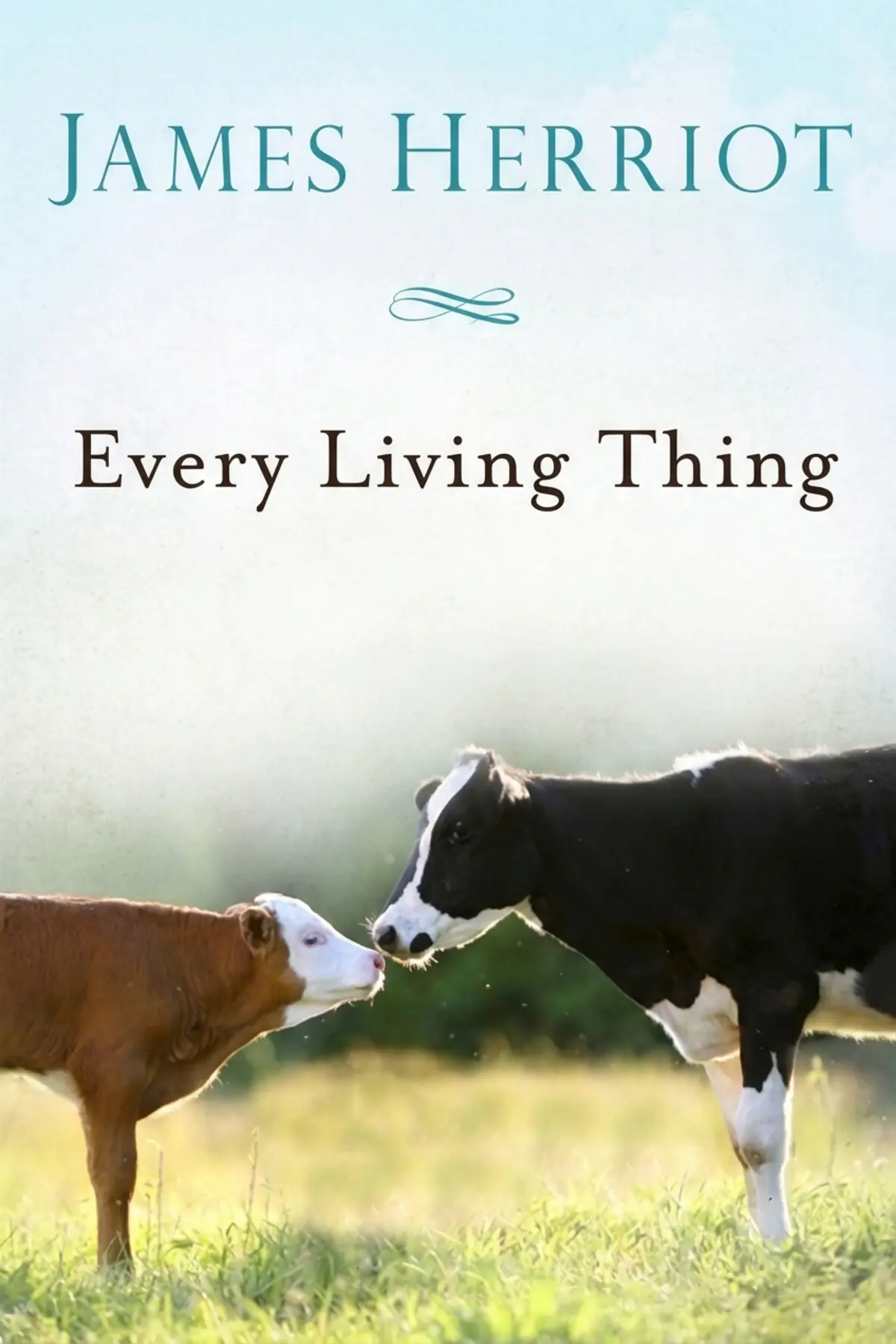
Table of Content
1. Introduction
1 min 49 sec
Imagine, for a moment, the sheer audacity of believing you could write a list of everything that lives on this planet. Every tiny moss in a damp forest, every strange creature in the deep ocean, and every variety of human being. In the 1730s, two men didn’t just imagine this—they made it their life’s mission. They lived in an era when nature was a wild, nameless chaos, and they believed that by applying human logic and language to that chaos, they could reveal the very blueprints of creation.
This is the story of Carl Linnaeus, a Swedish pastor’s son who wanted to be the architect of a divine filing cabinet, and Georges-Louis Leclerc, better known as Buffon, a French nobleman who saw nature as a vast, changing story. They were rivals in the truest sense, locked in a race to claim the natural world for their own respective systems. But this wasn’t just a friendly competition between scholars. The stakes were nothing less than the definition of life itself.
What followed was a centuries-long battle of ideas that influenced how we think about everything from climate change to the concept of race. One of these men would become a household name in science, and the other would be nearly forgotten by history. As we explore this journey, you’ll see that the system we use today to name every living thing wasn’t necessarily the most accurate one—it was simply the one that was most useful to the powers of the time. Through their struggle, we can see the origins of our modern world, and the tragic consequences that occur when we try to force the infinite complexity of nature into small, human-made boxes.
2. Two Opposing Philosophies of Nature
2 min 40 sec
Meet the rivals who sought to organize the world’s chaos, from a Swedish pastor’s son with a divine plan to a French aristocrat with a vision of flowing life.
3. The Price of Scientific Ambition
2 min 47 sec
Discover the human toll of the race to name all life, as ‘apostles’ were dispatched to the corners of the Earth to fuel a master’s dream.
4. The Dark Side of Classification
3 min 12 sec
Explore how the tools used to name plants and animals were turned toward humanity, creating categories that would justify centuries of prejudice.
5. A Legacy Split by Revolution and Empire
3 min 11 sec
How the tides of history decided the winner of the scientific race, as one man’s work was burned in a revolution while the other’s fueled a global empire.
6. Reconsidering the Web of Life
2 min 46 sec
In the modern age, we are finally realizing that nature is a network rather than a hierarchy, bringing us back to the truths that were nearly lost.
7. Conclusion
1 min 37 sec
The story of Carl Linnaeus and the Comte de Buffon is more than just a historical footnote about two competing scientists. It is a cautionary tale about the power of classification. Their race to name every living thing gave us the tools of modern biology, but it also gave us a legacy of division and hierarchy that we are still struggling to overcome.
We’ve seen how Linnaeus’s desire for order and his religious conviction created a rigid system that was easily co-opted by empires to justify control and prejudice. We’ve also seen how Buffon’s more holistic, changing view of nature was nearly lost to history because it didn’t fit the political needs of the time. The tragedy is that we chose the system that was more useful for power, rather than the one that was more accurate to the reality of life.
But there is an actionable lesson here for all of us. Every time we put a label on something—or someone—we are making a choice about how we see the world. We can choose to see the world as a collection of separate boxes, or we can choose to see it as a vibrant, interconnected whole. As we move forward, the most important thing we can do is to remember that nature doesn’t care about our names or our categories. Life is a flow, not a list. By embracing that complexity, we can move closer to a truth that recognizes the inherent value of every living thing, without needing to rank them on a ladder of our own making. Let’s look at the world again, not as a library to be cataloged, but as a community to which we belong.
About this book
What is this book about?
This narrative history dives into the 1730s, a time when the natural world was a chaotic mystery. Two brilliant minds, Carl Linnaeus and Georges-Louis Leclerc, Comte de Buffon, set out on a monumental quest to name and classify every species on Earth. While Linnaeus sought a rigid, divine order, Buffon saw a fluid, interconnected history of life. The book reveals how their competing philosophies shaped the future of science. It promises a deep look into the origins of our current biological language and the darker legacy of scientific racism. Readers will discover why the more accurate thinker, Buffon, was nearly erased by the French Revolution, while the flawed but systematic Linnaeus became the standard for the expanding British Empire.
Book Information
About the Author
James Herriot
Jason Roberts won the 2025 Pulitzer Prize for Biography for Every Living Thing. His first book, A Sense of the World, chronicling the blind adventurer James Holman, became a national bestseller and National Book Critics Circle Award finalist. Based in Northern California, he regularly writes for publications like McSweeney’s and The Believer.
More from James Herriot
Ratings & Reviews
Ratings at a glance
What people think
Listeners admire this work for its poignant anecdotes and skillful prose, where individual chapters serve as complete stories that elicit both laughter and deep emotion. The narrative is richly detailed, and listeners are drawn to the compelling cast, with one pointing out that the animals are just as lifelike as the humans. They find the material captivating and pleasant to consume, specifically suggesting it is ideal for bedtime, and regard it as a required experience for any animal enthusiast.
Top reviews
Sven
This book serves as a perfect capstone to the series, capturing the bittersweet transition into the 1950s. James Herriot has a way of making the simplest animal encounters feel like life-altering events, doesn't he? Frankly, I was moved by the descriptions of the windswept Yorkshire countryside, which almost becomes a character in its own right. The stories are self-contained, making it ideal for a quick read before sleep. While some might find the medical procedures a bit gruesome, his compassion for every creature shines through every sentence. It is a rare thing to find an author who balances humor and heartbreak with such effortless grace. This is essential reading for anyone who has ever loved a pet.
Show moreTanawan
Finally got around to finishing this series and I am just devastated that it's over. James Herriot’s writing is like a warm blanket on a rainy afternoon, especially when he’s describing the antics of Tricki Woo and the eccentric Mrs. Pumphrey. The way he depicts his own children, Jimmy and Rosie, starting to follow in his footsteps is genuinely heartwarming. I love that each chapter is a little nugget of gold that stands perfectly well on its own. Whether he is succeeding in a difficult surgery on a kitchen table or failing to save a feral cat, the honesty is raw. There is such a profound sense of place in these pages that I could almost smell the Yorkshire air.
Show moreMo
The chapter on the feral cats, Olly and Ginny, absolutely broke my heart into a million tiny pieces. James Herriot doesn't shy away from the reality that nature can be cruel, yet he maintains a sense of hope throughout. Not gonna lie, I was laughing out loud at his auction antics and the sheer chaos of a country vet's schedule. His prose is wonderfully descriptive without being overly flowery, which makes the characters feel like people you’ve known your whole life. Even the animals, from the pampered Pekinese to the massive workhorses, have distinct personalities that jump off the page. This is a masterful conclusion to a series that has meant so much to me over the years.
Show moreMoo
Wow, what an incredible journey this entire series has been for me. Every Living Thing manages to keep the same spirit as the previous books while acknowledging the passage of time and the aging of the characters. I loved the "revolving door" of assistants and the frantic energy of a growing family in Skeldale House. James’s relationship with Helen is portrayed with such tenderness, even in the smallest of gestures. It’s impressive how he can transition from a hilarious story about a dog betting on horse races to a somber reflection on human illness. He treats every living creature with the same level of respect and dignity, which is truly inspiring.
Show moreLook
After hearing so much about Herriot's later years, I was thrilled to find this last volume still held that signature spark. The writing style is deceptively simple, yet it manages to evoke such strong emotions with just a few well-placed words. I particularly enjoyed the segments about the kids, Rosie and Jimmy, helping out on the rounds. It adds a lovely domestic layer to the usual tales of colicky cows and unruly sheep. In my experience, very few authors can write about animals without being overly sentimental, but Herriot nails it every time. It is a bittersweet farewell to a world I wasn't ready to leave just yet, and I'll likely start my re-read immediately.
Show moreRungtip
Look, if you haven't read any Herriot yet, you really need to start from the beginning, but this is a stellar conclusion. The way he brings the Yorkshire Dales to life makes me want to visit Thirsk and see the surgery for myself. It’s a series of vignettes that perfectly capture the trials and triumphs of a country vet’s daily existence. The humor is timeless, especially when he’s dealing with the more "difficult" human clients who think they know better than the doctor. It’s the perfect book to keep on your nightstand for when you need a quick escape from modern stress. I honestly believe everyone should have a copy of this series on their shelf.
Show moreSomrutai
Ever wonder how a veterinarian deals with the onset of modern technology in a rural community? In this final volume, we see the introduction of the television and how it subtly changes the social fabric of Darrowby. Look, Herriot is a master storyteller, but I did feel that he occasionally glossed over the human characters in favor of the animals. I wanted more about Helen and less about the specific anatomy of a cow’s stomach. Still, the introduction of Callum Buchanan and his incredible badger provided the kind of eccentric humor I've come to expect. It's a cozy, nostalgic trip that left me feeling slightly hollow knowing there are no more books to come.
Show moreOrawan
As someone who grew up watching the television adaptation, reading the source material feels like visiting an old friend. This installment captures the post-war era beautifully, highlighting how the veterinary practice had to evolve with the times. I was particularly captivated by the stories involving Callum Buchanan; his rugged, nature-loving personality is such a contrast to Siegfried’s traditionalism. Personally, I think Herriot’s greatest strength is his ability to find humor in the most dire situations, like his own struggle with Brucellosis. The narrative flows effortlessly from one farm to the next, weaving a tapestry of life in the Dales. It's a wonderful, life-affirming collection that reminds us why we love our animal companions so deeply.
Show moreDing
Picked this up because I needed something light and comforting, and it delivered exactly what I was looking for. There’s a certain rhythm to Herriot’s life that is so soothing to read about, even when things are going wrong. Truth is, I found the 1950s setting fascinating, particularly the ways the agrarian economy began to shift. Some of the farmers' resistance to new science felt very relatable, even sixty years later. My only real complaint is that I wanted the book to be twice as long as it actually was. It’s the kind of storytelling that makes you want to pack your bags and move to a farm in England, provided you don't mind the cold nights.
Show moreGun
Not what I expected given the glowing recommendations I've seen everywhere. While the animal stories are undeniably sweet, the pacing felt a bit fragmented compared to the earlier volumes. To be fair, the humor is there, but I found some of the casual remarks about his daughter’s weight to be quite jarring for a modern reader. Also, the level of detail regarding the "primitive" surgeries was more than I needed to know. I found myself skimming the technical bits to get back to the interactions with the farmers. It's an okay read for fans, but it didn't quite capture the magic for me the way the first few books in the series did.
Show moreReaders also enjoyed

A Long Way Gone: Memoirs of a Boy Soldier
Ishmael Beah
Aflame: Learning from Silence
Pico Iyer

A History of Iran: Empire of the Mind
Michael Axworthy
Afropean: Notes From Black Europe
Johny Pitts
AUDIO SUMMARY AVAILABLE
Listen to Every Living Thing in 15 minutes
Get the key ideas from Every Living Thing by James Herriot — plus 5,000+ more titles. In English and Thai.
✓ 5,000+ titles
✓ Listen as much as you want
✓ English & Thai
✓ Cancel anytime







