
19 min 13 sec
Feral: Rewilding the Land, Sea and Human Life
Feral explores the radical concept of rewilding, arguing that restoring large-scale ecosystems and reintroducing missing predators can heal both the natural world and the human spirit by bringing back true wilderness.
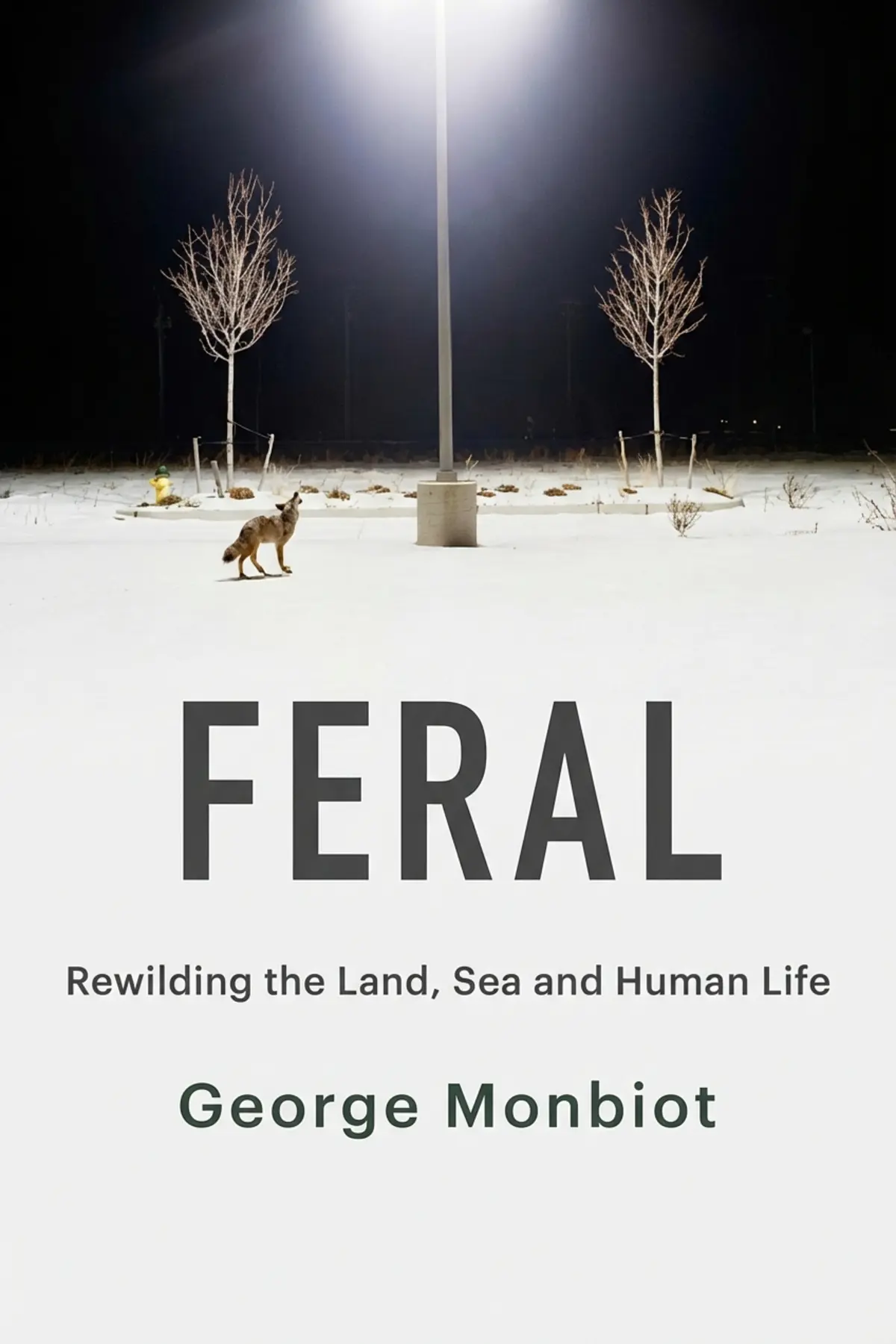
Table of Content
1. Introduction
1 min 31 sec
Imagine, for a moment, that you are walking through the countryside. Perhaps you see rolling green hills, neatly trimmed hedges, and a quiet, predictable landscape. To many of us, this looks like nature in its purest form. But what if that tranquil scene is actually a sign of a dying ecosystem? What if the landscapes we cherish are actually barren, ecologically impoverished ghosts of what they once were?
In this exploration of George Monbiot’s work, we are going to challenge the way we look at the world around us. We’re moving beyond the idea of ‘conservation’ as a form of maintenance and looking toward something much more radical: rewilding. This isn’t just about planting a few more trees or protecting a rare species of butterfly; it is about stepping back and letting nature regain its own agency. It’s about reintroducing the predators and the chaos that keep life vibrant and diverse.
Through Monbiot’s journey—from the dense jungles of the Amazon to the windswept shores of Wales—we will discover why humans have a biological need for the wild. We’ll look at the historical evidence of what we’ve lost and see how we can bring it back. The throughline of this summary is the idea that by freeing the land from our constant management, we also free ourselves from a state of ‘ecological boredom.’ We are about to embark on a journey that asks us to be a little less civilized and a lot more feral. Get ready to rethink everything you thought you knew about the great outdoors.
2. The Psychological Magnetism of Tribal and Wild Living
2 min 06 sec
Have you ever wondered why modern comforts leave us feeling restless? Discover how our deep ancestral history still pulls us toward a more spontaneous and untamed way of life.
3. The Devastating Reality of Extractive Progress
1 min 55 sec
What happens when the hunger for resources meets the world’s most delicate ecosystems? A look at the grim reality of gold mining in the Amazon rainforest.
4. Distinguishing Between Conservation and True Rewilding
2 min 02 sec
Is your favorite nature reserve actually a ‘plastic’ landscape? Learn why many of our environmental efforts are more like gardening than true preservation.
5. Trophic Cascades and the Importance of Large Animals
2 min 12 sec
Why do a few wolves or a group of wild boars matter so much? Uncover the ‘ripple effect’ that large species have on the entire ecosystem.
6. The Myth of the Productive Pastoral Landscape
1 min 51 sec
The rolling hills of the British countryside are often called ‘green and pleasant,’ but from an ecological standpoint, they might be ‘green deserts.’
7. Our Deep Yearning for the Dangerous and Unknown
1 min 51 sec
Why do so many people report seeing black panthers in the English countryside? It might be more about psychology than biology.
8. The Wild Sea and the Illusion of Abundance
2 min 12 sec
The ocean seems vast and inexhaustible, but the reality beneath the waves is one of shocking decline. Here’s why the sea needs rewilding too.
9. A Future Defined by Ecological Agency
1 min 59 sec
Rewilding isn’t a return to the past, but a new way forward. Learn how we can foster a world where nature is a partner, not a servant.
10. Conclusion
1 min 34 sec
As we reach the end of this journey through George Monbiot’s vision for a wilder world, the central message is clear: our current relationship with nature is one of artificial control that leaves both the earth and the human spirit impoverished. We have spent centuries taming the land, removing the predators, and tidying up the ‘mess’ of the wild. But in doing so, we have created a world of ecological boredom, where the landscapes are predictable and the life within them is a mere shadow of its former self.
Rewilding offers a different path. It asks us to be brave enough to let go. By reintroducing the ‘eco-engineers’ like wolves and boar, and by allowing ecosystems to follow their own unpredictable paths, we can restore the vibrant complexity of our planet. This isn’t just a win for biodiversity; it’s a win for us. It gives us back the mystery, the thrill, and the sense of wonder that can only be found in a world that isn’t entirely under our thumb.
So, what can you do with this knowledge? Start by changing the way you see the ‘great outdoors.’ The next time you see a manicured park or a bare, sheep-grazed hillside, look for what’s missing. Support initiatives that advocate for large-scale wilderness restoration and the reintroduction of native species. And most importantly, seek out your own wild experiences. Whether it’s a night spent under the stars or a hike through an untamed forest, reconnect with the feral part of yourself. The world is waiting to be wild again—and so are we.
About this book
What is this book about?
Feral is an exploration into the philosophy and practice of rewilding. George Monbiot argues that our current approach to conservation is often little more than a form of gardening, where we try to freeze ecosystems in an artificial, human-managed state. Instead, he proposes a hands-off approach that allows nature to take the lead. By setting aside large tracts of land and reintroducing keystone species—such as wolves, beavers, and wild boar—we can create self-sustaining environments that are rich, unpredictable, and vibrant. This book isn't just about ecology, though; it’s about the human psyche. Monbiot suggests that many of us suffer from a deep-seated ecological boredom, a longing for the thrill and mystery of a world that isn't entirely under our control. Through personal anecdotes from the Brazilian Amazon to the Welsh coast, the author makes a compelling case for a future where humans and wild nature coexist. The promise of this book is a world that is less managed and more alive, offering us a chance to reconnect with our ancestral roots and find a new sense of wonder in the natural world.
Book Information
About the Author
George Monbiot
George Monbiot is a distinguished nature journalist and a regular contributor to the Guardian. With a background as a trained zoologist, he has spent his career working for environmental organizations and investigating ecological issues across the globe. Based in the United Kingdom, he is a prominent voice in modern environmentalism. His extensive body of work includes several influential books such as Captive State and The Age of Consent, through which he has explored the intersections of politics, economics, and the environment.
Ratings & Reviews
Ratings at a glance
What people think
Listeners find this work captivating and thoroughly documented, with one review specifically pointing to its scientific facts on rewilding and nature’s restoration. Furthermore, the prose is lauded for its lyrical quality, as listeners value the book's striking beauty and intellectual depth. They also appreciate the perspective on biodiversity, with one review noting its remedies for major ecological problems, while another mentions the focus on the careful stewardship of our planet’s health.
Top reviews
Den
After hearing Monbiot on a podcast, I felt compelled to dive into his vision for a wilder world, and I wasn't disappointed. The concept of 'shifting baseline syndrome' is a total revelation that changed how I view the countryside. We are so used to seeing barren, sheep-grazed hills as 'natural' when they are actually ecological deserts. Monbiot writes with a rare combination of scientific rigor and poetic beauty. He doesn't just complain about the state of the earth; he offers a thrilling, well-researched roadmap for its regeneration. It’s a book that leaves you feeling more alive and deeply connected to the possibilities of the landscape around you.
Show morePalm
The chapter on the reintroduction of wolves to Yellowstone serves as a breathtaking testament to how quickly nature can heal when we simply step out of the way. Monbiot is a revolutionary thinker who manages to make conservation feel like a grand adventure rather than a list of restrictions. I was captivated by his descriptions of extinct megafauna and the idea that our landscapes still carry the 'ghosts' of these animals. This book is a fascinating exploration of how rewilding could restore the wonder we've lost in our modern, sanitized lives. It is easily one of the most thought-provoking environmental manifestos I have encountered in years.
Show morePui
Ever wonder why our 'beautiful' hills are so barren and silent? Monbiot ruthlessly deconstructs the aesthetic of the British countryside, exposing it as a sheep-ravaged desert that has been stripped of its natural diversity. His argument that sheep farming is a slow-burning disaster for our living systems is both shocking and meticulously researched. I loved the way he tied together history, biology, and personal memoir to create a vision of what the land could be. It’s a fascinating look at how we can move past 'preservation' toward true ecological restoration. This book didn't just inform me; it fundamentally shifted my perspective on what 'nature' even means.
Show moreBella
Wow. This is a gorgeous, challenging book that demands we rethink our entire relationship with the land and the sea. Monbiot uses poetic language to describe the 'enchantment' of wild places, making a logical case for why we need them for our own psychological well-being. The scientific facts on nature regeneration presented here are stunning, especially regarding how quickly ecosystems can bounce back when we stop over-managing them. It’s a radical call for a 'self-willed' world where humans aren't the only actors on the stage. If you care about the future of biodiversity, you absolutely need to read this. It’s a fascinating, well-researched, and ultimately joyful look at what we could achieve.
Show morePongpan
Monbiot’s prose is undeniably poetic, weaving scientific rigor with a palpable, almost desperate, love for the natural world. He challenges our obsession with 'tidy' landscapes and makes a case for 'self-willed' land that functions without human micromanagement. I appreciated the deep dive into 'trophic cascades'—a concept that explains why bringing back apex predators isn't just about the animals themselves, but about the entire ecosystem's health. Some might find his personal anecdotes about sea kayaking a bit too much, but for me, they grounded the science in real, raw experience. It’s a provocative argument against the agricultural status quo in the UK.
Show moreMay
Not what I expected from a standard environmental text, but Feral is all the better for its eccentricity and passion. Frankly, his description of 'ecological boredom' resonates deeply with anyone trapped in the suburban grind, longing for a world with more edges. The book provides actual, science-based solutions for biodiversity loss rather than just lamenting the damage already done. I did find the tone a bit smug in certain sections, particularly when he discusses rural communities or those who don't share his radical vision. Despite that, the wealth of information on how ecosystems actually function is worth the price of admission alone. It’s a bold, necessary shout for change.
Show moreMontri
Picking this up felt like a breath of fresh air compared to the usual doom-and-gloom environmentalism we see today. Monbiot makes a compelling case for the return of beavers and lynx, showing how these keystone species are essential for healthy waterways and forests. The writing is incredibly vivid—you can almost smell the damp earth of the regenerating forests he visits in Scotland. There were moments where the pacing slowed down too much during his personal anecdotes, but the overall message is powerful. This is a must-read for anyone interested in planetary health and finding a more hopeful path forward for our wild spaces.
Show moreNora
To be fair, the book is a bit disjointed, jumping between personal anecdotes of sea kayaking and dense ecological data about the Cambrian Mountains. However, the information on 'shifting baseline syndrome' is so essential that I’m willing to overlook the somewhat clunky structure. Monbiot argues convincingly that what we consider 'natural' today is often just a degraded remnant of a much richer past. I was particularly fascinated by the section on beavers; their ability to engineer entire wetlands is a perfect example of nature doing the work for us. It’s a thought-provoking read that offers a rare sense of hope for our planetary health and biodiversity.
Show moreWissanu
While the core message regarding biodiversity and planetary health is incredibly urgent, I struggled with the structure of this book. The truth is, I found the constant shifts between high-level ecology and his personal fishing trips a bit jarring. At times, the author's focus on his own 'ecological boredom' felt a little self-indulgent compared to the gravity of the environmental collapse he describes. However, his critique of the Common Agricultural Policy and its impact on the British uplands is absolutely stinging and necessary. It’s a mixed bag—brilliant scientific insights often interrupted by what feels like a glorified boy scout’s adventure diary.
Show moreMingkwan
I really wanted to like this, but I couldn't get past the author's relentless self-insertion into every single narrative. Instead of a deep dive into rewilding biology, we mostly get the random adventures of a glorified boy scout trying to reclaim his 'manly' instincts. His concept of 'ecological boredom' felt like a massive first-world problem when the world is facing actual survival crises. The prose is certainly beautiful, but the smug tone he adopts when discussing critics or other viewpoints is incredibly off-putting. If you're looking for a rigorous scientific text, this might frustrate you with its constant detours into personal machismo and sea kayaking near-misses.
Show moreReaders also enjoyed
Beyond Words: What Animals Think and Feel
Carl Safina
Cod: A Biography of the Fish That Changed the World
Mark Kurlansky
Comfortably Unaware: What We Choose to Eat is Killing Us and Our
Richard A. Oppenlander
Cradle to Cradle: Remaking the Way We Make Things
William McDonough
Drinking Water: A History
James Salzman
AUDIO SUMMARY AVAILABLE
Listen to Feral in 15 minutes
Get the key ideas from Feral by George Monbiot, plus 5,000+ more titles in English and Thai.
- 5,000+ titles
- Listen as much as you want
- 7-day free trial
- Cancel anytime







