
24 min 03 sec
A Brief History of Everyone Who Ever Lived: The Human Story Retold Through Our Genes
Explore the hidden narrative of humanity through the lens of modern genetics, debunking myths about race, ancestry, and the supposed biological markers of our past and future.
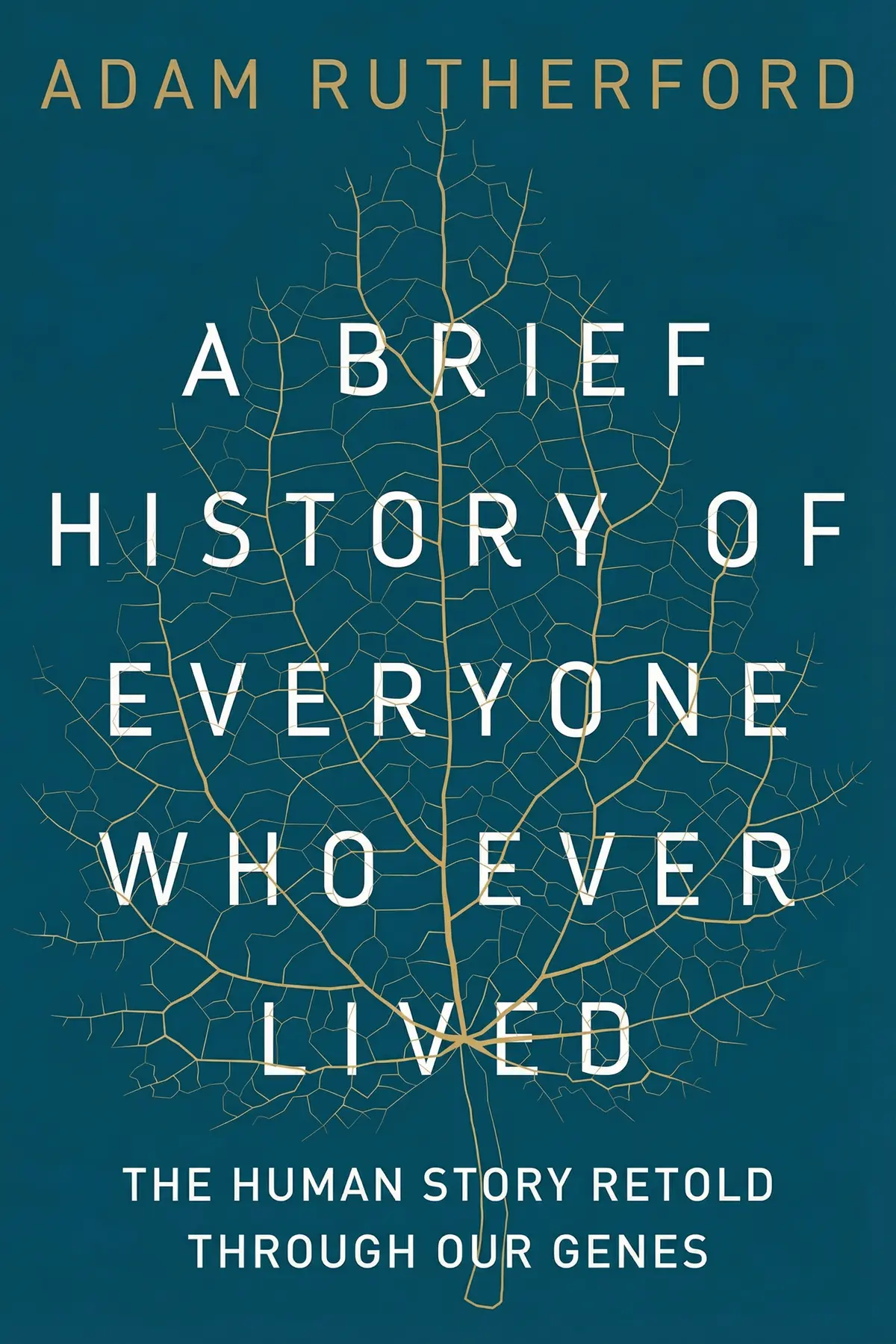
Table of Content
1. Introduction
2 min 04 sec
Imagine for a moment that you are carrying a library inside every cell of your body. This isn’t a library of books, but a biological record that stretches back hundreds of thousands of years. For the vast majority of human existence, we had no way to read these volumes. We relied on oral traditions, buried tools, and the occasional fossil to guess where we came from and how we related to one another. But recently, the lights have been turned on in that library. We have entered an era where our own DNA can act as a time machine, offering a narrative of our species that is far more complex and surprising than anything written in a traditional history book.
In this journey through our genetic past, we are going to look at the human story from a completely new perspective. We often think of history as a series of names, dates, and battles, but the genetic version of history is about movement, adaptation, and an incredible amount of shared ancestry. We will explore how our ancestors didn’t just survive; they mingled, they migrated, and they left indelible marks on our biology that explain everything from why some of us can drink milk to why the concept of biological race doesn’t actually exist.
What makes this perspective so vital is how it collapses the distance we often feel between ourselves and the ancient past. When we look at the genome, we see that the people who lived tens of thousands of years ago aren’t just characters in a story—they are quite literally a part of us. This throughline of connection is the heart of what we are exploring today. We’ll see how science has moved from the simple experiments of nineteenth-century monks to the massive, international efforts to map every single letter of the human code. Along the way, we’ll debunk some of the biggest myths about identity and ancestry that have persisted for centuries. By the time we finish, you’ll see that the history of humanity isn’t just something that happened long ago; it is a living, breathing reality contained within your very own cells.
2. A New Scientific Lens on Ancient Times
2 min 12 sec
Discover how the emerging field of paleogenetics is filling in the gaps of our prehistoric past by extracting biological secrets from ancient remains.
3. The Genetic Signature of Human Culture
2 min 17 sec
Learn how our ancestors’ lifestyle choices and environmental shifts left permanent marks in our DNA, using the fascinating example of dairy consumption.
4. The Myth of Tribal Purity and Ancient Migrations
2 min 23 sec
Uncover the true history of the first Americans and why modern genetic tests that promise to identify specific tribal heritage are scientifically flawed.
5. The Mathematical Reality of Universal Ancestry
2 min 27 sec
Explore the surprising statistics that prove every person of European descent is related to royalty, and why our family trees are more like webs.
6. Dismantling the Biological Concept of Race
2 min 09 sec
Examine the scientific evidence that proves race is a social construct rather than a biological reality, revealing more diversity within groups than between them.
7. Shocking Discoveries Within the Human Code
2 min 04 sec
Revisit the landmark Human Genome Project and the surprising findings that challenged our assumptions about human complexity and the nature of DNA.
8. The Fallacy of Genetic Determinism
2 min 26 sec
Critically evaluate the idea that our genes dictate our behavior and learn how environmental factors can influence how our DNA is expressed.
9. The Ongoing Journey of Human Evolution
2 min 18 sec
Debunk the idea that humans have stopped evolving and see how modern life and medicine are subtly shifting the direction of our species’ development.
10. Humanity's Shared Biological Narrative
1 min 54 sec
Reflect on the profound interconnectedness of the human species revealed by genetics, emphasizing our common origins and future potential.
11. Conclusion
1 min 49 sec
As we conclude this exploration of the human story through the lens of our genes, it becomes clear that we are living in a transformative moment for self-understanding. The biological diary we carry in our cells has finally been opened, and the stories it tells are far more inclusive and interconnected than we ever dared to imagine. We have seen how our ancestors were not isolated groups, but a restless, merging people who left their marks on one another and on us. We have learned that the categories we often use to divide ourselves, such as race or specific tribal purity, have no footing in the actual science of our DNA.
What this really means is that we must rethink our concept of identity. If we are all descended from the same ancient rulers, and if our genetic differences are as thin as a single letter of code, then the things that unite us are far more significant than the things that set us apart. The throughline of this journey is that we are a single, continuous species, constantly adapting and perpetually in transition. Our history is not a collection of stagnant events, but a living process that continues with every new generation.
The actionable takeaway from this journey is to embrace a more scientific and humble view of our own origins. When you look at another person, regardless of their background or appearance, you are looking at a cousin—someone who shares your history, your ancestors, and your fundamental biological makeup. By letting go of the myths of biological separation, we can begin to build a world based on the reality of our shared humanity. Our genes have already proven that we are one; it is now up to us to live as though we believe it.
About this book
What is this book about?
This exploration into the human genome serves as a revolutionary retelling of our collective history. Instead of relying on dusty scrolls and archeological fragments alone, we can now look at the very code that builds us. The book promises to take listeners on a journey from the ancient plains of Africa to the royal courts of Europe and the frozen bridges of the Bering Strait, revealing how our DNA holds the records of migrations, cultural shifts, and surprising interspecies encounters. Beyond just history, it challenges deeply held societal beliefs. It addresses the scientific reality—or lack thereof—behind the concept of race, the fallacy of commercial ancestry tests, and the complex relationship between our genes and our behavior. By the end, listeners gain a profound understanding of how we are all interconnected, proving that the story of one of us is, quite literally, the story of all of us.
Book Information
About the Author
Adam Rutherford
Adam Rutherford is a distinguished science writer and broadcaster who holds a doctorate in genetics from University College London. He is well-known for creating award-winning BBC programs such as Inside Science, The Cell, and Playing God.
Ratings & Reviews
Ratings at a glance
What people think
Listeners find this work fascinating and simple to follow, noting that the high-quality writing breaks down difficult scientific concepts into accessible language. While providing an outstanding history of humanity, one listener highlights how the narrative clarifies genetic testing myths, and listeners generally value the author’s wit and passion. Although many listeners feel the explanations are clear, some mention that the content can occasionally become burdensome.
Top reviews
Rania
Few science books manage to balance rigorous evolutionary biology with genuine wit, but Rutherford pulls it off brilliantly. His explanations of how ancient genomes are extracted from Neanderthal and Denisovan remains read like top-tier detective fiction. The statistical breakdown showing why virtually everyone of European descent is related to Charlemagne completely blew my mind. What really sets this apart is his refusal to oversimplify; he respects the reader enough to admit that genetics is messy, interconnected, and rarely produces tidy headlines. Don't skip the footnotes either, as some of the funniest historical trivia is hidden down there. A thoroughly illuminating chronicle of our shared roots.
Show moreDarawan
As someone with zero background in molecular biology, I was braced for a dense wall of impenetrable academic jargon. Thankfully, Rutherford is a gifted communicator who translates mind-boggling concepts into wonderfully digestible prose. Learning that modern humans carry Neanderthal DNA—and realizing how recent our common ancestors actually are—fundamentally shifted my perspective on human history. The book feels remarkably timely in how it uses empirical genetics to dismantle racist pseudoscience. Truth is, our biology is far stranger and more beautiful than any simplistic pedigree chart suggests. An essential read for curious minds.
Show morePensuda
What an absolute blast. Rutherford writes with the effortless charm and wry humor of Bill Bryson, but backs it up with the authority of an active geneticist. From debunking the absurd claims of mail-in genealogy tests to explaining how hemophilia shaped European monarchy, every chapter provided at least three facts I immediately annoyed my partner with. It dismantles bigoted myths while celebrating the intricate, chaotic tapestry of human evolution. I zipped through this in three sittings and haven't stopped thinking about it since. Highly recommended!
Show moreRose
Picked this up after hearing endless praise from a friend, and it mostly delivered on the hype. The forensic breakdown of King Richard III's exhumation under a Leicester car park was absolutely captivating. Rutherford writes with a dry British humor that keeps the dense chromosomal discussions from feeling like a dry university lecture. My only minor gripe is how UK-centric many of the cultural touchstones and social references are, which occasionally pulled me out of the flow. Still, if you want an accessible guide to what your DNA actually means without the corporate marketing spin of direct-to-consumer ancestry kits, this is well worth your time.
Show moreAkosua
Ever wonder why commercial ancestry kits give you such wildly contradictory percentages? Rutherford explains it here with total clarity: genetics is a fluid, probabilistic spectrum, not a binary switchboard. He systematically torches the idea that there is a singular gene for complex traits like intelligence, criminality, or sexual preference. The way he frames the ongoing dance between nature and environmental pressures was genuinely eye-opening for me. The prose can admittedly get slightly technical in the middle chapters when discussing genome mapping, but the author's enthusiasm keeps things afloat. You will walk away viewing your own family tree through a completely different lens.
Show moreKevin
Rutherford’s primary mission is myth-busting, and he goes about it with infectious delight. He makes a compelling case that our cultural obsession with discrete racial categories and royal lineages is totally detached from biological reality. We don't possess a neat little gene for musical genius or athletic speed, no matter what Sunday supplement tabloids claim. While certain sections regarding gene expression require careful, slow reading to digest, the author's clear analogies keep you from getting lost. Personally, I found his grounded, skeptical approach refreshing in a market overcrowded with overhyped pop-science books promising easy answers.
Show moreRohan
Finally got around to tackling my non-fiction backlog, and this was an eye-opener. The central thesis is humbling: our family trees don't branch outward into infinity; they fold back in on themselves until everyone is connected. It completely shatters romantic delusions of biological purity or noble ancestry. Rutherford does occasionally wander down technical rabbit holes that feel a bit burdensome for casual reading, but his passion for empirical truth shines through every page. A sharp, witty, and necessary reality check on what modern genetics actually reveals about our species.
Show morePatchara
The chapter breaking down the myth of race as a biological concept is undoubtedly the strongest, most coherent part of this volume. Rutherford dismantles the pseudo-science with surgical precision, showing how superficial traits like skin pigmentation completely mask the deeper genetic variation within populations. That said, the second half of the book drags noticeably. He spends an awful lot of ink complaining about lazy media journalists and sensationalist headlines. To be fair, bad science reporting is frustrating, but reading multiple chapters dedicated to the author's professional pet peeves felt a bit self-indulgent. It's solid pop-science, though unevenly paced.
Show moreLars
Part one is an exhilarating ride through deep evolutionary time, but part two loses steam rapidly. The discussions surrounding ancient Denisovans and early human dispersal across the globe are fascinating, highlighting just how revolutionary modern DNA extraction methods have become. However, once the book shifts into contemporary genetics, the narrative bogs down in legal minutiae, forensics, and repetitive warnings about genetic determinism. I also found the author's snarky footnotes hit-or-miss; sometimes they offered charming levity, but other times they felt forced. It's an informative overview for laypeople, just be prepared for a noticeable dip in momentum after the midway mark.
Show moreSuda
A misleading title attached to what is essentially an extended rebuttal of sensationalist news stories. Look, I wanted an expansive narrative chronicling ancient human migrations and evolutionary milestones across continents. Instead, huge chunks of this book devolve into Rutherford lecturing the audience about what DNA cannot tell us. It becomes deeply repetitive. His tone frequently drifts into condescension, particularly whenever he addresses commercial saliva testing kits or public misconceptions about inheritance. There are occasional flashes of brilliant storytelling, particularly regarding ancient hominins, but the burdensome complaining ultimately drowned out the actual science for me. Very disappointing.
Show moreFeatured in
Readers also enjoyed
A Planet of Viruses
Carl Zimmer
1929: Inside the Greatest Crash in Wall Street History--and How It
Andrew Ross Sorkin

Agent Sonya: The Spy Next Door
Ben Macintyre
A Short History of Nearly Everything
Bill Bryson

A Biography of Loneliness: The History of an Emotion
Fay Bound Alberti
Alexander Hamilton
Ron Chernow
A Thousand Brains: A New Theory of Intelligence
Jeff Hawkins
Alexander the Great
Philip Freeman
AUDIO SUMMARY AVAILABLE
Listen to A Brief History of Everyone Who Ever Lived in 15 minutes
Get the key ideas from A Brief History of Everyone Who Ever Lived by Adam Rutherford, plus 5,000+ more titles in English and Thai.
- 5,000+ titles
- Listen as much as you want
- 7-day free trial
- Cancel anytime







