
7 min 17 sec
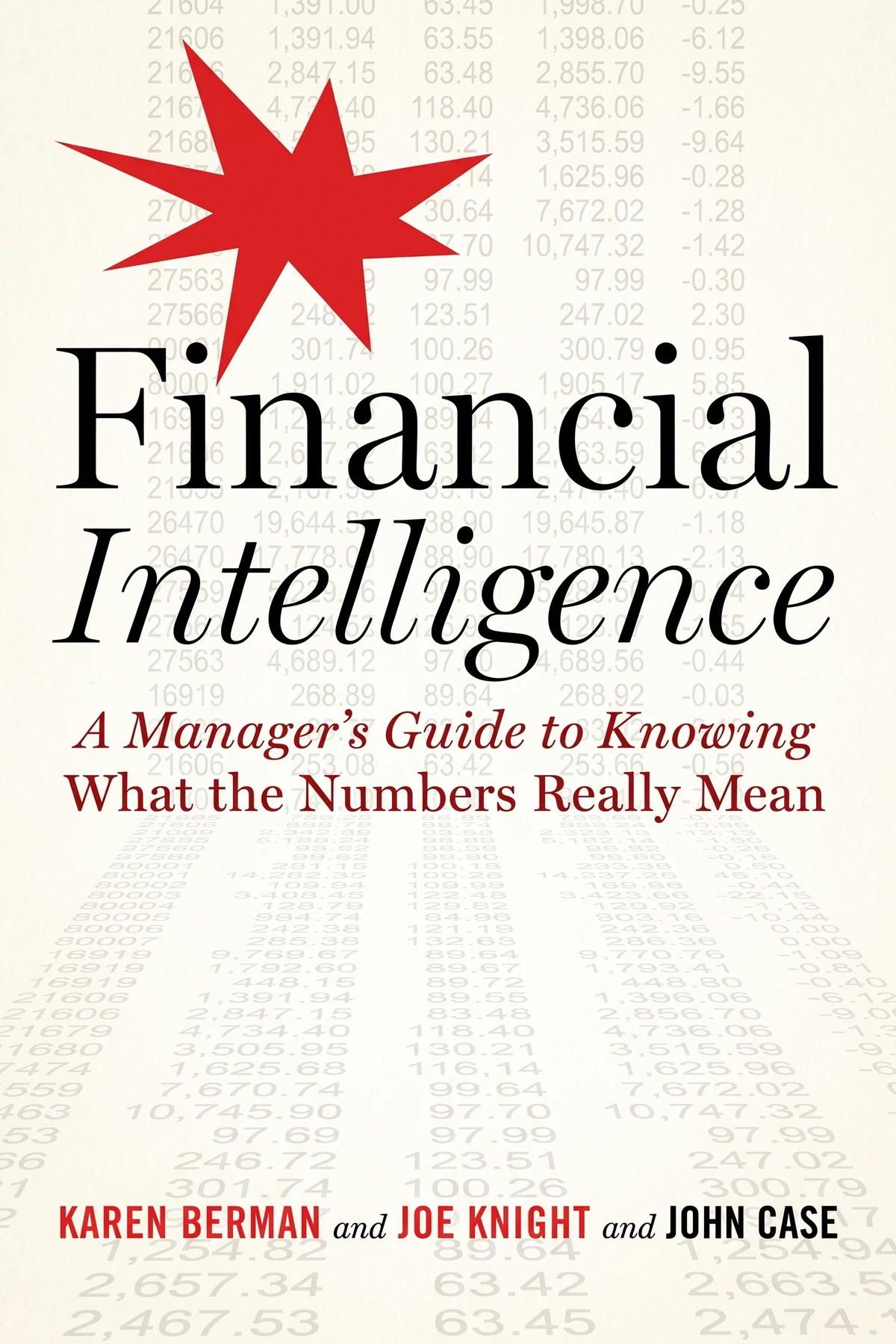
Financial Intelligence for Entrepreneurs: What You Really Need to Know about the Numbers
Financial Intelligence for Entrepreneurs demystifies the world of business finance. It teaches business owners how to navigate financial statements, understand the art of accounting, and make informed decisions based on data.

Table of Content
1. Introduction
1 min 10 sec
Starting a business is often born out of passion—a desire to create a new product, solve a specific problem, or provide a unique service. However, many entrepreneurs soon realize that passion alone cannot keep the doors open. To navigate the competitive landscape of modern business, one must learn a second language: the language of finance. This isn’t just about knowing how much money is in the bank; it’s about ‘financial intelligence,’ a deep-seated understanding of how the numbers reflect the reality of your operations.
For many, the world of finance feels like a closed door, guarded by accountants and complex terminology. But the truth is that financial intelligence is an accessible and essential skill set for anyone at the helm of a company. It provides the compass you need to steer through uncertainty and the map required to plot a course for growth. In the coming sections, we will explore how to decode the three core financial statements, recognize the inherent subjectivity in accounting, and understand the different levers you can pull to finance and value your enterprise. By the end, you’ll see that the numbers aren’t just a record of the past—they are a powerful tool for shaping your future.
2. Mastering the Three Pillars of Financial Reporting
1 min 38 sec
Discover how the income statement, balance sheet, and cash flow statement work together to tell the complete story of your company’s performance.
3. The Subjective Art of Accounting
1 min 44 sec
Uncover why accounting is more of an art than a science, and how estimates and assumptions can change the way your business looks on paper.
4. Valuation and the Financial Support System
1 min 41 sec
Learn how businesses are truly valued and the roles of different financial experts in helping you manage your growth.
5. Conclusion
1 min 04 sec
Developing financial intelligence is not a one-time task but an ongoing journey that evolves alongside your business. It is the bridge between having a great idea and running a sustainable company. By moving past the fear of numbers and embracing the three core financial statements, you gain a clearer view of your company’s true health. You begin to see that profit is an opinion, but cash is a fact, and that the ‘art’ of accounting requires your active participation and oversight.
As you move forward, remember that the numbers are there to serve you, not to intimidate you. Use your newfound understanding to ask better questions of your accountants, make more confident pitches to investors, and set more realistic goals for your team. When you master the language of finance, you aren’t just keeping score—you are gaining the insight needed to write the next chapter of your success story. Take these tools and apply them to your daily operations, and you will find that your business decisions become sharper, your strategy more focused, and your path to long-term profitability much clearer.
About this book
What is this book about?
Many entrepreneurs launch their ventures with a brilliant product idea or a specialized skill but lack the formal training to manage the complex financial landscape of a growing company. This guide bridges that gap by transforming the daunting language of finance into a practical toolset for leadership. It moves beyond simple bookkeeping to explain the 'financial intelligence' required to truly understand a company’s health. The book promises to strip away the jargon surrounding income statements, balance sheets, and cash flow reports. It reveals that accounting is not a rigid science of absolute facts, but rather an art form built on estimates, assumptions, and professional judgments. By learning how these numbers are constructed, entrepreneurs can better communicate with their teams, secure funding, and ensure their business remains viable in the long term.
Book Information
About the Author
Karen Berman
Karen Berman, PhD, is the founder and president of the Business Literacy Institute. She has dedicated her career to developing financial literacy programs that help employees and managers understand the mechanics of financial success. Joe Knight is a co-owner of the Business Literacy Institute and Setpoint Systems, where he serves as CFO. A frequent keynote speaker and facilitator, he is a dedicated advocate for financial transparency. John Case is a veteran business writer whose work has appeared in major publications such as Inc., the Atlantic, and Harvard Business Review, covering business and management for over forty years.
Ratings & Reviews
Ratings at a glance

What people think
Listeners find that this book provides a working knowledge of accounting practices and explains concepts with clarity, making them easy to grasp. The text makes financial subjects like cash flow accessible, and one listener even notes it is better than university courses. Furthermore, the writing style is expertly composed, and listeners consider it a valuable investment of their time and money.
Top reviews
Cooper
As an entrepreneur who used to break into a cold sweat at the mention of "accrual accounting," this book was a total lifesaver. Berman and Knight take the terrifying wall of numbers and turn it into a narrative about a company’s health. I finally understand the difference between being profitable on paper and actually having cash in the bank to pay the bills. Frankly, it’s more useful than any semester-long business course I sat through in my twenties because it focuses on the "why" instead of just the "how." The authors describe finance as an art form rather than a hard science, which makes sense once you see how many assumptions go into a balance sheet. It’s well-crafted, easy to digest, and worth every penny of the investment.
Show moreDarawan
Wow. I’ve spent years avoiding my income statements because I thought they were just for the tax man. Berman, Knight, and Case prove that these documents are actually a compass for steering your business. The way they demystify the "art" of revenue recognition and depreciation changed my entire perspective on my bottom line. It isn't just crunching numbers; it's about seeing the underlying narrative and the assumptions that shape it. Truly an essential read for anyone running their own show. I'm finally letting the numbers inform my decisions instead of letting my fear of numbers dictate them. This provides the kind of working knowledge that actually changes how you operate daily.
Show moreTar
Not what I expected at all, in the best possible way. I thought this would be a dry textbook about ratios, but it’s actually a deep dive into the philosophy of money. The authors tackle the "fear of appearing uninformed" head-on, which I really appreciated as a creative-turned-CEO. Learning to interpret the Cash Flow Statement versus the Income Statement has already changed how I manage my working capital. Not gonna lie, I used to just hope there was enough in the bank at the end of the month. Now, I’m actually looking at my business through all four "windows" of performance ratios. This book empowers you to actually own your financials.
Show moreSofia
This book is an absolute masterpiece of clarity. It takes the "black box" of finance and opens it up so even the most math-averse entrepreneur can see what’s inside. I particularly liked the focus on the three cardinal financial statements and how they interact like a GPA versus an individual grade. Personally, I was impressed by how they handled the topic of company valuation. They show how different methods like P/E ratios and Asset Valuation can paint totally diverse portraits of what a business is worth. It’s a complete mindset shift that every founder needs before they start seeking external debt or equity. You’ll walk away with a much higher FIQ.
Show moreNina
Do you feel like your accountant speaks a foreign language? Berman and Knight act as the perfect translators in this guide. They go beyond simple financial literacy and aim for true "financial intelligence," which involves understanding the biases behind the data. The section on "financial shenanigans" was particularly fascinating and kept me engaged through what could have been dry material. In my experience, the distinction they make between profit and cash is the single most important lesson any new business owner can learn. It’s well-crafted, easy to understand, and provides a level of discernment that is absolutely vital in today’s economy. Highly recommended for the entrepreneurial voyage.
Show moreUdom
Picking this up was the best decision I've made for my startup this year. The way they explain operating expenses as "good" or "bad" cholesterol is such a vivid analogy that it actually stuck with me during my last budget meeting. It’s written for those of us who weren't finance majors, breaking down the three cardinal statements without sounding patronizing. To be fair, I wish they spent a bit more time on the nitty-gritty of ROI calculations for complex equipment purchases. However, the section on valuation methods like Discounted Cash Flow was eye-opening. If you’re trying to move beyond basic literacy to true intelligence, this is the manual you need for your toolbox.
Show morePichaya
Ever wonder why your business feels broke even when your sales are hitting record highs? This book explains exactly why cash is king and profit is just a "sovereign criterion" that doesn't always pay the rent. The writing style is surprisingly punchy and doesn't get bogged down in unnecessary jargon. It’s almost like having a friendly CFO sitting across from you at a coffee shop, explaining the secrets of the trade. While I found some of the examples a little dated, the core lessons on liquidity and leverage are timeless. No math-phobia here anymore—just a much clearer understanding of my company's pulse and the art of the balance sheet.
Show moreJoy
Finally got around to reading this after a mentor recommended it, and I'm kicking myself for waiting so long. The authors do a fantastic job of explaining that accounting is a reflection of reality, not reality itself. Understanding that finance involves a huge amount of estimation and assumption was a "lightbulb" moment for me. In my experience, most business books are either too fluffy or too dense, but this strikes a perfect balance. The "Toolbox" sections at the end of each part are incredibly practical for immediate implementation. It’s a bit of an investment in time, but it pays off by making you feel far more confident during bank meetings and investor pitches.
Show morePruet
Word of warning for those who have already read Berman’s previous work: this is largely a rehash of "Financial Intelligence: A Manager's Guide." It’s a great book, don't get me wrong, but if you own the original, you might feel like you’re paying twice for the same insights. Look, the content itself is top-tier for a novice, particularly the chapters on how accountants use estimates and biases to craft a story. I appreciated the case studies on financial shenanigans, which keep the "numbers talk" from becoming too dry. It’s a solid 3-star for the lack of new material, but 5-star info if it’s your first time trying to decipher the language of finance.
Show moreElias
After hearing so much hype about this being better than a university course, I found it to be way too elementary for anyone who has even a basic handle on bookkeeping. If you already know how to read a P&L or understand the difference between debt and equity, you won't find many "golden nuggets" here. It felt a bit repetitive at times, and I was hoping for more advanced strategies on tax optimization or international finance. Truth is, it's a great "Finance 101" for a total beginner with no business background, but for an experienced business owner, it’s a bit of a snooze. It’s accessible, sure, but lacks the depth I needed.
Show moreReaders also enjoyed


7 Powers: The Foundations of Business Strategy
Hamilton Helmer


Alibaba: The House That Jack Ma Built
Duncan Clark



Bad Blood: Secrets and Lies in a Silicon Valley Startup
John Carreyrou
AUDIO SUMMARY AVAILABLE
Listen to Financial Intelligence for Entrepreneurs in 15 minutes
Get the key ideas from Financial Intelligence for Entrepreneurs by Karen Berman, plus 5,000+ more titles in English and Thai.
- 5,000+ titles
- Listen as much as you want
- 7-day free trial
- Cancel anytime







