
14 min 42 sec
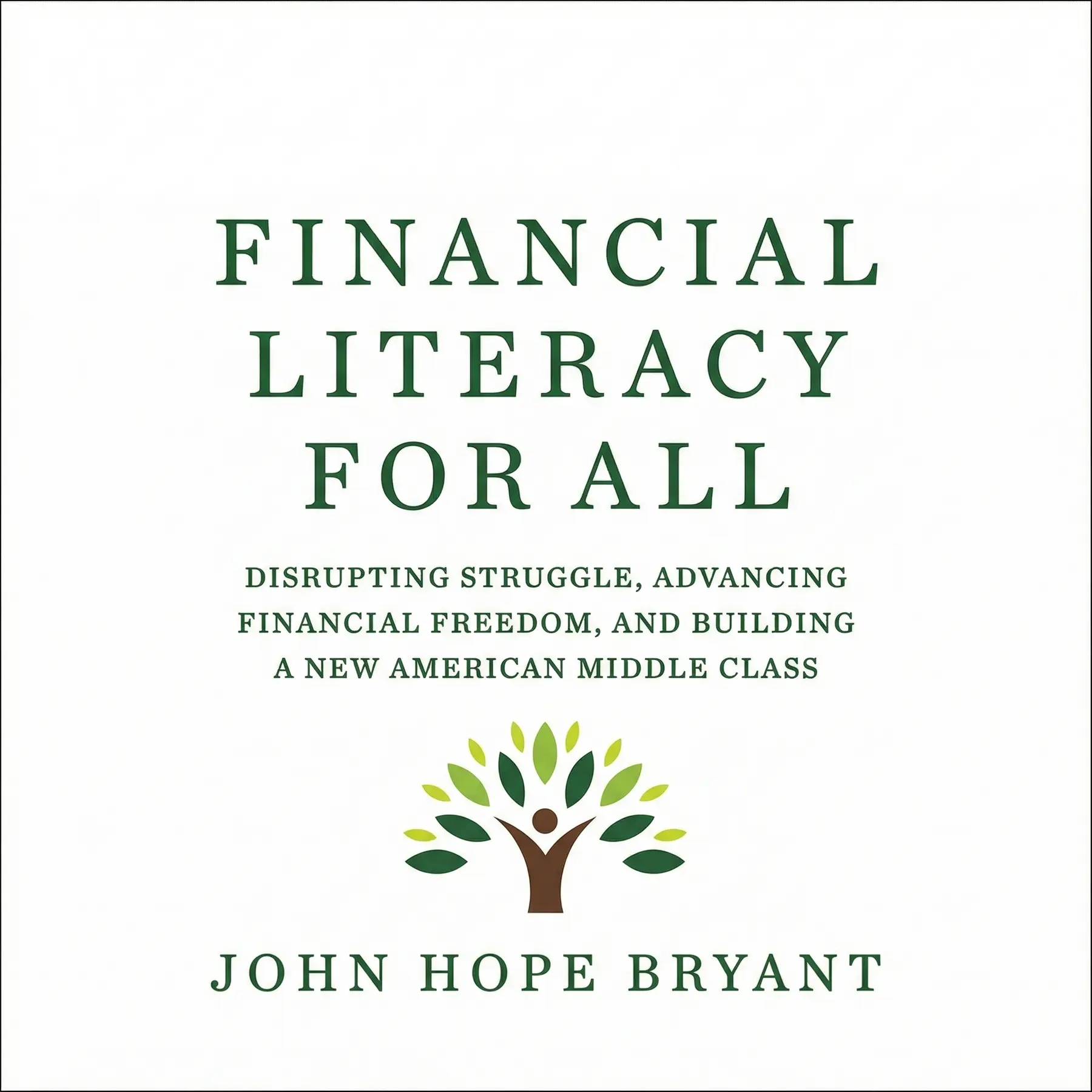
Financial Literacy for All: Disrupting Struggle, Advancing Financial Freedom, and Building a New American Middle Class
Financial Literacy for All offers a roadmap for achieving economic freedom by mastering the language of money, improving credit health, and dismantling the systemic barriers that hinder community-wide prosperity.
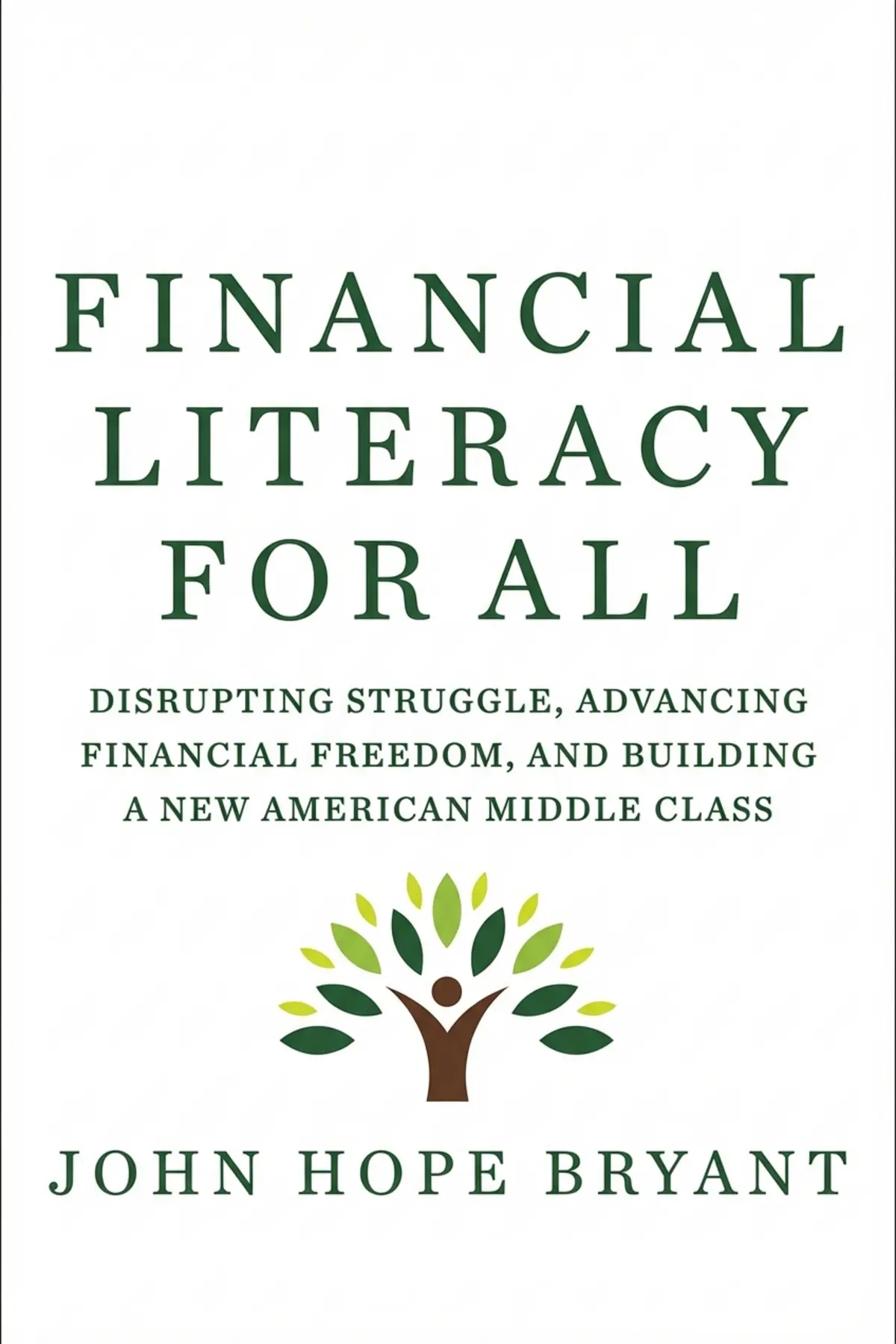
Table of Content
1. Introduction
1 min 23 sec
Imagine navigating a world where everyone speaks a language you were never taught, yet your survival depends on understanding it. For millions of people today, that language is finance. We live in a society built on the movement of capital, the complexities of credit, and the nuances of investment, yet our schools and institutions rarely provide a roadmap for navigating these waters. This lack of knowledge isn’t just a personal hurdle; it’s a systemic crisis that keeps individuals trapped in a cycle of debt and communities stalled in their growth.
In our exploration of Financial Literacy for All, we are diving into the philosophy and strategy of John Hope Bryant. He argues that financial literacy is the ultimate civil rights issue of our time. It is the tool that can bridge the gap between where you are and where you want to be. Throughout this summary, we will look at how credit acts as both a ladder and a snare, how history has shaped the economic landscape we see today, and why a three-digit number like a credit score might be the most powerful predictor of your future well-being.
This isn’t just about balancing a checkbook or saving a few dollars at the grocery store. It’s about a fundamental shift in how we view our place in the economy. It’s about moving from being a spectator to being an active participant in the American Dream. By the end of this journey, you’ll see that financial literacy is more than just math—it is a form of liberation that has the power to transform not just your bank account, but your entire community.
2. The Invisible Gap in Our Education
2 min 27 sec
We spend years learning complex science and history, yet graduate without the basic skills needed to manage our own money. Why has our education system failed us?
3. The Dual Nature of Credit
2 min 20 sec
Credit can be a powerful engine for growth or a heavy anchor of debt. Learn how to navigate the strings attached to modern financial tools.
4. Confronting the Legacy of Broken Capitalism
2 min 30 sec
The current wealth gap isn’t just about personal choices; it’s the result of historical systems that excluded entire communities from the path to prosperity.
5. The Credit Score as a Social Mirror
2 min 17 sec
A credit score is more than a financial metric; it’s a window into a community’s health, safety, and even the life expectancy of its residents.
6. Building the New Middle Class
2 min 25 sec
Transforming ‘unbankable’ individuals into valuable investors can unlock billions in capital and revitalize our entire economy from the ground up.
7. Conclusion
1 min 20 sec
As we wrap up our look at Financial Literacy for All, the central message is clear: financial knowledge is a necessity, not a luxury. We have seen how the lack of this knowledge creates a cycle of debt and how history has played a role in the economic divides we see today. But more importantly, we have seen the incredible power of the solution. By understanding credit, mastering the three-digit score that defines our financial reputation, and demanding better education for our communities, we can begin to close the wealth gap for good.
John Hope Bryant reminds us that we are currently in the midst of a ‘Third Reconstruction,’ where the fight for equality has moved into the realm of economics. This is a battle that is won one credit score at a time, one neighborhood at a time. The tools for this transformation are already in our hands. It starts with a commitment to learning the language of money and sharing that knowledge with those around us.
Take this as your call to action. Check your own credit report, understand the factors that influence it, and start making those small, consistent changes that lead to long-term wealth. Share what you’ve learned with your family and advocate for financial education in your local schools. When we empower ourselves financially, we stop being victims of the system and start becoming the masters of our own fate. The path to a new American middle class is open—it’s time for all of us to walk it together.
About this book
What is this book about?
Financial Literacy for All addresses the critical gap in our modern education system: the lack of practical financial knowledge. The book argues that true freedom in the twenty-first century is tied directly to one's understanding of credit, debt, and wealth building. It moves beyond simple budgeting advice to examine how financial ignorance acts as a weight on both individuals and society, particularly in marginalized communities. John Hope Bryant provides a vision for a 'Third Reconstruction' that democratizes financial power. By exploring the history of 'broken capitalism' and the transformative power of credit scores, the book promises a pathway to move from financial struggle to stability. It illustrates how raising the financial health of a single neighborhood can ripple outward, reducing crime, increasing life expectancy, and building a robust new middle class for everyone.
Book Information
About the Author
John Hope Bryant
John Hope Bryant is an influential entrepreneur and philanthropist dedicated to the cause of financial inclusion and economic empowerment. He serves as the founder and CEO of Operation HOPE, Inc., and he also leads Bryant Group Ventures and The Promise Homes Company. Bryant is a recognized leader in the field and has written several best-selling books, including The Memo and How the Poor Can Save Capitalism.
Ratings & Reviews
Ratings at a glance
What people think
Listeners find this to be an excellent and straightforward listen that offers useful financial perspectives, with one listener pointing out how it links daily choices to larger structures. Furthermore, the author's style is highly regarded, and listeners value the content's investment worth, with one review especially praising the novice-friendly method for learning about investing. In addition, the work gets favorable marks for being approachable, with one listener stating it is especially well-suited for those just starting out.
Top reviews
Jai
Finally got around to reading Bryant's latest, and it’s a game-changer for anyone feeling lost in the world of money. Instead of just listing stock market tips, the author connects how our daily spending choices fit into much larger economic structures. I appreciated the beginner-friendly language because many financial books are far too dense for a newcomer. While some might say it leans heavily on his personal story, I found the autobiographical elements quite inspiring and grounded. It felt less like a textbook and more like a manifesto for economic empowerment. Sure, it mentions Operation HOPE quite a bit, but his organization is doing the work, so it makes sense to highlight those resources. If you want to understand the "why" behind wealth disparity rather than just getting a spreadsheet template, this is the perfect starting point. It’s an easy read that really shifts your mindset about what's possible for your future.
Show moreBond
The chapter on the history of wealth inequality provided a context I hadn't considered before. Bryant excels at breaking down complex economic concepts into bite-sized, accessible pieces for the average reader. While I noticed some reviewers were annoyed by the lack of technical "how-to" guides, I think they missed the point of the book entirely. This isn't a manual on picking stocks; it's a call to action for systemic change and individual awareness. To be fair, he does promote his foundation quite frequently, which can feel a bit repetitive after the third or fourth mention. However, the way he links everyday decisions to the broader financial ecosystem is quite insightful for beginners. It’s a quick read that focuses more on the psychology and sociology of money. I’d recommend it to anyone who wants to understand the foundational barriers to wealth in our society.
Show moreSombat
Ever wonder why some communities stay trapped in a cycle of debt while others flourish? Bryant tackles this head-on by looking at the bigger systems at play. I found the book to be a valuable investment in my understanding of economic policy. It’s written in a way that’s incredibly accessible, making it perfect for someone who usually finds finance books boring or intimidating. While it does lean into personal stories and his own foundation, the message of empowerment is strong. It’s a solid 4-star read for the perspective shift alone. The way he frames financial dignity as a civil right is both moving and logical.
Show moreClara
As someone who has followed Operation HOPE for a while, I had high hopes for this release. The book is definitely an easy-to-understand read that shines a light on why our current system fails so many people. John Hope Bryant is clearly passionate about his mission, and his writing style is very engaging. However, the title is a bit misleading if you are looking for a technical education on finance. It functions more as a motivational manifesto and a history lesson on wealth disparity. Look, it’s great for sparking a conversation about economic inclusion, but it’s thin on the "how" part of financial literacy. I appreciated the beginner-friendly approach to systemic issues, but I left feeling like I needed a second book to actually manage my bank account. It’s a decent introductory text for community members or policy wonks, but less so for the individual striver.
Show moreArt
After hearing the author on a podcast, I decided to give his book a shot. The book is less about personal finance and more about the sociology of money. Bryant discusses how we got to this point of wealth disparity and why education is the key to fixing it. Personally, I found the parts about Operation HOPE to be a bit much; it felt like a constant sales pitch for the organization. He also brings up race and gender quite a bit, focusing on how these groups are disproportionately affected by the current system. While some might find this "racially charged," I think he’s just trying to show the reality of the gap. The writing is very accessible and the tone is encouraging. It’s a good starting point if you want to understand the "why," but you’ll need to look elsewhere for the "how." It's a middle-of-the-road read for me.
Show moreDylan
Wow, this was quite a different experience than the usual 'Rich Dad Poor Dad' style of book. Instead of focusing on specific investment vehicles, Bryant looks at the mindset and the hurdles facing the middle class. It’s a very beginner-friendly approach to investing in yourself and your community. The truth is, I wanted more technical details. I felt like the book hovered at a 30,000-foot view for too long without ever landing on practical steps. The autobiographical sections were interesting, though some of the stories felt a little embellished for dramatic effect. It’s a decent read if you want to understand the emotional and systemic side of money, but it lacks the depth needed for a true "literacy" course. I’d call it an introductory manifesto rather than a handbook.
Show morePhimwan
The book offers a unique perspective on the financial struggles of the average person today. It’s an easy-to-understand read, which I appreciate, but it definitely feels like a brochure for his foundation at times. I liked how he connects daily choices to bigger systems, but I was looking for more educational value I could apply to my own life immediately. It’s a bit thin on actual financial strategies for an individual. If you’re interested in the social aspects of banking and wealth, give it a go, as it provides a solid overview of the landscape. Just don't expect a technical manual on how to balance your budget or pick specific stocks. It’s more of a conversation starter than a deep dive into financial mechanics.
Show moreSing
Not what I expected based on the title alone. I went in looking for practical habits to improve my savings, but the book is mostly an autobiography of John Hope Bryant. He has a lot of good lines, but there is very little advice that you can actually use in your real life. The tone feels a bit racially charged at times, which was confusing since the author claims financial literacy should be for everyone regardless of their background. It’s basically a long pitch for his non-profit organization rather than an educational tool. If you want to read about a man's life and his opinions on the financial system, you might enjoy it. But if you’re like me and wanted to learn about actual investing, you should probably skip this one.
Show moreHugo
Picked this up to help my kids learn about money management, but it didn't fit the bill. The author spends an exorbitant amount of time discussing his own upbringing and his organization, Operation HOPE. It feels more like a PR piece than a guide to financial literacy. Not gonna lie, I was bored by the middle of the book because the advice was so vague. He talks about how important it is to have financial knowledge but then fails to actually provide any of that knowledge in the text. There are a few decent insights regarding how everyday choices impact your long-term wealth, but they are buried under layers of fluff. I’d suggest looking elsewhere if you want actual numbers, strategies, or financial tools to use.
Show moreWipawan
This book talks a lot without actually saying much of anything. I was genuinely hoping for a step-by-step guide to improve my credit score or start an investment portfolio, but instead, I got a long-winded advertisement for Operation HOPE. It feels like a high school essay where the student used a lot of filler words just to meet a specific page count requirement. Bryant spends way too much time on his own life story, including a questionable anecdote about running a liquor store out of business when he was ten. It’s incredibly frustrating to pay for a book titled "Financial Literacy" only to find zero actionable financial advice inside. Frankly, the content is repetitive and pushes a specific social narrative rather than teaching actual money management skills. Save your money and look for a real educational resource instead of this self-congratulatory fluff.
Show moreReaders also enjoyed
AUDIO SUMMARY AVAILABLE
Listen to Financial Literacy for All in 15 minutes
Get the key ideas from Financial Literacy for All by John Hope Bryant, plus 5,000+ more titles in English and Thai.
- 5,000+ titles
- Listen as much as you want
- 7-day free trial
- Cancel anytime







