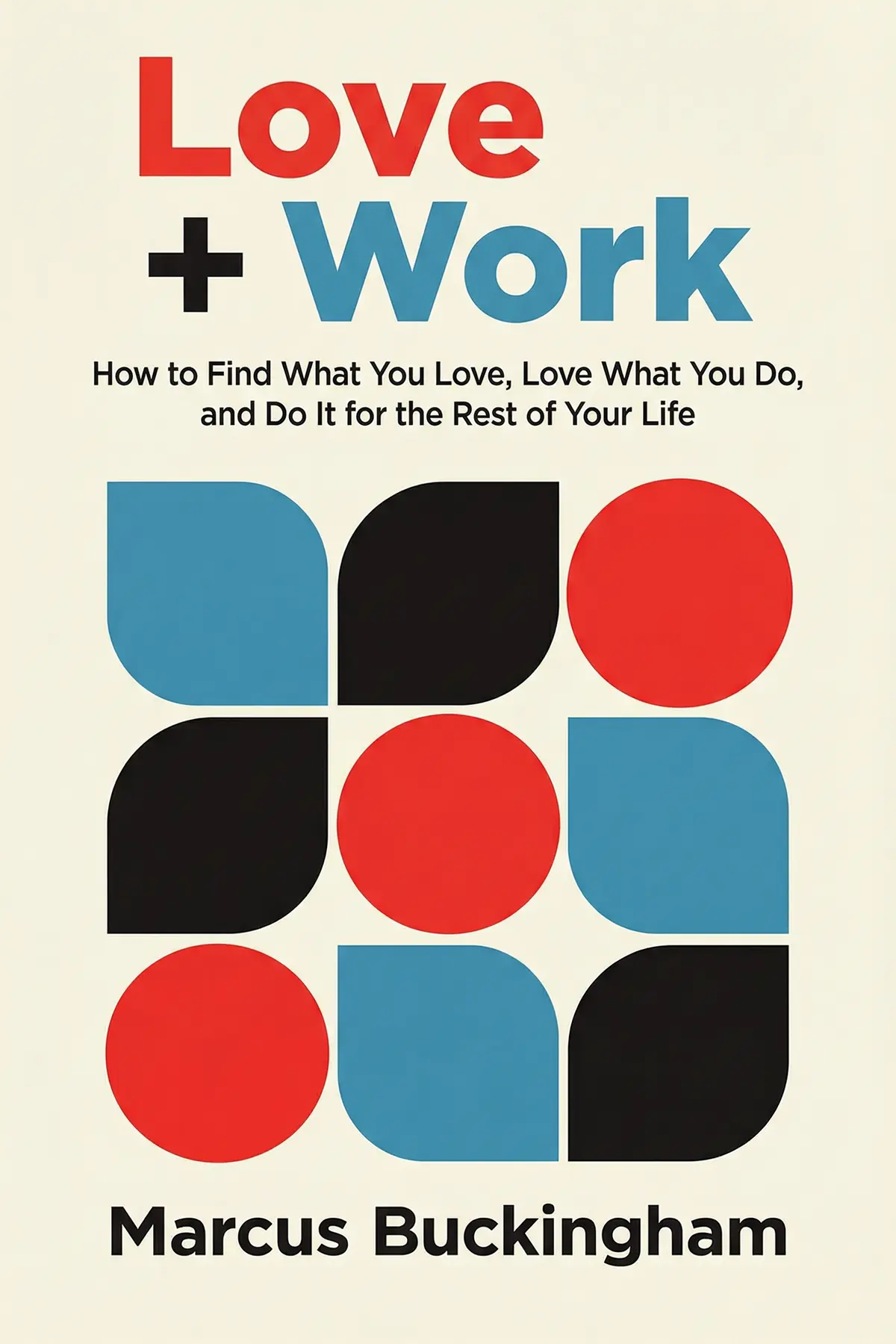
Love + Work: How to Find What You Love, Love What You Do,
Marcus Buckingham
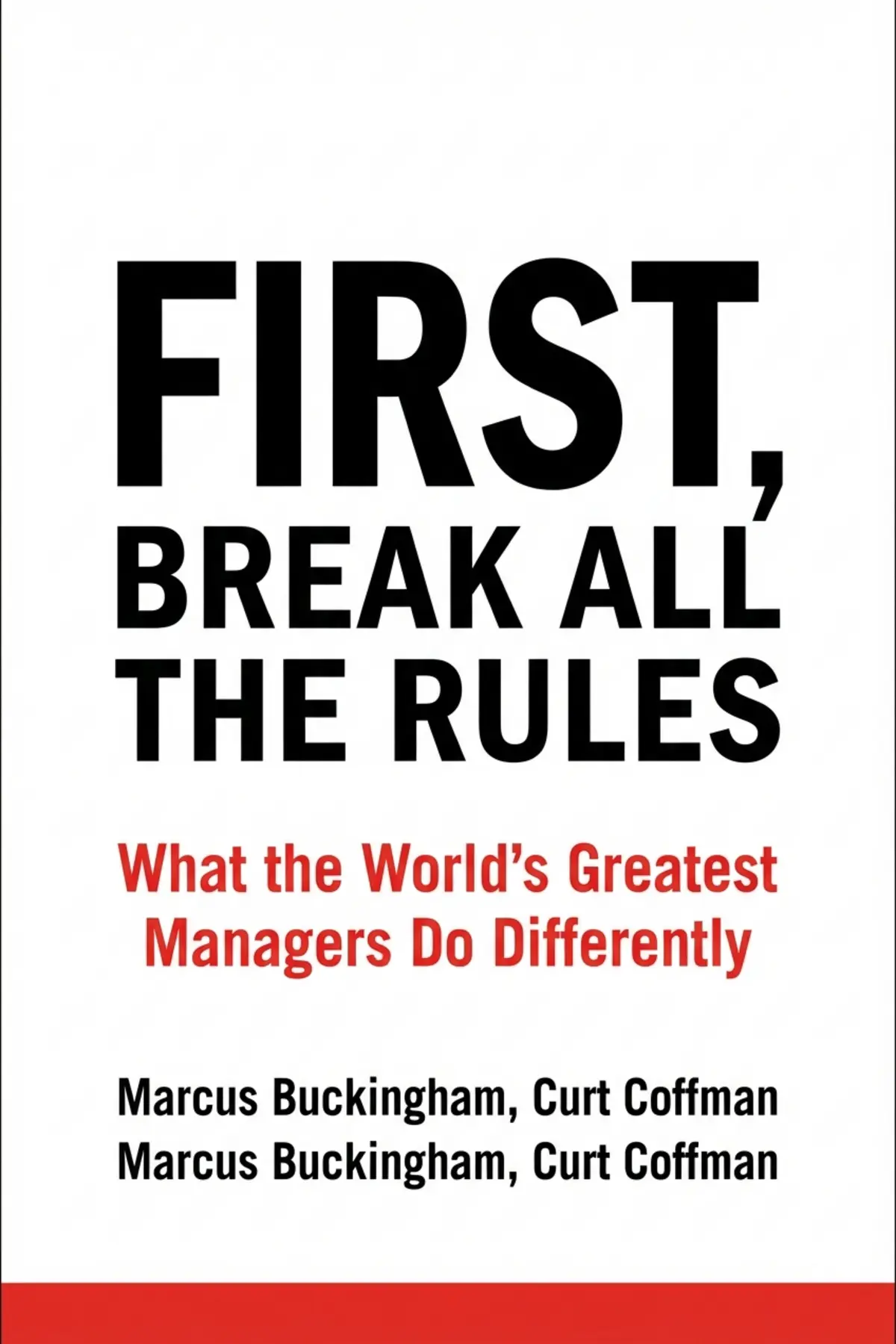
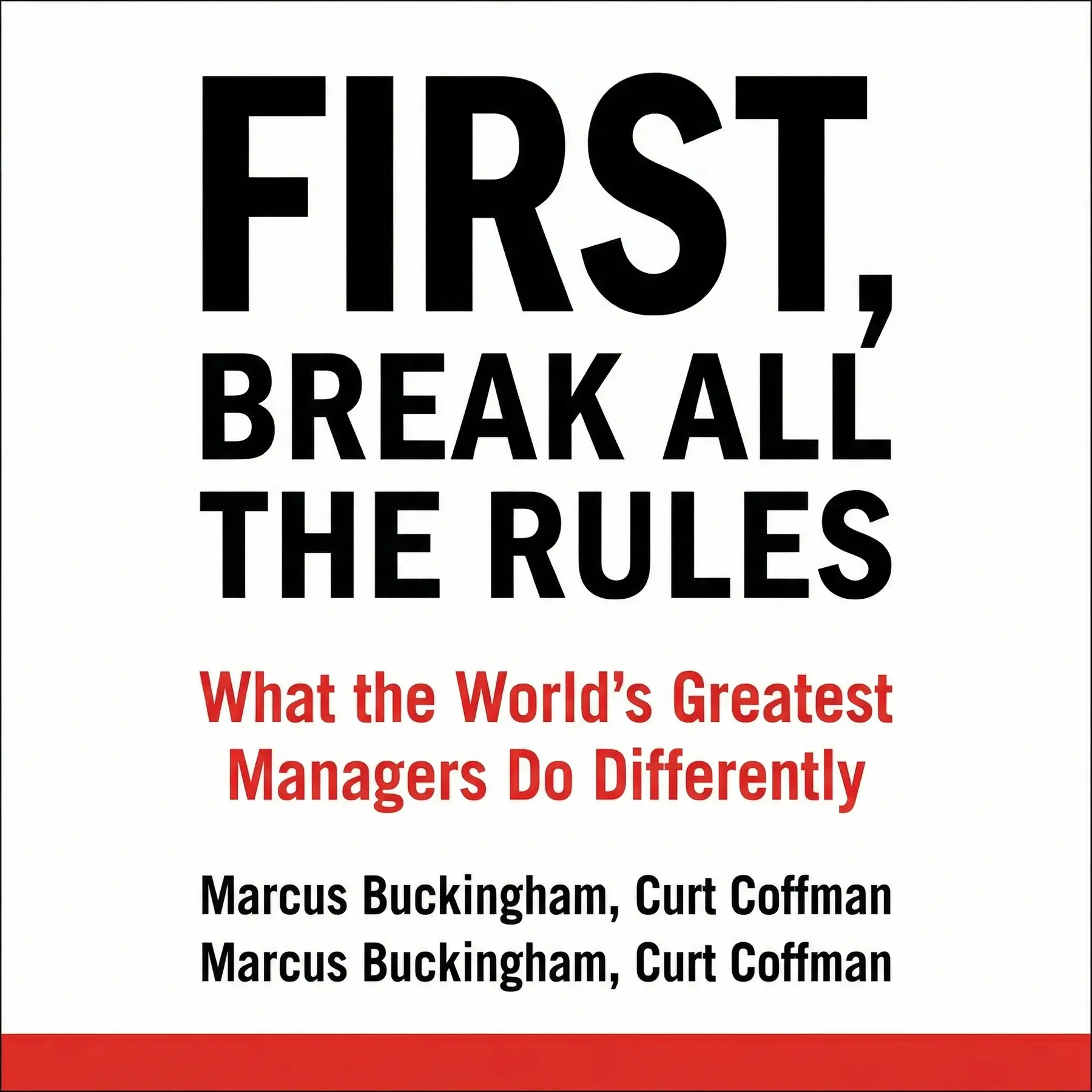
First, Break all the Rules reveals why the best managers ignore traditional wisdom. By focusing on employee talents rather than fixing weaknesses, leaders can unlock unprecedented productivity and long-term business success.
1 min 39 sec
Management is often treated as a science of correction. We are taught to look for gaps in performance, identify weaknesses in our staff, and then spend endless hours trying to fill those holes with training, discipline, or coaching. But what if this entire foundation is flawed? What if the most successful managers in the world are doing exactly the opposite of what the textbooks tell us? This is the provocative premise of First, Break all the Rules. It suggests that if you want to reach the pinnacle of performance, you have to stop trying to perfect people and start understanding who they actually are.
At its core, this book is about a fundamental shift in perspective. It moves us away from the idea that anyone can be anything if they just try hard enough, and toward a more profound truth: that every individual possesses a unique, largely unchanging set of talents. The job of a great manager isn’t to be a visionary leader or a strict disciplinarian. Instead, it’s to act as a catalyst, identifying those innate patterns of behavior in their team members and positioning them so those patterns result in peak performance. This throughline—the celebration of individuality over the enforcement of conformity—runs through every chapter of the book.
As we walk through these ideas, we’ll explore how employee satisfaction acts as the true engine of profit, why the traditional career ladder is often a trap, and how to define results without micromanaging the process. We’ll see that the best managers don’t play favorites; they play to strengths. They don’t try to make everyone the same; they revel in the differences. By the end of this summary, you’ll have a new set of rules to follow—rules that might feel like they’re breaking the status quo, but are actually the keys to unlocking the true potential of your organization.
1 min 57 sec
Explore why a happy workforce is the only sustainable way to grow a business and how managers, not CEOs, are the primary architects of employee contentment.
2 min 01 sec
Understand the vital distinction between a leader and a manager, and why the best managers act as mediators between the company and the individual.
2 min 05 sec
Learn why human personality and talent are largely fixed by early adulthood, and how this reality should change your approach to coaching.
1 min 54 sec
Discover the art of the interview and why selecting for innate talent is more important than hiring based on experience or prestige.
1 min 52 sec
Explore the power of ‘remote control’ management and why defining the destination is better than dictating the route.
1 min 51 sec
Understand why the best managers spend the most time with their top performers and why the ‘average’ is a dangerous benchmark.
1 min 52 sec
Learn how to reward excellence without forcing your best people into roles they weren’t meant for, such as management.
1 min 50 sec
Discover how to analyze failure objectively and why ‘managing around’ a weakness is often better than trying to fix it.
1 min 12 sec
The journey through First, Break all the Rules brings us back to a simple, yet revolutionary truth: the human element is the most powerful force in any business. We’ve seen that traditional management often tries to sand down the edges of individuality, hoping to create a smooth, uniform workforce. But the world’s greatest managers know that it’s the ‘rough edges’—the unique, jagged talents of each person—that provide the grip needed to climb to the top. By focusing on employee satisfaction, selecting for innate talent, and managing by outcomes rather than processes, you don’t just build a better business; you build a more human one.
As you move forward, the challenge is to look at your team not as a collection of roles to be filled, but as a collection of individuals to be understood. Stop asking what your people *can’t* do and start obsessing over what they *can* do better than anyone else. Spend your time with your stars, redefine what growth looks like in your organization, and have the courage to break the rules that have held management back for decades. The path to excellence isn’t found in a handbook; it’s found in the people sitting right in front of you. When you unlock their talent, you unlock the future of your company.
Have you ever wondered why some teams thrive while others, despite having the same resources, constantly struggle? First, Break all the Rules argues that the secret lies in the unconventional approach of the world’s greatest managers. Based on extensive research, this book challenges the standard management playbook, suggesting that the most effective leaders don't try to change people. Instead, they identify unique talents and position employees where they can naturally excel. The book promises to overhaul your perspective on leadership by shifting the focus from fixing flaws to cultivating strengths. It provides a practical framework for selecting the right people, defining clear outcomes rather than rigid processes, and creating career paths that reward excellence without forcing everyone into a management role. By the end of this summary, you will understand how to build a high-performing culture where employee satisfaction is the primary driver of sustainable growth.
Marcus Buckingham and Curt Coffman are distinguished figures in the fields of business consulting and organizational research. At the time of this book's publication, both were associated with the Gallup Organization, a world leader in performance management consulting. Their work is grounded in massive data sets and real-world observations. Both authors have gone on to found their own successful consulting and training firms and have authored several other influential business bestsellers centered on human performance and leadership.
Marcus Buckingham
Marcus Buckingham
Listeners find the extensive research and detailed study of 12 crucial questions impressive, viewing this as a vital guide for individuals new to leadership roles. This work is simple to grasp and a swift read, emphasizing a strengths-centered management approach that assists in maximizing employee talent. Listeners note its success in improving managerial skills and generating strong business outcomes, while further valuing the book's overall cost-effectiveness.
Finally got around to reading this management staple, and I was genuinely impressed by the depth of the Gallup research presented here. The authors argue convincingly that great managers don't try to fix people; instead, they focus on sharpening existing talents. I loved the section on the 12 questions (Q12) that actually measure workplace health. It’s refreshing to see a book back its claims with data from millions of interviews rather than just anecdotal corporate fluff. While some might find the 'strengths-only' approach a bit idealistic in high-pressure environments, the core message about hiring for talent rather than just experience is a game-changer. This is a must-read for anyone who wants to stop micromanaging and start leading. It really delivers on the promise of unlocking employee potential through a more human-centric approach.
Show moreWow, this is easily one of the most practical leadership books on my shelf. The concept of 'casting' employees in the right roles changed how I look at my team's performance issues. Instead of trying to 'fix' someone who is struggling, I’m now looking at whether they are even in the right position to succeed. The idea that people leave their immediate managers, not the companies, resonated deeply based on my own career history. It’s easy to understand and delivers actionable results if you actually implement the feedback loops suggested. The focus on outcomes over methods allows for so much more creativity in the workplace. This book is a masterclass in unlocking human potential through evidence-based management. I found the analysis of the 12 questions to be particularly illuminating for long-term growth.
Show moreThe central premise—that people don't change that much—is both controversial and incredibly practical. Most management books tell you to spend all your time coaching your underperformers, but this book suggests the opposite: spend your time with your best people. That shift alone can transform a team's energy. I found the exhaustive research into millions of employees to be much more convincing than the typical 'CEO memoir' style of management book. The authors do a great job of explaining how to standardize outcomes while giving employees the freedom to find their own path to those results. It’s an essential guide for anyone who wants to build a high-performance culture without burning people out. Truly an eye-opening read for the modern manager who values in-depth analysis over fluff.
Show moreThe chapter on 'hiring for talent' completely shifted my perspective on how I recruit for my team. Buckingham and Coffman make a compelling case that you can’t teach talent, which is a hard pill to swallow if you believe in the 'anyone can do anything' mantra. Their advice to define the right outcomes rather than the exact steps is incredibly liberating for both the manager and the employee. Truth is, I’ve seen so many people leave good companies because of terrible supervisors, and this book highlights exactly why that happens. My only gripe is that it feels a bit dated in its examples, but the psychological principles are timeless. It’s a solid resource for new leads who want to move beyond basic administrative supervision and actually inspire their workers.
Show moreAs someone who has struggled with micromanagement in the past, this book provided a necessary reality check. The authors suggest that the best managers are those who build an environment where employees can answer 'yes' to those 12 critical questions. I particularly appreciated the distinction between knowledge, skills, and talent; it helped me realize why some of my previous hires didn't work out despite having great resumes. The data-driven approach makes the 'unconventional' advice feel much more grounded and trustworthy. It’s a quick read, but the implications for how you spend your time with your 'best' people versus your 'struggling' ones are profound. Definitely worth the price for the insight into the Gallup methodology alone. It definitely helps clarify what we should be measuring to ensure business results.
Show moreAfter hearing my boss quote this book for months, I finally decided to see what the fuss was about. I gotta say, the emphasis on the interview process was my favorite part. Learning how to listen for recurring patterns of behavior rather than just checking off technical skills is something I wish I’d known years ago. The book is well-structured and doesn't get bogged down in too much academic jargon, despite being based on exhaustive research. My only complaint is that some of the sections on 'rewarding outcomes' felt a bit repetitive towards the end. However, the core message about treating every employee as an individual is a powerful antidote to the 'one-size-fits-all' corporate mentality. It’s an effective guide for anyone looking to improve their managerial qualities.
Show morePick this up if you're tired of the same old leadership cliches about 'fixing' your staff. Buckingham and Coffman provide a refreshing, data-backed perspective that prioritizes an employee's natural talents over their resume. The 12 questions are a brilliant way to measure the 'un-measurable' parts of company culture that actually drive productivity. I've already started using some of the open-ended interview questions, and the quality of my candidate evaluations has improved significantly. It’s a very quick read, though it does require some reflection to actually apply the 'breaking the rules' philosophy in a traditional office. Overall, it’s a high-value resource for anyone responsible for a team's output. The focus on strengths-based management is exactly what my organization needed to unlock potential.
Show moreEver wonder why some teams thrive while others with the same resources fail? This book attempts to answer that through the lens of the manager-employee relationship. While I found the Q12 framework extremely valuable for auditing my own department, the tone can be a bit arrogant at times. The authors seem to dismiss traditional management techniques with a wave of the hand, which might not work in every industry or culture. I agree that focusing on strengths is vital, but you still have to manage weaknesses so they don't become liabilities. It’s a good starting point for first-time managers, but it lacks the nuance needed for complex, multi-layered corporate structures. I’d recommend it with some reservations, mainly because the core research is so exhaustive and difficult to ignore.
Show moreThis book offers a fascinating look at the Gallup research, but I struggled with some of the specific metrics. For instance, the question about having a 'best friend at work' feels a bit forced and doesn't necessarily translate to every work culture. Look, I agree that focusing on talent is better than trying to force people into boxes, but the book sometimes feels like an advertisement for Gallup's consulting services. The writing is clear and the 12 questions are a great diagnostic tool, but I found myself wanting more concrete examples of how to handle 'non-talents' beyond just moving them to a different role. It's a decent read for the theory, but the execution feels a bit thin in parts. Good for a first-time manager, but perhaps too basic for seasoned pros.
Show moreNot what I expected given all the hype surrounding this title in business circles. Frankly, much of the advice feels like common sense dressed up in fancy Gallup terminology. Do we really need a whole book to tell us that we should treat employees with respect and play to their strengths? I found the writing style repetitive, and the 'rules' they claim to break aren't even that controversial anymore in modern tech circles. To be fair, the Q12 list is useful as a quick checklist, but the rest of the 200+ pages felt like filler. A perfectly good tree died for this book when a long-form blog post would have sufficed for the same information. If you've been a manager for more than five minutes, you likely already know most of this.
Show more
Joseph A. Maciariello
Deborah Gruenfeld
Mike Michalowicz
Hamilton Helmer

Margaret Heffernan
AUDIO SUMMARY AVAILABLE
Get the key ideas from First, Break all the Rules by Marcus Buckingham, plus 5,000+ more titles in English and Thai.