
8 min 30 sec
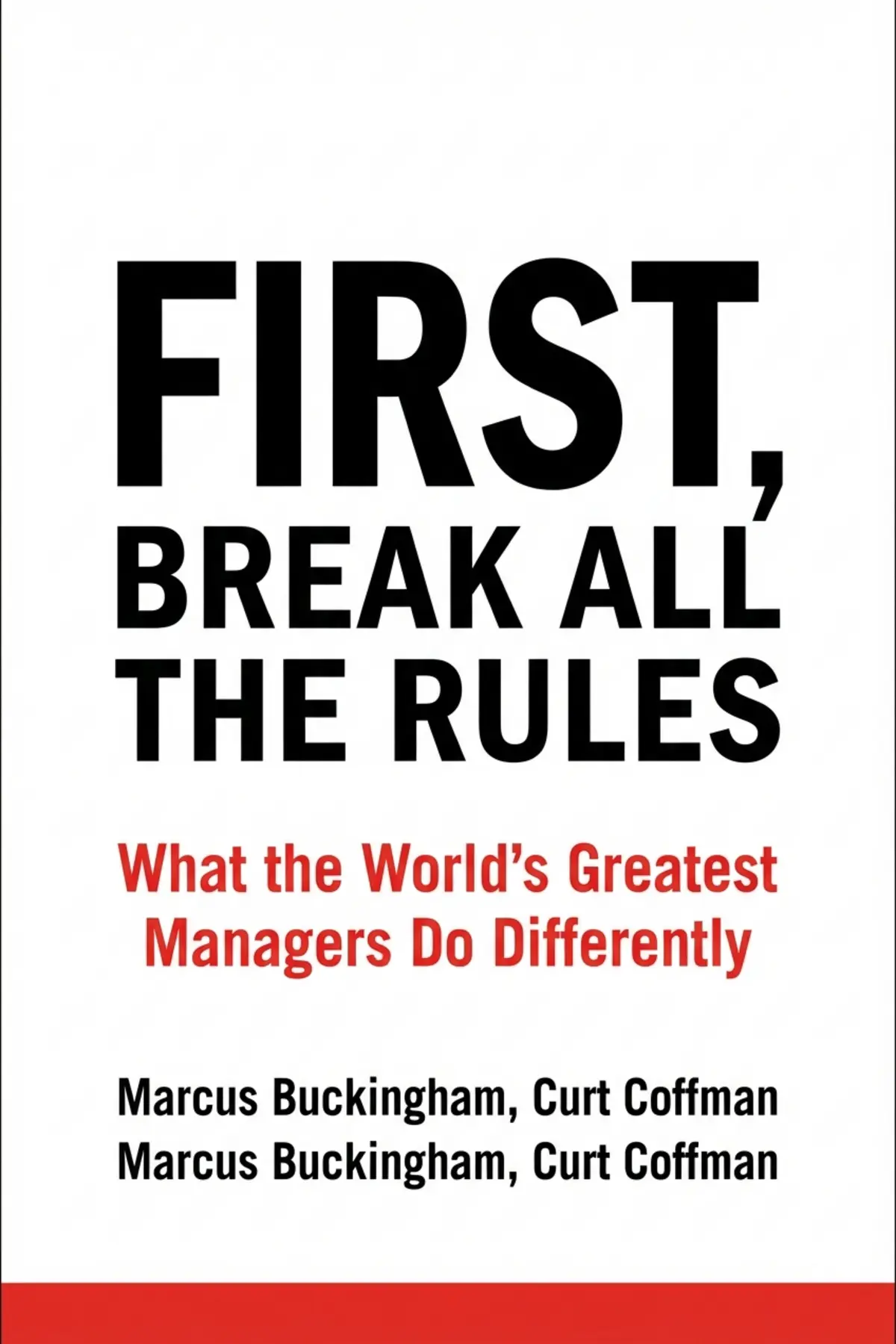
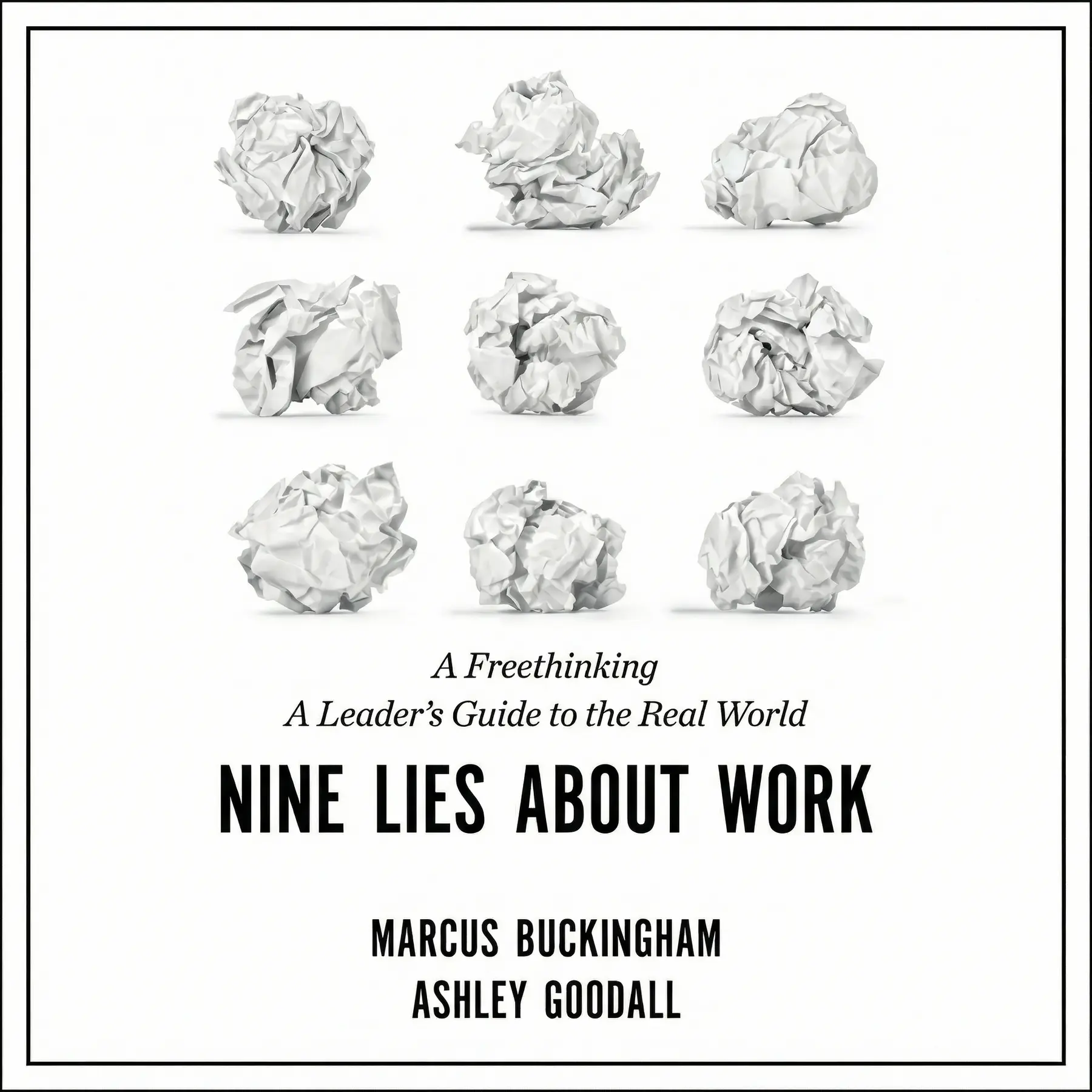
Nine Lies About Work: A Freethinking Leader’s Guide to the Real World
Nine Lies About Work dismantles corporate myths that hinder productivity and engagement. By focusing on team dynamics, real-time intelligence, and individual strengths, it offers a blueprint for a more authentic and effective workplace.
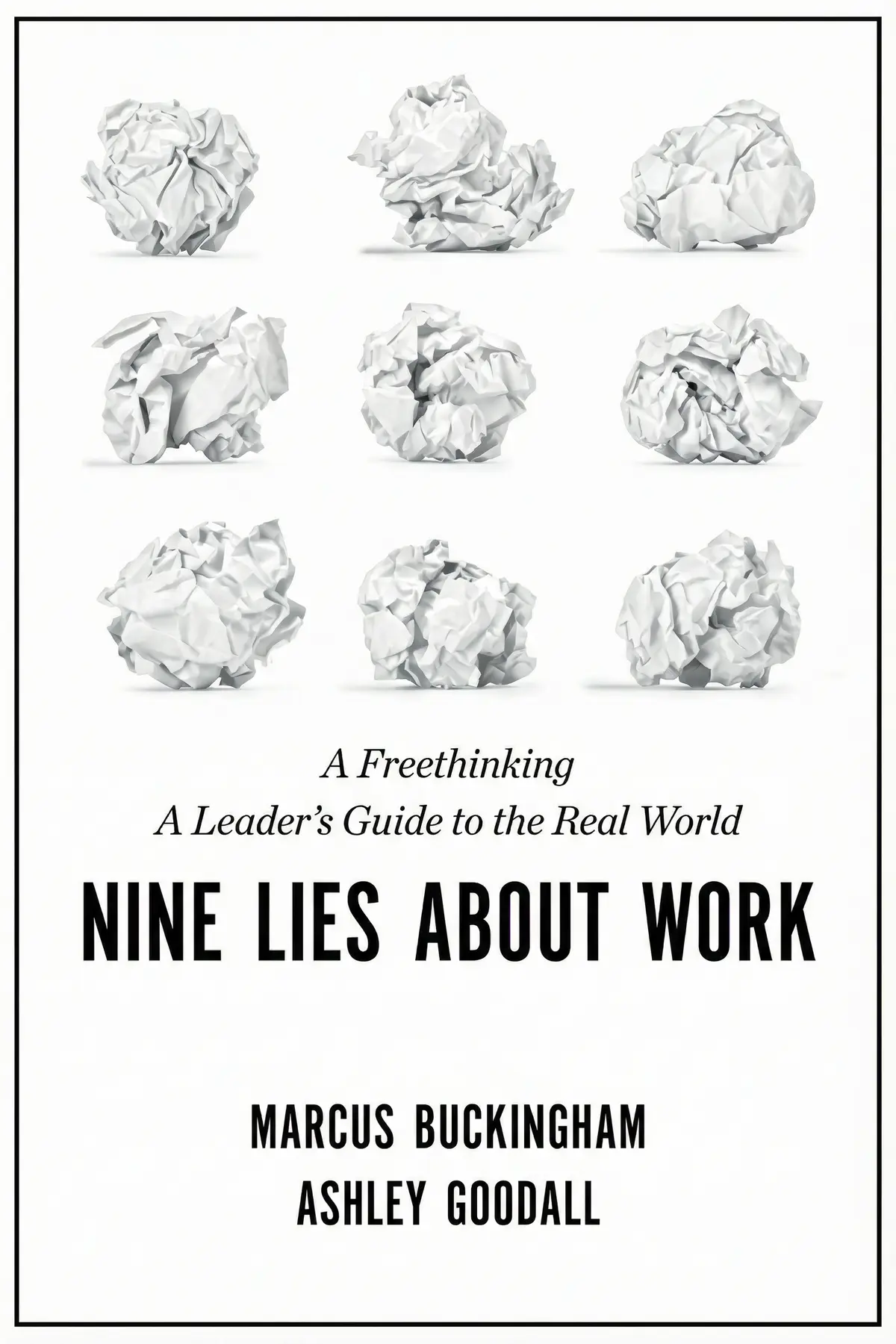
Table of Content
1. Introduction
1 min 06 sec
We are often told a specific story about what it takes to succeed in the modern professional world. We hear that the name on the building matters most, that a five-year plan is a necessity, and that we must strive to be well-rounded individuals. However, for many of us, there is a nagging disconnect between these corporate ideals and our daily experience at our desks. We find ourselves fighting against rigid systems that don’t seem to account for how we actually think, feel, or work best.
This tension arises because much of what we accept as ‘best practice’ is actually based on fundamental misconceptions about human nature and organizational health. In this summary, we are going to explore why the most celebrated corporate cultures often fail to inspire the people within them and why the most detailed strategies often crumble in the face of reality. By peeling back these layers, we can discover a more authentic way to lead and contribute, focusing on the throughline that connects individual talent to team success. It’s time to look past the official narrative and see the workplace as it truly is.
2. The Power of the Local Team Environment
1 min 36 sec
Discover why the prestigious logo on your paycheck matters far less for your daily happiness and performance than the specific people you interact with every single morning.
3. Prioritizing Intelligence Over Static Planning
1 min 39 sec
Explore why the most meticulously crafted long-term strategies often fail and how real-time information sharing creates a more agile and successful organization.
4. The Fallacy of Corrective Feedback
1 min 26 sec
Understand why the standard approach to ‘constructive criticism’ often does more harm than good and learn a more effective way to foster growth.
5. Cultivating Strengths Instead of Well-Roundedness
1 min 33 sec
Challenge the myth that the best employees are those who are good at everything, and see why leaning into unique talents is the secret to peak performance.
6. Conclusion
1 min 10 sec
In the end, the journey toward a more effective workplace begins with a willingness to question the status quo. We have seen that the grand corporate narratives—the focus on the company brand, the reliance on rigid plans, and the pursuit of well-roundedness—often act as barriers rather than bridges to success. The real power lies in the local, the immediate, and the individual.
By prioritizing the health of the team, embracing real-time intelligence over static scripts, and focusing on individual strengths rather than fixing weaknesses, we can create a work environment that is both more productive and more human. The takeaway is clear: stop trying to fit into a standardized mold of the ‘ideal’ worker or leader. Instead, look for the unique value you and your teammates bring to the table right now. Success isn’t about following the lies we’ve been told; it’s about uncovering the truth of how we actually thrive. As you move forward in your career, remember that the most impactful thing you can do is to build trust within your circle and play to the strengths that make you, and your team, truly exceptional.
About this book
What is this book about?
Modern corporate life is often governed by a set of unwritten rules and widely accepted dogmas that, while sounding logical, frequently fail to reflect the reality of how people actually perform best. This book takes aim at those fundamental misconceptions—or lies—that have become embedded in the DNA of human resources and management theory. It challenges the idea that employees care primarily about their company’s brand, that planning is the key to success, or that people need constant corrective feedback to grow. Through a blend of data-driven insights and practical examples, the promise of this work is to liberate leaders and team members from these stifling constraints. It shifts the focus away from top-down control and toward the bottom-up power of immediate team environments. By replacing outdated practices with a focus on real-time intelligence and individual human excellence, the authors provide a new way to navigate professional life that prioritizes meaning, performance, and true engagement.
Book Information
About the Author
Marcus Buckingham
Marcus Buckingham is a highly influential author and speaker known for pioneering the strengths-based movement in the professional world. His previous best-sellers, First, Break All the Rules and Now, Discover Your Strengths, established him as a leader in rethinking human performance. Ashley Goodall is a seasoned executive and leadership expert who has held significant roles at Cisco. He is recognized for his innovative approach to team dynamics and individual development, and he is also the author of The Problem With Change.
Love + Work: How to Find What You Love, Love What You Do,
Marcus Buckingham
Standout 2.0: Assess Your Strengths, Find Your Edge, Win at Work
Marcus Buckingham
Ratings & Reviews
Ratings at a glance
What people think
Listeners find this work both useful and perceptive, as it vividly exposes professional realities while providing data-driven insights. They value its accessibility and stimulating material, with one listener remarking that it is a must-read for all managers. The title receives praise for its focus on staff involvement, with one review highlighting its expertise in this area, and listeners appreciate its flow, with one calling it deeply human. The prose style gets varied responses; while some find it well-written, others find it hard to follow.
Top reviews
Zoey
The concept of 'spiky' people versus well-rounded individuals changed how I view my team entirely. We are so often told to fix our weaknesses, but Buckingham and Goodall argue that uniqueness is a feature, not a bug to be ironed out. This book is a deeply human look at why we follow certain people and how 'cascading meaning' is far more effective than just dumping goals on employees. Personally, I found the chapters on 'red threads' and finding love in your work to be life-changing for my own career path. It’s practical, it’s backed by fascinating statistical analysis, and it delivers a punchy challenge to everything HR has taught us for decades. If you lead people, you need to understand why their idiosyncrasies are actually their greatest strengths. Every manager should have a copy on their desk.
Show moreCooper
Finally got around to reading this, and the timing couldn't have been better for my transition into a senior management role. The book is well-written and filled with clear examples of why we need to move from 'plans' to 'intelligence.' In a world that moves this fast, a rigid annual plan is a liability, not an asset. I was particularly struck by the idea that we follow 'spikes'—that we choose to follow people who are exceptionally good at one specific thing. It makes leadership feel much more authentic and attainable than the usual list of fifty impossible traits. Gotta say, the research on how positive attention is thirty times more powerful than negative feedback was startling. This book vividly unveils workplace truths that most of us feel intuitively but can’t quite articulate. Highly recommended.
Show moreWatcharee
What a refreshing, deeply human take on the modern workplace that actually respects the intelligence of the individual worker. I absolutely loved the section on 'red threads' and the idea that we should weave what we love into our daily tasks. It’s not about finding a perfect job, but about finding the love in the job you already have. This book speaks to me as both a team member and a leader who is tired of the 'control business.' Buckingham and Goodall make a convincing case that leaders should be in the 'intelligence and empowerment business' instead. The stories are engaging, the quotes are memorable, and the overall message is incredibly empowering. It has definitely changed the way I approach my weekly check-ins. If you want to build a team that actually thrives, start here.
Show moreSaranya
In my experience, most business books are 90% fluff and 10% substance, but Buckingham delivers a punchy challenge to the status quo. The nine lies he identifies—from the myth of feedback to the fallacy of well-roundedness—are things we deal with every single day. I love how he uses logic to point out the gaps in existing approaches, especially regarding how we evaluate performance. The idea that people have 'momentum' rather than some fixed 'potential' is such a more helpful way to look at career growth. The book is well-written, the research is detailed, and the arguments are supported by a wealth of evidence from the authors' time at Gallup and Cisco. It’s a paradigm-shifting piece that will stay with me for a long time. Definitely worth the read if you want to understand what makes great teams tick.
Show moreNaomi
Ever wonder why corporate initiatives always seem to fall flat at the local level despite having massive budgets? This book identifies the culprit: we focus on the 'company' when the 'team' is where the work actually happens. The authors do a great job of using logic and research to point out the massive gaps in existing talent development methods. Truth is, the section on cascading meaning instead of cascading goals was a total lightbulb moment for me. My only real gripe is that the writing can get a bit wordy, and some of the real-life analogies feel a little bit stretched. However, the core insights about giving people attention instead of just feedback are incredibly valuable. It’s a paradigm-shifting read that outlines exactly what we can do to improve business performance while making life better for employees.
Show moreSaengdao
As someone who has worked in international corporate environments for over fifteen years, I found the evidence against standard performance ratings very compelling. The authors heap up data to contradict the 'Nine Lies' we’ve all been forced to believe, especially the myth that we can reliably rate other people. Instead, they suggest we can only reliably rate our own experience of others, which is a subtle but massive distinction. I love how this book stretches our thinking and pushes us past the standard HR methods that clearly aren't working. To be fair, they do occasionally overreact on their solutions, sometimes throwing the baby out with the bathwater when it comes to leadership definitions. Still, the practical advice on weekly 15-minute check-ins is something I’ve already started implementing with great success. It’s a solid, thought-provoking read for any professional.
Show moreCholada
Look, the business world loves its metrics, but Buckingham argues we’ve been measuring the wrong things for fifty years. One of the most insightful takeaways for me was the shift from measuring 'leaders' to measuring 'followership.' It’s much easier to see if people are actually following someone than it is to measure an abstract quality like 'vision' or 'charisma.' The authors use a very analytical approach to dismantle the idea of work-life balance, suggesting instead that we should focus on 'love-in-work.' While I think they generalize a bit too much about how organizations function, the core message is deeply human and necessary. The writing style received mixed reactions in my book club, but I found it engaging enough to finish in a weekend. It's a great non-fiction piece that offers a refreshing perspective on employee engagement.
Show moreNiphon
This book pushes past the standard HR and talent development fluff using research that feels grounded in real-world team experiences. I particularly appreciated the distinction between 'cascading goals,' which is a control mechanism, and 'cascading meaning,' which acts as a release mechanism. It’s a great read with clear examples for leadership that aren't just the usual anecdotes about Steve Jobs or Elon Musk. In my experience, most managers are hungry for this kind of data-driven insight that validates their gut feelings. There were a few moments where the theories felt benchmarked against a one-size-fits-all model, which didn't always ring true for my industry. Overall, though, the pacing is good and the content is genuinely thought-provoking. It’s a must-read for anyone who cares about building a healthy, thriving organization.
Show moreWissanu
To be fair, the authors make some excellent points about why we shouldn't rank 'potential' or force everyone into a 'well-rounded' box. The logic is sound, and the research into team dynamics is definitely more rigorous than your average airport business book. However, the topics are not always cogently delivered, and the pacing feels a bit uneven in the middle chapters. They spend so much time refuting the 'lies' that the actual recommendations for fixing the holes in the system feel a bit rushed. I found myself agreeing with the critiques but rolling my eyes at some of the overly general analogies used to prove their points. Not gonna lie, it’s a bit of a mixed bag. Read it to stretch your thinking and question the status quo, but take some of their more extreme solutions with a grain of salt.
Show moreDimitri
Frankly, this felt like a series of decent blog posts stretched into an overlong piece of dreck. It’s a mish-mash of essays that provide very little new insight if you’ve already read any modern management literature. The book has a lot of built-in distractions, like sudden jargon that sprouts up just to validate a thought, which completely breaks the flow of the argument. You could probably summarize the entire 200+ pages into a single cheat sheet and not lose any of the actual substance. Whatever interesting points were made—like the idea that people have momentum rather than potential—were over-diluted with paragraphs going nowhere. It mistakes itself for not adding to the 'dreck pile' of business books, but unfortunately, it fits right in. Save your time and just read a summary online.
Show moreReaders also enjoyed
Acting with Power: Why We Are More Powerful Than We Believe
Deborah Gruenfeld
All In: How Great Leaders Build Unstoppable Teams
Mike Michalowicz
7 Powers: The Foundations of Business Strategy
Hamilton Helmer

A Bigger Prize: How We Can Do Better Than the Competition
Margaret Heffernan
AUDIO SUMMARY AVAILABLE
Listen to Nine Lies About Work in 15 minutes
Get the key ideas from Nine Lies About Work by Marcus Buckingham, plus 5,000+ more titles in English and Thai.
- 5,000+ titles
- Listen as much as you want
- 7-day free trial
- Cancel anytime







