
14 min 48 sec
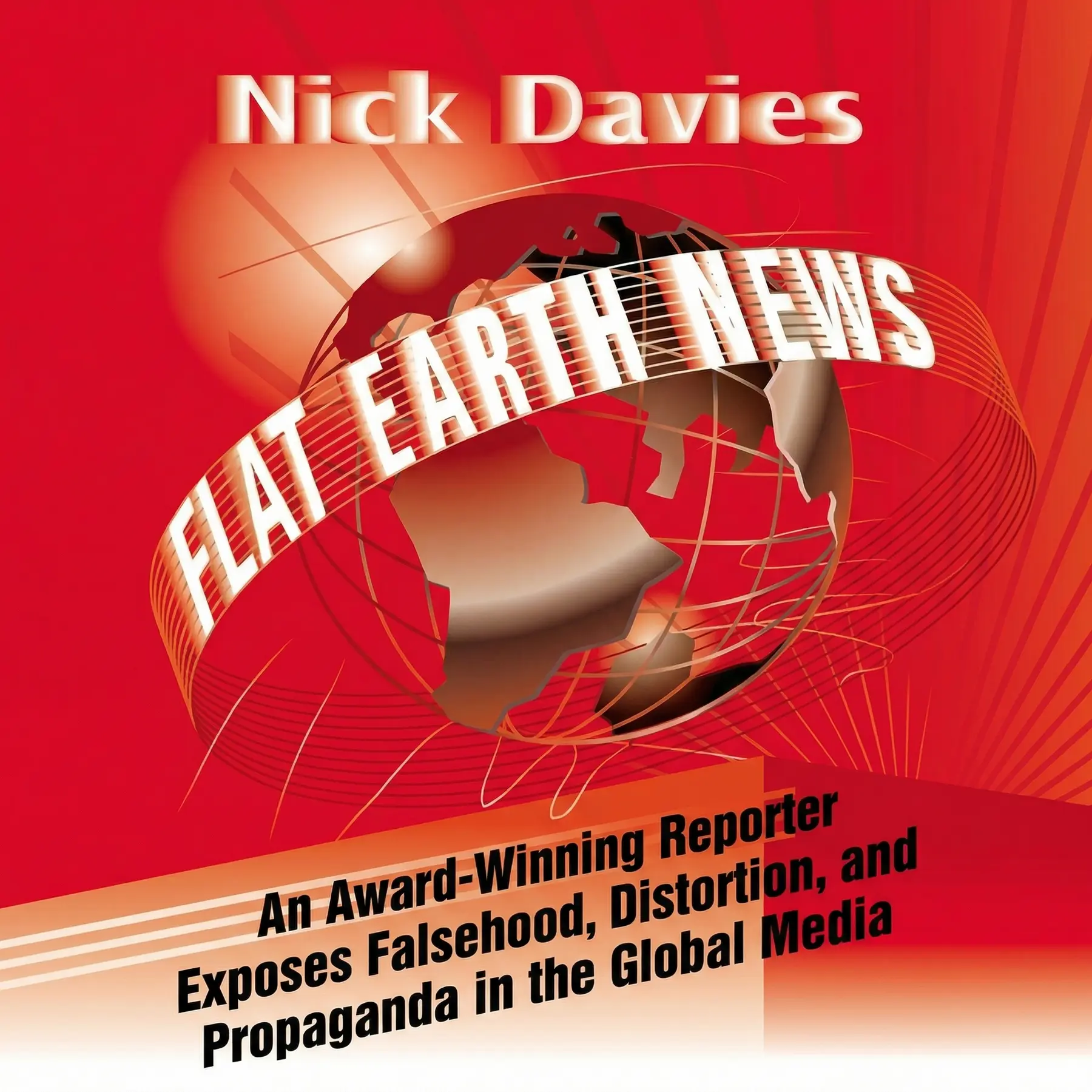
Flat Earth News: An Award-Winning Reporter Exposes Falsehood, Distortion, and Propaganda in the Global Media
By Nick Davies
Nick Davies pulls back the curtain on modern journalism, revealing how corporate cost-cutting, propaganda, and a lack of verification have turned the news industry into a machine for recycling unvetted falsehoods.
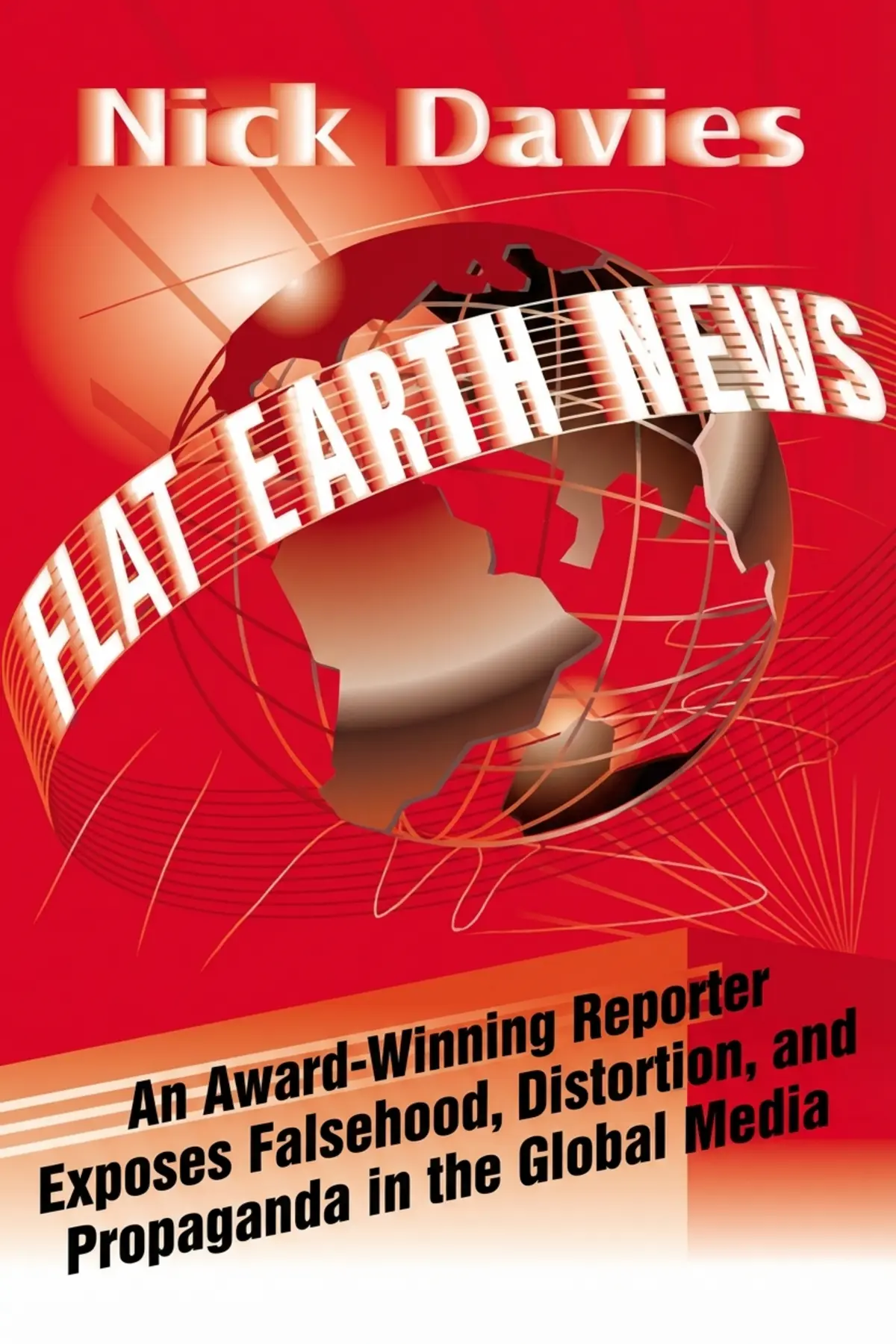
Table of Content
1. Introduction
1 min 30 sec
We often think of the news as a window into the world, a reliable record of the day’s most important events. We imagine reporters tirelessly pounding the pavement, questioning authority, and verifying every detail before it reaches our screens. But what if that window is actually a mirror, reflecting only what powerful interests want us to see? This is the central question of Flat Earth News. The title refers to the way falsehoods can become accepted as absolute truth simply because they are repeated often enough by enough people.
In this exploration, we are going to look at why the media landscape has shifted so dramatically. It isn’t necessarily a story of individual reporters being lazy or dishonest; rather, it is a story of a broken system. We will see how the drive for corporate profit has hollowed out newsrooms, leaving journalists with no time to actually do their jobs. We’ll examine the rise of ‘churnalism,’ where news is no longer gathered but merely processed.
Throughline: The modern media industry is no longer in the business of truth-seeking. Instead, it has become a profit-driven machine that relies on unverified wire reports, public relations spin, and even state-sponsored propaganda. By understanding the economic pressures and structural flaws of the industry, we can begin to see why the news we consume is often distorted, sensationalized, or flat-out wrong. Let’s go behind the scenes to see how the sausage is actually made.
2. The Rise of Churnalism
1 min 41 sec
Journalists are no longer investigators; they have become desk-bound processors of information who lack the time to verify the very stories they publish.
3. The Over-Reliance on Wire Agencies
1 min 34 sec
Large agencies like AP and Reuters have become the world’s primary news sources, yet they are just as vulnerable to errors as the outlets that copy them.
4. Profit and the Cult of Popularity
1 min 37 sec
The drive for high ratings and clicks has shifted the media’s focus from what is important to what is merely entertaining or sensational.
5. The Safety of False Neutrality
1 min 27 sec
In an effort to avoid lawsuits and controversy, many outlets use ‘balance’ as a shield, often giving equal weight to the truth and a lie.
6. The Logistics of Neglect
1 min 23 sec
Stories are often chosen based on how easy and cheap they are to cover, rather than their actual impact on the world.
7. The Public Relations Takeover
1 min 31 sec
PR agencies have filled the void left by shrinking newsrooms, providing pre-packaged content that journalists publish without question.
8. The Manipulation of Authority
1 min 19 sec
Companies hire ‘independent’ experts and fund biased research to give their marketing efforts the appearance of scientific credibility.
9. State Propaganda in the Modern Age
1 min 24 sec
Intelligence agencies have a long history of planting stories and influencing media outlets to shape public opinion on a global scale.
10. Conclusion
1 min 22 sec
As we have seen, the crisis in modern journalism is not the result of a few bad actors, but rather a systemic collapse brought on by corporate greed and structural changes. The transition from investigative reporting to ‘churnalism’ has left the public vulnerable to all sorts of manipulation. When newsrooms are hollowed out, the space they leave behind is quickly filled by public relations firms, lobbyists, and intelligence agencies, all of whom have their own agendas that have nothing to do with the truth.
The ‘Flat Earth News’ we consume daily is a product of convenience, cost-effectiveness, and calculated spin. We live in a world where the ease of covering a story often determines its importance, and where ‘balance’ is used to give a platform to falsehoods. It is a sobering reality, but understanding it is the first step toward becoming a more critical consumer of information.
So, what can we do? The most actionable advice is to become your own fact-checker. Don’t take a single headline at face value. If you see a story in your favorite newspaper, take a moment to look it up on a wire service like Reuters or the Associated Press. If the wording is almost identical, you know that the newspaper hasn’t actually investigated the story—they’ve just ‘churned’ it. By looking for the original source of the information, you can start to peel back the layers of spin and see the world as it actually is, rather than how someone wants you to see it. Stay curious, stay skeptical, and always look for the evidence behind the headline.
About this book
What is this book about?
Flat Earth News is an unsettling deep dive into the systemic failures of the global media. Investigative reporter Nick Davies explains that the golden age of the courageous, field-based journalist has largely been replaced by a desk-bound era of 'churnalism.' In this new landscape, newsrooms are understaffed and reporters are pressured to produce a massive volume of content with almost no time for fact-checking. The book promises to change how you consume information by exposing the hidden influencers behind the headlines. From public relations firms that stage events to intelligence agencies that plant stories, Davies shows how the machinery of news is easily manipulated. It explores why sensation often trumps substance and how the pursuit of corporate profit has compromised the media's role as a watchdog for truth. By the end, you will understand the economic and political forces that ensure the 'news' we read is often far from reality.
Book Information
About the Author
Nick Davies
Nick Davies is a highly acclaimed investigative journalist who has written four books. Throughout his distinguished career, he has contributed to some of the most respected English publications, including The Guardian. Beyond the written word, he creates television documentaries. His excellence in the field has been recognized with numerous honors, including being named British Journalist of the Year, Reporter of the Year, and Feature Writer of the Year.
Ratings & Reviews
Ratings at a glance
What people think
Listeners find this deep dive into the media industry to be a revelatory experience, even if some feel the storytelling gets redundant and bogged down by excessive details. Even so, listeners value the logical breakdown of "churnalism" and the way corporate goals result in the distribution of unverified reports. Additionally, they appreciate Davies’s viewpoint as a veteran reporter unmasking the questionable ties connecting the political sphere, public relations, and news outlets. They also point to the book’s relevant look at why speed is frequently prioritized over precision, with one listener describing it as an "excellent discourse on why you shouldn't believe everything you read."
Top reviews
Bua
Wow. I thought I understood how the news worked, but Nick Davies completely shattered my naive assumptions with this book. This insider account reveals a decaying industry where "churnalism" has replaced actual investigative work. It is terrifying to realize how much of what we consume is just repackaged PR handouts from corporate entities or government departments. Davies writes with a passionate, almost desperate energy about the death of truth in the UK press. While the sheer volume of examples can feel overwhelming, they serve as a necessary weight to prove his case against the giants of the media world. To be fair, this should be mandatory reading for anyone who still picks up a newspaper or scrolls through a news app. It changed my media consumption habits overnight. Truth is, you will never look at a headline the same way again.
Show moreVimolwan
Finally got around to reading this classic of media criticism. Nick Davies, a veteran from The Guardian, provides a well-reasoned analysis of why accuracy is no longer the priority in modern newsrooms. He meticulously documents the "flat earth news" stories—falsehoods that everyone accepts as true because they are repeated so often by supposedly reputable sources. The concept of the "news factory" is a chilling metaphor for how our reality is manufactured by underpaid, overworked reporters who have no time for critical distance. I was particularly struck by the sections on how intelligence agencies manipulate the flow of information. Not gonna lie, it makes you want to throw your television out the window in frustration. This is a brilliant discourse on the pitfalls of for-profit journalism in the West.
Show morePang
After hearing about "churnalism" for years, I decided to go to the source. Nick Davies has produced an excellent discourse on why you shouldn't believe everything you read in the papers or see on TV. He digs into the systemic corruption and the biased reporting that results when profit becomes the only metric of success for a news organization. The way he describes the boundaries of acceptability slowly slipping backward is particularly haunting for anyone who cares about democracy. We have normalized a level of falsehood that would have been scandalous just a few decades ago. Personally, I found the detailed examples of media manipulation by the intelligence community to be the most shocking part of the book. It is a dense read, but the clarity of the argument makes every page worth the effort.
Show moreMax
The chapter on how PR firms manipulate the press is worth the price of the book alone. Davies shows how the truth is dying because we value speed over accuracy in our 24-hour news cycle. It is a real eye-opener for anyone active in the media sector or even just those who want to be informed citizens in an age of propaganda. He brilliantly illustrates the dubious links between politics and the press, showing how "safe" facts are prioritized over difficult truths. Frankly, the state of the media he describes is terrifying, but his analysis is well-reasoned and grounded in years of experience at The Guardian. It’s a heavy read that will leave you feeling a bit cynical, but it’s better to know the truth than to live in a world of manufactured consensus. Highly recommended.
Show moreMo
Ever wonder why every news outlet seems to report the exact same story with the same phrasing? Davies answers this by diving deep into the mechanics of the modern newsroom, where journalists are forced to produce more content with fewer resources. He coins the term "churnalism" to describe this soulless process of recycling unverified information for the sake of speed. The book is an exhaustive—perhaps too exhaustive—critique of how commercial pressures have gutted the Fourth Estate. Look, I found the middle chapters a bit of a slog because the examples started to feel redundant after a while. However, the core argument is so vital that I pushed through the repetitive sections. It is a depressing but essential look at the corruption of our information ecosystem that every citizen should consider.
Show moreEye
As someone who worked briefly in public relations, this book hit a little too close to home. Davies exposes the dubious links between the press and the PR industry with brutal precision. He explains how "information subsidies" allow companies to control the narrative by doing the lazy journalist's work for them. It is a fascinating examination of how truth is sacrificed on the altar of commercial objectives and corporate greed. My only gripe is that the book feels slightly dated now that social media and algorithms have completely overtaken traditional print journalism. Still, the underlying mechanics of how falsehoods spread remain incredibly relevant. In my experience, most people have no idea how much of their daily news is actually carefully constructed propaganda designed to protect the powerful.
Show moreArm
This book is a massive, detailed wake-up call for the casual news consumer. Davies explains the deplorable state of British journalism with the cynical eye of a man who has seen it all from the inside. He focuses heavily on the rise of "churnalism," where speed is valued over accuracy and critical distance is completely ignored. The result is a media landscape awash with unchecked facts and manufactured hysteria. Truth is, the book can be a bit repetitive as it hammers home the same themes through dozens of exhaustive case studies. But perhaps that repetition is necessary to show just how systemic the problem really is. It’s an eye-opener that will make you question every headline you see on your morning commute. We are being fed a diet of safe facts and official consensus.
Show moreWipada
Nick Davies doesn't pull any punches here. He provides a scathing critique of how modern media is corrupted by mass hysteria and corporate greed. The book reveals how the "news factory" operates, churning out stories without any real fact-checking to fill space and attract advertisers. It’s a fascinating, if somewhat long-winded, examination of the industry's decline. I particularly appreciated the focus on how PR firms have essentially hijacked the news cycle. However, the sheer quantity of examples did start to wear on me by the end of the text. I think you get the gist of his argument pretty early on, but he insists on providing exhaustive evidence for every single claim. Still, it’s a vital piece of investigative journalism about the failures of journalism itself.
Show moreBenjamin
Interesting, depressing, and a little repetitive. While I appreciate the insider perspective Nick Davies brings, the prose is often quite dull and starts to feel like a chore after the first few chapters. He makes a compelling case about how the media is being corrupted by mass propaganda and commercial goals, but he beats the reader over the head with it. I also felt that some of his personal tangents, like his views on drug legalization, felt entirely out of place in a book about media ethics. To be fair, a lot of this material has been overtaken by the rise of digital algorithms and social media since its publication in 2008. It’s a decent historical look at the decline of newspapers, but it feels slightly antiquarian in its outlook now.
Show moreWilliam
The book seems to favour quantity over quality where evidence is concerned. I found myself leafing through 'Flat Earth News' rather than actually reading it because the narrative becomes an endlessly long list of repetitive examples. Once you understand the concept of news being "churned" like bread to fill space, you don't really need five hundred more pages of the same point. Davies has a clear bias towards a bygone era of journalism that probably never existed in the way he imagines. Frankly, the writing style is quite dry and eventually becomes a chore to finish. While his points about PR influence and the lack of fact-checking are valid, the delivery is so bloated that the impact is lost. It feels like an angry lecture that refuses to end.
Show moreReaders also enjoyed
A Warning
Miles Taylor
Abolish Rent: How Tenants Can End the Housing Crisis
Tracy Rosenthal
Abortion: Our Bodies, Their Lies, and the Truths We Use to
Jessica Valenti
Adults in The Room: My Battle With Europe’s Deep Establishment
Yanis Varoufakis
21 Lessons for the 21st Century
Yuval Noah Harari

A Different Kind of Power: A Memoir
Jacinda Ardern
AUDIO SUMMARY AVAILABLE
Listen to Flat Earth News in 15 minutes
Get the key ideas from Flat Earth News by Nick Davies, plus 5,000+ more titles in English and Thai.
- 5,000+ titles
- Listen as much as you want
- 7-day free trial
- Cancel anytime







