


17 min 45 sec
Forest Bathing: How Trees Can Help You Find Health and Happiness
By Qing Li
Discover the Japanese practice of Shinrin-Yoku with Dr. Qing Li. This summary explores how intentional time among trees can reduce stress, boost your immune system, and restore your mental well-being through sensory connection.
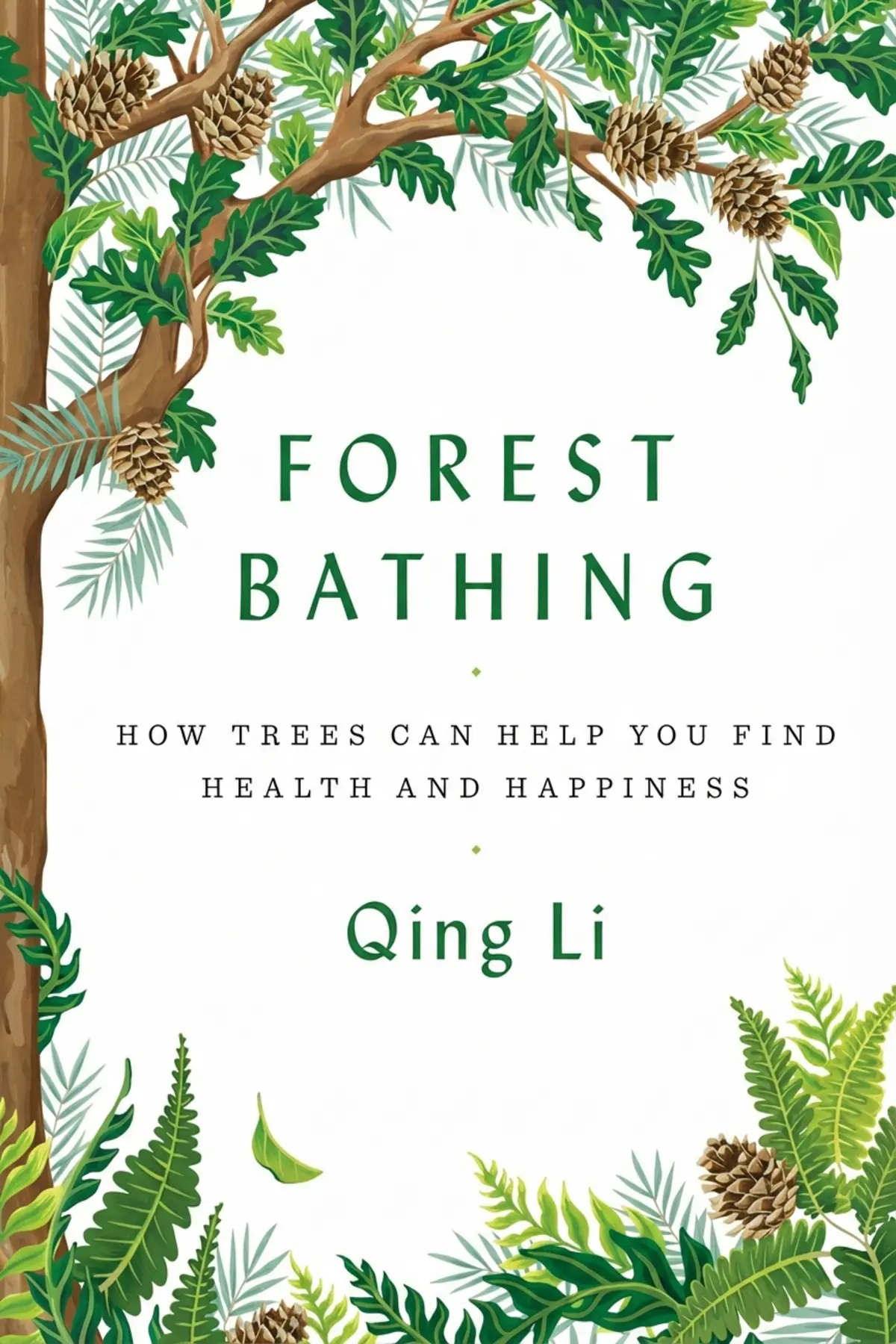
Table of Content
1. Introduction
1 min 44 sec
Have you ever wondered why a simple walk through a park can make you feel like a completely different person? We often dismiss that feeling of refreshment as just a bit of ‘fresh air,’ but there is actually a deep, biological transformation happening beneath the surface. In our current era, the average person spends an incredible 90 percent of their time indoors. We are confined by walls, tethered to desks, and constantly bombarded by the digital hum of our devices. This indoor-centric lifestyle is a radical departure from the way humans lived for thousands of years, and our bodies are feeling the strain.
In Japan, researchers and health officials recognized this growing crisis decades ago. They developed a practice known as Shinrin-Yoku, or ‘forest bathing.’ It isn’t a form of exercise like jogging or hiking. Instead, it is a practice of mindful immersion. It is about letting the forest enter your body through your ears, eyes, nose, mouth, hands, and feet. Dr. Qing Li, a pioneer in the field of forest medicine, has spent his career proving that this isn’t just a pleasant pastime—it is a vital medical intervention.
Over the course of this summary, we are going to explore the fascinating science of why trees make us healthier. We will look at the chemical compounds that act as natural bodyguards for our immune systems and discover how the sounds and colors of the wild can physically rewire our brains for relaxation. More importantly, we’ll learn how to bring the essence of the forest into our homes and offices, ensuring that no matter how busy our urban lives become, we never lose touch with the healing power of the earth. By the end, you’ll see that the forest isn’t just a place to visit—it is a sanctuary that we carry within us.
2. The Cultural Roots of Forest Civilization
2 min 33 sec
Explore how the deep history of Japan shaped a unique spiritual and physical connection to the woods, and why that bond is more threatened today than ever before.
3. The Science of Natural Immunity
2 min 17 sec
What if the very air you breathe in a forest contained invisible healers? Learn about the biological compounds that strengthen your body’s defenses against disease.
4. The Visual and Auditory Path to Peace
2 min 26 sec
Discover how the specific shapes and sounds found in the wild can trigger a relaxation response in your brain, lowering stress by up to sixty percent.
5. A Tangible Connection: Touch and Taste
2 min 35 sec
Moving beyond just looking at the scenery, find out how physical contact with the earth and the flavors of the wild can deepen your healing experience.
6. Creating an Indoor Sanctuary
2 min 18 sec
If you can’t get to the woods, bring the woods to you. Learn practical strategies for turning your home and office into a mini-forest for better air and focus.
7. The Path to a Greener Future
2 min 24 sec
Nature doesn’t just save us; we must also save it. Explore how connecting with trees creates a cycle of preservation that benefits the entire planet.
8. Conclusion
1 min 28 sec
As we reach the end of our journey through the woods, it’s clear that forest bathing is much more than a simple walk. It is a fundamental realignment of our biological selves with the world we were designed to inhabit. We’ve seen how the trees offer us a natural pharmacy of phytoncides to boost our immunity, how the very soil can act as a mood stabilizer, and how the patterns and sounds of the wild can drop our stress levels in a way that no medication can replicate.
The throughline of Dr. Qing Li’s work is that we don’t have to choose between modern life and the forest. We can live in cities, use technology, and have busy careers, as long as we make intentional time to reconnect. Whether it’s a weekend trip to a remote woods, a daily walk in a neighborhood park, or simply filling your apartment with the scents and sights of greenery, the benefits are waiting for you.
Here is a simple way to start today: Take your next workout outside. Research shows that moving your body in a green space feels significantly easier and less tiring than doing the same exercise indoors. You’ll work harder, feel better, and be much more likely to stick with it. But even if you don’t have the energy for a workout, just go and sit. Let the forest in. Listen to the wind, smell the damp earth, and breathe deeply. Your body already knows what to do; it’s just waiting for you to give it the chance to heal. The forest is calling, and it is time for us to answer.
About this book
What is this book about?
In our modern, high-tech world, many of us have lost our ancestral connection to the wilderness, spending the vast majority of our lives trapped inside climate-controlled buildings and staring at digital screens. Forest Bathing introduces a powerful remedy to this modern malaise through the Japanese practice of Shinrin-Yoku. This isn't about rigorous exercise or hiking; rather, it is the art of simply 'being' in nature and soaking in the atmosphere through all five senses. Dr. Qing Li, a world-renowned expert in forest medicine, provides a scientific foundation for what we intuitively feel: that time spent among trees is transformative. He details how specific tree oils and soil bacteria can physically alter our biology, strengthening our internal defenses against illness and calming our overactive nervous systems. This summary offers a guide to bringing these benefits into your daily life, whether you have access to a vast national park or just a few potted plants in a city apartment. It promises a path to improved sleep, lower blood pressure, and a profound sense of peace by rediscovering our place in the natural world.
Book Information
About the Author
Qing Li
Dr. Qing Li is a distinguished immunologist and a premier global authority on the science of forest medicine. He holds a teaching position at Tokyo's Nippon Medical School and has contributed his expertise as a visiting fellow at Stanford University. As a founding member of the Japanese Society of Forest Medicine and a leading executive in the International Society of Nature and Forest Medicine, Dr. Li has spent decades researching the physiological links between the natural world and human health.
Ratings & Reviews
Ratings at a glance
What people think
Listeners find the book deeply informative about forest bathing and value its detailed insights, with one listener highlighting that it is backed by scientific research. Additionally, the text is straightforward and contains striking imagery, providing a swift and delightful experience. Listeners also prize how the book improves mood and wellness, with one specifically citing its effectiveness in reducing anxiety.
Top reviews
Lars
Picked this up during a particularly stressful month at work, and it felt like a deep breath in paper form. Dr. Li manages to capture that elusive feeling of being under a canopy of green and translates it into something both practical and poetic. The photography is simply stunning; I found myself just staring at the dappled light on the pages when I couldn’t get to a park. It’s more than just a coffee table book—it’s a reminder to slow down and let the fractal patterns of nature soothe your nervous system. While some might find the 'sixth sense' talk a bit much, for me, it was exactly what my anxiety needed. Truly a life-changing perspective on how we interact with our environment and a quick read that stays with you.
Show moreSkylar
This book is a sensory masterpiece that effectively argues for the preservation of our natural world by showing us how much we need it. Dr. Qing Li explains the physiological benefits of forest bathing, like reduced blood pressure and improved immune function, in a way that feels incredibly encouraging. I specifically enjoyed the chapter on the different scents of trees and how they impact our mood differently. Frankly, just flipping through the lush photography lowered my heart rate. It’s a profound look at our ancestral connection to trees. I’ve started taking my lunch breaks in the local park instead of at my desk, and the difference in my mental clarity is night and day. A must-read for city dwellers.
Show morePia
Finally, a book that validates what I’ve felt every time I step into the woods! Dr. Li is clearly an expert in his field, and his passion for the forest shines through every sentence. I was particularly fascinated by the discussion on phytoncides—the natural oils trees release—and how they actually boost our 'natural killer' cells. It’s a fascinating blend of ancient wisdom and modern research. The book is easy to navigate and doesn't demand hours of your time; you can dip in and out for a quick dose of serenity. It has definitely motivated me to be more mindful during my weekend hikes. A must-read for the modern, over-stimulated soul who needs to reconnect with the earth.
Show moreUbolrat
Wow. This book actually made me change the way I walk. Instead of rushing through the woods with my headphones on, Dr. Li’s advice helped me engage my 'sixth sense' and actually listen to the wind and smell the damp earth. It’s a very restorative read that manages to be both informative and incredibly soothing. The data on how even just looking at a tree through a window can help healing is mind-blowing. It’s the kind of book you want to keep on your nightstand to flip through whenever the world feels a bit too loud. I highly recommend this to anyone looking to reduce their stress and reconnect with the world around them in a meaningful way.
Show moreTippawan
After hearing so much about the Japanese concept of Shinrin-Yoku, I finally got around to reading the 'official' guide. It’s surprisingly accessible and doesn’t get bogged down in overly academic jargon, which I appreciated. I loved the practical tips on how to bring the forest indoors through essential oils and houseplants, especially since I live in a cramped apartment. The book is heavily visual, which makes it a very quick read, but the message sticks with you. There are some editing quirks and a few 'woo-woo' moments that I glossed over, but the core advice—get outside and use your five senses—is solid. It’s a lovely, calming companion for anyone feeling burnt out by tech and looking for a way to improve their mood.
Show moreViroj
As someone who struggles with chronic anxiety, finding ways to ground myself is a constant battle. This book offered a very gentle, persuasive argument for why I should be spending more time among the trees. The concept of 'drinking in the forest' through all five senses is beautiful, and I’ve actually started practicing the breathing techniques mentioned. I do think the author oversimplifies some systemic issues by suggesting trees are the answer to everything, but the individual health benefits are hard to argue with. It’s a very knowledgeable guide that feels like a warm hug. It might be a bit 'New Age' for some, but the underlying message is undeniably healthy and backed by a surprising amount of research.
Show moreElias
Not what I expected, but in a good way. I thought this would be a dry manual, but it’s actually a very artistic exploration of the relationship between humans and forests. The focus on Japanese traditions, like the tea ceremony and onsen baths, provides a wonderful cultural context that I haven’t seen in other 'nature therapy' books. While I agree with other reviewers that the science can feel a bit exaggerated—especially the bits about essential oils—the overall sentiment is uplifting. The book itself is high quality, though some of the black and white photos felt a bit out of place compared to the vibrant color ones. It’s a great gift for a nature lover who values aesthetics as much as information.
Show moreManika
Ever wonder why a simple walk in the woods feels so restorative? This book attempts to bridge the gap between that intuition and actual data, but it’s a bit of a mixed bag. On one hand, the layout is gorgeous and the sections on Japanese culture are fascinating. On the other, the 'science' can feel pretty thin at times. Dr. Li talks a lot about negative ions and phytoncides, but some of the claims—like nature being a cure-all for complex conditions—left me skeptical. To be fair, it’s a beautiful object to own, even if many pages feel a bit 'empty' or repetitive. It’s great for inspiration, just don’t expect a rigorous, peer-reviewed textbook. The editing could have been tighter, but the sentiment is lovely.
Show moreRuangrat
Transitioning from a rural area to a big city was a shock to my system, and I bought this hoping for a way to cope. It’s a stunning book to look at, no doubt about that. However, the writing style is very simplistic, almost like a children's book for adults. While the photographs are phenomenal, they take up about 70% of the book, leaving the actual information feeling a bit sparse. I found the sections on bringing the 'forest' into the office with pictures of trees a bit silly, to be honest. It’s a nice 'mood' book that looks great on a coffee table, but I was hoping for more practical, depth-oriented advice rather than just being told to go to a park.
Show moreGrace
Look, I wanted to love this because the photos are undeniably beautiful, but the content is lacking. There are some wild claims here, like the suggestion that nature can essentially make ADHD symptoms disappear, which feels irresponsible without more robust citations. It often veers into pseudoscience territory with talk of 'charging' yourself with ions, and the prose can be quite repetitive. It feels like a high-end magazine expanded into a book, but with way too much white space and not enough substance. If you want a pretty book to decorate your shelf or use as a meditation aid, this is it. If you want a deep dive into the actual biology of nature’s impact on health, you might want to look elsewhere.
Show moreFeatured in
Readers also enjoyed








AUDIO SUMMARY AVAILABLE
Listen to Forest Bathing in 15 minutes
Get the key ideas from Forest Bathing by Qing Li, plus 5,000+ more titles in English and Thai.
- 5,000+ titles
- Listen as much as you want
- 7-day free trial
- Cancel anytime







