
15 min 47 sec
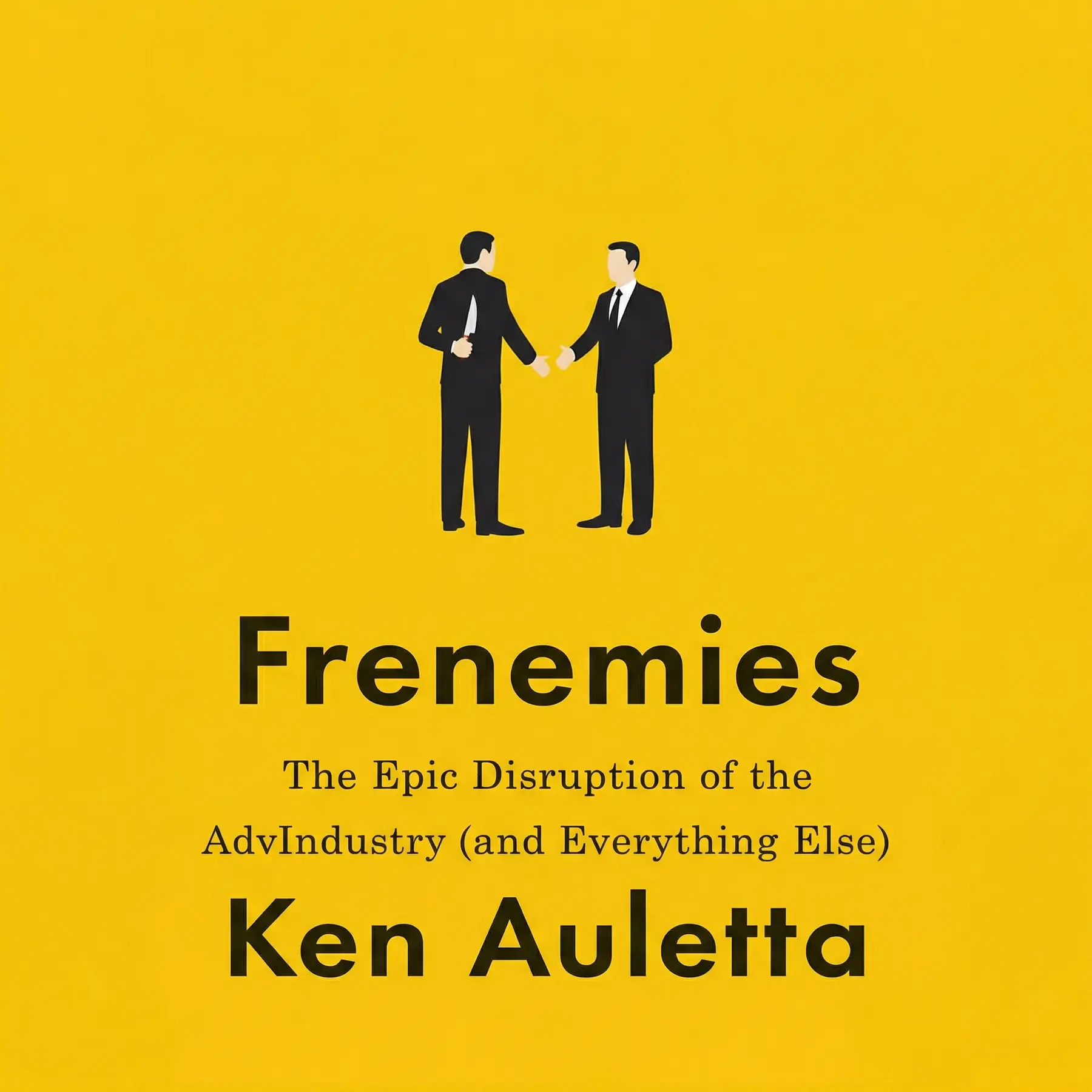
Frenemies: The Epic Disruption of the Advertising Industry (and Everything Else)
By Ken Auletta
Frenemies investigates the radical transformation of the advertising world, revealing how data-driven algorithms and tech giants have dismantled traditional creative agencies to redefine the way brands reach consumers in the digital age.
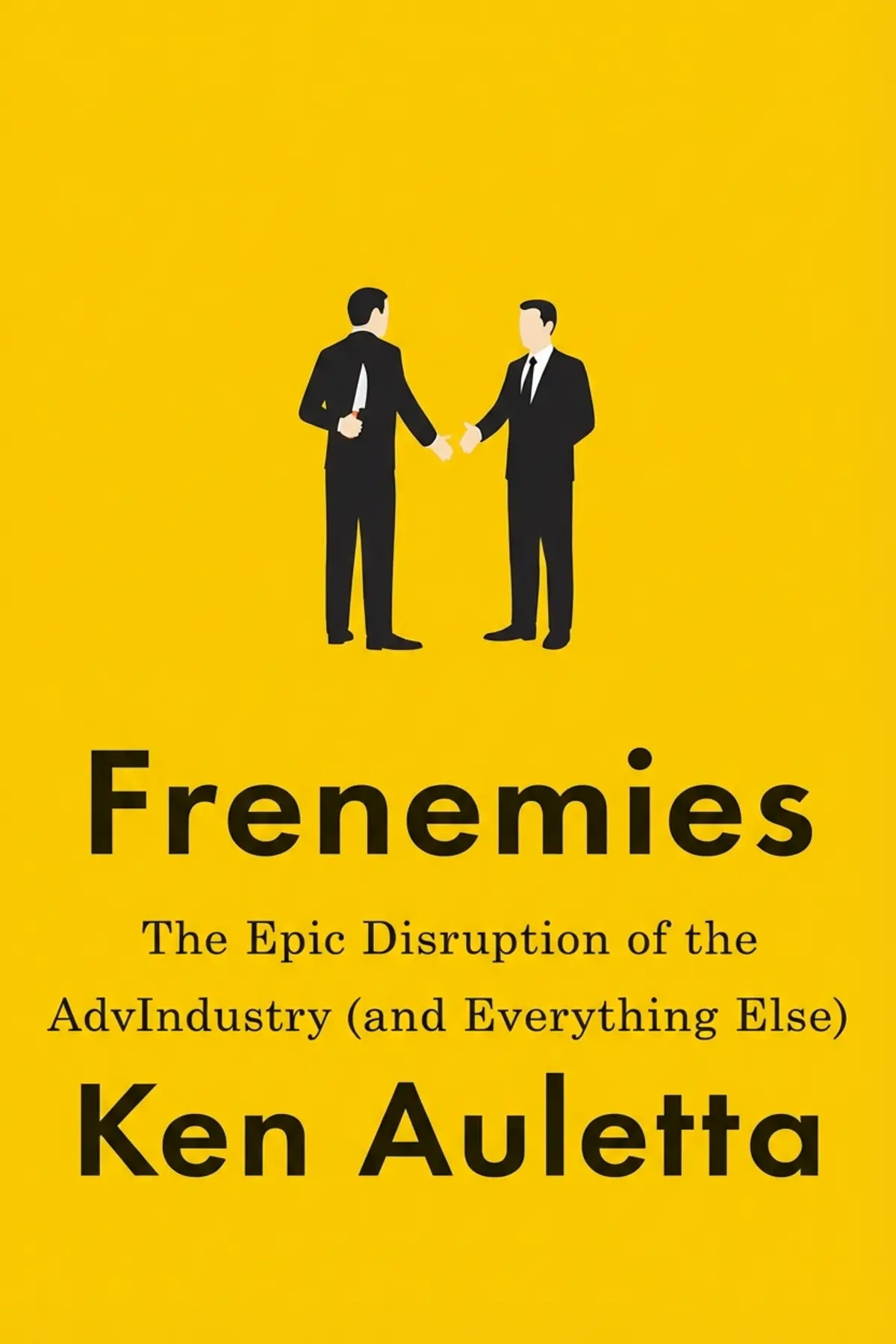
Table of Content
1. Introduction
1 min 43 sec
Everywhere we look today, we are greeted by an endless stream of attempts to grab our attention. From the glowing screens in our pockets to the billboards lining the highway, the world is saturated with advertising. But if you feel like the nature of these messages has changed recently, you’re right. We’ve moved far beyond the era of catchy slogans and simple television commercials. We have entered a time where advertising is less about the ‘art’ of a creative spark and more about the precision of a laboratory experiment.
In this journey through the modern advertising landscape, we’re going to look at the massive disruption that has turned a once-glamorous industry upside down. The power has shifted away from the creative geniuses of Madison Avenue and toward the data scientists of Silicon Valley. This isn’t just a story about commercials; it’s a story about how technology, big data, and a new economic reality have forced everyone—from publishers to tech platforms—to become ‘frenemies.’ They are forced to work together while simultaneously trying to undermine one another for a larger slice of the profit pie.
Over the next few minutes, we will explore how the smartphone became the most powerful marketing tool in history, why the traditional ways ad agencies made money have evaporated, and how the rise of digital tracking has put our privacy at the center of a high-stakes corporate battle. We’ll also see how these changes are impacting more than just our shopping habits—they are actually changing the face of global politics. Let’s dive in and see how the world of persuasion became the world of prediction.
2. The Infinite Reach of Modern Marketing
2 min 13 sec
Marketing today isn’t just about catchy commercials; it’s an all-encompassing machine that follows you from your social media feed to the very palm of your hand.
3. The Collapse of the Mad Men Economy
1 min 58 sec
The days of high commissions and three-drink lunches are over, replaced by a new era of fiscal scrutiny and data-driven accountability.
4. Data Overtakes the Big Idea
2 min 02 sec
The legendary creative spark that used to drive advertising is being sidelined by data scientists who can target individuals with surgical precision.
5. The Gold Mine of Personal Information
2 min 05 sec
Not all data is created equal, and the fight to control the most intimate details of your life has created a new hierarchy of power.
6. The Privacy Paradox and the Rise of Frenemies
1 min 57 sec
The tech companies that make our lives easier are also the ones watching our every move, creating a relationship defined by both utility and distrust.
7. Marketing Lessons from the Political Arena
2 min 11 sec
The 2016 election served as a massive wake-up call for the advertising world, proving that massive spending matters less than precise targeting.
8. Conclusion
1 min 38 sec
As we look back at the radical changes in the advertising world, it is clear that we can never return to the days of simple persuasion and broad-strokes creativity. The shift from art to science is complete. The industry has moved from an era of secure commissions and ‘big ideas’ to a world of thin margins, intense data analysis, and micro-targeted messaging. We live in a landscape where our own personal information has become the most valuable commodity on earth, traded and analyzed by a network of ‘frenemies’ who are all fighting for our attention and our dollars.
What does this mean for us as consumers? It means we must be more aware than ever of the invisible forces shaping our choices. Every click, every search, and every voice command is a data point in a vast digital profile that companies use to predict—and influence—our behavior. The disruption of the advertising industry is, in many ways, a disruption of our own privacy and agency. The take-home message is that the tools of the trade have changed forever. Success in this new world requires more than just a clever slogan; it requires a deep, data-driven understanding of the individual. As the lines between technology, commerce, and our private lives continue to blur, the only thing that is certain is that the battle for our attention will only become more precise, more personal, and more persistent.
About this book
What is this book about?
Frenemies takes us behind the curtain of the modern marketing machine to explore a landscape in total upheaval. For decades, the advertising world was defined by the 'Big Idea' and high-priced television spots, but that era has vanished. Today, the industry is a complex web of cooperation and cutthroat competition between traditional agencies, tech giants like Google and Facebook, and consulting firms. This book explores the shift from the art of persuasion to the cold science of data. The promise of this exploration is a deep understanding of why the ads you see are more personalized—and perhaps more invasive—than ever before. You will learn how the smartphone became the ultimate tracking tool, why traditional commissions have collapsed, and how the collection of thousands of data points on individual citizens is reshaping not just what we buy, but how we vote. It is a story of 'frenemies'—partners who need each other to survive but are constantly looking for ways to take each other’s lunch.
Book Information
About the Author
Ken Auletta
Ken Auletta has been a prominent voice in media reporting since 1993, specifically writing the Annals of Communications for the New Yorker. Throughout his career, he has authored twelve books, including the acclaimed New York Times bestseller, Googled: The End of the World as We Know It.
Ratings & Reviews
Ratings at a glance
What people think
Listeners find this account thoroughly documented and absorbing, featuring substantive analysis of its core topics. They value its accessible writing style, and one listener highlights that it offers an excellent exploration of today's media industry landscape.
Top reviews
Rung
Finally, someone explains why my digital life is a constant barrage of targeted ads and why traditional agencies are panicking. This book is a wild ride through the boardrooms of the most powerful media companies on the planet. I didn't expect a book about advertising to be this gripping, but Auletta makes the power struggles feel almost Shakespearean. To be honest, I didn't know much about Michael Kassan before this, but his role as the industry’s 'connective tissue' is fascinating to see unfold. The book captures that anxious energy of an industry realizing its old tricks don't work in the age of ad-blockers and Netflix. Some parts are a little repetitive, especially when discussing the agency holding companies, but the overall picture is clear. It’s an essential look at how data is the new oil in the attention economy.
Show moreManop
Auletta has clearly spent decades building the rolodex necessary to write a book of this magnitude. This is an incredibly well-researched exploration into the tectonic shifts currently rattling the advertising world. I appreciated how he broke down the 'frenemy' relationship between legacy agencies and the tech giants like Facebook and Google. It’s not just a business book; it’s a character study of titans like Martin Sorrell and Maurice Levy. While it gets a bit bogged down in the minutiae of MediaLink’s consulting deals, the broader insights are prescient. Personally, I found the second half much more engaging once the narrative momentum picked up. It is a dense read that requires focus, but the payoff is a much deeper understanding of the media landscape we inhabit. Truly a must-read for anyone trying to make sense of why traditional ads are failing.
Show moreNitaya
Think of this as the 'Mad Men' finale for the 21st century, where the martinis are replaced by data points and algorithms. Auletta does a masterful job of showing how the 'creative' side of advertising is being crushed by the 'analytical' side. The tension between the old-school agency heads and the new-school tech platforms is palpable throughout every chapter. I particularly enjoyed the sections on how consumers are revolting against intrusive marketing through subscriptions and ad-blockers. It’s a very readable, engaging look at a world that most of us interact with every day but rarely understand. My only gripe is that it can feel a bit repetitive when it comes to the biographical details of the CEOs. Still, it provides a fantastic overview of why the media world is in such a state of upheaval right now.
Show moreTantipat
After hearing about this in my communications seminar, I expected a dry textbook, but I was pleasantly surprised by the storytelling. Auletta turns the complicated world of media arbitrage and brand management into something that feels like a high-stakes drama. I loved the deep dives into the lives of industry giants like Carolyn Everson and Martin Sorrell. It’s fascinating to see how much of the global economy relies on these 'frenemy' agreements. To be fair, some of the industry jargon can be a bit overwhelming if you aren't familiar with the space. But the author does a good job of simplifying things without being condescending. It’s an eye-opening look at how much power Facebook and Google really wield over what we see and buy. Highly recommended for anyone curious about the machinery of modern influence.
Show moreKru
Truth is, the media world moves at such a breakneck speed that half the 'revelations' here already feel like ancient history. Writing about digital disruption is a losing game because by the time the book hits the shelves, the landscape has changed again. Auletta is a great writer, but this book relies too heavily on anecdotes from a few years ago. The chapters on the big holding companies like Omnicom and Publicis are interesting, but they don't offer much that you couldn't find in a weekend’s worth of trade articles. Personally, I found the focus on individual personalities to be a distraction from the larger systemic issues he was trying to address. It’s well-researched, sure, but it lacks the 'wow' factor I was expecting from such a big name. It’s a fine book for a long flight, but not a definitive text.
Show moreArthit
Ever wonder why you're paying for Netflix just to avoid the noise? Frenemies takes you behind the curtain to show the people desperately trying to get back into your living room. The book is incredibly insightful when it discusses the rise of 'interruption' marketing and the consumer's subsequent rebellion against it. Auletta manages to make the dry world of media buying feel urgent and consequential. I especially liked the analysis of how IBM and other consulting firms are becoming the new players in a space once dominated by creatives. While it does lean a bit too heavily on the celebrity status of certain CEOs, the core message about the death of the old agency model is spot on. It’s an engaging, well-paced read that gives you a new perspective on every ad you see. Definitely worth picking up for the industry insights alone.
Show moreNook
While the insights into the 'frenemies' dynamic are undeniably sharp, the structure of the narrative leaves a lot to be desired. The book feels more like a series of loosely connected essays than a focused investigation. One chapter we are deep into the history of WPP, and the next we are meandering through a profile that feels slightly out of date. Look, Auletta’s prose is top-tier, and he clearly knows these players personally, which allows for some great 'fly-on-the-wall' moments. But I wanted more data and fewer descriptions of expensive lunches in Cannes. To be fair, he does a great job illustrating how consulting firms are eating the agencies' lunch. It’s a solid 3-star read that offers some value but lacks a strong, unifying conclusion. It’s worth a look if you’re interested in the business side of things, but don’t expect a roadmap for the future.
Show moreYothaka
Look, Ken Auletta is a titan of journalism, but this often feels less like an objective analysis and more like a love letter to Michael Kassan. MediaLink is mentioned so frequently that I began to wonder if they sponsored the research for the book. That said, if you can look past the heavy focus on Kassan, there is some genuinely good reporting here on the decline of the traditional agency model. The way he describes the 'frenemy' relationship between WPP and the tech giants is quite clever. However, the book struggles to stay relevant as the industry shifts toward AI and programmatic buying, which are only briefly touched upon. It’s a decent primer on the personalities involved, but it doesn't quite get to the heart of the 'everything else' promised in the title. A bit of a mixed bag, to be perfectly frank.
Show moreYanin
Is this book actually for industry pros, or just the casual observer? Frankly, for those of us living in the trenches of media buying, a lot of the 'insider' info feels like yesterday’s news. Auletta provides a decent high-level view of how companies like WPP and Publicis are being squeezed, but he spends far too much time on the social lives of the executives. To be fair, the writing is crisp and the access he has to people like Michael Kassan is unparalleled. However, it often reads more like a collection of New Yorker profiles rather than a cohesive thesis on the future of marketing. If you're new to the space, the anecdotes about Google and Facebook disrupting the old guard will be fascinating. If you’re a veteran, you might find yourself skimming through the gossip to find the actual meat.
Show moreMarco
What a massive slog. I went into this hoping for a deep dive into the technology behind modern marketing, but instead, I got 300 pages of industry gossip. Not gonna lie, I was bored by the third chapter because so much of the content revolves around who knows whom in the New York media circle. It feels very 'insider' in a way that excludes the reader rather than inviting them in. Plus, the mentions of people like Les Moonves make the whole thing feel incredibly dated. The truth is, the book spends way too much time worshipping Michael Kassan and MediaLink without questioning their actual impact on the consumer experience. It’s mostly just high-level executives complaining about Google while doing nothing to innovate. Skip this one and find a book that actually talks about the tech.
Show moreReaders also enjoyed

AUDIO SUMMARY AVAILABLE
Listen to Frenemies in 15 minutes
Get the key ideas from Frenemies by Ken Auletta, plus 5,000+ more titles in English and Thai.
- 5,000+ titles
- Listen as much as you want
- 7-day free trial
- Cancel anytime







