
21 min 47 sec
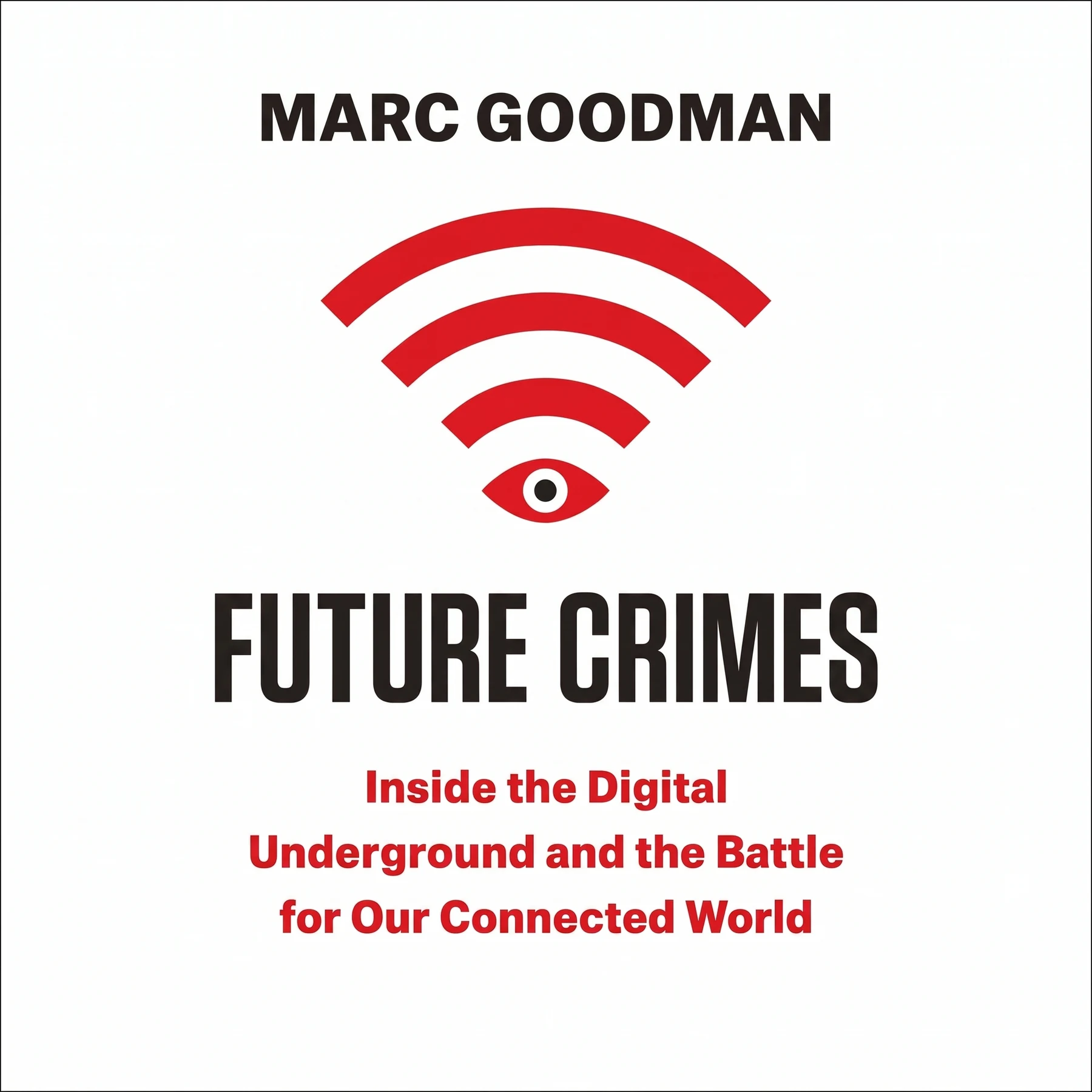
Future Crimes: Inside the Digital Underground and the Battle for Our Connected World
By Marc Goodman
Future Crimes explores the dark side of our hyper-connected world, revealing how modern technology exposes us to unprecedented risks and detailing practical steps to reclaim our digital security and privacy.
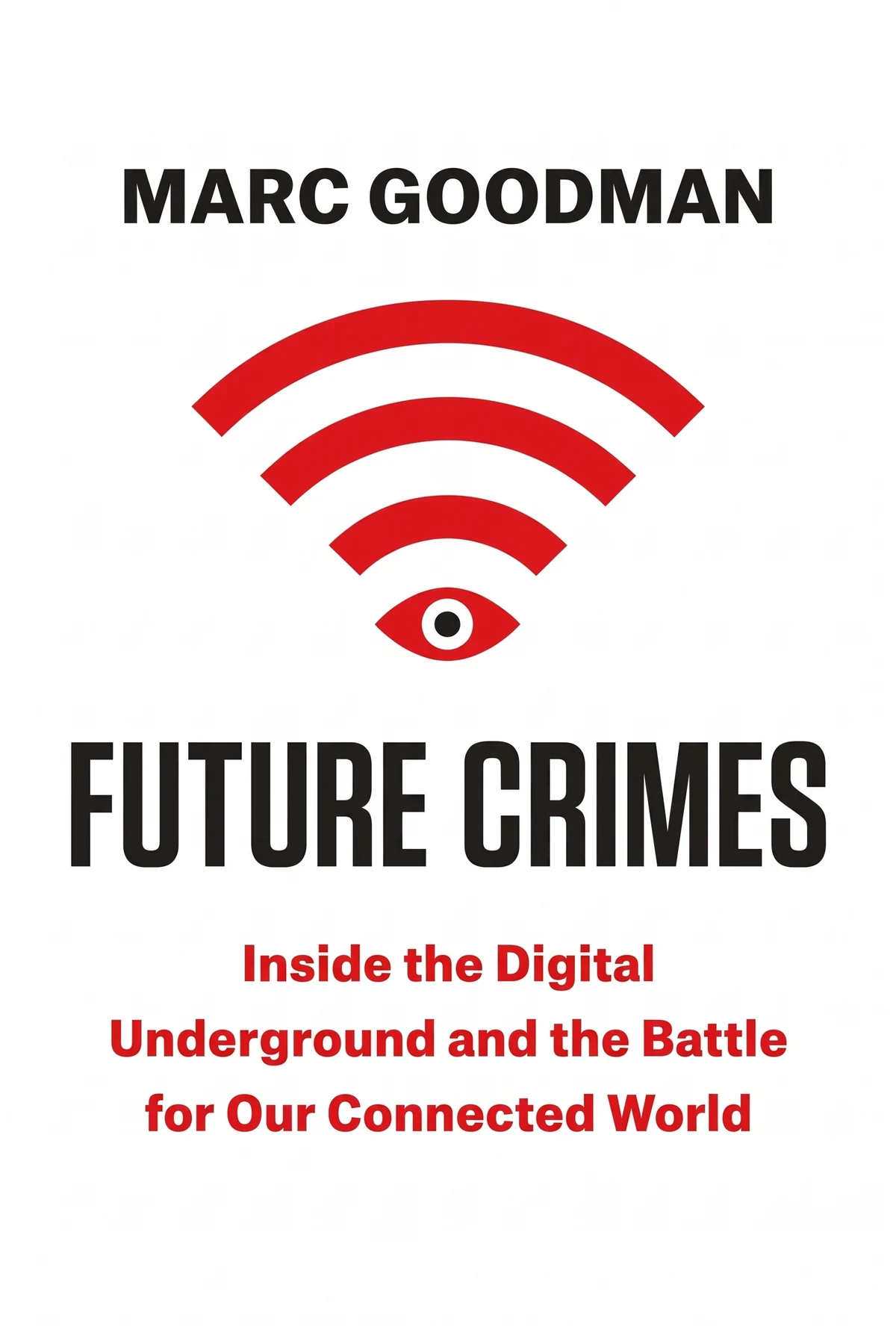
Table of Content
1. Introduction
2 min 02 sec
Think about your morning routine for a second. Before you even have your first cup of coffee, there is a very high probability that you have already interacted with the most sophisticated surveillance network ever created. It is sitting on your nightstand, or perhaps even under your pillow. Most of us check our smartphones within minutes of waking up, entering a digital world that we’ve come to rely on for everything from social validation to financial management. We view these devices as helpful tools, but there is a shadowy reality lurking behind the bright glass screens. We have entered an era of total connectivity, and with that comes total vulnerability.
In this exploration of the digital landscape, we are going to look at the unintended consequences of our technological obsession. We will see how the very tools designed to make our lives easier are being repurposed by criminals, corporations, and governments to track our every move and exploit our most private moments. This isn’t just about hackers in dark rooms; it’s about the fundamental way we’ve structured our modern world. From the apps we download without a second thought to the massive databases that store our personal history, the risks are pervasive and growing.
Our throughline today is a sobering but necessary realization: as the distance between the ‘online’ and ‘offline’ worlds vanishes, our traditional concepts of safety are becoming obsolete. However, this isn’t a message of despair. By understanding how these systems work and where the cracks are located, we can begin to build a more resilient digital life. We’ll uncover the hidden scripts running in the background of our lives and learn the practical steps necessary to protect ourselves in an age where a single line of code can be more dangerous than a physical weapon. Let’s dive into the complex, often unseen world of modern cybercrime and discover what it truly means to live in a connected world.
2. The Psychological Tether and the Speed of Digital Infiltration
2 min 40 sec
Our emotional attachment to mobile devices creates a constant state of vulnerability that professional hackers can exploit in mere minutes.
3. The Smartphone as a Sophisticated Surveillance Tool
2 min 14 sec
Every sensor and app on your phone could be collecting intimate details about your life to sell to the highest bidder.
4. The Hidden Reality of the 'Free' Digital Economy
2 min 13 sec
When a service is offered for free, your personal information and creative work become the product being sold.
5. The Escalation of Cybercrime and the Fog of War
2 min 19 sec
Hacking has moved from a hobbyist pursuit to a highly organized industry utilized by cartels and nation-states.
6. Social Media as a Map for Physical Crime
2 min 05 sec
Oversharing your daily life and vacation plans provides criminals with a perfect itinerary for home invasion.
7. The Looming Threat of the Internet of Things
2 min 11 sec
As every household object becomes ‘smart’ and connected, the number of entry points for hackers grows exponentially.
8. The Fragile State of Critical Infrastructure
2 min 11 sec
Connecting vital services like water and power to the internet creates the risk of catastrophic large-scale failures.
9. Reclaiming Control in a High-Tech Future
2 min 10 sec
The future of technology is inevitable, but its impact depends on our commitment to digital hygiene and ethical oversight.
10. Conclusion
1 min 42 sec
As we wrap up our journey through the digital shadows, it’s clear that the world described in Future Crimes is already here. We are living in a society where the boundaries between the physical and the virtual have all but disappeared, creating a landscape that is as dangerous as it is miraculous. The core message of this exploration is that while we cannot stop the march of technology, we are not helpless in the face of its risks. Our vulnerability is often a product of our own convenience-seeking behavior, but that means our security can be a product of our own intentionality.
The throughline of this summary has been one of awareness and action. We’ve seen how our smartphones can be turned against us, how ‘free’ services trade away our privacy, and how our national infrastructure rests on a digital foundation that is far from secure. But we’ve also identified the ways we can fight back. The path forward requires a shift in mindset. We must stop viewing digital security as an IT problem and start viewing it as a fundamental life skill.
Your next step is simple but vital: start small. Go through your phone and delete the apps you don’t use. Check the permissions on the ones you keep. Invest in a password manager and start the process of creating unique, complex keys for your digital life. Remember, in a world where everything is connected, a small change in your personal habits can have a massive impact on your overall safety. The digital age is full of wonders, and by taking these steps, you can ensure that you are the one in control of your technological future, rather than a passenger in someone else’s malicious game.
About this book
What is this book about?
We live in an era where everything is connected, from our thermostats to our bank accounts. While this connectivity offers immense convenience, it also creates a playground for a new breed of sophisticated criminals. Future Crimes examines the hidden vulnerabilities of the digital age, stripping away the illusion of safety that comes with our daily gadgets. Marc Goodman takes us through the evolution of cyber threats, explaining how your smartphone acts as a personal spy and how your social media habits could be an open invitation for physical crime. The book moves beyond individual risks to look at the fragility of our national infrastructure, including power grids and water supplies. By understanding the true cost of 'free' digital services and the shifting landscape of global hacking, readers are empowered with the knowledge to protect their identities and assets in an increasingly dangerous online environment.
Book Information
About the Author
Marc Goodman
Marc Goodman is an FBI futurist who has consulted organizations such as INTERPOL, the United Nations, NATO, the LAPD and US government on issues ranging from security to business to international affairs. He also serves as Global Security Advisor and Chair of Policy and Law at the NASA- and Google-sponsored Silicon Valley’s Singularity University.
Ratings & Reviews
Ratings at a glance
What people think
Listeners find the book to be deeply researched and intellectually stimulating, calling it a necessary read for anyone with a digital presence. They value the comprehensive breakdown of cyber risks and the way it highlights their personal security vulnerabilities, with one listener mentioning that it offers extremely helpful safety advice. The prose is praised for being smartly composed; although some feel the content is frightening, many view it as a compelling and intriguing experience.
Top reviews
Jiraporn
Wow, I am never going to look at my smart thermostat or my fitness tracker the same way again after finishing this masterpiece. Marc Goodman manages to take complex technical concepts and translate them into a narrative that is both accessible and deeply bone-chilling. Look, we all know the internet has risks, but seeing the sheer scale of 'Moore’s Outlaws' and how they outpace our legal systems is eye-opening. The section on 'Hackable You'—discussing the security of pacemakers and bionics—is enough to make anyone want to go off the grid entirely. Fortunately, the author doesn't just leave you in a state of terror; he introduces the concept of 'cyber hygiene' as a necessary public health approach for the digital age. This is essential reading for anyone who uses a computer, which is basically everyone alive today. It’s a wake-up call that we are all much more vulnerable than we care to admit.
Show moreRuangrat
As someone who teaches courses on technology, I found Future Crimes to be an invaluable resource for understanding the darker side of our connected world. Goodman’s background as a cybercrime cop gives him a unique perspective that you just don't get from typical tech journalists. The way he describes the hierarchy of criminal organizations—showing they have more in common with Fortune 500 companies than we’d like to think—is brilliant. In my experience, most people underestimate the risks of biometric security, but Goodman explains perfectly why a stolen fingerprint is far worse than a stolen password. The book is comprehensive, intelligently written, and provides a necessary counter-narrative to the Silicon Valley 'technology solves everything' mantra. Even if you only read the final fifty pages for the security tips, it is well worth the investment of your time. It’s a wake-up call for a society that has become far too complacent with its gadgets.
Show morePita
Finally got around to reading this and I’m genuinely shaken by the 'Moore’s Outlaws' concept and the sheer scale of global vulnerability. Marc Goodman has written what I consider to be the definitive guide to the risks of the 21st century. The level of detail he provides on the structure of cyber-criminal organizations is unmatched, and his warnings about the Internet of Things feel more relevant every single day. Truth is, we are all living in a glass house, and most of us don't even realize the windows are wide open. The writing style is engaging and fast-paced, even if the subject matter is heavy enough to make you want to throw your phone in a river. I highly recommend this to anyone who wants to understand the true cost of our convenience. It’s an essential, provocative, and deeply researched book that will stay with you long after you turn the final page.
Show moreMats
Picked this up after hearing a podcast interview with Marc Goodman, and I was immediately struck by how intelligently he lays out the current landscape of cyber threats. The truth is, most of us are living in a state of digital denial, ignoring the massive amount of 'digital exhaust' we leave behind every single day. While the book is definitely a long read, Goodman provides an encyclopedic cataloging of everything from the DarkNet to the vulnerabilities inherent in the Internet of Things. Some might find his frequent use of the term 'Crime Inc.' a bit repetitive, but it effectively drives home the organized nature of modern outlaws. I particularly appreciated the safety tips provided toward the end of the text, as they offer a practical way to manage the overwhelming anxiety the rest of the chapters induce. It’s a fascinating, if somewhat terrifying, look at how our connectivity is being weaponized against us in ways we rarely consider.
Show moreRyan
Ever wonder how vulnerable your digital life really is when you click 'agree' on those fifty-page Terms of Service agreements? Goodman explores this question with terrifying detail, showing how companies and criminals alike are harvesting our data for their own ends. Personally, I found the chapters on the Internet of Things to be the most impactful, as they highlight how even our lightbulbs can become entry points for hackers. The book is quite long and the writing can be a bit flowery at times, but the core message is too important to ignore. Gotta say, I appreciated the shift toward the end where he discusses Asimov’s Laws and the potential for robotic interference in our daily lives. It’s a thought-provoking read that will definitely make you rethink your 'in screen we trust' attitude. Just be prepared for a very long journey through a lot of dark territory before you get any real solutions.
Show moreWeera
After hearing so much buzz about this title, I finally dove into Goodman's encyclopedic look at the risks of our modern era. The book is definitely scary, but it’s a necessary kind of fear that encourages better digital habits. I was particularly fascinated by the discussion on the Silk Road and how cryptocurrency is changing the nature of illegal transactions. While it’s true that some sections feel a bit like 'overkill' in their warnings of impending disaster, the research is undeniably solid. My only real gripe is that the author spends so much time on crimes that have already occurred rather than focusing solely on what's coming next. Still, the concept of 'cyber hygiene' is something I’ve already started implementing in my own life. It’s an important contribution to the conversation about privacy and security in an age where everything is connected and everyone is vulnerable.
Show moreFinn
Honestly, this book changed the way I use the internet almost overnight, which is a testament to how persuasive Goodman’s arguments are. I never realized how much personal information I was leaking just by carrying a smartphone in my pocket. The sections on how hackers can target medical devices and even moving cars were particularly eye-opening and made me reconsider my excitement for the 'smart' revolution. While the book can be a bit of a downer, the safety tips at the end are practical and easy to implement for the average user. It’s well-researched and intelligently written, though I agree with other reviewers that it can be a bit long-winded in parts. If you can get past the repetitive stories of 'Crime Inc.,' there is a wealth of information here that everyone should know. It’s a fascinating read for anyone concerned about the intersection of technology and personal safety.
Show moreWatcharaporn
This book desperately needed a ruthless editor who wasn't afraid to cut at least two hundred pages of repetitive anecdotes. To be fair, Goodman’s research is incredibly deep, and he clearly knows his subject matter inside and out, but he often misses the forest for the trees by getting bogged down in every single minor crime story. I was also incredibly frustrated by the documentation style; having endnotes keyed to page numbers without any actual footnote markers in the text makes it nearly impossible to verify specific claims on the fly. Many of the 'future' crimes he describes are actually things that have already happened, which makes the title feel slightly sensationalized. Not gonna lie, I found myself skimming through the middle sections just to get to the actual predictions about AI and robotics. It’s a decent primer for the tech-illiterate, but those already familiar with 'The Dark Side' of the web might find it a bit redundant.
Show moreNong
Not gonna lie, I had a hard time finishing this one because of how dense and repetitive the prose becomes after the first few chapters. Goodman has a lot of great ideas, but he tends to hammer them home with so many examples that the impact starts to fade. The whole 'Crime Inc.' branding felt a bit forced, and the lack of traditional footnotes made it difficult for me to take some of his more extreme claims seriously. To be fair, he does make some excellent points about the dangers of algorithms deciding what information we see. However, the book often feels like it's trying to scare the reader into submission rather than providing a balanced view of technological progress. It’s a good book to keep on your shelf for reference, but reading it cover-to-cover is a bit of a slog. It should have been much shorter and more focused on the actual 'future' rather than the recent past.
Show moreGoy
The constant alarmist tone in this book eventually made me tune out, despite my initial interest in the subject of cyber security. Frankly, Goodman’s overuse of the phrase 'Crime Inc.' became so tedious that I started flinching every time I saw it on the page. While the author is clearly well-researched, the presentation feels more like a collection of scary headlines than a cohesive look at future technological trends. Much of what is discussed here has already been covered more elegantly in books like 'Data and Goliath' or 'Homo Deus.' The documentation is also a mess, making it difficult to distinguish between legitimate scholarly facts and the author's own speculative fears. By the time I reached the concluding chapters on what we can actually do to protect ourselves, I felt too worn down by the sensationalism to care. It’s a dense, exhausting read that prioritizes shock value over nuanced analysis of the evolving tech landscape.
Show moreReaders also enjoyed



AUDIO SUMMARY AVAILABLE
Listen to Future Crimes in 15 minutes
Get the key ideas from Future Crimes by Marc Goodman, plus 5,000+ more titles in English and Thai.
- 5,000+ titles
- Listen as much as you want
- 7-day free trial
- Cancel anytime







