
21 min 41 sec
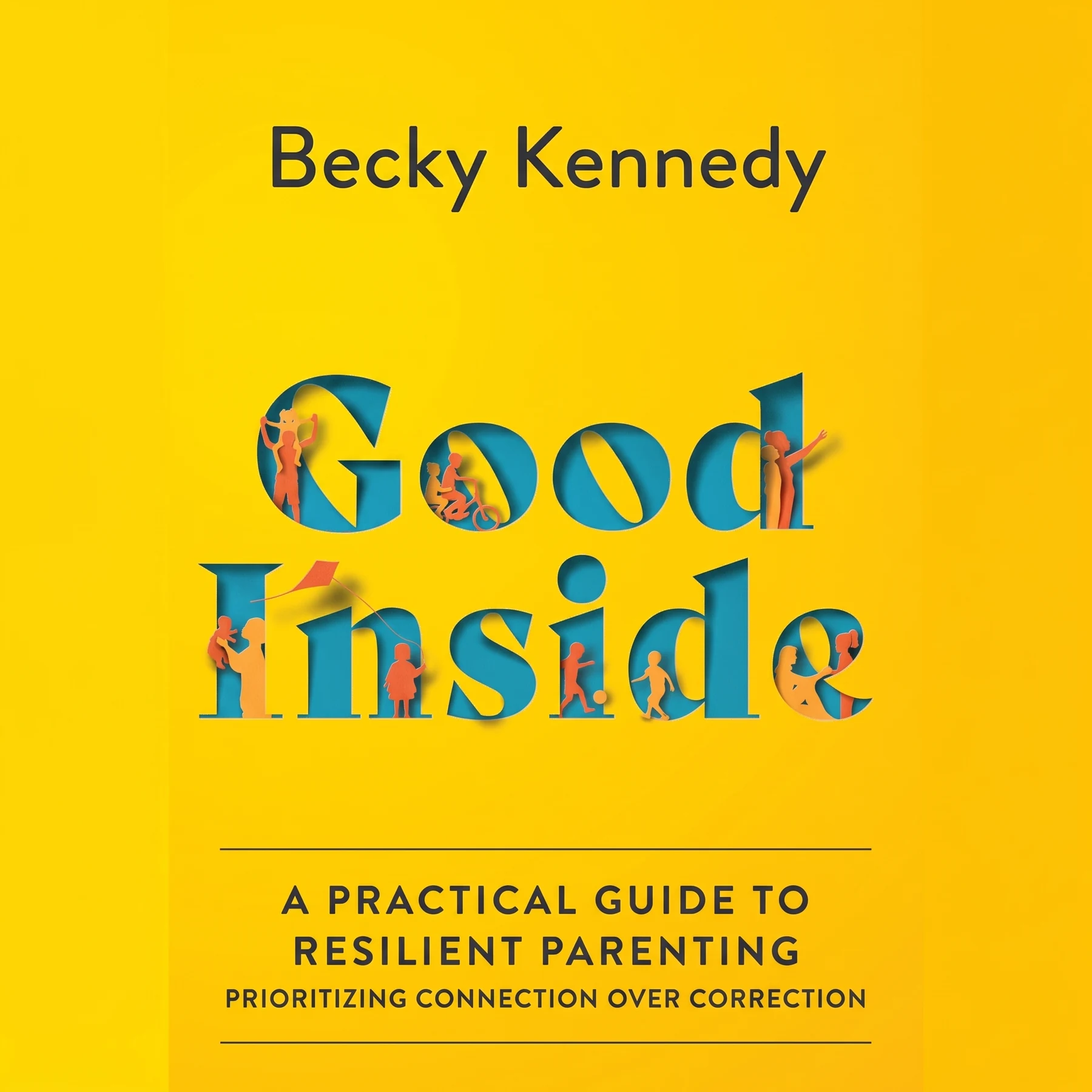
Good Inside: A Practical Guide to Resilient Parenting Prioritizing Connection Over Correction
Discover a transformative approach to parenting that moves beyond behavior modification. Learn to build deep connections, foster resilience, and recognize the inherent goodness in your child, even during their most challenging moments.
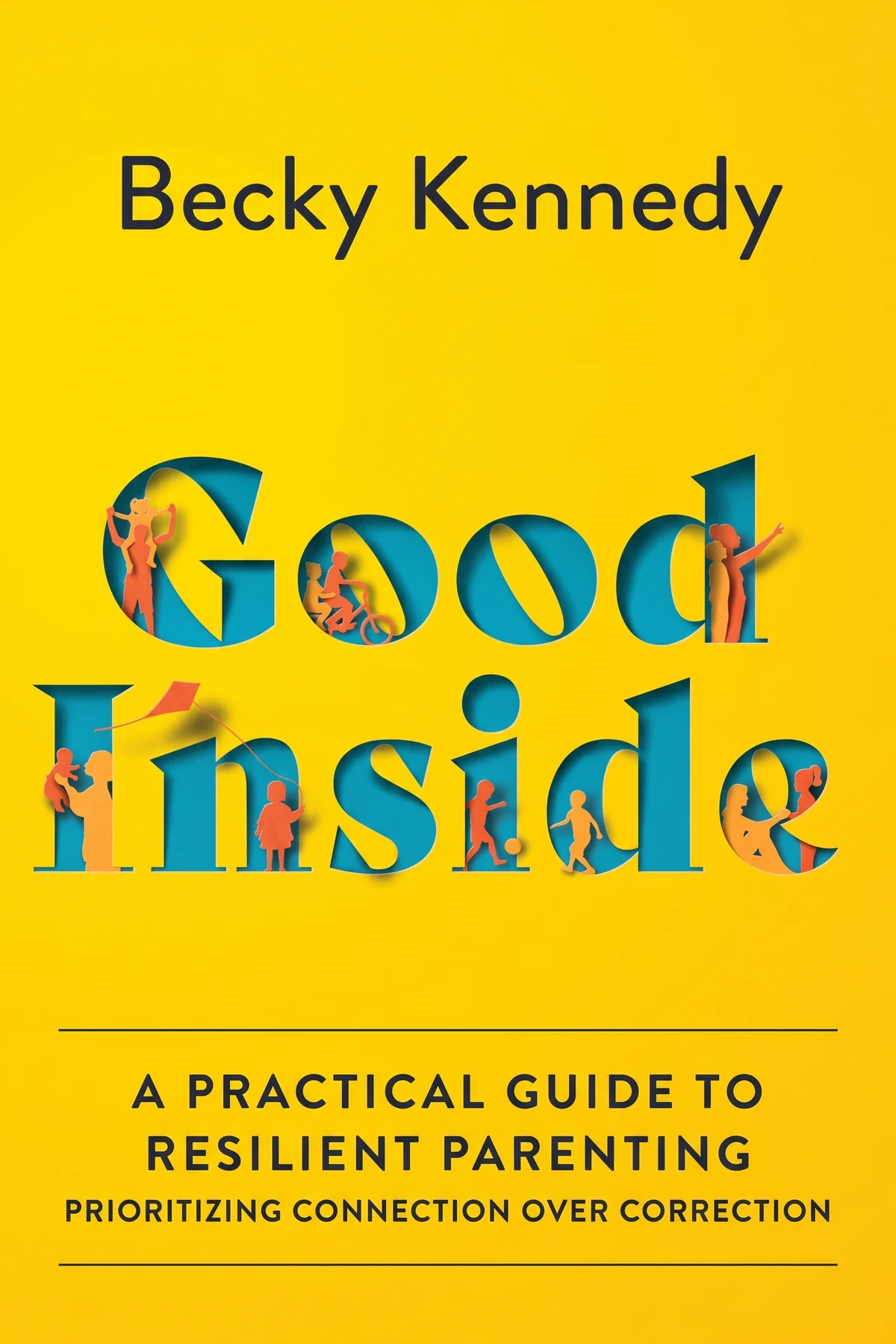
Table of Content
1. Introduction
1 min 54 sec
If you have ever found yourself standing in the middle of a grocery store aisle with a screaming toddler, or staring at a sticker chart that seems to have lost its magic, you know the particular brand of exhaustion that comes with modern parenting. We are often told that our primary job is to manage our children—to reward the good, punish the bad, and somehow mold them into polite members of society through a series of consequences and incentives. But what if this constant focus on behavior is actually getting in the way of the very thing we want most: a healthy, loving, and lifelong relationship with our kids?
This is where we begin our journey with the core philosophy of being good inside. This isn’t just a feel-good phrase; it is a fundamental shift in how we perceive the small humans in our care. Instead of seeing a child who is ‘being difficult,’ we start to see a child who is ‘having a hard time.’ This distinction changes everything. It moves us away from being the police officers of our household and toward being the supportive coaches and sturdy leaders our children actually need.
In the pages and ideas ahead, we are going to deconstruct the traditional methods that have left so many parents feeling guilty and discouraged. We will explore how to build what is called ‘connection capital,’ how to handle the most explosive tantrums without losing our cool, and why resilience is a far more valuable goal than temporary happiness. The beauty of this approach is that it doesn’t just help your child; it helps you. It’s about letting go of the pressure to be a perfect parent and instead embracing the messy, beautiful work of being a present one. By the end of this summary, you will have a new lens through which to view your family, one that prioritizes understanding over obedience and love over labels. Let’s dive into a way of parenting that finally feels as good on the inside as we want our children to be.
2. The Foundation of Internal Goodness
2 min 09 sec
What if your child’s worst behavior didn’t define who they are? Discover how the Most Generous Interpretation can transform your reaction to even the most stressful parenting moments.
3. Holding Boundaries While Honoring Feelings
2 min 13 sec
You don’t have to choose between being a ‘kind’ parent and a ‘firm’ one. Learn how the principle of ‘two things are true’ allows you to do both simultaneously.
4. The Power of Repair Over Perfection
2 min 21 sec
Worried about past parenting mistakes? Discover why the process of ‘repair’ is more important for your child’s development than being a perfect parent ever could be.
5. Choosing Resilience Over Constant Happiness
2 min 11 sec
Is your child’s happiness the ultimate goal? Learn why focusing on resilience—the ability to handle life’s ups and downs—is a far more valuable gift.
6. The Antidote to Shame
2 min 06 sec
Shame can freeze a child’s ability to learn and grow. Discover how connection and truth-telling can dismantle shame and encourage better behavior.
7. Building Your Connection Capital
2 min 13 sec
Parenting isn’t just about managing crises; it’s about the everyday moments. Learn practical ways to strengthen your bond before trouble starts.
8. Handling Outbursts with Safety and Sturdiness
2 min 18 sec
Tantrums and defiance can feel like personal attacks, but they are often cries for help. Learn the ‘I won’t let you’ technique to maintain order with love.
9. Reframing Normal Struggles as Development
2 min 16 sec
Is your child shy, picky, or a perfectionist? Discover why these ‘problem’ behaviors are actually normal parts of growing up and how to support them.
10. Conclusion
2 min 00 sec
As we wrap up our exploration of the Good Inside philosophy, it is helpful to take a moment and reflect on the major shift we’ve discussed. We started by moving away from the idea of parenting as behavior management—the world of sticker charts and time-outs—and toward a model based on deep, unwavering connection. We’ve learned that behavior is simply a window into a child’s internal world, a signal that something is happening beneath the surface that they don’t yet have the words or skills to handle. By adopting the ‘good inside’ mindset, we give ourselves permission to stop judging and start understanding.
The throughline of everything we’ve covered is the idea that the relationship you have with your child is the most powerful tool in your parenting kit. Whether you are using the ‘Two Things are True’ principle to hold a firm boundary, performing a ‘repair’ after a difficult afternoon, or building ‘connection capital’ through ten minutes of focused play, you are investing in a foundation of safety. This safety is what eventually allows your child to move from ‘having a hard time’ to being able to regulate themselves, trust their own feelings, and treat others with the same respect they receive from you.
Parenting this way isn’t always the easiest path. It requires more patience, more self-reflection, and more emotional labor than simply sending a child to their room. But the rewards are infinitely greater. You are not just raising a child who follows the rules; you are raising a human being who is resilient, confident, and empowered. You are breaking cycles of shame and building a legacy of love. Remember, you don’t have to be perfect to be a great parent. You just have to be willing to see the good—in your child and in yourself—and to keep showing up, one repair and one connection at a time. As you move forward, carry with you the knowledge that you are a sturdy leader, and no matter how messy things get, your child is, and always will be, good inside.
About this book
What is this book about?
Good Inside challenges the traditional parenting model of rewards and punishments, suggesting that the key to a healthy family lies in connection rather than control. Instead of viewing difficult behaviors as problems to be fixed, this approach treats them as signals of unmet needs or internal struggles. By shifting the focus from 'fixing' the child to understanding their internal world, parents can cultivate a relationship built on trust and safety. The book provides a framework for handling common hurdles like tantrums, sibling rivalry, and defiance without resorting to shame. It promises to help parents become the 'sturdy leaders' their children need, emphasizing that it is never too late to repair past mistakes. Through practical strategies like the 'Most Generous Interpretation' and the power of 'two things can be true,' parents learn to hold firm boundaries while remaining emotionally available, ultimately raising confident and resilient human beings.
Book Information
About the Author
Becky Kennedy
Dr. Becky Kennedy is a clinical psychologist, mother of three, and founder of Good Inside, a membership platform that gives parents the education and skills they need to heal their family and move forward empowered and full of love for both themselves and their children. Along with the book Good Inside, Dr. Becky offers workshops, runs a podcast, and uses her thriving social media accounts to make her parenting techniques accessible to as many people as possible.
Ratings & Reviews
Ratings at a glance
What people think
Listeners find this parenting guide to be an excellent resource that provides actionable techniques and explains intricate psychological theories in accessible language. This work enhances family relationships and makes advice feel manageable, as one listener pointed out how it allowed them to adjust their outlook. Listeners value the profound influence it has, with one describing how it transformed their approach to raising children, while another comments on how it assisted them in respecting their family members' viewpoints. The book is well-received for its clear format and emphasis on addressing emotional requirements to help kids grow into resilient adults.
Top reviews
Joe
The concept of 'Connection Capital' alone makes this worth the price of admission. Dr. Becky has an incredible gift for taking dense, clinical psychological concepts and translating them into something you can actually use while your toddler is screaming over a blue bowl. I love that she moves away from the transactional nature of sticker charts and focuses on the long-term emotional health of the child. Gotta say, it really shifted my perspective on what 'bad' behavior actually is—it's just a symptom of an unmet need. My house feels less like a battlefield now. While some of the scripts felt a bit wordy for real-life application, the underlying philosophy is solid. It’s practical, compassionate, and life-changing.
Show moreAdam
Finally, a parenting book that doesn't make me feel like a total failure every time I lose my cool. The focus on 'Repair' is revolutionary because it acknowledges that we are all human and we are going to mess up. This isn't about being a perfect parent; it's about being a sturdy leader. I found the strategies for managing power struggles incredibly doable, even on my most exhausted days. It's refreshing to see a psychologist admit that parenting is hard and that we deserve self-care too. This book helped me validate my own feelings as much as my kids'. If you want to raise emotionally healthy adults, start here. It is a masterclass in empathy.
Show morePatcharaporn
Dr. Becky is a parenting Jedi, plain and simple. She takes the shame out of the equation and replaces it with curiosity. I used to rely heavily on time-outs, but after reading this, I realized I was just leaving my child alone in their biggest feelings. The shift to 'time-ins' and emotional regulation has been a game-changer for my 'orchid' child who needs that extra hothouse attention to thrive. The writing style is accessible and quick, which is perfect for busy parents who can only read two pages before falling asleep. It’s not just about stopping a behavior; it’s about understanding the human behind it. Truly a masterpiece of modern parenting advice.
Show moreKob
If you feel like your home has become a constant cycle of punishments and resentment, you need to read this immediately. The way Kennedy explains the 'Internalized Narrative' of a child is haunting and beautiful. She explains that if we constantly label kids as 'bad,' they start to believe it. This book teaches you how to maintain boundaries without sacrificing the relationship. Not gonna lie, I cried during the chapter on self-care for parents because it was so validating. It’s one of the few books that actually gives you a toolkit rather than just vague theories. My family dynamics have improved 100% since I started implementing her strategies. Five stars isn't enough.
Show moreWan
Wow, just wow. This book completely changed my approach to discipline. I used to think I had to be the 'boss' and win every argument, but now I see my role as a 'sturdy pilot' navigating a storm. The strategies are so simple yet so profound. It makes complex developmental psychology feel like common sense. I’ve noticed my kids are more willing to cooperate because they feel seen and heard. It’s not about being a doormat; it’s about building a foundation of trust that lasts into the teenage years. Frankly, every person who works with children should be required to read this. It is a brilliant, essential resource.
Show moreSkylar
Every parent should have a copy of this on their nightstand. It’s the first book that actually helped me understand why my child reacts the way they do to transitions and limits. The distinction between 'stop behaviors' and 'start behaviors' was a lightbulb moment for me. I’ve stopped using sticker charts because I want my kids to have intrinsic motivation, not just perform for a prize. The chapter on 'Good Inside' philosophy helped me heal some of my own childhood triggers too. It’s a lot of emotional work, but the results in my children’s behavior are undeniable. They are becoming more resilient and socially aware every day. Highly recommended for any parent.
Show moreJiraporn
After following her on Instagram for a year, I wasn't sure if the book would offer anything new, but the depth here is impressive. Truth is, it pulls a lot from 'The Whole Brain Child,' but it’s presented in a much more digestible way for the average parent. I especially liked the scripts for sticky situations, even if they sound a bit 'therapy-speak' at times. Does every child need this level of intensive emotional labor? Probably not, as some 'dandelions' will grow fine regardless. But for those of us with spirited kids, these tools are a lifeline. My only gripe is that it’s a bit repetitive in the middle sections. Still, it’s a fantastic read that offers real hope.
Show morePornpimon
Picked this up during a particularly rough patch with my eldest, and the shift in our family dynamic was almost immediate. Personally, I found the examples of 'horrid behavior' very relatable—it’s nice to know other kids scream 'I hate you' too! Dr. Becky’s tone is non-judgmental and encouraging throughout the entire book. My only real criticism is the length; it could have been 100 pages shorter and still hit the same points. Also, some of the dialogue feels a bit scripted and robotic for a busy household. However, the core message of validating emotions while holding firm boundaries is gold. It’s a solid addition to the 'gentle parenting' library.
Show moreYulia
While I appreciate Dr. Becky’s heart for children, I struggled with the core premise that everyone is inherently 'good inside' at all times. To be fair, as a Christian, this worldview clashes with the scriptural teaching that we are all flawed and prone to foolishness—Proverbs 22:15 comes to mind. Children aren't just 'good kids having a hard time' every single instance; sometimes they are just being defiant. I found the methods a bit too permissive for my taste, almost like the parent is expected to be a full-time therapist rather than an authority figure. However, I did find the sections on 'Resilience vs. Happiness' quite insightful. I’ll take the small nuggets of wisdom regarding child processing but skip the overall philosophy.
Show moreJai
Maybe I’m in the minority here, but parts of this felt like the ultimate form of high-pressure helicopter parenting. The author suggests that if we don't handle every emotional outburst perfectly, our children will grow up unable to trust their own reality. In my experience, that’s a lot of pressure to put on a parent who is just trying to get dinner on the table! I found the 'Repair' ceremonies a bit over the top for minor infractions. Does a three-year-old really need a 10-minute debrief because I used a loud voice? It feels like we are raising a generation of navel-gazers. I enjoyed the bits on connection capital, but the rest felt like pseudoscience designed to make parents more anxious.
Show moreReaders also enjoyed



AUDIO SUMMARY AVAILABLE
Listen to Good Inside in 15 minutes
Get the key ideas from Good Inside by Becky Kennedy, plus 5,000+ more titles in English and Thai.
- 5,000+ titles
- Listen as much as you want
- 7-day free trial
- Cancel anytime







