

A Long Way Gone: Memoirs of a Boy Soldier
Ishmael Beah
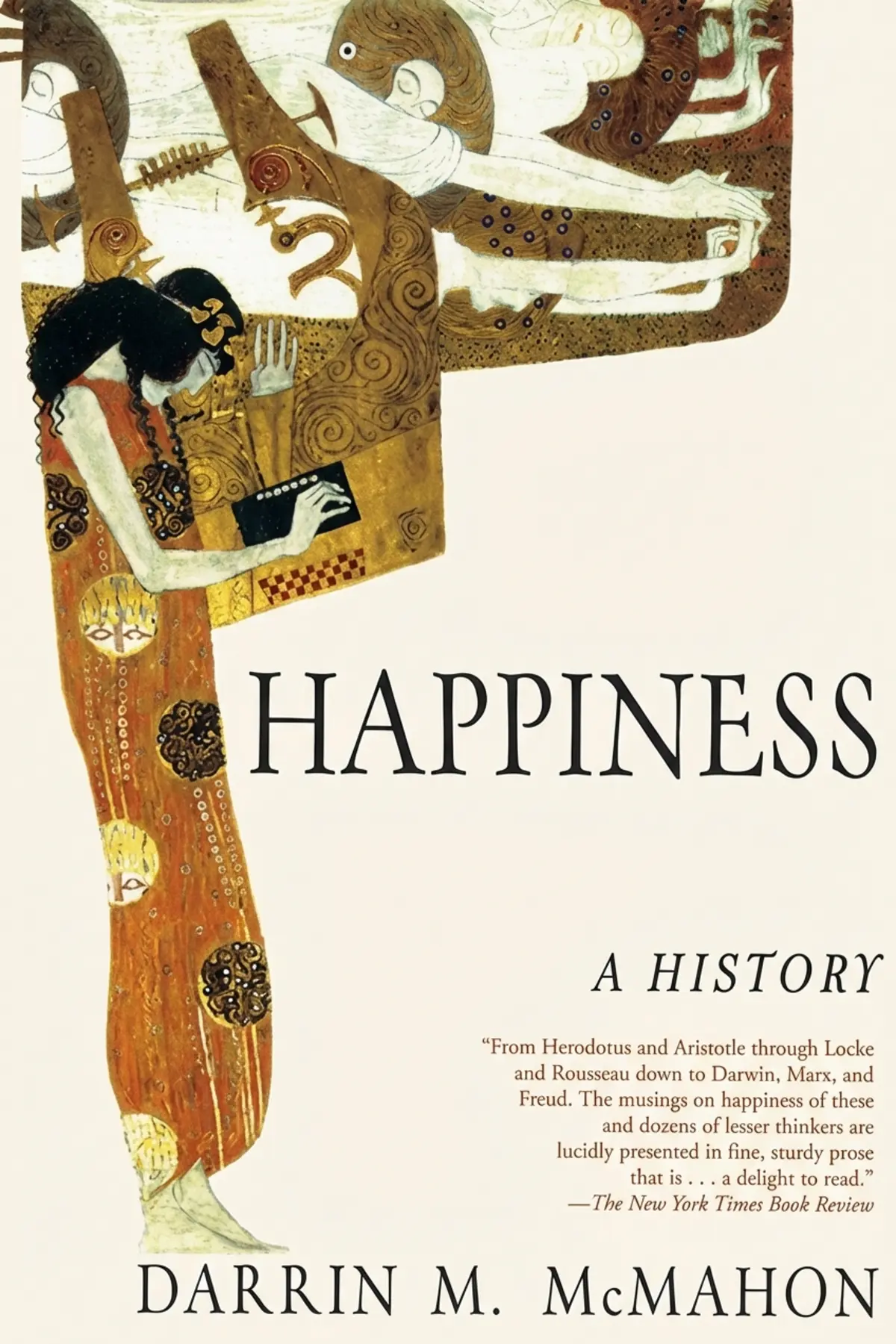
A sweeping historical exploration of how human joy evolved from a divine gift into a modern entitlement. Discover how philosophers, theologians, and revolutionaries redefined what it means to live a good life.
1 min 32 sec
In our modern world, we are surrounded by the message that we should be happy. It is baked into our advertising, our social media feeds, and even our political documents. We treat happiness like a metric of success, a goal to be achieved through the right habits, the right career, or the right mindset. But if you were to travel back several centuries and ask the average person about their right to be happy, they would likely look at you with total confusion. For most of human history, happiness was not a goal—it was a mystery.
This exploration takes us through the long and winding history of how we came to view happiness as something we deserve. It is a journey that moves from the marble pillars of Athens to the dark, plague-ridden streets of medieval Europe, eventually landing in the optimistic fervor of the American Revolution. We will see that our current definition of a ‘good life’ is not a fixed truth, but a shifting ideal that has been rebuilt by philosophers, religious leaders, and political theorists over thousands of years.
As we walk through these historical shifts, you will begin to see that our obsession with joy is actually a heavy burden. When happiness becomes a right, failing to be happy starts to feel like a failure of the self. By looking at how previous generations grappled with suffering, luck, and transcendence, we can start to deconstruct our own modern pressures and understand the complex, often elusive nature of human contentment. This is the story of how a rare divine blessing became a mandatory human pursuit.
2 min 16 sec
Could your own mind be the key to a joyful existence? Trace the moment in history when people stopped viewing their fate as a whim of the gods and started seeing it as a personal project.
2 min 09 sec
During the darkest chapters of European history, joy on earth was considered a dangerous illusion. Discover how the Renaissance slowly began to bridge the gap between human misery and heavenly bliss.
1 min 55 sec
What if heaven wasn’t a place you went to after you died, but a state you could create right here? Explore the shift that turned happiness into a natural human right.
2 min 00 sec
In a world that suddenly demanded happiness, what happened to those who felt left behind? Discover how sadness was reinvented as a profound path toward deeper fulfillment.
2 min 01 sec
The American Revolution promised the pursuit of happiness, but it didn’t guarantee the result. Learn why the responsibility for a good life shifted onto your own shoulders.
2 min 00 sec
Is chasing your own happiness making you miserable? Explore the radical idea that true fulfillment can only be found by looking beyond yourself and toward the community.
1 min 29 sec
The history of happiness is not a straight line of progress, but a series of dramatic reinventions. We have moved from being passive observers of luck to active pursuers of our own destiny. We have shifted our gaze from the heavens to the earth, and from the community to the individual. By looking back at this journey, we can see that our modern definition of happiness—as an individual right and an almost constant requirement—is just one chapter in a much longer story.
What this historical perspective offers us is a sense of freedom. If our ancestors could find meaning in suffering, and if they could view joy as a collective effort rather than a private burden, then we too have the power to rethink our own expectations. We don’t have to be trapped by the modern pressure to feel good all the time. We can recognize that sadness has its place, that luck still plays a role, and that our connections to others are often more important than our personal trophies.
As you move forward, consider the ‘throughline’ of this story: happiness has always been a mirror of what a culture values most. In your own life, you might find that the best way to ‘pursue’ happiness is actually to stop chasing it so directly. Instead, focus on building a life of virtue, community, and purpose, much like the philosophers of old. When we understand that happiness is a fluid, evolving concept, we can stop worrying about whether we’ve ‘caught’ it and start focusing on living a life that is truly meaningful.
We often treat the pursuit of happiness as a universal, timeless human drive. However, as this deep dive into cultural history reveals, our modern obsession with feeling good is actually a relatively recent invention. For much of human history, happiness was seen as a rare stroke of luck or a divine reward reserved for the afterlife, rather than something an individual could control or expect on earth. This summary takes you on a chronological journey from the ancient city-states of Greece to the radical political shifts of the Enlightenment and the industrial era. You will see how giants like Socrates, Aristotle, and Benjamin Franklin reshaped the human narrative, moving us away from a world of fatalism toward a world where joy is considered a fundamental right. Along the way, the narrative explores the surprising role of sadness in the nineteenth century and the communal critiques offered by communist thinkers. By understanding the origins of our expectations, you will gain a clearer perspective on the elusive nature of fulfillment in the modern world.
Darrin M. McMahon is a prominent American history professor. He has authored several acclaimed historical works, including Enemies of the Enlightenment: The French Counter-Enlightenment and the Making of Modernity, as well as Divine Fury: A History of Genius. His insightful commentary and research have been featured in major publications such as The New York Times, The Wall Street Journal, and The Washington Post.
Listeners find the book expertly written and thoroughly researched, with one listener highlighting how it connects insights across history. It receives favorable feedback regarding its value, as listeners note that the work is worth the investment. Perspectives on readability are varied; some describe it as a highly stimulating read while others disagree. The book’s perspective on happiness also draws mixed reactions, with one listener characterizing the treatment of the subject as too mechanical.
Wow. This isn't your typical airport self-help book. McMahon has produced a staggering piece of intellectual history that tracks how we moved from seeing happiness as divine luck to viewing it as a fundamental human right. It is dense, yes, but the way he links ideas across centuries—from the tragic outlook of the Greeks to the consumerist obsession of the 21st century—is nothing short of masterful. I found myself highlighting passages on nearly every page. It’s a commitment to read, but the payoff is a much deeper understanding of why we are so restless today. This is a book that stays with you long after you've put it back on the shelf.
Show moreMcMahon has crafted something truly impressive here, weaving together threads of philosophy from the ancient Greeks to the modern day. I was particularly struck by the sections on the Enlightenment and how our modern 'culture of unhappiness' actually stems from our desperate need to be happy at all times. The research is deep, the prose is elegant, and the insights into the Romantic era were particularly enlightening for me. It’s rare to find a book that feels this authoritative without being totally inaccessible. If you are interested in the history of ideas, this is an essential addition to your library. It certainly changed how I view my own pursuit of contentment.
Show moreAfter hearing about this book in a philosophy seminar, I dived in expecting a dry chronological list. Instead, I found a beautifully written, if somewhat discursive, narrative. McMahon is clearly a fan of the big picture. He manages to make the shift from Christian suffering to Enlightenment optimism feel like a high-stakes drama. My only real gripe is that the title is a bit of a misnomer; it should really be called 'A History of Western Happiness.' If you go in looking for Eastern perspectives or global philosophies, you will be disappointed. However, as a study of the European mind, it is incredibly thorough and well-worth the effort.
Show morePicking this up felt like a commitment, but I wanted to understand how our modern obsession with 'feeling good' actually started. McMahon delivers a surprisingly rounded view of the subject. He doesn't just list dates; he explores the psychological shifts that occurred as God was slowly replaced by the idol of earthly satisfaction. Some of the chapters are quite dense and require re-reading, particularly the sections on Kant and Schopenhauer, but the clarity of his overall argument makes it worth the struggle. It is a stimulating read that challenges the idea that happiness is a simple, natural goal. To be fair, it is very long, but the depth is necessary.
Show moreThe chapter on the Enlightenment was a revelation for me. It’s amazing to see how recently the idea that we *should* be happy actually took hold of the human imagination. Before that, it was all about fate or the afterlife. McMahon does a great job of showing how our current frustration is a byproduct of our own high expectations. My only complaint is that the book is very long and can be quite repetitive in its critique of modern hedonism. Still, for anyone interested in ethics or the history of religion, this is a very valuable text. It links understanding across vast stretches of time in a way few other books manage.
Show moreFinally got around to finishing this massive tome, and I have many thoughts. It is a truly discursive work, wandering through centuries of thought with a very keen eye for detail. I loved learning about how the ancient Greeks viewed happiness as a rare miracle of fate—it’s so different from our current 'just do it' attitude. The book is well-researched and the writing is often quite beautiful, though occasionally the author's bias against certain modern movements (like communism) peeks through a bit too clearly. It’s an academic book through and through, so don’t expect a light read, but it’s a rewarding one if you have the patience for it.
Show moreTruth is, I found the discursive style a bit much at times, as McMahon frequently drifts into florid scene-setting that doesn't always add to the philosophical argument. But if you can look past the occasionally dense prose, there is a wealth of knowledge here. He handles the transition from the 'blessed' state of the Middle Ages to the 'pursuit' of the modern era with real nuance. It's a sobering reminder that our current obsession with happiness might actually be making us miserable. Not quite a 'definitive' history because of its narrow Western focus, but certainly a highly stimulating one for those who enjoy intellectual history. Definitely worth the price for the sheer volume of information.
Show moreIs it possible to write a definitive history of happiness while ignoring three-quarters of the globe? This book is an impressive academic feat, but its Eurocentric focus is impossible to overlook. McMahon tracks the evolution of the concept from Aristotle through to Freud with great precision, yet the lack of non-Western thought makes it feel incomplete. The writing style can also be a bit much; he spends a lot of time setting scenes and using flowery metaphors when a simple explanation would do. It’s a good resource for students of Western philosophy, but it’s definitely not the universal history the title implies.
Show moreTo be fair, the research displayed here is staggering in its depth and breadth. McMahon clearly knows his stuff, and the way he tracks the concept of happiness through the lens of the Christian Fall was fascinating. However, I struggled with the density of the text. It’s written for a well-educated audience, often using 'big words' where simpler ones would suffice. At times, the book feels like it’s drowning in its own erudition. I enjoyed the bits on the Stoics and the Epicureans, but by the time we got to the industrial age, I was feeling pretty exhausted. A solid 3.5 stars for the scholarship, even if the readability isn't always there.
Show moreNot what I expected based on the title, which suggests a much more universal and perhaps more human exploration. Instead, this felt like a mechanical slog through every minor Western philosopher the author could find. The tone is very academic and quite dry, making it difficult to stay engaged for long periods. I also found the author's tendency to 'set the stage' with imaginary historical details to be distracting rather than helpful. Why do I need to imagine the coughs in a room before a quote? I wanted a history of the feeling, but what I got was a very narrow history of the word as used by elite European men.
Show moreIshmael Beah


William J. Bernstein

Ben Macintyre

William B. Irvine

AUDIO SUMMARY AVAILABLE
Get the key ideas from Happiness by Darrin M. McMahon, plus 5,000+ more titles in English and Thai.







