
21 min 09 sec
Holacracy: The New Management System that Redefines Management
Holacracy introduces a revolutionary organizational framework that replaces traditional top-down hierarchies with a decentralized system of circles and roles, empowering employees to act with autonomy and adapt to rapid market changes.
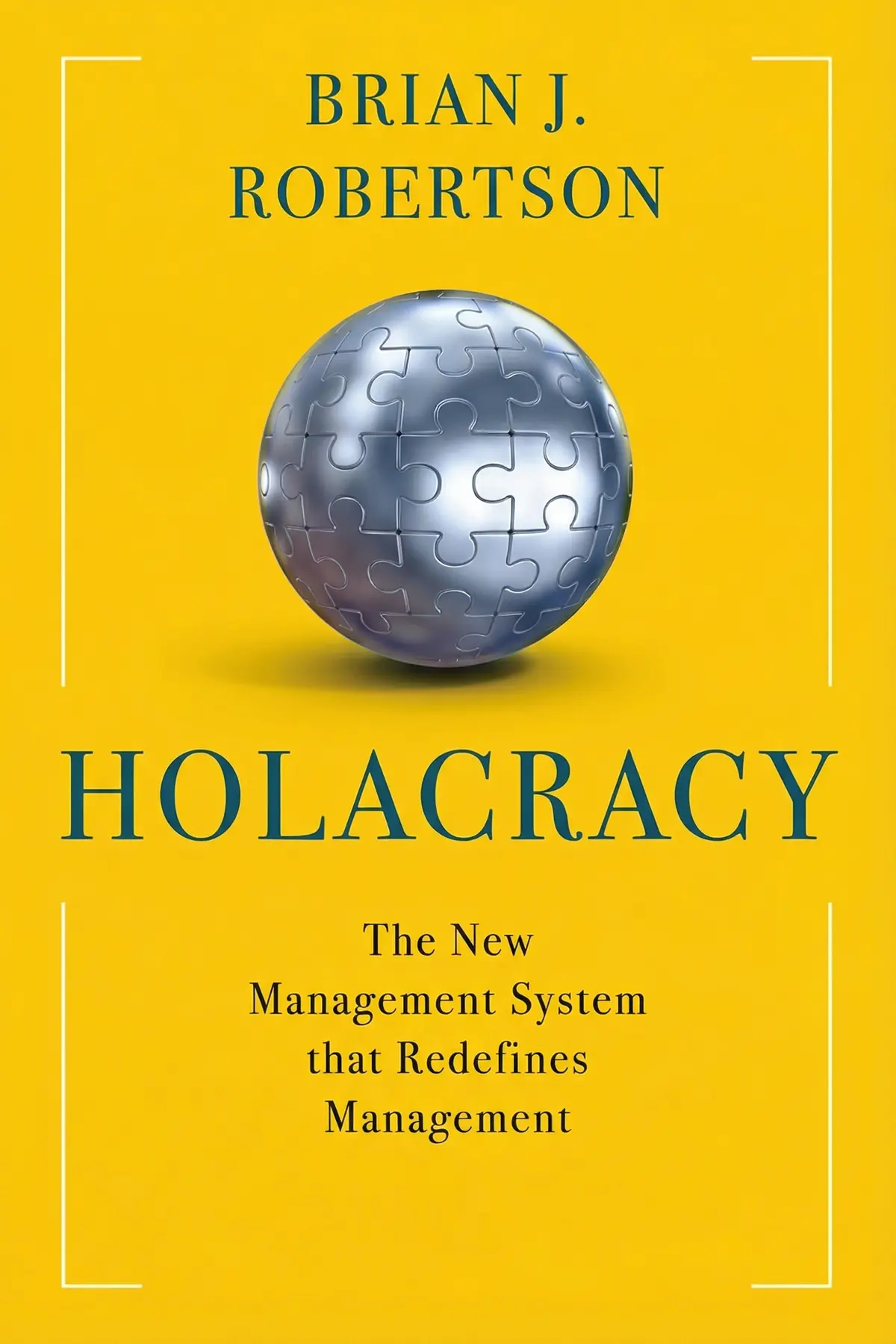
Table of Content
1. Introduction
1 min 50 sec
Imagine a workplace where the bottleneck of the ‘boss’ simply doesn’t exist. For decades, the business world has been operating under a shadow of the industrial revolution, using management techniques designed for factory floors and predictable markets. But we no longer live in that world. Today, the landscape is defined by sudden shifts, digital disruption, and a pace of change that can leave a traditional corporation paralyzed. This is where Holacracy enters the conversation. It is not just a minor adjustment to how we work; it is a total operating system upgrade for the modern organization.
Holacracy moves us away from the two extremes we often see: the suffocating, top-down hierarchy where every decision waits for approval, and the chaotic, flat structure where nothing gets done because everyone is responsible for everything. Instead, it offers a third path. It provides a rigorous framework for self-organization that maintains clear direction and intense accountability without the need for traditional managers. It is a system built on the idea that an organization should function more like a living organism than a machine.
In this exploration, we are going to dive deep into the mechanics of this system. We will look at how moving from ‘jobs’ to ‘roles’ changes the way people view their work, and how ‘circles’ replace departments to create a more fluid flow of information. We will also examine the specific rituals—the meetings and decision-making processes—that allow a Holacratic company to stay agile. By the end, you will understand how tension within a business can actually be its greatest fuel for growth, and how you can begin to implement these ideas to watch your team’s productivity reach new heights. This is about redefining what it means to lead and what it means to contribute in the twenty-first century. Let’s look at how we can stop predicting the future and start responding to the present.
2. The Obsolescence of Predict-and-Control
2 min 03 sec
Traditional management was built for a world that no longer exists, where stability was the norm and change was slow and infrequent.
3. Authority Through the Constitution
1 min 51 sec
In a Holacracy, power doesn’t belong to individuals; it belongs to a written document that defines how work is done.
4. The Logic of Circles and Holons
1 min 54 sec
Organizations are reimagined as a series of nested, self-organizing units that function like biological cells.
5. Transitioning from Jobs to Explicit Roles
2 min 08 sec
Forget vague job descriptions; Holacracy uses precisely defined roles to eliminate confusion and overlapping responsibilities.
6. Connecting the System Through Linkage
1 min 48 sec
Information flows smoothly across the organization using two distinct roles that bridge the gap between circles.
7. Governance: The Architecture of Evolution
1 min 56 sec
Instead of arguing about daily tasks, governance meetings are dedicated to refining the structure of the organization itself.
8. The Integrative Decision-Making Process
1 min 53 sec
Decisions are made rapidly using a structured format that focuses on progress over perfection and eliminates ego-driven debates.
9. Tactical Meetings for Operational Flow
1 min 49 sec
Weekly operational check-ins keep the team synchronized and focused on concrete next actions without wasting time.
10. Dynamic Steering and Strategic Heuristics
2 min 02 sec
Strategy in Holacracy is not a rigid long-term plan but a flexible set of guidelines that prioritize responsiveness.
11. Conclusion
1 min 55 sec
The transition to Holacracy is not just a change in office layout or meeting titles; it is a fundamental shift in how we conceive of human cooperation. We are moving from a world of ‘bosses and subordinates’ to a world of ‘partners and roles.’ Throughout this summary, we have seen how the rigid, industrial-age hierarchies of the past are being replaced by a more organic, cellular structure. We’ve explored how the Holacracy Constitution creates a fair playing field, how circles and roles provide a clear map of accountability, and how governance and tactical meetings keep the gears of the organization turning smoothly without the friction of ego or politics.
The throughline of this entire system is the empowerment of the individual through the clarity of the process. When everyone knows their purpose, their domains, and their accountabilities, they are free to do their best work without fear. They are empowered to act as sensors for the organization, turning every tension they feel into a meaningful improvement. This is how a company becomes truly agile—not by having one brilliant leader at the top, but by harnessing the collective intelligence of every person on the team.
If you are inspired to bring these principles into your own work, the most important piece of advice is to start small. You don’t have to transform an entire global corporation overnight. Find a ‘guinea pig’—a single team or department that is willing to experiment. Let them adopt the constitution, define their roles, and hold their first governance meeting. As they begin to experience the speed and clarity that comes with Holacracy, the results will speak for themselves. The friction will decrease, productivity will rise, and the ‘management’ of the work will finally be returned to the people doing it. The future of work is not about control; it is about creating a system that allows everyone to lead within their own scope. It is time to stop managing and start organizing.
About this book
What is this book about?
The modern business environment is too volatile for the slow, rigid management structures of the past. Holacracy offers a radical alternative: a self-organizing system where authority is distributed rather than concentrated at the top. By shifting focus from individuals to clearly defined roles, companies can foster a culture of accountability and agility. This summary explores how Holacracy redefines management through a constitution-based approach. You will learn how to structure an organization into interdependent circles, how to conduct efficient governance and tactical meetings, and how to use dynamic steering to navigate uncertainty. It promises a roadmap for leaders and teams looking to boost productivity and motivation by letting the work itself dictate the structure.
Book Information
About the Author
Brian J. Robertson
Brian J. Robertson is the visionary behind Holacracy. He developed this system by testing various organizational techniques at his own software start-up. Following his success, he co-founded HolacracyOne, an advisory firm that helps organizations transition to this modern management framework.
Ratings & Reviews
Ratings at a glance
What people think
Listeners find that the book offers a lucid framework for operating self-governed organizations and serves as a solid primer on the topic. Furthermore, they view it as essential reading for CEOs and value the intriguing ideas presented. However, the clarity of the explanations gets varied reviews, with some saying it makes complete sense while others find it hard to understand. Also, one listener mentions the book is too light on implementation details.
Top reviews
Somkid
Finally got around to finishing this, and I have to say it’s a total game-changer for anyone in a leadership position. Robertson offers a clear method for running self-managed organizations that actually feels sustainable. The city metaphor he uses really helped me visualize how a business can thrive without a traditional boss breathing down everyone’s neck. We often treat our companies like machines, but treating them like evolving organisms makes so much more sense. I'll admit the jargon can get a bit thick in the middle chapters, but the core concepts are revolutionary. Every CEO who feels like they are drowning in micro-decisions needs to read this immediately. It’s not just a book; it’s an operating system for the future of work. Even if you don’t implement every single rule, the shift in mindset regarding distributed control is worth the price of admission alone. Truly a must-read for the modern era.
Show moreNikolai
The city metaphor Robertson uses completely changed my perspective on organizational growth and complexity. Unlike most business books that offer vague advice, this provides a digestible 'how-to' guide for shifting to a self-organizing model. I loved the concept of 'tensions' as the fuel for organizational evolution; it turns every problem into a potential improvement. My experience with traditional management has always been hit-or-miss, usually depending on whether the manager was having a good day. This system removes that volatility by putting the process in charge instead of the person. Look, it’s a dense read at times, and you’ll probably have to re-read the section on tactical meetings twice. But the result is a system where we all get to be adults together. It’s a fierce focus on company success that doesn't sacrifice personal autonomy. I'm already planning how to pitch a pilot circle to my department.
Show moreNook
Ever wonder what it would look like if everyone in your company acted like an adult? Holacracy provides the most coherent answer I’ve found to that question. This book is a deep dive into how we can move past the 'parent-child' dynamic of traditional management. Robertson’s writing style is clear and engaging, making complex organizational theories feel accessible. I especially liked how he addresses the 'messy' side of human behavior by giving it a separate space, allowing work to focus on work. It’s a well-thought-through and genuinely innovative set of ideas that challenges almost everything we take for granted about business. While some might find it process-heavy, I find the structure liberating. It creates a space where anyone can sense a problem and have the power to fix it. This is easily one of the most important business books I've read in the last five years. Highly recommended for any forward-thinking leader.
Show moreNing
Not what I expected, but Robertson’s framework is undeniably well-thought-out and comprehensive. I started the book thinking it would be another vacuous business fad, but I was pleasantly surprised by the depth of the logic. The way it balances personal autonomy with a fierce focus on organizational success is impressive. It’s a digestible read that gives you the full story on why our current models are broken. The chapter on tactical meetings was particularly eye-opening for me. No more endless debates or lost signals! It’s all about clear roles and rapid processing. Granted, implementing this would require a massive culture shift, and Robertson is honest about how jarring that can be. But for those willing to do the work, the rewards of a truly self-organizing company are massive. This book is the perfect starting point for that journey.
Show moreOrm
As someone who has navigated corporate hierarchies for a decade, this was a refreshing, if slightly intimidating, breath of fresh air. The book does an excellent job of showcasing how authority and accountability can be distributed rather than hoarded at the top. Robertson’s framework for 'circles' and 'roles' feels like the logical evolution of what Scrum did for software development. I appreciated the separation between the person and the role, which helps keep ego out of the boardroom. However, I can see why some critics call it a process-heavy straightjacket. It is very rigid, and I wonder if adults might find the strict meeting protocols a bit stifling over time. The truth is, it requires a massive amount of discipline to make this work. It’s a great introduction to the subject, though it could have used more concrete examples of implementation in larger, legacy companies. Still, I’m inspired to try a few of these 'governance' ideas.
Show moreLaddawan
After hearing several podcast episodes about self-management, I decided to go to the source and read Robertson's manifesto. It is remarkably well-written and persuasive, especially when he discusses the pitfalls of the traditional 'heroic leader' model. I found the 'why' behind Holacracy to be much more compelling than the 'how' presented in the later chapters. The idea of shifting authority to roles rather than people is brilliant, yet I worry about the 'decision paralysis' that might occur during the governance process. To be fair, the book does address some of these risks, but it feels a bit overly optimistic about how quickly people can adapt. It’s like learning a new language; you can’t just flip a switch and be fluent. Still, this is an essential read for anyone interested in the future of work. It provides a structured path away from the 'process-heavy straightjacket' of traditional bureaucracy, even if it replaces it with a different kind of structure.
Show moreLucia
Is it a business manual or a sci-fi anthology? I went in with high hopes because I love the idea of 'teal' organizations, but I came away feeling conflicted. On one hand, the first part of the book has some great thoughts and a very innovative vibe. On the other hand, the explanation quality is mixed, and it gets incredibly bogged down in the minutiae of meeting structures. I found myself skimming the middle sections because they felt like a desperate attempt to formalize every single human breath taken in an office. It’s a bit light on implementation details for those of us not starting from scratch. I’m not gonna lie, the idea of 'distributed control' is sexy, but the sheer volume of rules makes me think this would slow down a fast-moving team. It’s a decent 3-star read for the concepts, but take the 'operating system' stuff with a grain of salt.
Show moreBam
To be fair, the concept of 'tensions' is a brilliant way to reframe workplace conflict into something productive. I picked this up because I was curious about how self-management works in practice, and I found the introduction to the subject quite helpful. However, the book is frustratingly light on implementation details for existing companies. Robertson makes it sound like you just adopt the 'Constitution' and everything magically fixes itself, but that hasn't been the experience of people I know. The explanation quality is hit or miss; some parts make complete sense, while others feel like a science fiction novel about a robotic society. It's a bit too extreme for my taste, though I do like the idea of nested circles. It’s worth a read if you want to understand the 'teal' movement, but don't expect it to be a simple plug-and-play solution for your office drama.
Show moreAubrey
This book reads more like a manual for building robots than leading human beings. Robertson is so rigid in his '110% holacracy or it won't work' stance that it starts to feel like a cult doctrine rather than a management philosophy. While the 'peer-to-peer' language sounds empowering, the reality described here is a neoliberal wish to erase the messy, beautiful realities of human interaction. He talks about 'tearing out the fabric of relationships' to liberate work from personal matters, but humans aren't machines you can just toggle off. Frankly, the robotic interactions dictated by the governance process felt like something out of a science fiction anthology. It’s hard to find much substance here regarding how humans actually relate to one another. If you want to turn your employees into replaceable cogs in a utilitarian machine, this is the book for you. If you value empathy and culture, look elsewhere.
Show moreOat
Beware the alluring promise of abdicating your leadership responsibilities to a complex flowchart. This system is a dangerous management trap that nearly brought my previous company to its knees when we tried to implement it. Robertson treats the organization as an entity in its own right, but an organization is not a person—it cannot have goals or relationships. By trying to remove 'human values' from the workspace, you don't get efficiency; you get a cold, sterile environment where initiative dies. The truth is, there is no system that can replace solid, grounded leadership and clear accountability. Applying this straightjacket for decision-making is simply the wrong path for any business that values its people. If you want autonomy, cultivate better signaling and trust, don't formalize your interactions to a degree that even a government bureaucracy would find cumbersome. This was a massive disappointment and a waste of time.
Show moreReaders also enjoyed
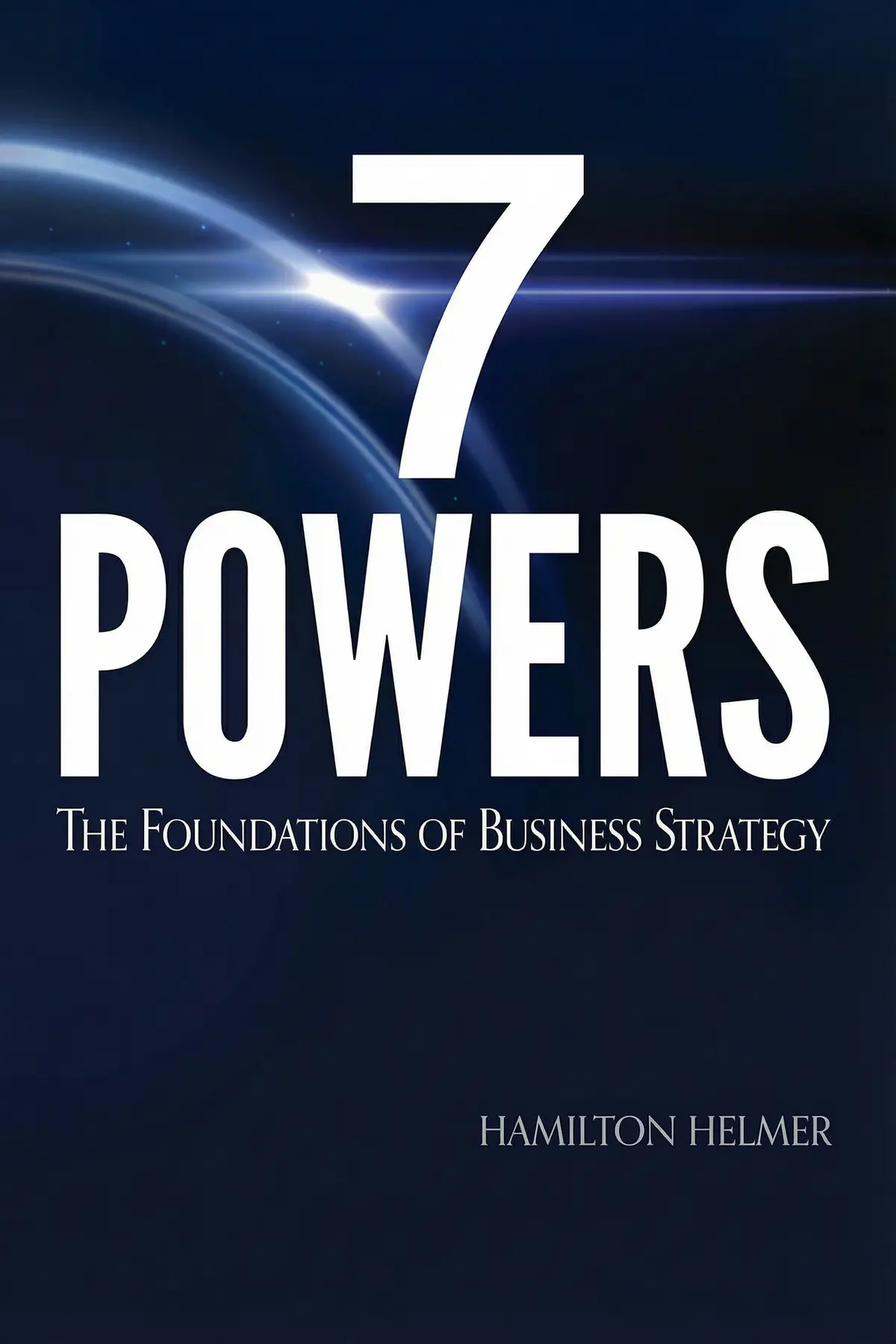
7 Powers: The Foundations of Business Strategy
Hamilton Helmer

A Bigger Prize: How We Can Do Better Than the Competition
Margaret Heffernan
A Year with Peter Drucker: 52 Weeks of Coaching for Leadership Effectiveness
Joseph A. Maciariello
AUDIO SUMMARY AVAILABLE
Listen to Holacracy in 15 minutes
Get the key ideas from Holacracy by Brian J. Robertson, plus 5,000+ more titles in English and Thai.
- 5,000+ titles
- Listen as much as you want
- 7-day free trial
- Cancel anytime







