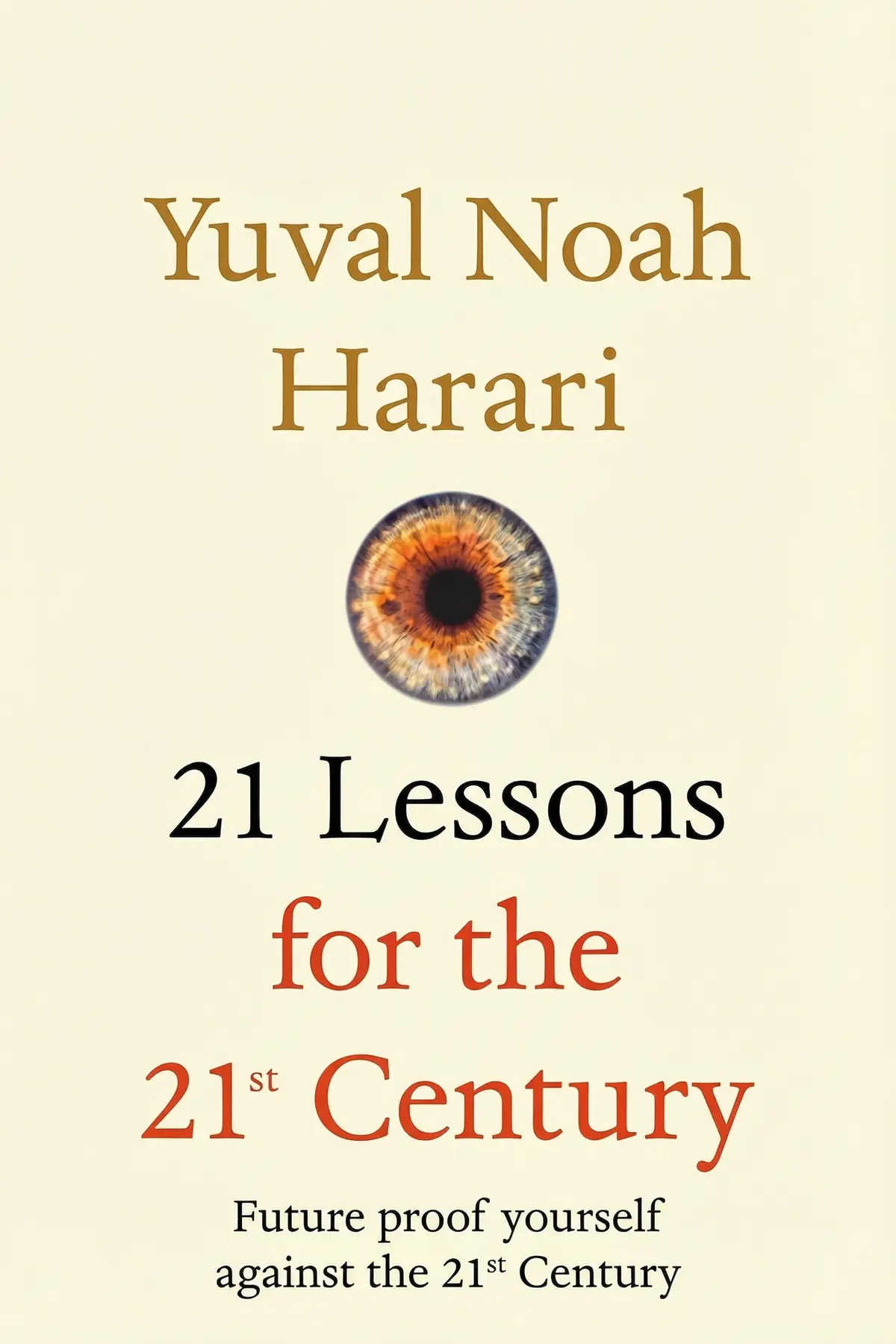
21 Lessons for the 21st Century
Yuval Noah Harari
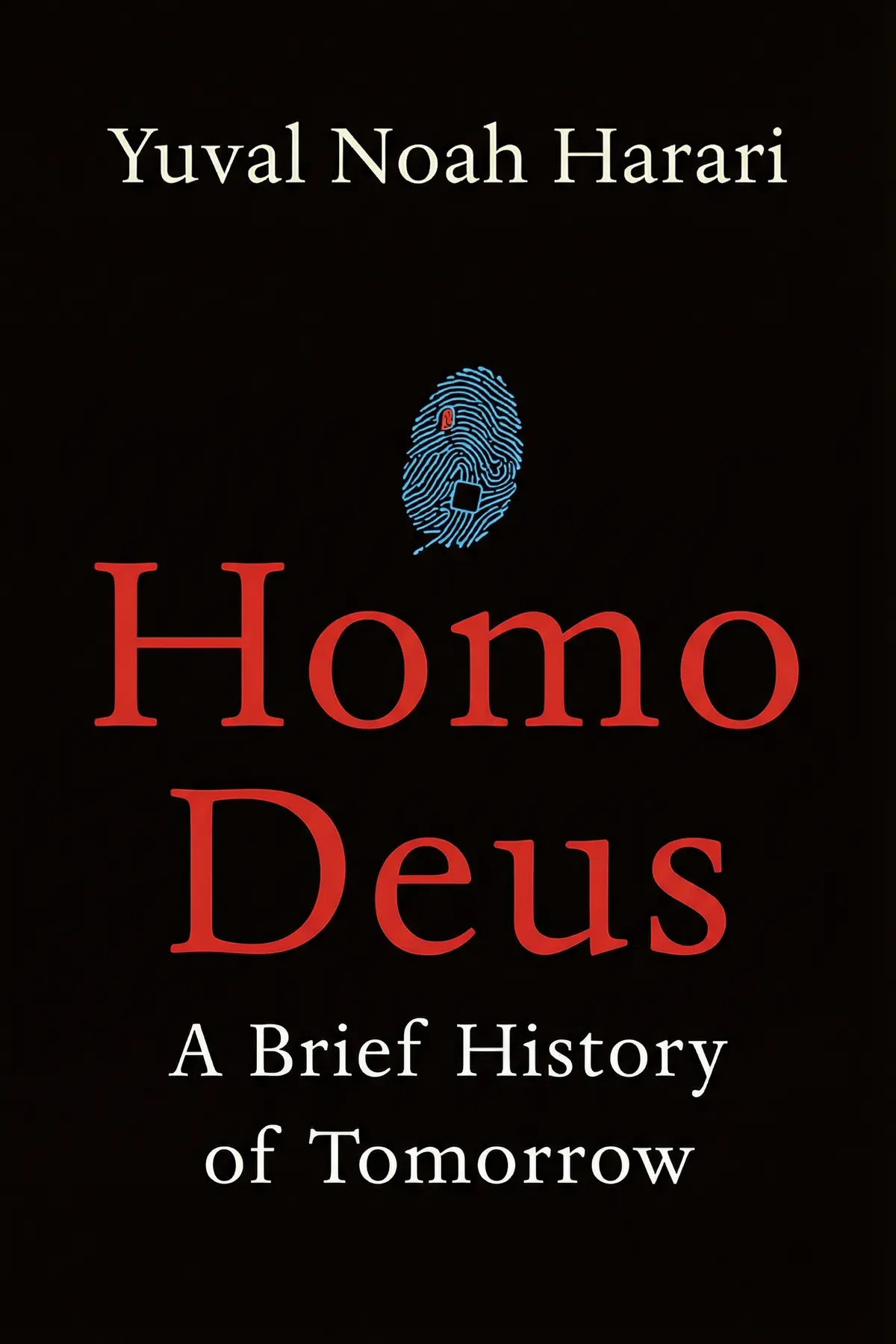
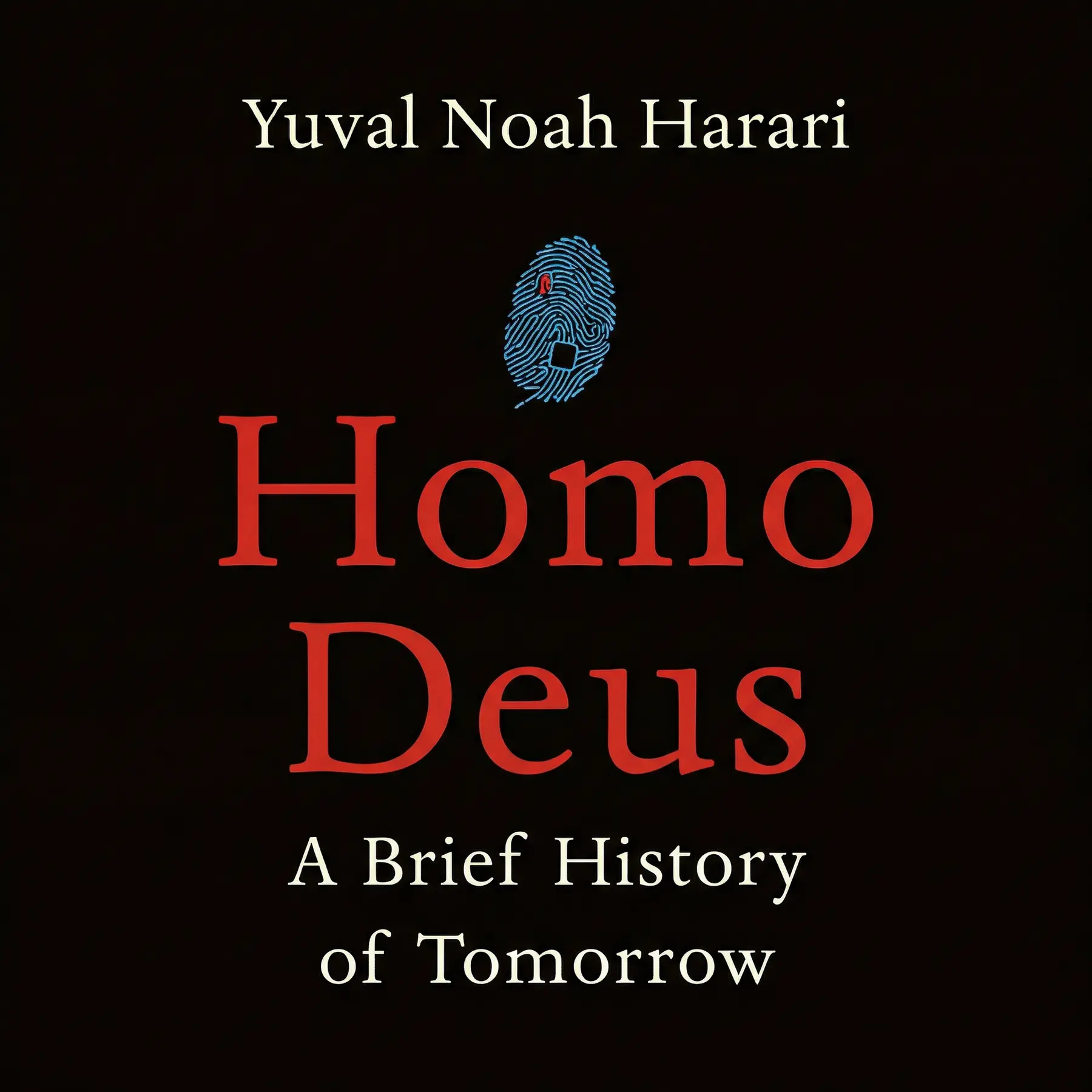
Explore the next stage of human evolution in this deep dive into Yuval Noah Harari's Homo Deus. Discover how our species transitions from solving survival to pursuing divinity and immortality.
1 min 58 sec
Imagine for a moment that you are a traveler from the Middle Ages who has been magically transported into the present day. What would shock you the most? It probably wouldn’t be the tall buildings or the horseless carriages. Instead, it would be the fact that the things that used to kill us—hunger, infectious disease, and constant local warfare—have been largely neutralized. For the vast majority of human history, these were the defining features of life. They were the ‘unsolved problems’ that dominated every culture and religion. But today, more people die from eating too much than from eating too little. More people die from old age than from the plague. And in most parts of the world, you are more likely to die by your own hand than by the hand of an enemy soldier.
This incredible shift represents a turning point in the story of our species. We have moved from a state of survival to a state of unprecedented power. But with the old problems mostly solved, we are now looking for new projects. According to Yuval Noah Harari, the next items on the human agenda are nothing less than achieving immortality, finding the key to everlasting happiness, and upgrading ourselves into gods. This is the transition from Homo sapiens to Homo deus.
In this summary, we are going to explore how we got here and where we are going. We’ll look at the shared fictions that allowed humans to dominate the planet, the way modern science is dismantling our ideas about the ‘self,’ and the rise of data as the new supreme authority. This isn’t just a look at the future of technology; it’s a look at the future of meaning. If we are no longer defined by the struggle to stay alive, what will define us? As we peel back the layers of human history and look toward the horizon of tomorrow, we might find that the very qualities we think make us human are about to change forever.
2 min 20 sec
Humanity is moving beyond the ancient struggles of hunger and disease, setting its sights on radical new goals like biological immortality and the mastery of human emotion.
2 min 07 sec
Our power doesn’t come from individual intelligence, but from our unique ability to cooperate in massive numbers through the creation of shared imaginary concepts.
1 min 59 sec
Religion isn’t just about the supernatural; it is a system of laws and stories that allows large groups of people to work toward a common goal.
1 min 49 sec
Modernity is a trade-off where we have given up the comfort of a divine plan in exchange for the immense power to manipulate our environment.
1 min 56 sec
In a world without a divine script, the human experience has become the ultimate source of authority, making our feelings and desires the new moral compass.
2 min 14 sec
New insights in neuroscience and psychology suggest that our ‘self’ is a construction and our choices are biochemical processes rather than acts of free will.
1 min 51 sec
As external algorithms become better at understanding and predicting our behavior than we are, they will take over the role of decision-maker in our lives.
2 min 02 sec
Two new paths are emerging for our species: upgrading ourselves to stay relevant, or surrendering to a new world order where data flow is the highest value.
1 min 52 sec
As we wrap up our journey through the ideas of Homo Deus, we are left with a landscape that is both exhilarating and deeply unsettling. We have seen how our species moved from the desperate struggle for survival to the brink of godhood. We’ve explored how the narratives of the past—from traditional religions to modern liberalism—have served as the foundation for our success, and how those very foundations are now being tested by the cold, hard logic of data and biology.
The throughline of our story is clear: humanity’s greatest strength has always been our ability to invent stories and cooperate around them. But the stories we are telling ourselves now are leading us toward a future where the individual might not matter as much as the network. If the ‘self’ is an illusion and free will is a biochemical myth, the humanist world we’ve built over the last few centuries will have to be reimagined. We are standing at a threshold where we have to decide what we truly value. Is it the human experience, with all its messiness and inefficiency? Or is it the pursuit of intelligence, power, and data-driven perfection?
There are no easy answers here, and the future Harari describes is not set in stone. It is a map of possibilities. The most important thing we can do is to remain aware of how our technology and our stories are shaping us. Pay attention to how often you outsource your decisions to an algorithm. Notice how your sense of self is being quantified by likes, steps, and data points. By understanding the forces at play, we might just be able to steer this transition in a way that preserves the things we find most precious. We may be on our way to becoming Homo deus, but it is up to us to decide what kind of gods we want to be.
For millennia, the human species has been defined by its struggle against the three great enemies: famine, plague, and war. We have spent our history developing the tools and social structures necessary to survive these catastrophes. However, as we enter the twenty-first century, we have largely brought these threats under control. This success raises a profound question: What will humanity strive for next? Homo Deus explores the shift from our current status as Homo sapiens to a new kind of existence defined by technology and biological engineering. The book argues that our future goals will likely involve the pursuit of immortality, universal happiness, and god-like powers. But this journey toward becoming Homo Deus—man-god—comes with significant risks. As we develop increasingly sophisticated algorithms and artificial intelligence, the very foundations of our society, including liberalism and the belief in individual free will, are being challenged. Harari invites us to look at the history of our species to understand how we achieved dominance and to consider whether our own creations might eventually render the human experience obsolete.
Yuval Noah Harari is a distinguished Israeli historian and a tenured professor in the Department of History at the Hebrew University of Jerusalem. He gained international acclaim as the author of the best-selling book Sapiens: A Brief History of Humankind, which explored the past of our species. Harari is known for his ability to synthesize complex historical and scientific data into compelling narratives about the future of society.
Yuval Noah Harari
Yuval Noah Harari
Yuval Noah Harari
Listeners find this title remarkably easy to digest and intellectually stirring, packed with excellent details and high-level insights. In addition, the text offers a deep dive into historical patterns and striking visions of the coming years, presented through an approachable narrative that flows like a compelling story. Listeners also value the captivating concepts that spark fresh perspectives, with one listener pointing out how effectively the writer projects current trajectories to their logical ends.
After finishing Sapiens, I wasn't sure if Harari could top the sheer scale of that narrative, but Homo Deus is a chillingly brilliant follow-up. The way he frames the shift from humanism to 'Dataism' feels like watching a slow-motion car crash—you can’t look away because the logic is so sound. I found the section on how algorithms might eventually know our desires better than we do particularly haunting; the idea of a Kindle reading your facial expressions to gauge your emotions is pure sci-fi turned reality. While some might find his tone a bit arrogant, I think he just refuses to sugarcoat the inevitable. He challenges the very core of our individualist values. It is a profound analysis of history that morphs into a roadmap for a future where we might be obsolete. This isn't just a book; it’s an intellectual earthquake that forces you to rethink every decision you make.
Show moreThe chapter on how we treat animals as mere algorithms or property was a total gut-punch for me. Harari uses history not just to tell us what happened, but to expose the fictions we’ve used to justify our dominance over the planet. It’s a powerful, blunt perspective that many will find uncomfortable. Truth is, his description of the transition from 'healing' the sick to 'upgrading' the healthy is one of the most insightful things I've read all year. The prose is effortless and fascinating, managing to break down complex socioeconomic trends into things even a casual reader can grasp. I loved how he explored the idea that intelligence is decoupling from consciousness. This book will definitely stimulate alternate thoughts about where we are heading as a species. It’s easily one of my new favorites for the sheer bravery of its arguments. Five stars.
Show moreWow. I didn't expect a book about the future of humanity to read as easily as a page-turning thriller. Harari has a unique knack for taking these massive, intimidating concepts—like the decoupling of consciousness from intelligence—and making them feel relevant to your everyday life. I was especially struck by his analysis of modern censorship; the idea that we aren't being starved of information but flooded with irrelevance is so spot-on for 2024. The book provides a profound analysis of history while managing to be totally provocative about the future. It’s the kind of writing that stays with you long after you close the cover. Whether he’s talking about the future of ebooks or the end of the individual, he makes it all feel incredibly urgent. I’ll be thinking about the 'Homo Deus' upgrade for a long time. This is essential reading for anyone curious about our species.
Show moreFinally got around to reading this, and it’s essentially a roadmap for the 21st century that makes you question the very concept of free will. Harari’s bluntness is refreshing. He doesn't care about being 'nice'; he cares about following trends to their natural conclusion. I found his insights into how religion and science are actually 'good bedfellows' because they both value order and power over truth to be mind-blowing. The book is just packed with these little gems of wisdom that force you to look at society through a different lens. If you’re looking for a comfortable read, this isn't it—it’s meant to shake you up. But if you want a book that is highly readable, deeply researched, and genuinely original in its perspective, this is the one. It’s a masterpiece of modern non-fiction that feels more like a warning than a prediction.
Show moreIn my experience, few writers can synthesize history and technology as effortlessly as Harari. Homo Deus is a captivating sequel that explores the terrifying possibility of humans becoming 'superfluous' in the face of superior algorithms. I loved the section on how the rich might eventually afford personalized medicine and genotyping to the point of becoming a different species altogether. It sounds like sci-fi, but the way he lays out the current trends makes it feel almost inevitable. The prose is vibrant and keeps you engaged even during the more dense philosophical stretches. Some people might quibble with his take on extramarital affairs or the death of liberalism, but you can't deny the man has a vision. This book is a brilliant, unsettling, and totally necessary look at the future of the world. It’s definitely one of the best things I've read in years. Highly recommended.
Show morePicking this up was a bit like stepping into a cold shower; it’s bracing and leaves you feeling completely different about your own agency. Harari’s writing is exceptionally accessible, almost like a storybook, yet the implications of his theories are heavy. I appreciated his deep dive into why we value growth above all else and how our modern 'contract' involves trading meaning for power. However, I do think he spends a little too much time rehashing the agricultural revolution and the history of grass lawns before finally getting to the 'tomorrow' part of the title. To be fair, the final third of the book is where the real meat is, especially the discussion on the 'useless class' and the rise of AI. It’s thought-provoking and slightly terrifying. You might not agree with every extrapolation he makes about genetic engineering, but you certainly won't be bored.
Show moreThis book feels like a long, intellectual conversation with a very smart friend who has had just a bit too much coffee. Harari is great at the 'big picture' stuff, connecting the dots between ancient religions and modern silicon-valley ideologies in ways I never considered. I especially enjoyed the discussion on how capitalism defeated communism simply because distributed data processing works better than a centralized system. Not gonna lie, some of his claims about the future of medical science favoring the ultra-rich felt a bit like a Neal Stephenson plot, but he makes a compelling case for why it could happen. My only gripe is that it feels a bit less cohesive than Sapiens; it jumps around between biological algorithms and the history of lawns quite a bit. Still, it’s a highly readable exploration of what makes us tick and what might replace us.
Show moreEver wonder if we're just biological data processors whose time is running out? Homo Deus tackles that question with a mix of historical expertise and bold speculation that is hard to ignore. Harari's central thesis about liberal humanism evolving into 'techno-humanism' is fascinating, even if it feels a little disconcerting at times. The book is written with a juvenile exuberance that makes 400 pages of philosophy fly by. I did find some of the scientific claims a bit shaky, particularly when he discusses the lack of a 'soul' as a definitive proof of his theories. That said, the way he explains the 'discovery of ignorance' as the spark for the scientific revolution was brilliant. It’s a stimulating read that asks more questions than it answers, which is exactly what a book about the future should do. Definitely worth your time.
Show moreTo be fair, while the writing is fluid and the concepts are certainly big, I found myself waiting for the 'tomorrow' promised in the subtitle. Most of the book felt like a retread of his previous work, focusing heavily on how we got here rather than where we are going. By the time we actually got to the AI and genetic engineering bits in the final quarter, I felt a bit exhausted. The ideas about 'Dataism' are interesting, but they didn't feel entirely new if you've already read any modern popular science articles. Frankly, the author’s tendency to extrapolate present trends to their most extreme logical outcomes can feel a bit repetitive after a while. It’s an okay follow-up, and certainly accessible, but it lacks the groundbreaking 'novel' feel that made his first book such a global phenomenon. Three stars for the effort.
Show moreLook, Harari is an incredible historian who can weave a narrative like no other, but as a futurologist, he misses the mark by a mile. This book reads like someone watched a few episodes of Black Mirror after a long weekend and decided to call it science. He focuses on these extreme, almost insane uses of technology—like the rich becoming god-like cyborgs—while ignoring the much more mundane and immediate threats we actually face today. As someone with a background in tech, I found his grasp of cognitive science to be frustratingly shallow. It felt less like a serious inquiry and more like a high-budget sci-fi fanfic about the end of the world. The writing is energetic and easy to digest, which is probably why it's so popular, but the actual substance is mostly just provocative packaging. Stick to his first book if you want actual history.
Show moreAUDIO SUMMARY AVAILABLE
Get the key ideas from Homo Deus by Yuval Noah Harari, plus 5,000+ more titles in English and Thai.