
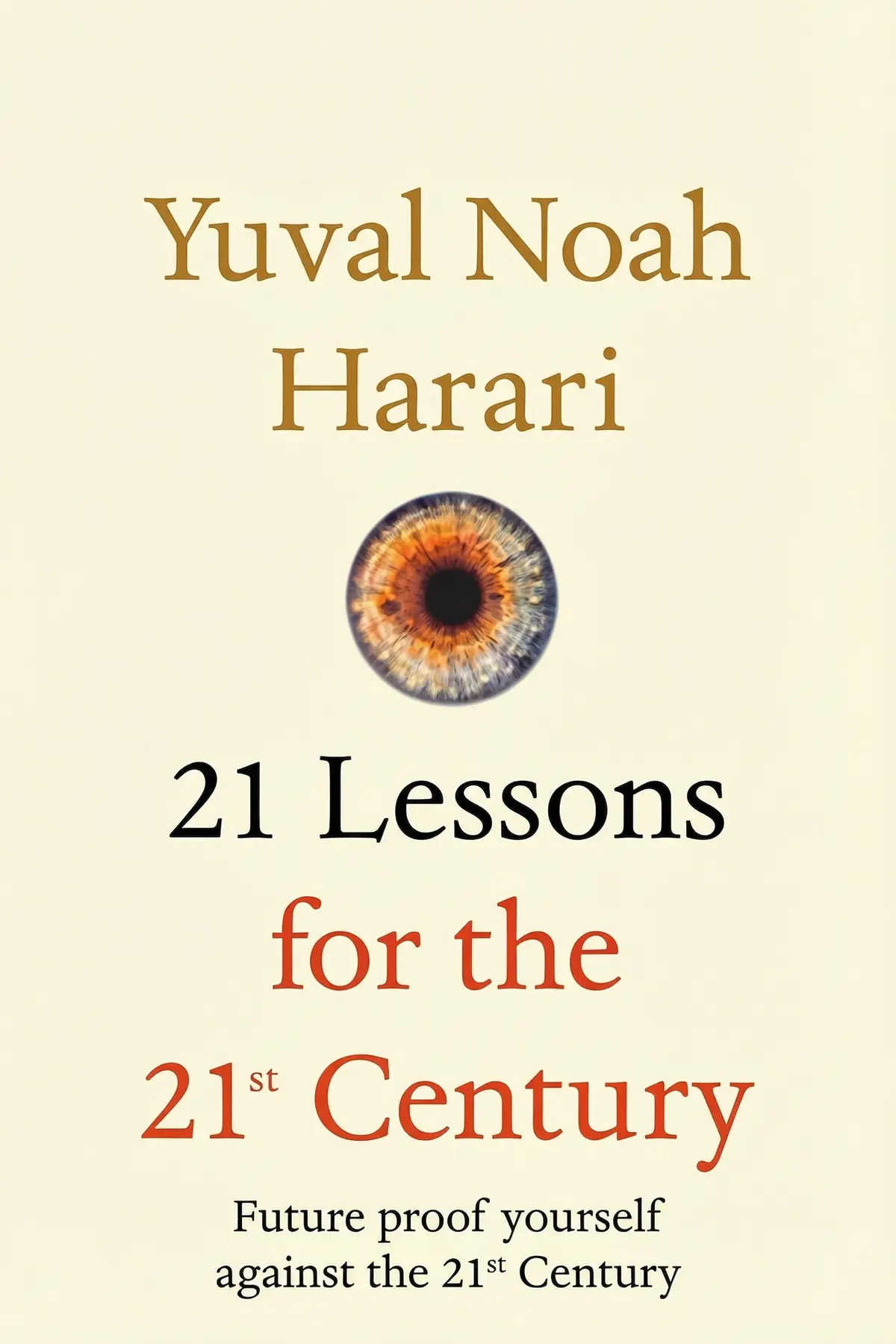
21 Lessons for the 21st Century
Yuval Noah Harari
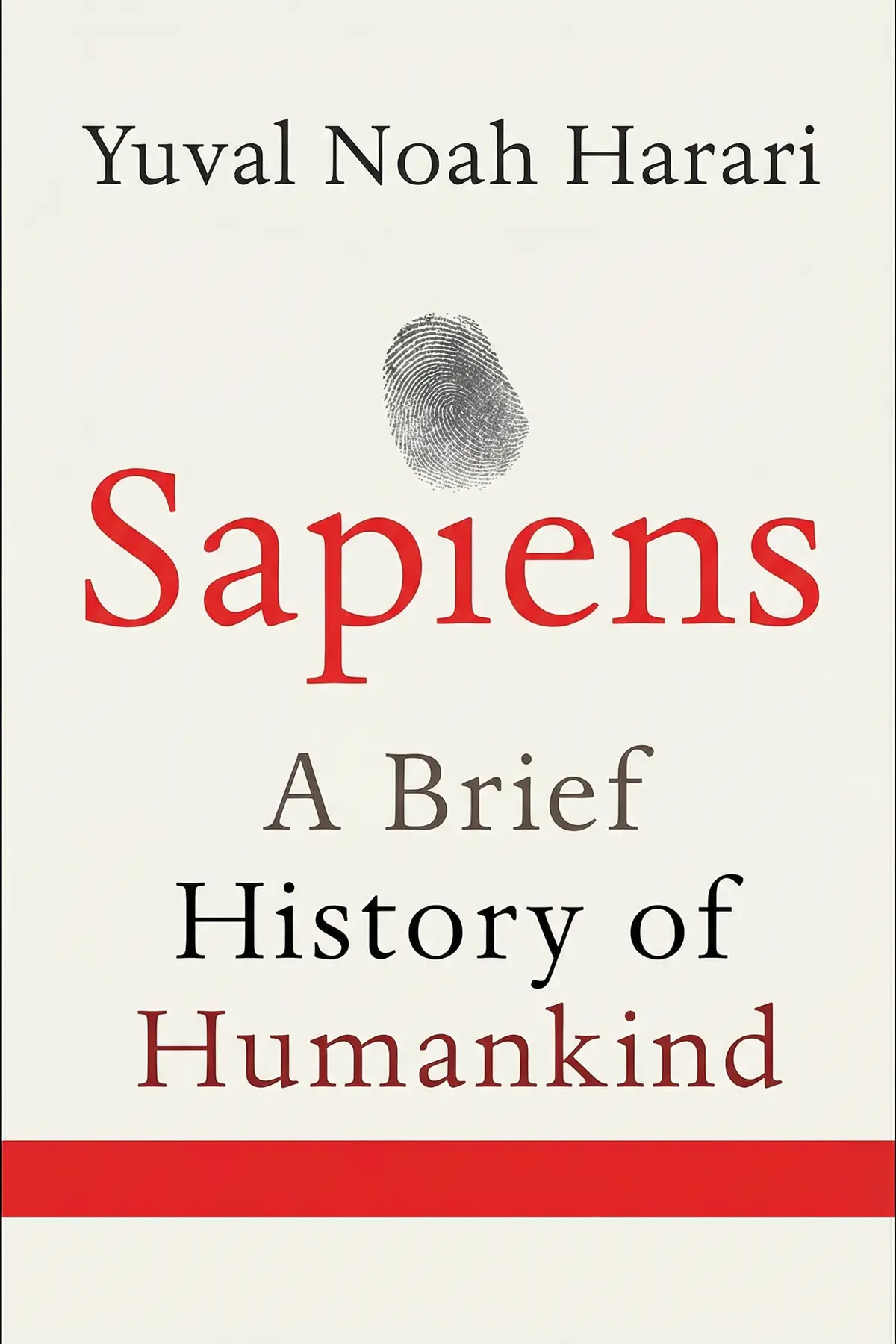
A sweeping narrative of human history, tracing our evolution from ancient ancestors to a technologically dominant global society through cognitive, agricultural, and scientific breakthroughs that redefined our species and our planet.
1 min 19 sec
Step back for a moment and look at the world around you. We live in a reality defined by massive cities, global communication networks, and a mastery over the natural world that would have seemed like magic to our ancestors. But how did we get here? Why is it that Homo sapiens—a species that started as just another creature in the African savannah—ended up ruling the planet while our closest relatives are either in cages or long extinct?
In this exploration of Sapiens by Yuval Noah Harari, we are going to travel through three hundred millennia of history. We’ll look past the dates and names of kings to find the underlying forces that shaped our civilization. This isn’t just a story of survival; it’s a story of how we used our minds to invent things that don’t exist in the physical world, like money, human rights, and gods, to organize ourselves into a global superpower.
The throughline of our journey today is the power of shared imagination. We will see how our ability to believe in the same stories allowed us to cooperate in numbers that no other animal can match. From the moment our brain structures shifted in the Cognitive Revolution to the high-tech experiments of the modern day, we’ll see how humanity has constantly redefined the limits of what is possible. Let’s begin our journey by looking back to a time when being human meant something very different than it does today.
1 min 53 sec
Long before we were the only humans on Earth, we shared the planet with several other distinct human species, each with their own unique adaptations and cultures.
2 min 00 sec
The true secret to our dominance wasn’t physical strength or individual intelligence, but our unique ability to create and believe in myths and collective stories.
1 min 51 sec
The shift from hunting to farming was once seen as a great leap forward, but it may have actually led to harder lives and less freedom.
1 min 44 sec
To facilitate trade between distant strangers, humans invented money, a psychological tool that serves as the world’s most universal system of mutual trust.
1 min 53 sec
Empires, despite their history of conquest and exploitation, played a crucial role in uniting diverse cultures under shared laws and administrative systems.
1 min 49 sec
Religion acted as the ultimate social glue, providing a divine justification for laws and social hierarchies that kept large populations in order.
1 min 48 sec
The Scientific Revolution began not with a new discovery, but with the radical realization that humans didn’t already have all the answers.
1 min 34 sec
Modern society is driven by the belief in growth and credit, a system that relies on the shared trust that the future will be more prosperous than the present.
1 min 35 sec
Despite the presence of devastating weapons, we live in the most peaceful era of human history because global connections have made war too expensive to wage.
1 min 35 sec
As we gain the power to manipulate our own genetic code and merge with technology, we may be on the verge of evolving into something beyond Homo sapiens.
1 min 48 sec
We have traveled from the humble beginnings of a small ape in the savannah to the threshold of a post-biological future. Along the way, we’ve seen that the secret of our success wasn’t a bigger brain or a stronger body, but our ability to weave stories. These shared fictions—money, nations, religion, and science—gave us the power to collaborate in the millions, transforming the face of the Earth in a relatively short span of time.
However, this progress has come with a cost. We’ve seen that the Agricultural Revolution, while allowing our population to explode, often made the lives of individuals harder and more restricted. We’ve seen that our global prosperity is built on a capitalist engine that demands constant growth, and that our modern peace is a fragile result of economic interdependence.
Most importantly, we have to ask ourselves: are we actually happier? Despite all our technology and wealth, the basic chemistry of our happiness hasn’t changed much since we were foraging for berries. We are more powerful than ever, but we often seem just as dissatisfied and uncertain about our purpose.
The takeaway from Harari’s sweeping history is that we are the only animals capable of changing our reality by changing our stories. As we move into a future where we might transcend our own biology, the most important question isn’t what we *can* do, but what we *should* do. We are becoming like gods, with the power to create and destroy life at will. The challenge for the next chapter of our story is to ensure that we use that power with the wisdom that our history has—hopefully—taught us.
As you move forward, consider the myths you live by every day. Recognize that the world around you is shaped by human imagination, and remember that we have the collective power to write a new story for the future of our species.
Sapiens provides an expansive look at the 300,000-year history of our species, examining how a seemingly ordinary ape came to dominate the Earth. The book navigates through the major turning points of our collective journey, including the Cognitive Revolution, which gave us the power of shared imagination, and the Agricultural Revolution, which traded nomadic freedom for settled stability. It explores the abstract inventions that allow millions of strangers to cooperate—such as money, religion, and the nation-state—and analyzes how the Scientific Revolution propelled us into a new era of global empire and capitalist expansion. Harari promises to challenge our assumptions about progress, happiness, and the biological limits of our future, offering a thought-provoking perspective on what it truly means to be human in an increasingly artificial world.
Yuval Noah Harari is a distinguished academic who serves as a professor at the Hebrew University of Jerusalem. His academic focus lies in world history and military history. Sapiens represents his first major international success, garnering massive acclaim and being translated into more than 60 different languages worldwide.
Yuval Noah Harari
Yuval Noah Harari
Yuval Noah Harari
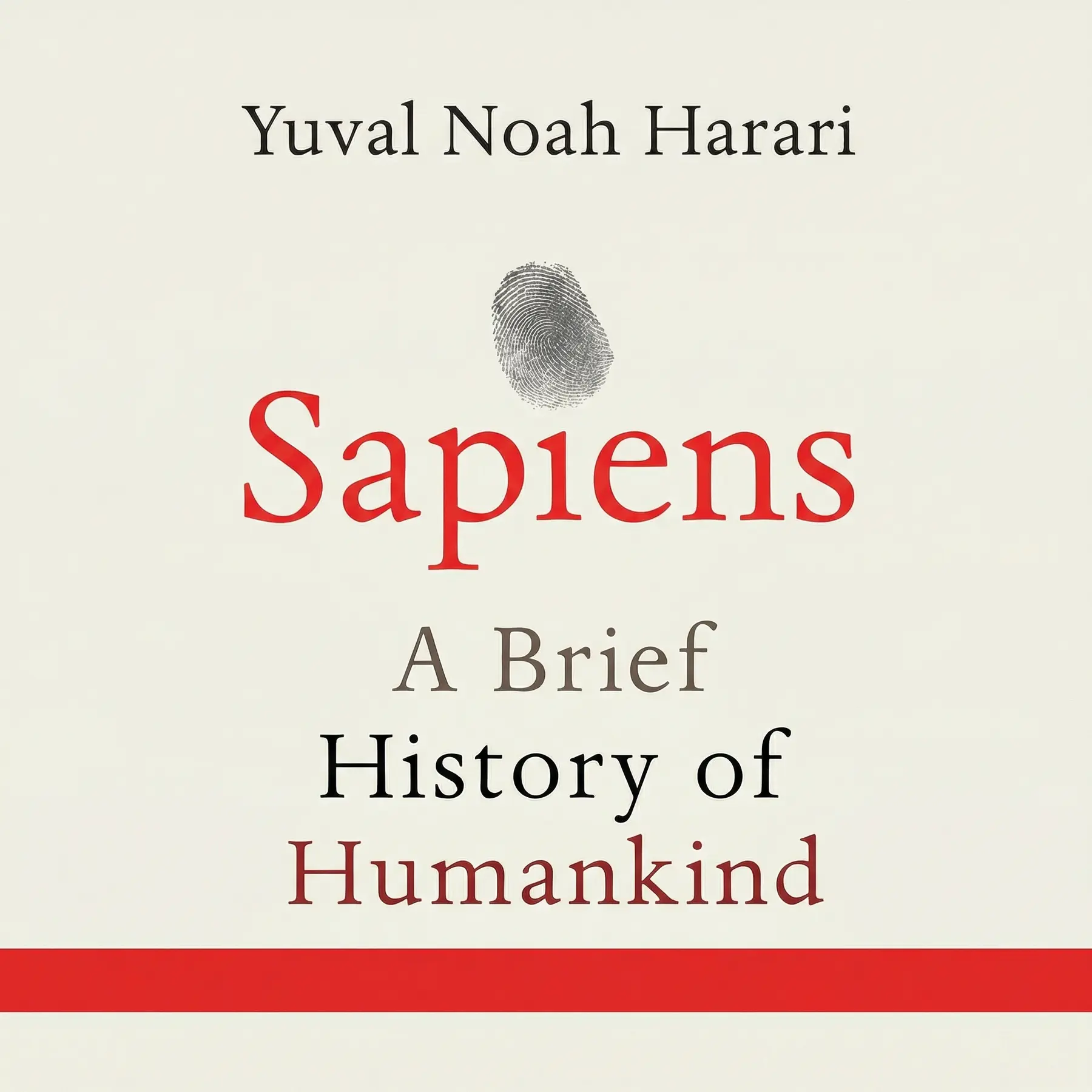
Listeners find this book exceptionally engaging and intellectually stimulating, offering a skillfully structured overview of significant historical patterns and thoroughly investigated material. The prose is both approachable and clever, and listeners characterize the experience as a captivating expedition through the timeline of mankind. They value how it encourages profound reflection and provides remarkable perspectives on the human race, with one listener noting how it casts systems of belief in a new light.
Picked this up after hearing the massive hype, and it genuinely lives up to the reputation of being a page-turner for history buffs. Harari’s exploration of "imagined realities" like money, human rights, and corporations is absolutely mind-bending. It makes you realize that our entire civilization is held together by stories we all agree to believe in. The writing is incredibly accessible, moving from the Cognitive Revolution to our modern world with a wit that keeps things from feeling like a dry, dusty textbook. While some sections felt a bit rushed, the overall narrative arc is staggering in its scope and ambition. It’s rare to find a book that forces you to re-examine your basic assumptions about reality every few pages. Truly a fascinating journey through human history that I couldn’t put down until the very end.
Show moreAfter hearing everyone from my boss to my barista talk about this, I finally understood why it’s a global bestseller. This isn't just a history book; it's a deep dive into the psychology of our species and why we act the way we do. The way the author explains how Homo Sapiens outcompeted Neanderthals through collective cooperation and gossip is brilliant. I loved the section on how capitalism and empire-building drove the modern age, even if those systems are shown to be inherently flawed. The truth is, I’ve never read anything that manages to connect biology, history, and sociology so seamlessly into a single narrative. It’s a dense read but remains highly readable thanks to the author’s conversational style. My only minor complaint is that the ending gets a bit too speculative for my taste, but it's still a five-star experience.
Show moreAs someone who usually finds history books a bit tedious, I was shocked by how much I enjoyed Harari’s narrative voice. He writes with a certain level of sass and irony that makes the long journey from the Savannah to the Space Age fly by. The concept that we are essentially hunter-gatherers living in a high-tech world explains so much of our modern anxiety and physical ailments. I found myself highlighting entire pages of text to share with friends later. Frankly, the author’s ability to make you feel both incredibly significant and totally irrelevant at the same time is a real feat. It’s a carefully researched work that avoids the trap of being boring. If you want a book that will make you look at the world differently, this is the one to get.
Show moreThis book changed my life in terms of how I perceive the social structures surrounding us every day. The idea that everything from the "Law" to "Google" exists only in our collective imagination is a radical way to look at the world. Harari isn't just recounting dates and battles; he's asking why humans are the only ones capable of large-scale organization. The writing is witty and accessible, making even the most complex sociological theories easy to digest. I found the chapter on the unification of humankind particularly compelling. Even though he can be a bit cynical about the cost of progress, his arguments are consistently thought-provoking. It is a masterpiece of storytelling that manages to summarize thousands of years without ever feeling rushed or superficial. Truly a must-read.
Show moreTruly a fascinating journey through human history that manages to be both deeply educational and highly entertaining. I loved how Harari explains that our success as a species isn't due to individual intelligence, but our unique ability to cooperate in large numbers. The way he ties together the development of language with the ability to gossip and form social bonds is just brilliant. Personally, I found the section on the industrialization of animal farming to be heartbreaking but necessary to include. It’s a book that asks the big questions: who are we, where did we come from, and where are we going? While it’s a broad overview, it provides enough "aha!" moments to keep you engaged from cover to cover. It’s definitely earned its spot as a modern classic for a reason.
Show moreEver wonder why we transitioned from foraging to farming, only to end up working longer hours and eating worse diets? Harari’s take on the Agricultural Revolution as "history's biggest fraud" is easily the most provocative and memorable part of the entire book. He argues that wheat essentially domesticated humans rather than the other way around, which is a hilarious and disturbing thought. The tone is sharp and often cynical, which I found refreshing even when I didn't fully agree with his anti-progress stance. To be fair, some of the scientific claims feel a bit loose and under-sourced, and the lack of extensive footnotes might bother those looking for a rigorous academic text. However, as a summary of major historical themes, it’s masterfully crafted and incredibly thought-provoking. It definitely sparks a lot of internal debate for the reader.
Show moreWow. This book offers some of the most profound insights into humanity I have ever encountered in a single volume. Harari has a unique talent for taking massive, complex topics—like the evolution of language or the rise of global commerce—and distilling them into understandable concepts. I particularly enjoyed how he casts systems of belief in a new light, treating religion and legal structures as useful fictions that allow strangers to cooperate. Look, the book isn't perfect; it definitely has a western-centric lean at times and some of the generalizations are quite broad. But for a "brief history" under 500 pages, the breadth of information is staggering. It’s the kind of work that leaves you staring at a wall for twenty minutes after finishing a chapter just to process everything he said.
Show moreFinally got around to reading this, and while I see why some critics are annoyed, I think it’s a brilliant introductory text. It’s very much an accessible approach that respects the reader's intelligence while keeping the pace moving. The discussion on how money functions as a universal language of trust was a personal highlight for me. However, I noticed that Harari often uses very short, punchy sentences to make debatable points seem like undeniable truths. It’s a rhetorical trick that works well for a bestseller but might frustrate a more analytical reader. In my experience, it's best read as a philosophical framework rather than a definitive historical record. I’d recommend it to anyone who enjoyed "Guns, Germs, and Steel" but wanted something a bit more focused on the human mind.
Show moreDetailed, expansive, and occasionally very frustrating, "Sapiens" is a must-read that deserves its place on any intellectual’s bookshelf. I appreciated the way it bridges the gap between biological evolution and cultural development. The truth is, many of us forget that we are still animals at our core, and Harari never lets us off the hook for that. My main critique is that the tone can be a bit condescending, especially when he discusses religion or traditional values. He has a way of belittling beliefs that have sustained people for centuries by calling them "myths," which feels a bit reductive. Still, the insights into the Scientific Revolution and the rise of Capitalism were worth the price of admission alone. It’s a solid 4-star read that I’ll likely revisit.
Show moreNot what I expected at all, and frankly, I found the author’s persistent bias against modern civilization exhausting. Harari seems to have an axe to grind against the Agricultural Revolution, painting our ancestors as some kind of enlightened supermen while ignoring the brutal realities of their lives. He treats his own philosophical musings as objective facts, often skipping over evidence that contradicts his bleak worldview. The prose is undeniably catchy, but the substance feels more like a long opinion piece than a scholarly history. I kept waiting for more data and fewer sweeping generalizations about how miserable we all are compared to foragers. By the time I hit the section on the future of AI, I was just skimming to get to the end. It’s a popular book for a reason, but that reason is sensationalism, not rigor.
Show more

William J. Bernstein

Ben Macintyre



Charles C. Mann

James Shapiro

Andrew Ross Sorkin
AUDIO SUMMARY AVAILABLE
Get the key ideas from Sapiens by Yuval Noah Harari, plus 5,000+ more titles in English and Thai.







