
15 min 32 sec
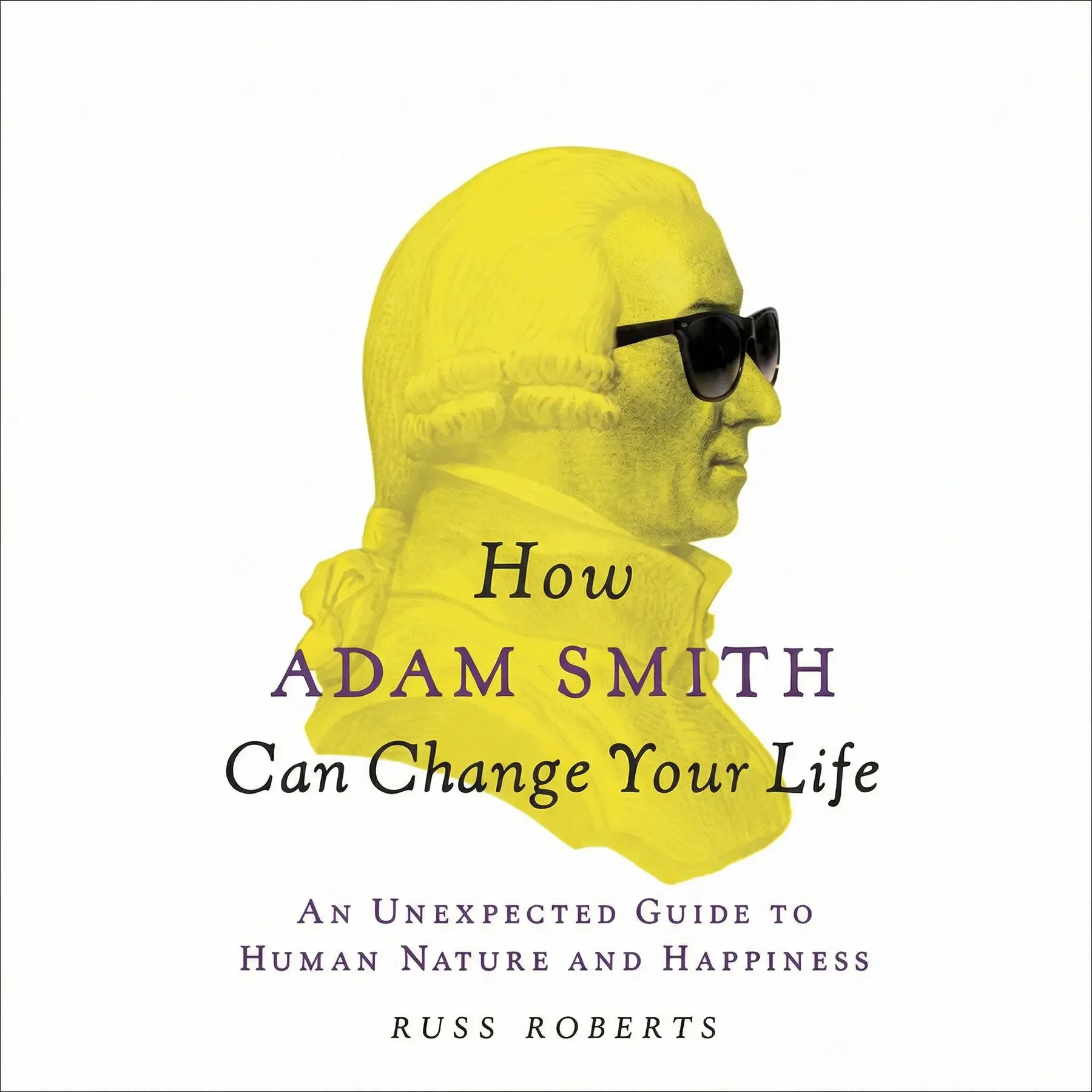
How Adam Smith Can Change Your Life: An Unexpected Guide to Human Nature and Happiness
By Russ Roberts
Discover how the father of modern economics, Adam Smith, provided a profound roadmap for personal happiness and moral living in his lesser-known masterpiece on human nature and the inner conscience.
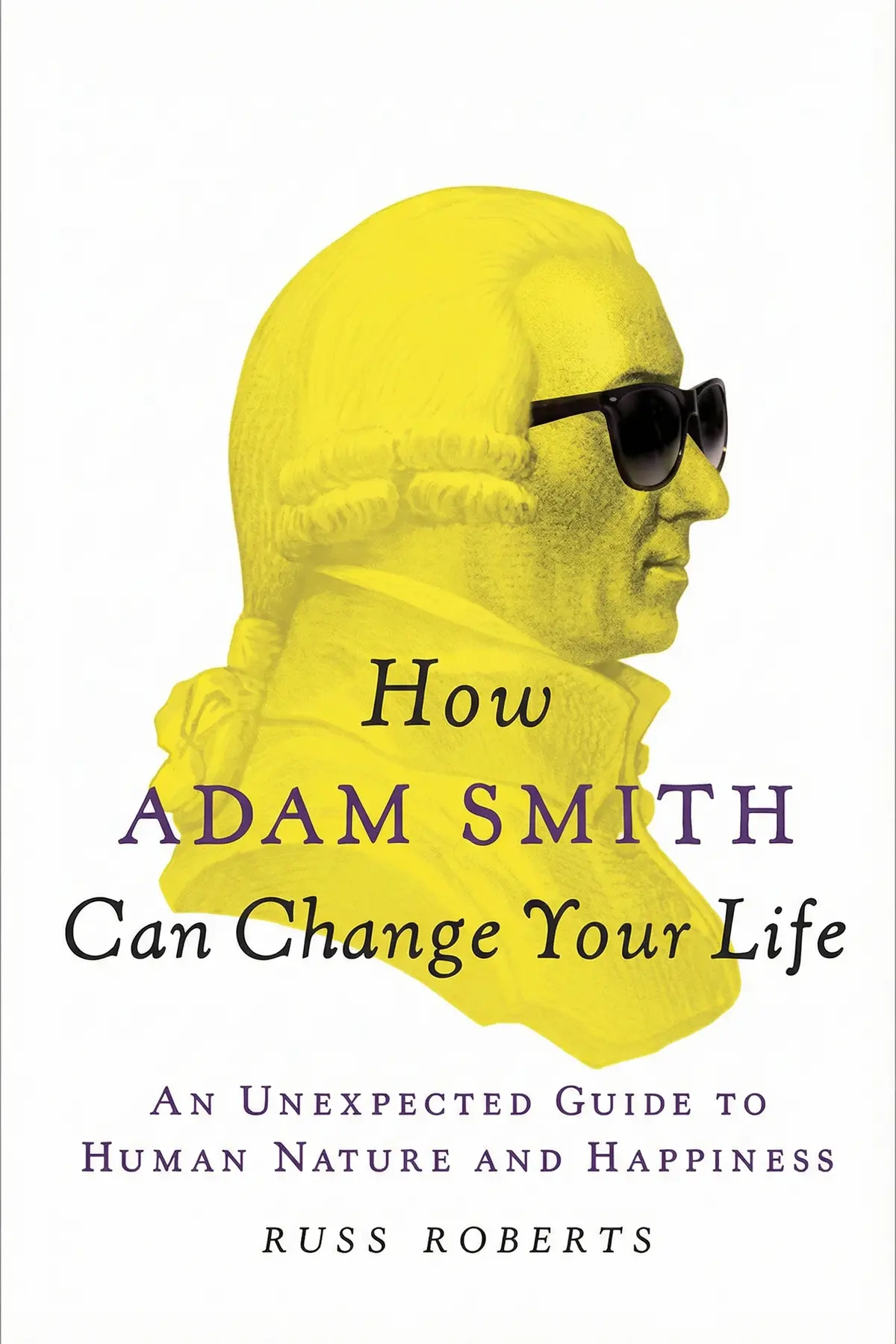
Table of Content
1. Introduction
1 min 41 sec
When you hear the name Adam Smith, your mind likely goes straight to the foundation of modern economics. You probably think of the ‘invisible hand,’ the mechanics of the free market, and his monumental work, The Wealth of Nations. Smith is often hailed as the patron saint of capitalism, a figure synonymous with the cold, hard logic of commerce. But there is a second side to Smith that has been largely forgotten by the general public—a side that was deeply concerned with the soul, the conscience, and the quest for a meaningful life.
Before he wrote about the wealth of countries, Smith wrote about the moral lives of individuals in a book called The Theory of Moral Sentiments. While his more famous work looked at how societies get rich, this earlier work looked at how people become happy. It wasn’t about money; it was about the psychological and philosophical underpinnings of human behavior. Russ Roberts takes this 18th-century text and translates it into a guide for the 21st century, showing that Smith’s insights into human nature are as relevant today as they were during the Enlightenment.
In the following sections, we are going to explore how Smith’s ideas can help us navigate the complexities of our modern world. We will look at why we struggle with selfishness, why fame often fails to satisfy us, and how we can train our inner moral compass. This is a journey through the mind of a thinker who believed that the ultimate goal of human existence wasn’t just to be successful in the eyes of others, but to be truly ‘lovely’ in our own character. By the end of this summary, you’ll see Adam Smith not just as an economist, but as a wise counselor who can help you change your life for the better.
2. The Inner Spectator and the Limits of Selfishness
2 min 51 sec
Explore the fascinating tension between our natural self-interest and the internal voice that demands we act with honor and fairness toward others.
3. The True Definition of Happiness and Lovability
2 min 27 sec
Learn why simple praise isn’t enough for true fulfillment and why we must strive to be worthy of the respect we receive.
4. Confronting the Trap of Self-Deception
2 min 12 sec
Discover how our minds hide our flaws from us and why breaking through these internal lies is essential for personal growth.
5. The High Price of Wealth and Fame
2 min 16 sec
Uncover the psychological toll of chasing status and why a life of quiet virtue is often much more rewarding than one lived in the spotlight.
6. How Individual Virtue Can Transform Society
2 min 21 sec
Explore the power of bottom-up change and see how your small, daily moral choices can influence the entire world.
7. Conclusion
1 min 44 sec
Adam Smith’s message, as brought to life by Russ Roberts, is a refreshing antidote to the hyper-competitive, fame-obsessed culture we live in today. He reminds us that while the ‘invisible hand’ of the market might help us achieve material prosperity, it is the ‘impartial spectator’ of our conscience that helps us achieve a meaningful life. The throughline of Smith’s philosophy is clear: happiness is not found in what we have, but in who we are and how we relate to others.
To put these ideas into practice, Smith offers a simple yet profound three-step framework for living. First, practice prudence. Take care of yourself, your health, and your finances, avoiding the reckless behaviors that lead to ruin. Second, be just. Ensure that you never harm others, and never put your own interests so far ahead that you trample on the rights of those around you. And finally, be beneficent. This goes beyond just being fair; it means actively looking for ways to do good and contribute to the happiness of others.
By following this path, you move toward becoming ‘lovely’—a person who is genuinely worthy of love and respect. This isn’t a destination you reach overnight, but a lifelong process of refining your character and listening to that inner spectator. In the end, Adam Smith’s greatest legacy isn’t an economic formula, but the realization that a good life is built one honorable choice at a time. As you go forward, remember that your personal virtue is your greatest asset, both for your own happiness and for the health of the world around you.
About this book
What is this book about?
While most people recognize Adam Smith as the architect of free-market capitalism, he spent much of his life exploring the depths of the human heart. This summary explores his forgotten classic, The Theory of Moral Sentiments, to uncover timeless wisdom on how we can lead more fulfilling lives. It moves beyond financial profit to investigate what truly makes a person happy: the desire to be both loved and worthy of love. Through the lens of modern experience, this guide explains how we can overcome our natural selfishness, avoid the traps of self-deception, and find genuine contentment. It challenges the modern obsession with fame and wealth, offering instead a path toward wisdom and virtue. By understanding Smith’s concept of the impartial spectator, listeners will learn how to refine their character and contribute to a better society from the bottom up.
Book Information
About the Author
Russ Roberts
Russ Roberts is a research fellow at Stanford University and an acclaimed author known for making complex economic ideas accessible through storytelling. His works include The Price of Everything: A Parable of Possibility and Prosperity. He is also the host of the long-running, award-winning podcast EconTalk.
Ratings & Reviews
Ratings at a glance
What people think
Listeners find this work to be a distinctive self-improvement guide that offers deep perspectives on Adam Smith’s complex thinking. They describe it as a compelling and accessible experience that is well worth the time and cost, with Russ Roberts doing a skillful job of distilling the material. Listeners value how much the book makes them think; one listener mentions its ability to spark self-reflection regarding behavior, and another emphasizes the relevance of its teachings for the 21st century.
Top reviews
Takeshi
Wow. Russ Roberts managed to turn an 18th-century philosophy tome into a page-turner that feels incredibly relevant for the 21st century. I was particularly struck by the concept of the 'impartial spectator.' It’s such a simple yet powerful way to think about our own behavior and moral choices. Instead of just chasing fame or money, the book argues for wisdom and virtue as the real paths to contentment. The writing is clear and engaging, making complex ideas feel like a conversation with a wise friend. Not gonna lie, I’ve already started looking at my own actions through that 'impartial' lens. It makes you realize that being a good person isn't just for others; it's the key to your own peace of mind. Highly recommended!
Show moreRay
Picked this up on a whim and I'm so glad I did. I had always associated Adam Smith with dog-eat-dog capitalism, so seeing this deeply moral side of him was eye-opening. Roberts does a great job of showing how our small, daily decisions add up to a life of character. The way he describes the 'duet' of emotional interaction—how we fine-tune our feelings to match those around us—was a brilliant observation. It’s rare to find a book that combines economics, history, and psychology so seamlessly. Frankly, it’s a relief to read something that emphasizes that money isn't everything. This book is a gentle reminder that happiness is found in the way we treat people, not in our bank accounts.
Show moreEvelyn
If you think Adam Smith is just the patron saint of 'greed is good' capitalism, this book will completely shatter your perspective. Roberts shows us a philosopher who was obsessed with human connection and the inner voice that keeps us honest. The way the author connects 18th-century wisdom to the 21st-century rat race is brilliant. I found myself pausing after every chapter to reflect on my own interactions with friends and coworkers. It’s not just an economics book; it’s a roadmap for living a life of integrity. Truth is, we need these reminders about being trustworthy and prudent more than ever. This is easily one of the most impactful and readable books on philosophy I've picked up in years. Five stars.
Show moreNan
Ever wonder how the man who basically invented modern capitalism actually thought about happiness? Roberts does a fantastic job pulling Smith’s 'The Theory of Moral Sentiments' out of the shadows of his more famous 'Wealth of Nations.' The central idea—that we don't just want to be loved, but we want to be 'lovely'—really stuck with me. It’s a refreshing take on self-improvement that focuses on virtue instead of just acquiring more stuff. In my experience, most business books are about winning, but this is about being a decent human being. My only gripe is that it can feel a bit repetitive in the middle chapters as it circles the same themes. Still, it’s a quick, thoughtful read for anyone feeling stuck in the rat race.
Show moreSofia
The chapter on how to be 'lovely' is worth the price of the book alone. Roberts breaks down the difference between being liked for superficial reasons and being truly worthy of respect. It’s a distinction we often lose in the age of social media likes and followers. I appreciated how he addressed Smith’s views on ambition and why the pursuit of fame often leads to misery. The book is short, punchy, and doesn't waste time. My only criticism is that he sometimes glosses over the more difficult aspects of Smith's philosophy to keep it 'light.' Nevertheless, it’s a great entry point for anyone who wants to see the human side of economic theory. It definitely encourages introspection.
Show moreFort
Frankly, Russ Roberts does a stellar job of translating 18th-century prose into something you can actually use on a Tuesday morning. He avoids the dry, academic tone you'd expect from a book about a famous economist. Instead, we get a guide on how to navigate the complexities of modern life using Smith's 'impartial spectator' as a compass. The focus on local love and global trade is a fascinating way to bridge his two major works. Some might find the tone a bit too 'self-help-y,' but the underlying wisdom is solid. It makes you think about who you are when nobody is watching. It's a quick read that packs a punch, though it does get a bit repetitive regarding the 'loved and lovely' quote.
Show morePensuda
Finally got around to finishing this, and I’m struck by how much Smith’s ideas echo ancient traditions without the dogmatic baggage. Roberts turns what could have been a dusty academic exercise into a practical manual for the modern soul. I loved the discussion on how we self-delude and why it's so hard to see our own flaws. The 'invisible hand' isn't just for markets; it's about how we create a culture of decency through tiny, individual interactions. While the book could have used a bit more critical pushback against Smith’s views, it serves as a wonderful summary of his lesser-known work. It’s an engaging read that will leave you thinking about your own character for weeks.
Show moreNit
As someone who listens to the EconTalk podcast, I had high expectations for this one. Roberts is a great communicator, but I found the 'self-help' angle a little forced in parts. The book basically translates Smith's moral philosophy into modern language, which is helpful since the original prose is quite dense. However, a lot of it felt like common sense dressed up in 18th-century clothes. Do we really need Adam Smith to tell us to be honest and prudent? It’s a pleasant read, and I enjoyed the breakdown of the 'invisible hand' as a moral guide, but it didn't exactly change my life. It’s a solid introduction for beginners, just don't expect it to be earth-shattering if you're already familiar with ethics.
Show moreGioia
Look, the core message here is that money isn't the only currency that matters in a well-lived life. It’s a noble sentiment, and Russ Roberts is clearly passionate about the subject. He does a good job explaining why we care so much about what others think of us. But the book relies very heavily on block quotes from the original text. Sometimes it felt more like a guided reading of Adam Smith than its own cohesive narrative. Personally, I found it a bit repetitive towards the end, as if the author was stretching the material to reach book length. It’s definitely worth the cost if you want to understand the moral side of the father of economics, but it lacks the depth I was hoping for.
Show moreHana
This book was a bit of a letdown because it felt like a repackaged version of things I've already read in basic philosophy or religious texts. Roberts spends too much time on block quotes that disrupt the flow and make the pacing feel uneven. While the intention is to make Adam Smith accessible, it comes off as shallow pop-psychology at times. To be fair, if you’ve never touched 'The Theory of Moral Sentiments,' this might serve as a decent primer. But for anyone looking for deep analysis, it’s frustratingly repetitive. It tries to turn Smith into a secular saint, which misses some of the nuances of his actual work. I’d suggest just reading the original text or a more academic commentary.
Show moreReaders also enjoyed
A Guide to the Good Life: The Ancient Art of Stoic Joy
William B. Irvine
A High-Performing Mind: Strengthen Your Mind and Live Your Best Life
Andrew D. Thompson
Abundance: The Inner Path to Wealth
Deepak Chopra
A Little History of Philosophy
Nigel Warburton
A Theory of Justice
John Rawls
AUDIO SUMMARY AVAILABLE
Listen to How Adam Smith Can Change Your Life in 15 minutes
Get the key ideas from How Adam Smith Can Change Your Life by Russ Roberts, plus 5,000+ more titles in English and Thai.
- 5,000+ titles
- Listen as much as you want
- 7-day free trial
- Cancel anytime







