
17 min 52 sec
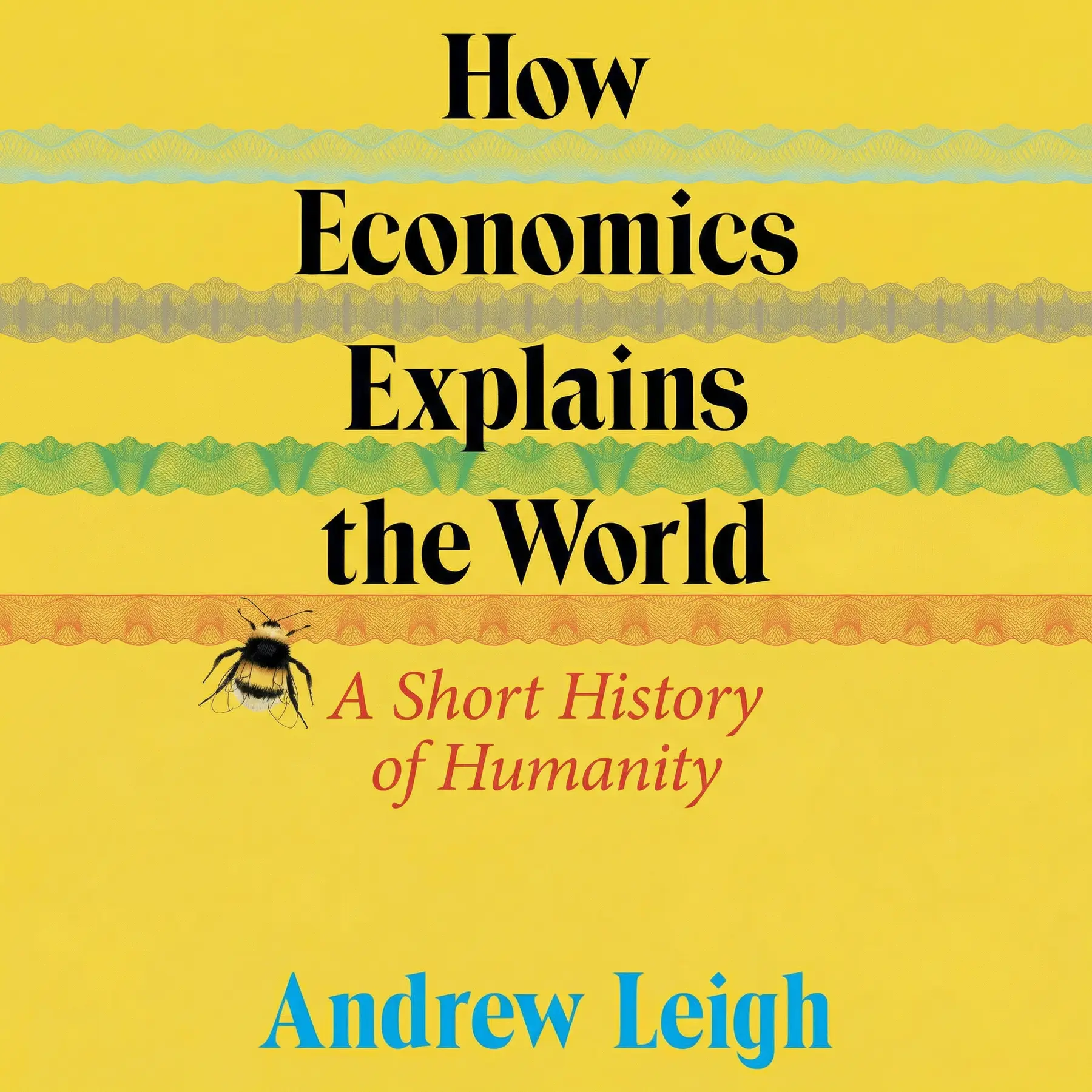
How Economics Explains the World: A Short History of Humanity
By Andrew Leigh
Discover how economic forces have directed the course of human history. Andrew Leigh reveals the hidden financial and social logic behind everything from the first farms to the modern digital economy.
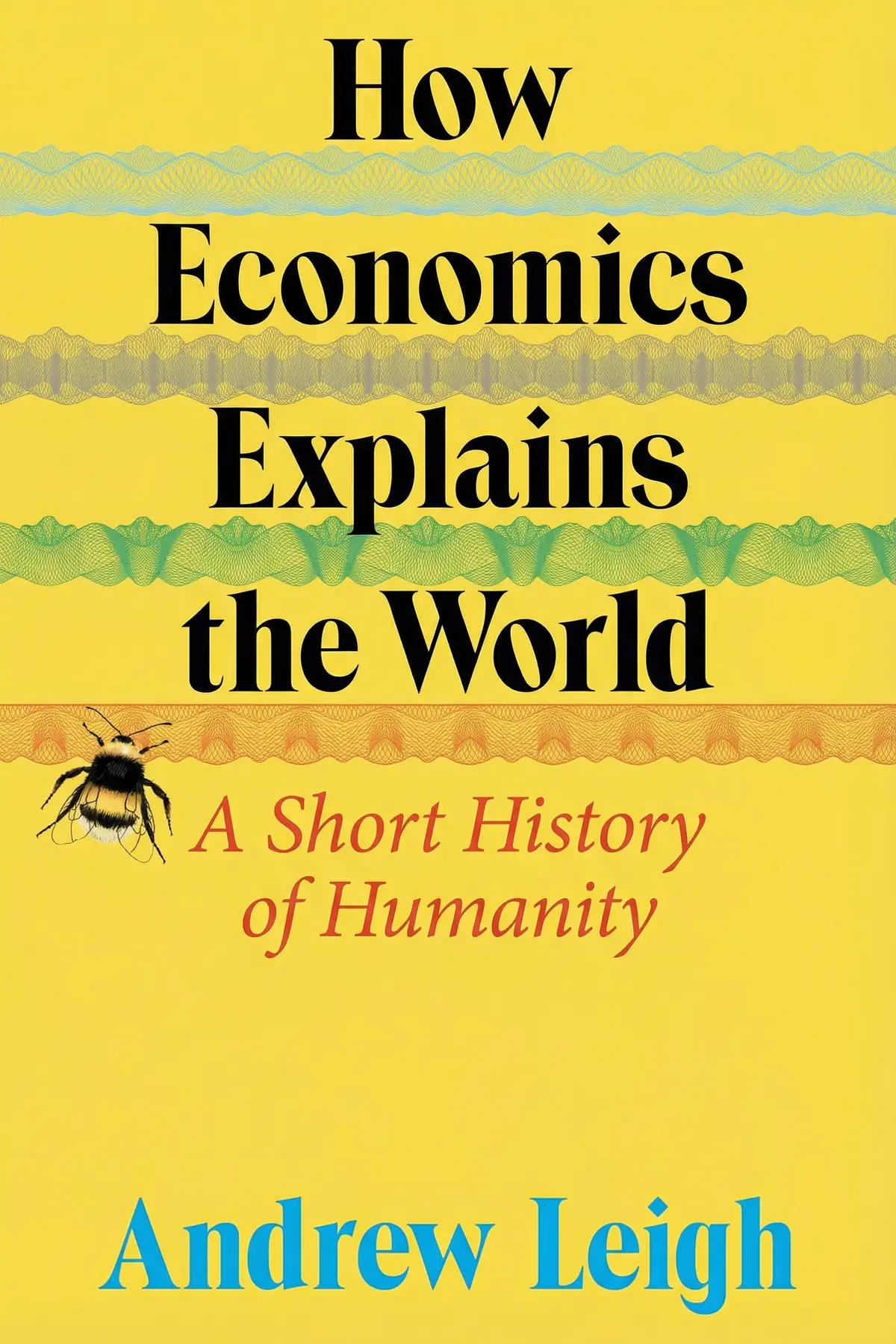
Table of Content
1. Introduction
1 min 54 sec
Think about your morning routine. The coffee you drink, the phone you check, the car or train that gets you to work—every single one of these things exists at the end of a long, invisible chain of economic decisions. Most of us view history as a series of names, dates, and battles. We remember the emperors and the explorers, but we often miss the underlying engine that drove them: economics.
Economics isn’t just a dry academic subject filled with spreadsheets and stock tickers. At its heart, it is the study of how humans make choices in a world of limited resources. It is the story of how we moved from being nomadic hunter-gatherers to building global empires and digital networks. It explains why a farmer in northwestern India four thousand years ago decided to plow a field, and why that single decision ripple-effected into the birth of mathematics and social welfare.
In this journey, we are going to peel back the layers of the past to see the world through the eyes of an economist. We will look at how geography gave some regions a head start, how the mastery of the seas connected the planet, and how the sudden roar of the steam engine changed the nature of work forever. We will also explore the darker side of these shifts—the inequality, the oppression, and the environmental costs that often accompany rapid growth.
By understanding these throughlines, we don’t just learn about where we’ve been; we gain a map for where we’re going. Economics provides the tools to address our most pressing modern challenges, from climate change to the rise of artificial intelligence. Let’s begin by looking back to the very first revolution that changed the human trajectory: the moment we stopped moving and started planting.
2. The Dawn of Settled Life
2 min 32 sec
Discover how a simple shift in how we gathered food twelve thousand years ago paved the way for modern civilization and social inequality.
3. The Power of Infrastructure and Ideas
2 min 34 sec
Learn how massive engineering feats and the free flow of information turned regional hubs into global economic powerhouses.
4. The Engine of Modernity
2 min 28 sec
Explore why the Industrial Revolution took time to benefit the average worker and how it fundamentally changed the global market.
5. Conflict and the Economic Tug-of-War
2 min 23 sec
Examine how the two World Wars and the Great Depression forced a radical rethinking of how governments should manage the economy.
6. The Great Market Shift
2 min 17 sec
Trace the global move toward free markets and how the ‘inflation thermostat’ changed how we live and shop.
7. Facing the Horizon
2 min 06 sec
Discover how the tools of economics are being repurposed to tackle modern existential threats like climate change and AI.
8. Conclusion
1 min 38 sec
As we wrap up our journey through the economic history of humanity, the most important takeaway is that nothing in our modern world is accidental. The prosperity we enjoy, the inequalities we struggle with, and the technologies we use are all products of a long chain of economic evolution. From the moment the first farmer plowed a field in India to the modern central banker adjusting interest rates in a skyscraper, the goal has remained the same: managing resources to create a better future.
We have seen how geography can be destiny, but also how human innovation can overcome natural barriers. We have seen how trade can build bridges between cultures, and how it can be used as a tool of oppression. Most importantly, we have seen that the way we choose to structure our economies has a direct impact on the freedom and well-being of every person on the planet.
As you go about your day, try to look for the economic forces at play. When you see a new infrastructure project, think of the Grand Canal. When you see a price change at the store, think of the ‘inflation thermostat.’ And when you hear about new technologies like AI, remember the steam engine and the lessons of the Industrial Revolution. By understanding these principles, you are no longer just a spectator in the global economy; you are an informed participant. The future is not a predetermined path; it is a series of choices. Armed with the insights of economics, we can strive to make choices that lead to a more prosperous, equitable, and sustainable world for everyone.
About this book
What is this book about?
Have you ever wondered why some nations are incredibly wealthy while others remain caught in cycles of poverty? This exploration of human history through an economic lens provides the answers. By looking back at the last twelve thousand years, we see that the story of humanity is not just one of kings and wars, but of resource management, trade routes, and technological breakthroughs. The book promises to demystify complex economic concepts, showing how they apply to the real world. From the dawn of agriculture to the high-stakes world of modern central banking, you will learn how geography, innovation, and policy decisions shaped the lives we lead today. We will examine the rise of the Industrial Revolution, the impact of global conflicts on financial stability, and the secret agreements that sparked economic miracles. Whether it is the invention of the printing press or the implementation of inflation targeting, these economic shifts are the true drivers of social change. This summary offers a comprehensive view of how we arrived at our current global landscape and what economic principles will guide us into an uncertain future.
Book Information
About the Author
Andrew Leigh
Andrew Leigh is an Australian politician, economist, and author serving as the Assistant Minister for Competition, Charities, Treasury and Employment, and Federal Member for Fenner in the Australian Parliament. A former professor of economics at the Australian National University, Leigh holds a PhD in Public Policy from Harvard and has been recognized with the Economic Society of Australia's Young Economist Award. His bestselling books include Disconnected, Battlers and Billionaires, and Randomistas.
Ratings & Reviews
Ratings at a glance
What people think
Listeners find the work accessible and well-crafted, with one person remarking that it makes them want to keep going. Additionally, the text is filled with historical facts and offers insights from global economic history, making it an excellent study of economics.
Top reviews
Bee
Andrew Leigh has managed to condense thousands of years of human development into a remarkably digestible narrative. From the early days of the Agricultural Revolution to the complexities of the COVID-19 pandemic, this book weaves a seamless thread through history using economic principles as the loom. I was particularly struck by the discussion on how geographical advantages in Eurasia dictated early success. The writing is punchy and never gets bogged down in dense jargon, which makes it a rare find in this genre. Personally, the way Leigh connects the Age of Sail to modern global trade routes opened my eyes to the long-term consequences of maritime innovation. It is an impressive feat to cover so much ground in such a short volume without losing the reader’s interest. This is a must-read for anyone wanting to understand why the world looks the way it does today.
Show moreKom
Ever wonder how a mathematician studying bullet holes on bombers could explain the entire field of economics? Leigh’s use of Abraham Wald’s story to illustrate survivor bias was brilliant and perfectly captured how economic thinking applies to real-world survival. The book is a fascinating journey through time. It shows that economics is no more about money than architecture is about inches; it is fundamentally about human well-being. I loved the exploration of how Venice’s 'colaganza' system democratized trade profits, even if that mobility was eventually stifled. The prose is elegant and the chapters are short enough to read during a commute. It really packs a punch. It’s one of those rare books that makes you feel smarter with every chapter you finish.
Show moreRatthapong
What a refreshing take on the long arc of human history! This book perfectly balances the heavy hitters of economic thought—Smith, Keynes, Hayek—with the lived reality of people across different eras. I was fascinated by the story of how Chinese farmers initiated market-based production in secret, eventually leading to a massive national transformation. Leigh’s ability to weave these anecdotes into a larger narrative about global trade and policy is masterful. It’s a short history, but it feels incredibly comprehensive. The book reminds us that economics is a tool for understanding the past and building a better future. It’s easily one of the most accessible books on the subject I’ve ever come across. I'll be recommending this to everyone.
Show moreKaen
Picked this up on a whim after seeing it on a 'best of' list, and I’m glad I did. The book is incredibly easy to read, almost like a series of interconnected essays that guide you through the evolution of market systems. To be fair, it moves very quickly, sometimes glossing over the nuances of the 20th century in just a few pages. However, the explanation of Keynesianism versus Hayek’s free-market approach was one of the clearest summaries I’ve encountered. Leigh’s center-left perspective is visible, yet he provides enough context for readers to draw their own conclusions about government intervention. It keeps you wanting to turn the page, which is a high compliment for an economics text. A few sections felt a bit rushed, but the overall historical scope is fantastic for a general audience.
Show moreRyan
The chapter on the Industrial Revolution was a total standout for me because of how it balanced technological growth with social impact. Leigh doesn’t just celebrate the steam engine; he looks at how Ford’s assembly line fundamentally changed the lives of the working class. It’s a very readable summary of how we got to where we are. Frankly, it’s impressive how much information is packed into such a slim book. My only gripe is that it feels a bit light on the 21st-century challenges like AI and climate change, which are only touched upon at the very end. Still, for a short history of humanity, it hits the mark. The ending quote about capitalism not guaranteeing the well-being of those without capital really stuck with me. It’s a sober reminder of the system's flaws.
Show moreParichat
Economics is about human choices, and Leigh illustrates this beautifully through historical milestones. I particularly enjoyed the sections on New Zealand’s role in pioneering inflation targeting and how that stabilized global monetary policy. The book is written with a sense of optimism about human progress while acknowledging the darker chapters like the Atlantic slave trade. Leigh’s writing is clear and insightful, making complex ideas like opportunity cost feel intuitive. Some of the later chapters on current events felt a bit like reading a news summary, but the historical context provided earlier makes it worth the read. It’s a great examination of how economic forces drive both growth and conflict. Definitely a solid addition to any history lover's bookshelf.
Show moreGai
After hearing Leigh on a podcast, I was curious to see if his writing was as engaging as his speaking. This book does not disappoint. It is a quick, insightful read that manages to cover everything from the Grand Canal of China to the repeal of the Corn Laws in Britain. The way he explains how societies that promote social mobility grow stronger while those that stifle it decline is a lesson many modern leaders should heed. Not gonna lie, I think the book could have been fifty pages longer to give some topics room to breathe. However, the brevity is also part of its charm. It makes for a great weekend read that provides a high-level overview of the 'dismal science' without any of the gloom.
Show moreOrathai
While the narrative is undeniably engaging, I found myself questioning some of the author’s causal links. For instance, the claim that wealth inequality is the primary driver for civilizations building massive monuments felt like a significant oversimplification. In my experience, those kinds of projects are often about centralized power or religious fervor rather than just the gap between the rich and poor. Look, the book is a great primer if you are new to the subject, but it lacks the granular detail found in works like Mariana Mazzucato’s 'The Value of Everything.' It’s a bit run-of-the-mill for seasoned readers. The writing style is breezy and accessible, which is a plus, but the lack of deep analysis on certain historical turning points left me wanting more. It's a decent overview but doesn't offer many ground-breaking insights for those already familiar with economic theory.
Show moreSirichai
If you’re already an economics buff, you might find this a bit repetitive. It follows a very standard chronological path from agriculture to the modern day without offering much in the way of new evidence or radical theories. That being said, for a beginner, this is a fantastic place to start. The author is clearly knowledgeable, but his brevity sometimes works against him. The transition from the World Wars to the era of Margaret Thatcher and Ronald Reagan felt like a whirlwind. I would have appreciated more depth on the rise of the East Asian economies. It’s a solid, well-written recitation of economic history, but it doesn't quite reach the 'thought-provoking' level I was hoping for. It’s good, just not exceptional.
Show moreGun
To be fair, the opening chapter on how economics shaped early culture was actually quite strong. But as the book progressed, the author’s personal biases and privilege started to overshadow the actual history. The suggestion that it is natural for people to derive their core identity from their jobs feels incredibly out of touch with the reality of essential workers like janitors or retail staff. Furthermore, some of the comparisons regarding IQ scores and cultural progress felt clumsy and borderline offensive. Truth is, referencing Steven Pinker to make points about global 'progress' without acknowledging the massive systemic inequalities involved is a major red flag for me. I appreciate the attempt to make economics accessible, but this felt more like an opinion piece than a rigorous non-fiction work. I really wanted to like this, but the tone eventually turned me off completely.
Show moreReaders also enjoyed
A Year in the Life of William Shakespeare: 1599
James Shapiro
Age of Anger: A History of the Present
Pankaj Mishra
1491: New Revelations of the Americas Before Columbus
Charles C. Mann

Agent Sonya: The Spy Next Door
Ben Macintyre

A Biography of Loneliness: The History of an Emotion
Fay Bound Alberti
Alexander Hamilton
Ron Chernow
1929: Inside the Greatest Crash in Wall Street History--and How It
Andrew Ross Sorkin
AUDIO SUMMARY AVAILABLE
Listen to How Economics Explains the World in 15 minutes
Get the key ideas from How Economics Explains the World by Andrew Leigh, plus 5,000+ more titles in English and Thai.
- 5,000+ titles
- Listen as much as you want
- 7-day free trial
- Cancel anytime







