
18 min 18 sec
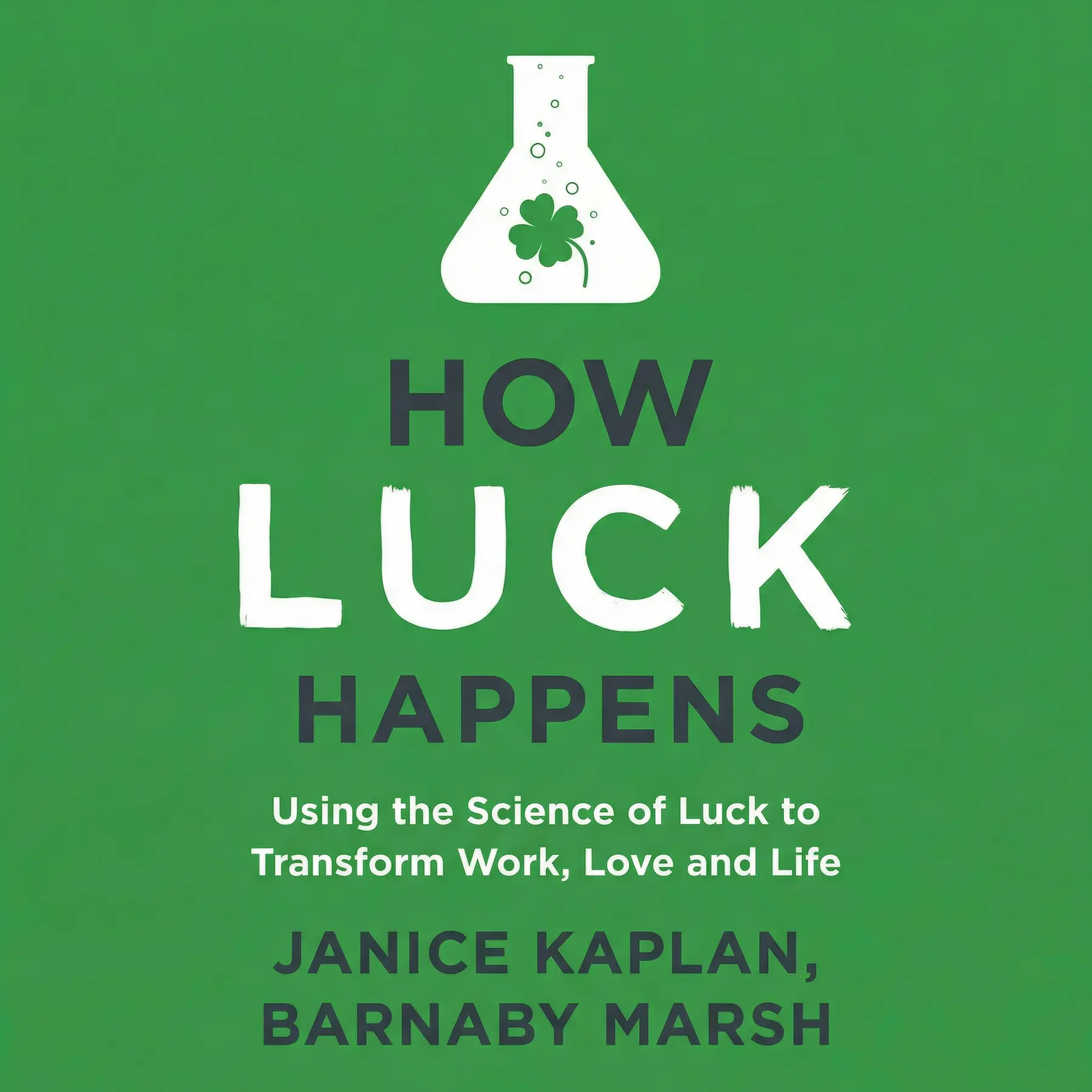
How Luck Happens: Using the Science of Luck to Transform Work, Love and Life
How Luck Happens explores the intersection of preparation and opportunity. It reveals how individuals can move beyond passive chance by cultivating the specific habits, mindsets, and environments that invite extraordinary success into their lives.
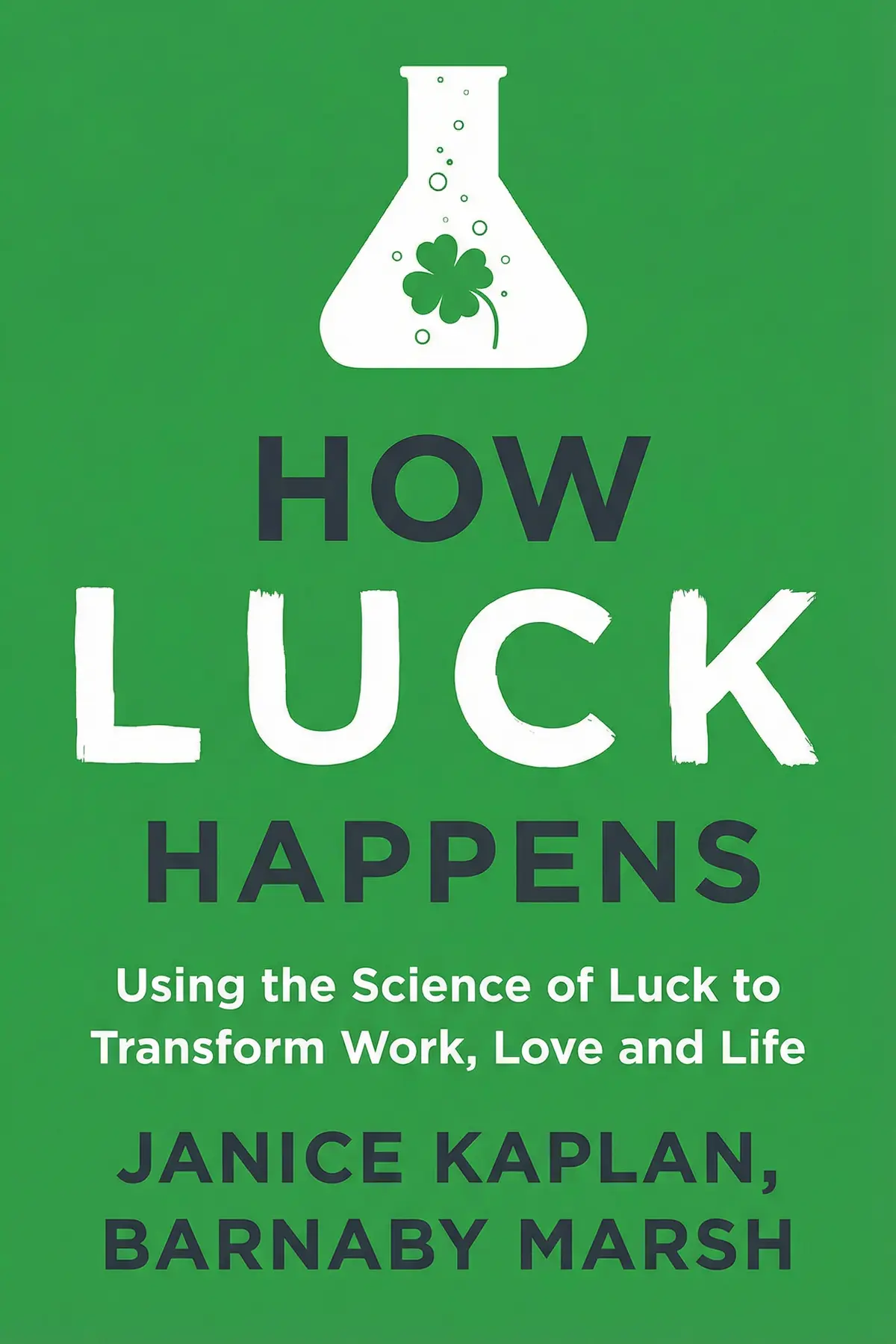
Table of Content
1. Introduction
1 min 37 sec
We have all witnessed those moments where someone seems to effortlessly stumble into a golden opportunity. Perhaps it’s the colleague who happened to be in the elevator with the CEO at just the right moment, or the friend who met their soulmate through a series of unlikely events. In those moments, it’s easy to shrug our shoulders and attribute it all to the fickle whims of the universe. We tell ourselves that some people are just born under a lucky star, while the rest of us have to grind away in the shadows of misfortune. This perspective, however, is not just discouraging—it’s factually incomplete.
How Luck Happens invites us to look under the hood of these seemingly random occurrences to see the gears and levers that actually drive them. The central throughline of this exploration is that luck is not a mystical gift, but a predictable result of how we interact with the world. It is the point where our preparation, our character, and our willingness to take risks meet the unpredictable elements of chance. While you cannot control which way the wind blows, you can certainly control how you set your sails.
In the pages ahead, we will dismantle the myths that keep us passive and replace them with a proactive framework for success. We’ll explore how small shifts in your social circle can lead to massive career breakthroughs, why the pursuit of perfection actually sabotages your chances of finding love, and how the way we raise our children can determine their lifelong relationship with opportunity. By the end of this journey, the mystery of luck will be replaced by a clear-eyed strategy for inviting more of it into your work, your relationships, and your everyday life. It’s time to stop waiting for luck to find you and start learning how to make it happen.
2. The True Anatomy of Luck
2 min 04 sec
What if luck isn’t a random roll of the dice? Discover the three-part formula that transforms unpredictable chance into a tangible tool you can control.
3. Strategic Positioning and the Power of Divergence
2 min 15 sec
Hard work alone isn’t enough to get lucky. Learn how the right placement and a willingness to break tradition can put you exactly where the rewards are.
4. The Strength of Weak Ties and Diversified Networks
2 min 20 sec
Your closest friends might be holding your luck back. Explore why casual acquaintances and a wide variety of interests are the keys to unlocking new doors.
5. Standing Out in the Professional Arena
2 min 06 sec
In a world of identical resumes, how do you ensure you’re the one who gets the call? Uncover the secrets to landing in the ‘lucky pile’ of candidates.
6. The Science of Finding and Building Love
2 min 05 sec
Is romance really about fate, or is it a matter of statistics and sweat equity? Learn why the search for ‘the one’ might be what’s keeping you unlucky in love.
7. Cultivating Lucky Foundations in the Next Generation
1 min 56 sec
How do you raise a lucky child? It starts by shifting their perspective from being a passenger in life to being the pilot of their own destiny.
8. The Art of Avoiding and Transforming Bad Luck
2 min 13 sec
Bad breaks are inevitable, but they don’t have to be permanent. Discover how to shield yourself from misfortune and flip the script on setbacks.
9. Conclusion
1 min 42 sec
As we have seen, the divide between the lucky and the unlucky is not nearly as wide or as mysterious as it first appears. Luck is a multifaceted phenomenon that honors the prepared, the persistent, and the proactive. By understanding the formula of chance plus talent plus hard work, you can begin to see your life not as a series of random collisions, but as a landscape of opportunities waiting to be harvested.
The transition from being a spectator to a participant in your own luck requires a fundamental shift in how you navigate the world. Think of it as moving through life with a compass rather than a map. A map is rigid; it dictates a single path, and if that path is blocked by ‘bad luck,’ you are lost. A compass, however, gives you a sense of direction while allowing you the flexibility to navigate around obstacles and explore new territories. When you have a clear sense of your goals—your ‘True North’—you can afford to be adventurous. You can take the ‘Fosbury Flop’ risk, you can reach out to that weak tie, and you can invest in a relationship that isn’t perfect but has potential.
Ultimately, the science of luck is the science of agency. It is the realization that while the world will always throw unexpected variables your way, your response to those variables is what creates your destiny. Whether you are looking to revitalize your career, find deeper connections in your personal life, or simply move through the world with more confidence, the tools are now in your hands. Start by aligning your ‘cherries,’ expanding your circle, and staying ready for the small breaks. Luck isn’t just something that happens to you—it’s something you build, one intentional choice at a time. Go out and start making your own luck.
About this book
What is this book about?
Most people view luck as a mysterious, lightning-like force that strikes at random, leaving the rest of us in the dark. How Luck Happens fundamentally challenges this passive perspective, arguing that while we cannot control pure chance, we can absolutely master the science of luck. By breaking down luck into its component parts—talent, hard work, and the strategic positioning of oneself—the authors provide a blueprint for creating more favorable outcomes in every arena of life, from professional advancement to romantic fulfillment. The book promises a shift in agency. It moves the reader from the sidelines of their own life into the driver’s seat by explaining how to spot small breaks before they vanish and how to build a network that acts as a magnet for opportunity. Through a blend of sociological research, psychological insights, and real-world success stories, it demonstrates that 'getting lucky' is actually a skill that can be practiced. Whether you are looking to pivot your career, find a life partner, or raise resilient children, this summary provides the tools to ensure that when chance finally does knock, you are not only home but have the door wide open.
Book Information
About the Author
Janice Kaplan
Janice Kaplan is a versatile media professional with a distinguished career as a magazine editor, television producer, writer, and journalist. She is the author of 13 books, including the widely acclaimed New York Times bestseller, The Gratitude Diaries. Dr. Barnaby Marsh is a prominent academic and a recognized expert in the study of risk-taking and complex systems.
Ratings & Reviews
Ratings at a glance
What people think
Listeners find the book accessible and enjoy the fascinating premise, with one listener noting how complicated ideas feel deceptively simple. The work offers solid observations, as one listener points to the useful real-world examples, and listeners generally consider it an entertaining experience. Opinions on the research quality are varied: some find it engaging, while others argue it lacks scientific rigor. Although many find the work motivating, some feel it was not worth their time or financial investment.
Top reviews
Charles
This book completely shifted my perspective on luck. I used to think of it as a random lightning strike, but Kaplan and Marsh argue it is more about building a sturdy net to catch opportunities as they fly by. The concept of 'weak ties' really resonated with me because I’ve always been hesitant to network outside my immediate circle. Now, I see that those distant connections are actually the ones that open the most doors. To be fair, the book leans heavily on anecdotes rather than hard data, but the conversational style makes complex sociological ideas feel manageable. I've already started applying the 'go to more parties' rule. It is surprisingly effective for meeting new people! If you need a motivational boost to change your routine, this is it.
Show moreKasemsan
The chapter on the power of other people alone makes this book worth the purchase price for any professional. I’ve always been an introvert, so the idea of 'going to every party' sounded exhausting at first. But the way Kaplan explains the compounding effect of connections changed how I view my social energy. It is not about being the loudest person in the room; it is about creating opportunities for serendipity to occur. This book acts like a supportive mentor, cheering you on to believe that you actually deserve good things to happen. To be fair, it is more of a motivational piece than a textbook, but that’s exactly what I needed. It is a refreshing take on success that emphasizes agency over mere passive chance.
Show moreOm
Ever wonder why some people always seem to be in the right place at the right time? This book breaks down that mystery by showing that 'luck' is often a result of being prepared and staying persistently experimental. I enjoyed the blend of storytelling and advice, even if some of the examples felt a bit out of reach for us non-celebrities. The authors argue that being lucky involves a mix of talent, hard work, and the willingness to show up when others stay home. I particularly liked the advice about 'zigging when others zag' to find unique paths. While it could have used more statistical evidence, it serves as a great recharge for your personal motivation. It is a fun, quick read that encourages you to take more chances.
Show moreNathan
Look, this is a standard self-help book that does a good job of repackaging the idea of 'making your own luck.' The formula they present—talent plus hard work plus chance—is a solid way to look at success. I appreciated the sections on health and how base rates of illness matter more than what we see on TV. It helps ground some of the more flighty Hollywood stories in a bit of realism. However, it definitely suffers from 'survivorship bias' by only focusing on the people who actually made it big. They don’t talk much about the thousands of people who did everything right and still didn't get their big break. If you take it with a grain of salt, there are some decent takeaways about persistence and networking.
Show moreTun
After hearing so much about the 'Luck Lab,' I was excited to see what the research actually showed. While the 'science' part was lighter than I anticipated, the practical advice on maintaining an open mindset was valuable. I especially liked the discussion on how your reaction to circumstances defines your future outcomes more than the events themselves. It reminds you to stay curious and keep your eyes open for clues that others might miss. Some of the TV examples were a bit much, but they served their purpose in illustrating the points. It is an easy, uplifting read that doesn't demand too much of the reader but still leaves you with something to think about. Perfect for a long flight or a lazy afternoon.
Show moreOlivia
Finally got around to finishing this, and I have to say the section on 'giving luck to get luck' was a highlight. It is a simple concept, but the authors explain how generosity can actually expand your own network of possibilities. I’m still a bit confused about how this squares with some of the more introverted-focused books I've read, but it is a good counter-perspective. The writing is very polished, which you’d expect from a former editor-in-chief. Not every chapter hit home—some of the 'lucky lift' stories felt a bit forced—but the overall message is positive. It encourages you to be more proactive in your life rather than just waiting for things to happen to you. Definitely worth a look for the networking tips.
Show moreMeen
Picked this up expecting a deep dive into the science of probability, but found a collection of chats instead. The book is framed as a series of conversations between the authors, which makes it feel a bit like reading someone’s personal journals. I found the advice about 'weak ties' to be the most practical part of the entire thing. However, I got tired of hearing about Los Angeles and New York being the only places where things happen. Not everyone can just move to a major metropolis to increase their 'luck' surface area. The writing is smooth and easy to digest, yet I left feeling like I’d heard most of this before in other self-help books. It is decent for a weekend read but don't expect a groundbreaking scientific breakthrough.
Show moreIvan
As someone who appreciates a good success story, I found the various interviews throughout the book to be quite engaging. Kaplan has a knack for getting people to talk about their paths, which provides a nice human element to the concept of luck. On the flip side, Barnaby Marsh’s contributions felt a bit theoretical and sometimes detached from reality. That penny store example he used was particularly absurd and didn't translate well to practical life. It is a bit of a mixed bag where the anecdotes are better than the actual analysis provided. I did appreciate the reminder to stay optimistic and keep trying new routines to break out of a rut. Overall, it is an okay book that might inspire you to be more social, even if it lacks rigor.
Show moreRatchada
Wow, I really wanted to like this, but the tone-deaf attitude toward privilege made it hard to stomach. Janice Kaplan writes about her high-level career as a TV producer as if everyone starts with those same elite connections. At one point, she mentions meeting a Saudi prince like it's a common Tuesday occurrence for the average person. It felt less like a guide to creating luck and more like a diary of an already wealthy woman talking to her famous friends. There was very little hard science or actual data from the 'Luck Lab' to back up the claims. If you are looking for a rigorous psychological study, you’re going to be disappointed by the endless Hollywood anecdotes. It is a frustrating read that confuses being fortunate with being lucky.
Show moreJames
Frankly, I found the structure of this book to be quite dreary and repetitive after the first few chapters. It follows a predictable pattern where Janice meets a famous friend, they discuss a 'lucky' moment, and then Barnaby chimes in. It felt like I was being told that luck is only for people who already have high-powered agents and ranch-owning co-authors. The lack of diversity in the examples was glaring. Luck is a practical matter for most of us, not a theoretical exercise involving Saudi princes or Rhodes scholars. I was hoping for experiments and data, not just a series of wordy dialogues that lead to common-sense conclusions. It was a struggle to finish this one because it felt so out of touch with reality.
Show moreReaders also enjoyed
A Guide to the Good Life: The Ancient Art of Stoic Joy
William B. Irvine
A High-Performing Mind: Strengthen Your Mind and Live Your Best Life
Andrew D. Thompson
Abundance: The Inner Path to Wealth
Deepak Chopra
59 Seconds: Change Your Life in Under a Minute
Richard Wiseman
AUDIO SUMMARY AVAILABLE
Listen to How Luck Happens in 15 minutes
Get the key ideas from How Luck Happens by Janice Kaplan, plus 5,000+ more titles in English and Thai.
- 5,000+ titles
- Listen as much as you want
- 7-day free trial
- Cancel anytime







