

16 min 06 sec
How to Be a Great Boss
Discover how to transform from a simple manager into a respected leader. This summary explores practical frameworks for delegating tasks, building high-performing teams, and mastering the balance between visionary leadership and disciplined management.
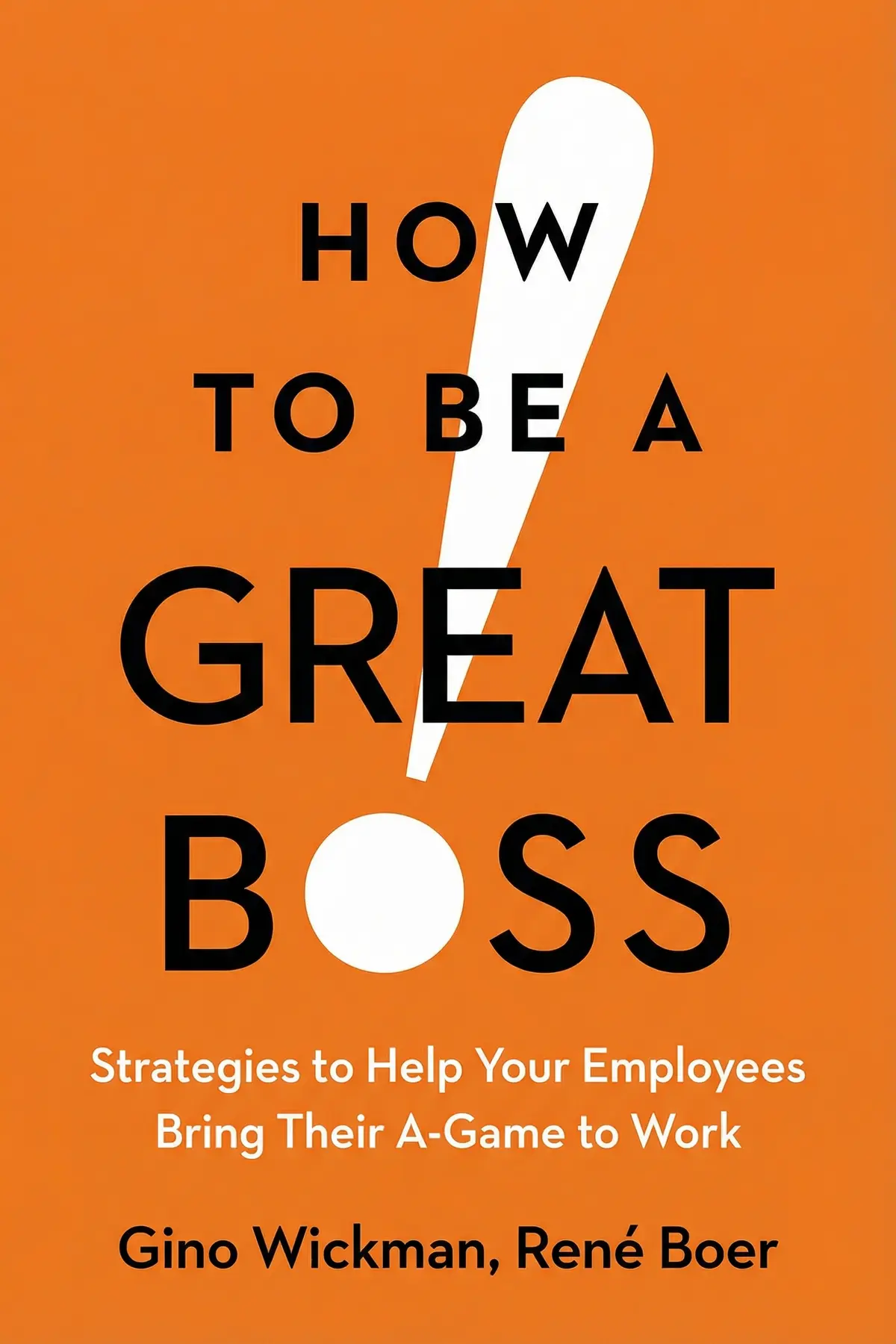
Table of Content
1. Introduction
1 min 42 sec
Take a look at your business card or your official job description. You might see a title like Manager, Director, or Vice President. But consider what your employees actually call you when they’re talking about their workday. More often than not, they use the word “boss.” While some modern corporate cultures try to soften this term with labels like “coach” or “facilitator,” the reality is that being the boss comes with a specific, heavy set of responsibilities. It means you are the person responsible for the output, the morale, and the growth of your team.
Many people in leadership positions feel a bit uneasy with that responsibility. They might feel like they’re constantly firefighting, or perhaps they worry that their team isn’t as motivated as they could be. The truth is that the difference between a struggling company and a thriving one often comes down to the quality of its bosses. Great bosses don’t rely on their authority to get things done; they create an environment where people want to give their best. They understand that while competitors can copy your products or your technology, they can never copy your people. Your team is your only truly sustainable competitive advantage.
In this summary of How to Be a Great Boss, we’re going to look at the strategies developed by Gino Wickman and René Boer to help you step into this role with confidence. We’ll explore why employee engagement is currently in a state of crisis and how you can fix it. We will also break down the specific habits of leadership and management that lead to a culture of accountability. By the end of this journey, you’ll have a clear framework for evaluating your team, delegating your workload, and ensuring that every person in your organization is in a position to succeed. Let’s get started by looking at the hidden costs of a disengaged workforce and why the responsibility for that engagement sits squarely on your shoulders.
2. The High Cost of Disengagement
1 min 50 sec
Low employee engagement is a massive financial drain on businesses, and the solution starts with realizing that leadership, not the employees, is usually the root cause.
3. Assessing Your Own Fit for the Role
1 min 58 sec
Before you can lead others effectively, you must honestly evaluate if you possess the innate understanding, the desire, and the capacity to handle the demands of being a boss.
4. Mastering Delegation and Time Management
1 min 49 sec
Effective leaders stay within their optimal capacity by constantly evaluating their tasks and letting go of anything that doesn’t require their unique strengths.
5. Finding the Right People for the Right Seats
1 min 45 sec
Success is built on a foundation of people who share your core values and possess the specific skills needed for their unique roles.
6. The Formula for Accountability
1 min 42 sec
Accountability isn’t something you can demand through force; it is the natural byproduct of combining clear leadership with disciplined management.
7. Ten Practices for Effective Bosses
2 min 14 sec
A great boss masters five leadership habits to set the vision and five management habits to ensure daily execution and alignment.
8. Navigating Difficult People Decisions
1 min 43 sec
Maintaining a high-performing culture requires the courage to have honest, frequent conversations and to make the hard calls when someone no longer fits the team.
9. Conclusion
1 min 23 sec
Being a great boss is not a destination you reach; it is a discipline you practice every day. It starts with a shift in mindset—moving from seeing yourself as someone who manages tasks to seeing yourself as someone who cultivates people. We’ve seen that engagement is a leadership responsibility, and that by focusing on your own capacity and delegating effectively, you can create the space needed to truly lead.
Remember the core equation: Leadership plus Management equals Accountability. By setting a clear vision, providing the right tools, and maintaining a disciplined rhythm of communication through your weekly meetings and quarterly conversations, you build a foundation of trust. You ensure that you have the right people in the right seats, and you have the courage to address issues before they become crises.
Your throughline as a boss should be one of clarity and support. When your team members know exactly what is expected of them, when they feel their values are aligned with the company’s, and when they know you genuinely care about their success, they will naturally bring their best to work. You won’t have to demand accountability because they will own it themselves. As you move forward, take the time to reflect on your own habits. Which of the ten practices could you improve today? By making small, consistent changes, you will transform not just your own workday, but the lives and careers of everyone you lead. You have the tools; now it’s time to lead with pride and purpose.
About this book
What is this book about?
How to Be a Great Boss tackles one of the most significant challenges in the business world: the gap between possessing a title and actually leading people effectively. Many managers struggle with burnout, disengaged employees, and a lack of accountability within their teams. This book provides a clear roadmap to bridge that gap by focusing on two core pillars—leadership and management. The promise of this work is that anyone, regardless of their natural personality or industry, can become a boss that employees are proud to follow. It moves away from complex theories and instead offers a set of practical, repeatable tools. You will learn how to evaluate your own capacity, how to ensure you have the right people in the right roles, and how to maintain a rhythm of communication that keeps everyone aligned. By the end, the goal is to create a self-sustaining culture of accountability where the business thrives because the people are empowered and the leader is focused on the right priorities.
Book Information
About the Author
Gino Wickman
Gino Wickman created the Entrepreneurial Operating System (EOS) to help leaders find structure and balance. He is the author of several bestsellers, including Traction and Rocket Fuel. René Boer brings over three decades of leadership experience from the restaurant industry, having held executive positions at brands like Jamba Juice and Pizza Hut. As a certified EOS implementer, he has guided hundreds of organizations toward better health.
Ratings & Reviews
Ratings at a glance
What people think
Listeners find this guide accessible and value the actionable tips provided, especially for individuals transitioning into management roles. Furthermore, the material offers a solid overview of professional best practices; one listener points out that it effectively consolidates concepts from multiple different sources. They also appreciate the inspiring nature of the content, with one review stating that it improves their self-assurance at work. The prose is brief and direct, and one listener emphasizes the helpful templates included in the book.
Top reviews
Chanida
Finally got around to reading this after a promotion, and it really helped calm my nerves about leading a team for the first time. The "Delegate and Elevate" quadrant is such a simple tool, yet it completely changed how I look at my daily task list. I used to feel guilty about passing things off, but now I see it as a way to let others grow. It’s concise and doesn't waste time with unnecessary fluff, which I appreciate. If you are new to the people management domain, this is an essential starting point for your journey. It makes the transition from coworker to boss much smoother.
Show moreLars
The simplicity here is actually its greatest strength, especially the GWC (Get it, Want it, Capacity) metric. I’ve started using the 30-minute monthly sessions with my team, and the engagement levels have skyrocketed already. Look, many of us get promoted because we’re good at our technical jobs, not because we know how to lead humans. This book bridges that gap perfectly. It’s actionable, it's fast, and the tone is incredibly encouraging without being cheesy. I especially liked the "pulling the string" analogy—it really helps visualize the difference between pushing people and leading them with vision.
Show moreTod
Ever wonder why your team feels stagnant despite everyone being "busy"? This book answers that question by forcing you to look at your own leadership style first. I loved the emphasis on ownership and confronting conflict rather than running from it. The advice to ask top employees what they would change about the company is pure gold. It makes them feel valued and gives you insights you’d never get from a standard KPI report. The forms included are incredibly practical and I’ve already printed several for my office. It’s motivational and highly applicable to real-world office dynamics.
Show moreSangduan
As a fan of Wickman’s Traction, I found this to be a natural extension of the EOS framework. The "Right Person, Right Seat" concept is broken down so clearly here that even my most junior supervisors could implement it immediately. Frankly, it’s refreshing to read something that emphasizes spending time with top performers instead of just putting out fires with the underachievers. The writing style is very punchy and direct. My only gripe is that it feels a bit repetitive if you’ve already internalized the core EOS principles, but the specific boss-related tips for maintaining clear expectations are worth the price.
Show moreRung
Gotta say, the section on positive reinforcement and the 24-hour rule for accolades was a huge wake-up call for me. I realized I was "piling on" corrections during annual reviews instead of giving constant, small feedback loops throughout the month. The advice to keep expectations incredibly clear is easier said than done, but the authors provide the actual steps to make it happen. Not gonna lie, some of it feels like common sense once you hear it, but having it all in one place is very helpful for maintaining consistency. It definitely boosted my confidence in handling difficult conversations.
Show moreNit
The included worksheets alone make the purchase price worth it for any new supervisor. I really appreciated the "Right Person, Wrong Seat" framework because it helped me realize I didn't need to fire a struggling employee, just move them to a different department. The tone is very direct, which suits the busy schedule of a manager. However, it does feel a bit thin on the "business management" side of things like market edges or budget cycles. It’s a people-first book through and through, which is great, provided you have other resources for the technical and financial side of the role.
Show moreSureerat
This book is a bit of a mixed bag for anyone who has been in a leadership role for a decade or more. While I appreciate the focus on people, it ignores almost every other aspect of being a boss, like budget management or market strategy. To be fair, it’s great for the "soft skills" side of things, but it feels like it’s missing half of the job description. The narrow view of the manager as just a people person is somewhat limiting in today’s complex business environment. It’s a quick read, but don’t expect a comprehensive guide to ROI or KPIs.
Show morePick
After hearing so much hype, I expected something groundbreaking, but what I got was a solid summary of business best practices. It’s a good book if you are looking for a refresher, but it’s not particularly insightful if you’ve already read the "greats" of management literature. Personally, I found the checklists a bit tedious after a while, though I can see why they would be helpful for a novice. The focus on the EOS system is heavy, so if you aren't using that, some of the terminology might feel a little foreign. It’s worth reading for the "Delegate and Elevate" section alone, though.
Show moreSirichai
Truth is, I have read better books on organizational excellence, but this one is decent for a quick weekend read. It’s filled with "rah-rah" energy that might be too much for cynical readers, but the core advice is sound. I liked the focus on clear communication and syncing up with team members regularly to ensure everyone is moving in the same direction. On the downside, the anecdotal examples feel a bit generic and sometimes repetitive. It’s a good starting point for a brand new boss, but seasoned executives might find it a bit too elementary for their specific needs.
Show moreMaksim
I struggled with the audio version of this one because it relies so heavily on checklists and frameworks that just don't translate well to listening. Beyond the format, I felt like the book was largely a collection of pithy platitudes that didn't offer much depth. "Lead, follow, or get out of the way" is a fine sentiment, but I was looking for something more analytical. It feels like a rah-rah motivational speech stretched into a book. If you're an experienced manager with an MBA, you've likely heard all of this before in a much more nuanced way. Not worth the credit for me.
Show moreReaders also enjoyed

A Bigger Prize: How We Can Do Better Than the Competition
Margaret Heffernan
A Year with Peter Drucker: 52 Weeks of Coaching for Leadership Effectiveness
Joseph A. Maciariello


Acting with Power: Why We Are More Powerful Than We Believe
Deborah Gruenfeld
All In: How Great Leaders Build Unstoppable Teams
Mike Michalowicz
AUDIO SUMMARY AVAILABLE
Listen to How to Be a Great Boss in 15 minutes
Get the key ideas from How to Be a Great Boss by Gino Wickman, plus 5,000+ more titles in English and Thai.
- 5,000+ titles
- Listen as much as you want
- 7-day free trial
- Cancel anytime







