
13 min 44 sec
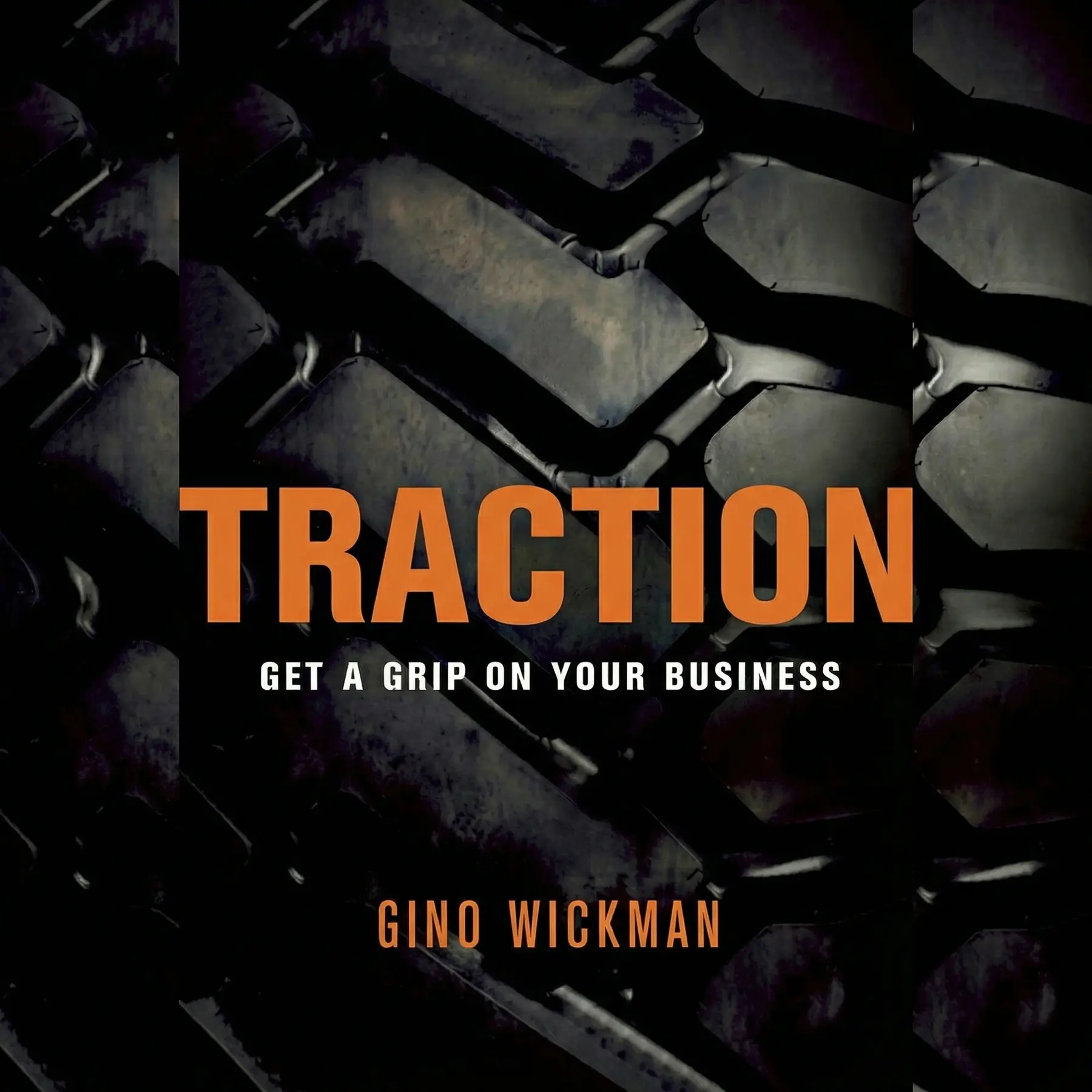
Traction: Get a Grip on Your Business
By Gino Wickman
Traction introduces the Entrepreneurial Operating System, a practical framework designed to help business leaders overcome common hurdles, align their teams, and achieve consistent growth through six core components of organizational health.
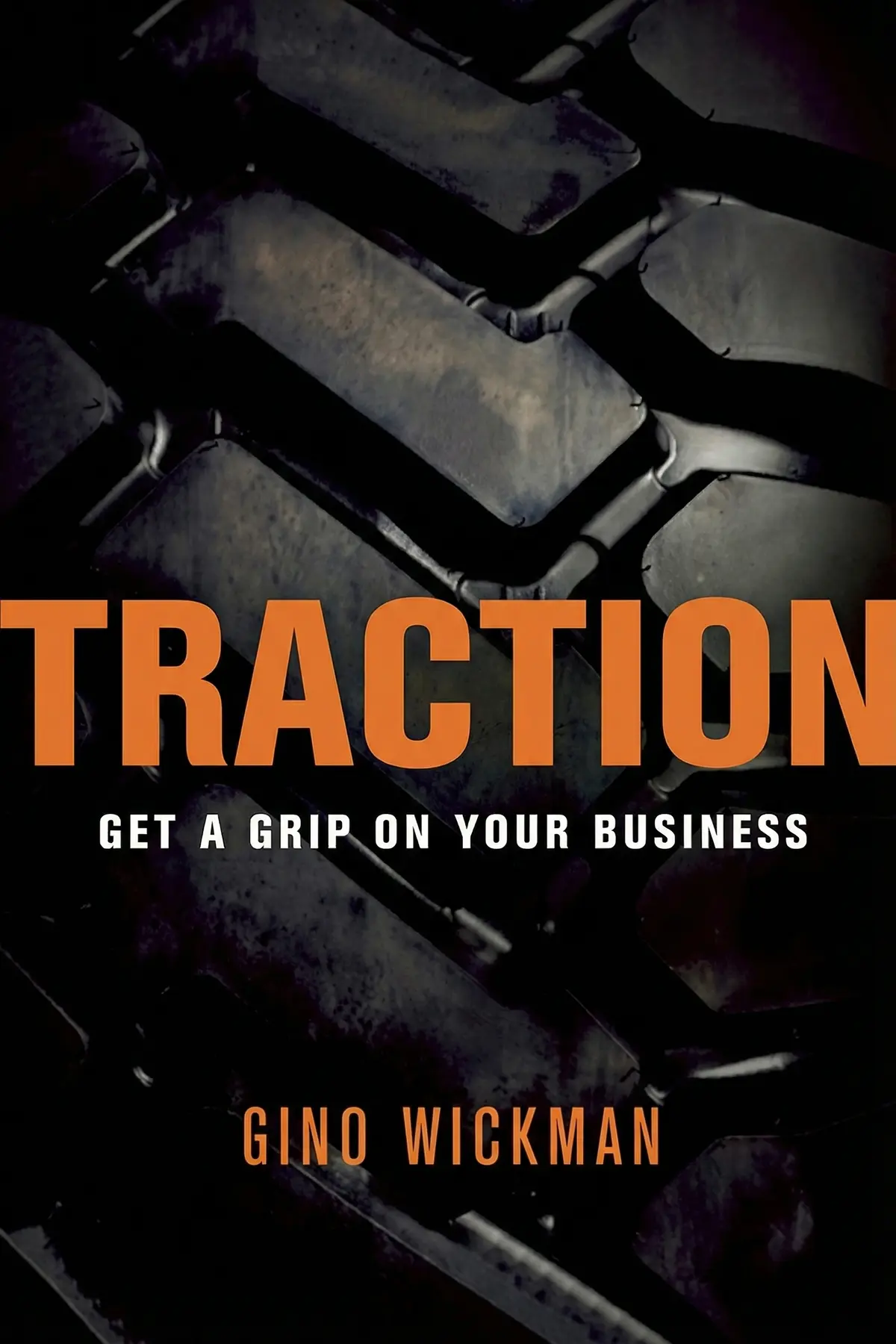
Table of Content
1. Introduction
1 min 25 sec
Have you ever felt like your business is a runaway train, and you’re just clinging to the back of it for dear life? Many entrepreneurs start their companies with a grand vision of freedom and success, only to find themselves bogged down by the daily grind of employee disputes, inefficient processes, and stagnant numbers. It feels like you’re constantly reinventing the wheel just to keep the doors open another month. If this sounds familiar, you aren’t alone; in fact, most business leaders face these exact frustrations.
The problem isn’t usually a lack of effort or talent. Instead, it’s often a lack of a cohesive system to manage the complexity of a growing enterprise. This is where the Entrepreneurial Operating System, or EOS, comes into play. Developed by Gino Wickman through years of real-world trial and error, this framework provides a practical, step-by-step roadmap to get your company back on track.
In this summary, we will explore how focusing on just six key elements can transform a struggling or plateaued business into a well-oiled machine. We’ll look at how to define your core identity, how to get the right people into the right seats, and how to use data to make objective decisions. By the end, you’ll see how these components come together to create genuine ‘traction’—the ability to turn your long-term vision into a reality through disciplined execution. Let’s dive into how you can start regaining control of your organization today.
2. Defining the Vision and Core Identity
1 min 49 sec
Success begins with a shared destination, but many teams are unknowingly moving in opposite directions. Discover how to align everyone around a singular purpose.
3. Mapping the Future Through Strategic Targets
1 min 37 sec
Long-term dreams are only possible if they are broken down into manageable, short-term actions. Learn how to bridge the gap between today and a decade from now.
4. Maximizing Performance with the Right People
1 min 53 sec
Your company is only as strong as its team, but having talented individuals isn’t enough if they don’t fit your culture or their specific roles.
5. Objective Decision Making with Data and Issues
2 min 01 sec
Stop managing based on gut feelings and emotions. Discover how scorecards and structured problem-solving can clear the fog of business uncertainty.
6. Documenting and Streamlining Core Processes
1 min 42 sec
Consistency is the secret to scaling. Learn how to capture the ‘way’ your company does business to ensure efficiency and quality at every level.
7. Achieving Traction Through Accountability
1 min 51 sec
Vision without execution is just hallucination. Master the discipline of quarterly meetings and individual accountability to turn plans into results.
8. Conclusion
1 min 26 sec
Implementing the Entrepreneurial Operating System is not an overnight fix, but it is a permanent one. By focusing on the six core components—Vision, People, Data, Issues, Process, and Traction—you can transform your business from a source of stress into a source of pride and profit. You’ve learned how to define your core values to ensure you have the right people on your team, how to set a clear 10-year target, and how to use data to move away from emotional management.
What this really means is that you are building a business that can run smoothly even when you aren’t in the room. You are creating a culture of accountability where everyone knows what is expected of them and feels empowered to solve problems. The ‘Traction’ you gain through quarterly rocks and disciplined meetings ensures that your long-term dreams don’t get lost in the shuffle of daily emergencies.
As a practical first step, try implementing the ‘Tangent Alert’ in your next meeting. If a conversation starts to drift away from the core topic, anyone in the room can call it out, keeping the discussion focused on the goal. This small shift in discipline can be the beginning of a much larger transformation. Remember, vision without execution is just hallucination. It’s time to stop dreaming about a better business and start building the system that will take you there. Take these tools, get a grip on your business, and start moving forward with confidence.
About this book
What is this book about?
Many business owners find themselves trapped in a cycle of firefighting, dealing with internal friction, stagnant growth, and a lack of clear direction. They feel like the business is running them, rather than the other way around. Traction provides a solution to this common entrepreneurial burnout by introducing the Entrepreneurial Operating System, or EOS. This system focuses on six essential components: Vision, People, Data, Issues, Process, and Traction. By mastering these areas, leadership teams can move away from chaotic management and toward a structured, scalable model. The book promises to provide a set of simple, actionable tools that allow any business to gain focus, build a high-performing culture, and ultimately achieve the long-term goals that once felt out of reach. It is a guide for regaining control and ensuring every person in the organization is rowing in the same direction.
Book Information
About the Author
Gino Wickman
Gino Wickman has been an entrepreneur since the age of 21. Drawing from his extensive hands-on experience in the business world, he developed the Entrepreneurial Operating System to help leaders optimize their companies. He is the founder of EOS Worldwide, a leadership development organization, and has authored other influential works, including the bestselling book Get a Grip.
Ratings & Reviews
Ratings at a glance
What people think
Listeners find this business volume to be an exceptional resource that offers actionable tactics and a structured method for managing a company. The material is accessible and clear, with one listener pointing out its ability to make intricate ideas straightforward. Listeners value how well it produces tangible outcomes; one mentions significant improvements in meeting efficiency, while another emphasizes its capacity to create transparency across the entire firm.
Top reviews
Jeeranan
Stop trying to reinvent the wheel every Monday morning and just read this book. Wickman provides what he calls the Entrepreneurial Operating System, and for my small agency, it was the structural skeleton we were missing. The concept of 'Rocks'—those 90-day priorities that actually move the needle—completely shifted how our leadership team views productivity. To be fair, some of the terminology feels a bit forced, like they are trying to trademark common sense, but the results are hard to argue with. We implemented the Level 10 meeting format last month and our efficiency has already skyrocketed because we finally stopped talking in circles. It is a dense read if you are looking for a narrative, but as a manual for growth, it is unparalleled.
Show moreNarumon
Ever wonder why your team is constantly spinning their wheels despite everyone working eighty hours a week? Traction answers that question by forcing you to look at the six key components of your business with brutal honesty. We started using the Scorecard to track our weekly measurables, and it’s like someone finally turned the lights on in a dark room. No more managing by 'gut feeling' or reacting to the loudest problem of the day. The book is remarkably easy to digest, breaking down complex management theories into actionable steps that any entrepreneur can follow. It isn't just theory; it is a practical roadmap that provides the tools needed to actually execute a long-term vision without losing your mind in the process.
Show moreSam
Wow, I didn't expect a business book to actually provide a step-by-step roadmap that stays grounded in reality. Most of these titles are full of fluff and high-level philosophy, but Wickman gets into the weeds of how to actually run a weekly meeting. We adopted the 'Everyone has a Number' philosophy, and the level of accountability in our office has transformed overnight. People actually want to hit their targets when they are clearly defined and visible to the whole team. It’s a functional, cohesive system that builds on the work of Jim Collins and Stephen Covey but makes it more accessible for the average small business owner. If you feel like your business is running you instead of you running it, buy this immediately.
Show moreGame
The beauty of Wickman’s system lies in how he simplifies the chaotic reality of entrepreneurship into six manageable key components. I’ve read dozens of management books, but this is the first one that felt like it gave me a literal 'operating system' I could install. The 'Three Uniques' exercise in the marketing section was particularly eye-opening for our sales team, helping us differentiate ourselves in a crowded market. Look, it’s not going to solve every human problem in your office, but it provides the structure to identify and solve those issues promptly. This book isn't just about reading; it's about doing, and the results for our bottom line have been nothing short of significant since we started the implementation.
Show moreSupachai
The clarity this brought to our leadership team was undeniable, even if the prose feels a bit like a long-form sales pitch for his consulting firm. We spent years stumbling over the definitions of goals versus objectives, yet the V/TO (Vision/Traction Organizer) gave us a shared vocabulary that stuck. I particularly appreciated the distinction between the 'Visionary' and the 'Integrator,' which helped us realize we had the right people but they were definitely sitting in the wrong seats. Truth is, you have to be willing to look past the slightly pedantic tone to find the gold within the framework. It is a systematic approach that demands total buy-in to work, but once you have it, the chaos of the day-to-day starts to subside into something manageable.
Show morePim
After hearing about EOS from every other business owner in my networking group, I finally dove in to see what the fuss was about. The book is effectively a workbook for the 'Entrepreneurial Operating System,' and its strength lies in its simplicity and repeatability. I've been using the 'People Analyzer' to evaluate our staff, and it helped us make some tough but necessary decisions about culture fit. My only gripe is that the book is quite repetitive, hammering the same points home over and over again to the point of exhaustion. However, for a business that lacks a pulse or a clear direction, this provides a much-needed heartbeat. It simplifies the messy reality of running a company into a series of checklists that actually work.
Show moreAstrid
Picked this up on a whim and ended up highlighting half the pages regarding the Accountability Chart and the GWC (Get it, Want it, Capacity). We realized our biggest bottleneck wasn't our product, but the fact that our roles were incredibly muddled. To be fair, the author's tone can be a bit self-promotional at times, frequently referencing his own success and his specific client list. That aside, the actual 'Traction' components are solid gold for anyone struggling with organizational drag. It provides a shared language that eliminates the 'he-said, she-said' nonsense that kills productivity in small teams. It’s not a literary masterpiece by any means, but as a functional tool for your business kit, it is absolutely essential.
Show moreCharlotte
As someone working in a non-profit environment, I found that the core principles of this book translate surprisingly well to mission-driven work. We often struggle with decisiveness, and Wickman’s warning against governing by consensus really challenged our leadership style in a healthy way. I do wish there was a version tailored specifically for ministries, as the corporate jargon can be a bit jarring when you're trying to apply it to a volunteer-heavy organization. Still, the V/TO and the concept of 10-year targets have given our board a level of focus we haven't had in a decade. Got to say, the emphasis on documenting core processes is a total game-changer for onboarding new staff and ensuring quality remains consistent across the board.
Show moreSamira
While I appreciate the 'Level 10' meeting structure, the book often treats an organization like a linear machine that can be perfectly controlled. In my experience, a business is more like a complex adaptive system—a garden that needs nurturing—rather than a collection of cogs you can just tighten. Wickman borrows heavily from the Rockefeller Habits and Patrick Lencioni, which isn't necessarily a bad thing, but it feels less revolutionary if you've already read the classics. The 'Accountability Chart' is a useful tool for defining roles, yet I found the writing style a bit dry and repetitive at points. It is a decent primer for someone who has never managed a team before, but seasoned leaders might find it a bit reductive.
Show moreWei
Frankly, this felt like an over-branded version of better business books disguised in shiny new terminology to sell consulting packages. Everything in here has a special, trademarked name for things that have existed for decades, which makes the reading experience feel quite gimmicky. 'Rocks' are just quarterly goals, and 'IDS' is just a basic problem-solving framework, yet Wickman presents them as if he discovered fire. Without an expensive outside facilitator to manage the human elements, I suspect most leadership teams will just end up creating dangerous rabbit trails. I'd suggest reading 'Rework' or 'Brave New Work' instead if you want a perspective that feels like it belongs in the twenty-first century. It was far too rigid for our creative culture.
Show more
Readers also enjoyed
Acting with Power: Why We Are More Powerful Than We Believe
Deborah Gruenfeld
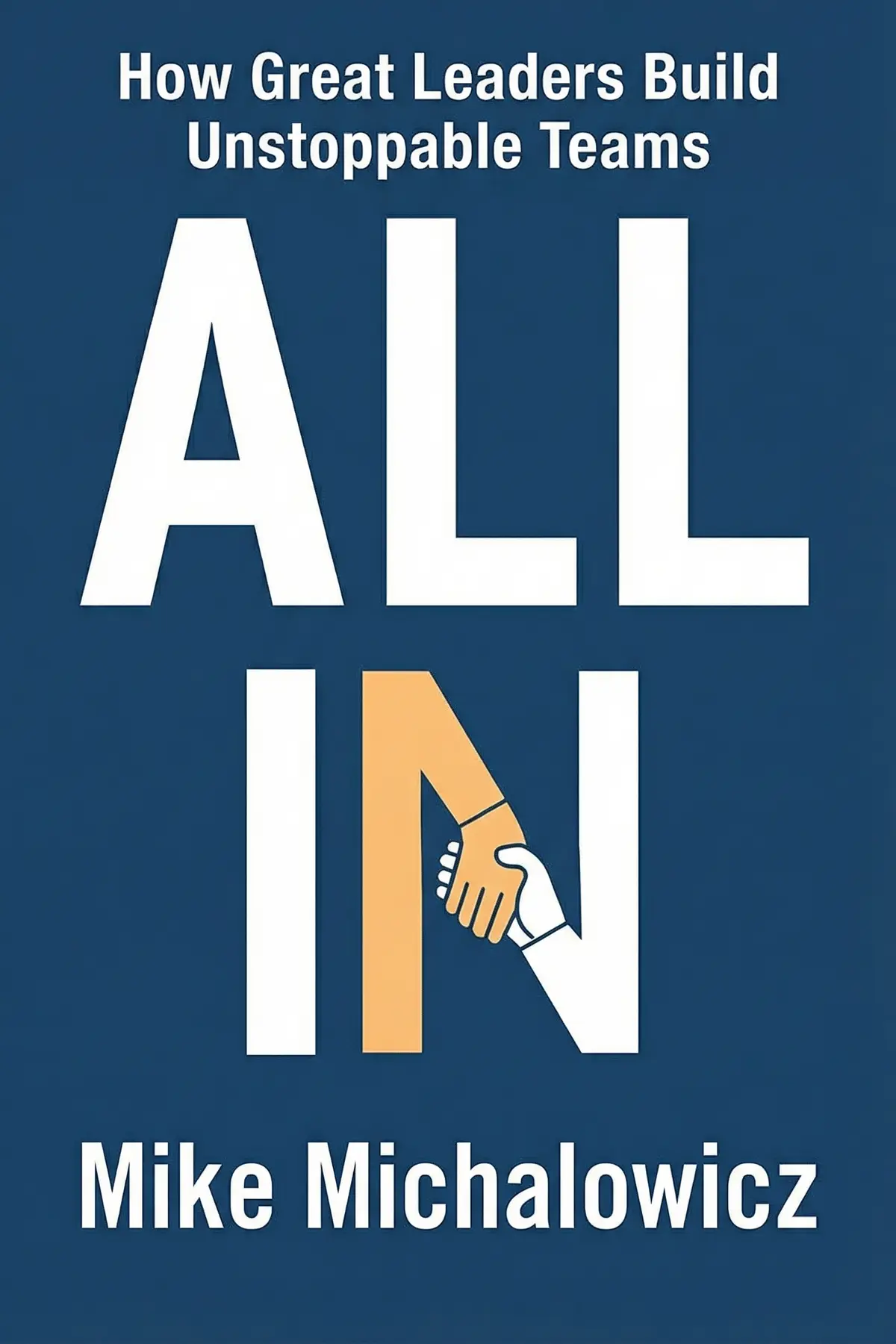
All In: How Great Leaders Build Unstoppable Teams
Mike Michalowicz
Alibaba: The House That Jack Ma Built
Duncan Clark
AUDIO SUMMARY AVAILABLE
Listen to Traction in 15 minutes
Get the key ideas from Traction by Gino Wickman, plus 5,000+ more titles in English and Thai.
- 5,000+ titles
- Listen as much as you want
- 7-day free trial
- Cancel anytime







