
18 min 19 sec
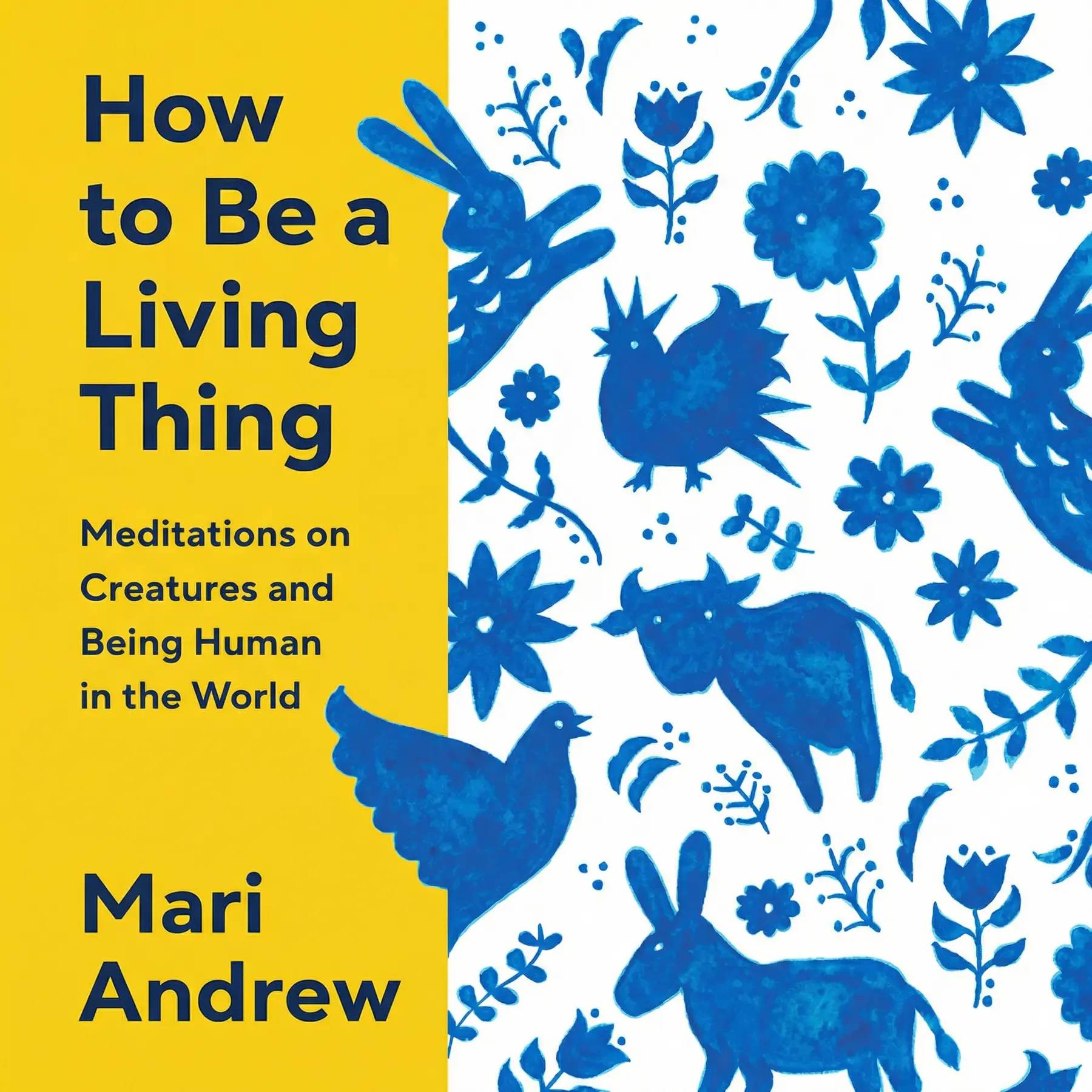
How to Be a Living Thing: Meditations on Creatures and Being Human in the World
By Mari Andrew
Explore the emotional landscape of modern life through the lens of the animal kingdom. This summary reveals how vulnerability, resilience, and our shared biological instincts can lead to a more authentic human experience.
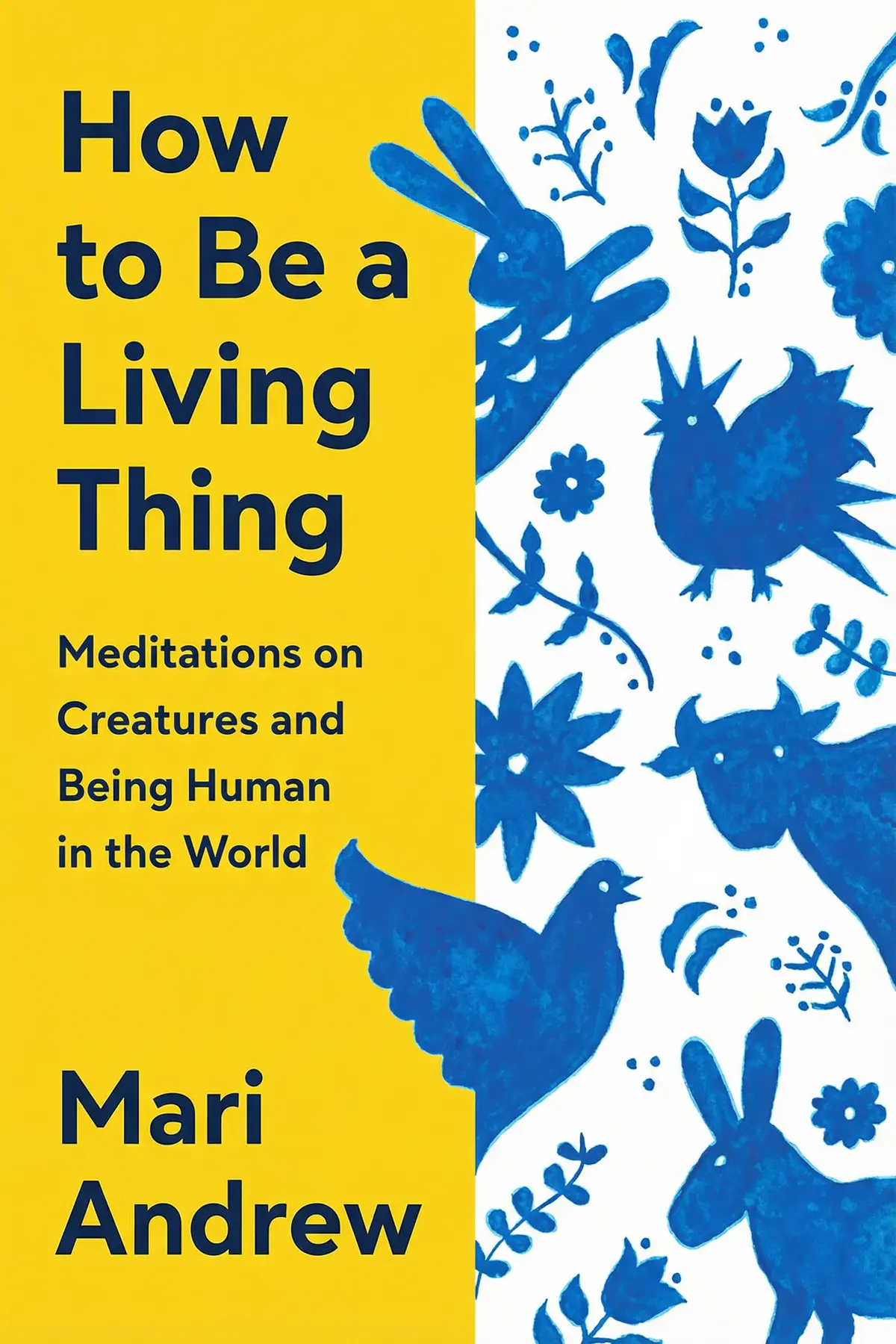
Table of Content
1. Introduction
1 min 45 sec
Imagine for a moment that you are observing a house cat. Let’s call her Sunny. Sunny is a study in contradictions. One minute, she is startled by the faint rustle of a curtain; the next, she is a silent, laser-focused predator stalking a tiny fly. She ignores your calls for hours, then suddenly decides—entirely on her own terms—to offer a soft meow or a brief brush against your leg. If she knocks a glass off a shelf, she doesn’t pause for an apology. She simply continues being a cat.
Watching a creature like Sunny provides a unique vantage point on our own species. We often hold ourselves to impossible standards of consistency, productivity, and emotional control. But if a cat is allowed to be moody, self-protective, and imperfect, why don’t we afford ourselves the same grace? This is the central inquiry of Mari Andrew’s reflections on what it means to be alive. She introduces a vital concept called “human-ing.” To human is to live within a range of confusion, intense feeling, and frequent missteps. It is not a state of being to be perfected, but a process to be inhabited.
In this exploration, we aren’t just looking at psychology; we are looking at biology, history, and the natural world. By viewing ourselves as simply one type of animal among many, we can begin to dismantle the rigid structures we’ve built around what a “successful” life looks like. Over the course of this journey, we will look at the lives of various creatures—from the depths of the ocean to the dirt of the farmyard—to see what they can teach us about our own resilience, our grief, and our deep-seated need for connection. We are beginning an open-ended inquiry into the beauty of being a living thing in a vast, wild world.
2. The Necessity of Friction
2 min 45 sec
Discover why a life of total ease might be more of a cage than a comfort, and how orcas reveal our deep-seated need for a challenge.
3. The Universal Sound of Loss
2 min 14 sec
Explore the profound connection between species through the lens of grief, and how certain emotions require no translation.
4. The Many Dialects of Belonging
2 min 25 sec
Chickens have a lot more to say than we think, and their social lives offer a lesson in how to find our own communities.
5. Trusting the Rhythms Beyond Reason
2 min 38 sec
What if the world is full of knowledge that our senses can’t catch? Oysters and stars suggest we should listen to our intuition more often.
6. Confronting the Mirror of Disgust
2 min 32 sec
Our recoil from creatures like rats reveals more about our internal fears than the animals themselves. Learn how to face your shadow.
7. The Sacredness of Being a Creature
2 min 29 sec
Drawing on medieval wisdom and modern observation, discover why your physical self is not a source of shame, but a part of a beautiful whole.
8. Conclusion
1 min 31 sec
The journey of understanding how to be a living thing brings us back to a simple but profound truth: we have much more in common with the rest of the animal kingdom than we often care to admit. By looking at the world through the eyes of orcas, gorillas, and even rats, we begin to see our own lives in a new light. We see that our need for challenge and friction is a sign of health, not a lack of contentment. We see that our grief is a universal bridge that connects us to every other sentient being. And we see that our disgust is often just a mask for our own fears of vulnerability.
Ultimately, the throughline of these reflections is a call to embrace what Mari Andrew calls “human-ing.” It is a rejection of the sterile, the perfect, and the artificial. It is a permission slip to be inconsistent, to feel deeply, and to trust the intuitive rhythms of our own bodies.
As you move forward into your daily life, try to carry a bit of this “creaturely” perspective with you. When you encounter a challenge, remember the orca and appreciate the friction. When you feel a sense of loss, remember the gorilla and honor the sound of your own grief. And when you feel out of place, remember the chickens and keep looking for the flock that speaks your language. We are all just animals trying to figure out how to navigate this world. If we can treat ourselves and each other with the same curiosity and grace we might give to a house cat or a wild bird, we might just find that all shall, indeed, be well.
About this book
What is this book about?
How to Be a Living Thing is an exploration of what it truly means to inhabit a human body in a complex, often confusing world. Drawing on reflections from the animal kingdom—ranging from the social dynamics of orcas and the grief of gorillas to the intuitive rhythms of oysters—the book challenges us to embrace our 'creaturely' nature. It moves away from the pressure of perfection and toward a concept called 'human-ing,' which accepts missteps and intense emotions as vital parts of life. By blending personal anecdotes, biological observations, and historical perspectives, the book promises a shift in how we view our struggles. It suggests that our imperfections aren't flaws to be fixed, but evidence of our connection to all living things. Listeners will discover how to find beauty in friction, value in unseen knowledge, and a sense of belonging that transcends traditional language, ultimately leading to a more compassionate and grounded way of being.
Book Information
About the Author
Mari Andrew
Mari Andrew is an American writer and illustrator who first gained attention by sharing her drawings online. She is the New York Times best-selling author of Am I There Yet? and My Inner Sky.
Ratings & Reviews
Ratings at a glance
What people think
Listeners find this a reflective series of essays examining the similarities between human actions and the lives of animals. Although views differ on if the animal analogies are always perfectly integrated, listeners enjoy the writer's playful illustrations and deep personal stories. Furthermore, they describe the prose as "wholesome" and "fascinating," with one listener highlighting the curious fact that oysters alter their eating patterns based on the moon. The work is also prized for being an imaginative and soulful prompt regarding our collective bond with nature.
Top reviews
Charlotte
Ever wonder why human beings feel so out of sync with the natural world? Mari Andrew addresses this by weaving together personal anecdotes and fascinating facts about the animal kingdom. The story about oysters adjusting their feeding schedules to moon cycles even in a Midwest basement was absolutely captivating. It’s a heart-centered reminder that we are all part of a larger ecosystem. While some of the comparisons felt a bit abstract, the overall tone is incredibly wholesome and life-affirming. Her signature whimsical drawings are scattered throughout, providing a lovely visual break between the essays. It’s the kind of book that encourages you to slow down and look at a common pigeon with new-found respect and empathy.
Show moreJoshua
What an absolute gem of a book for the deeply feeling animal lovers out there. This collection of essays serves as a beautiful reminder that we are more like our pets and wild creatures than we care to admit. Mari Andrew mixes personal vulnerability with observations about the natural world in a way that feels both intimate and universal. I loved the focus on how most creatures respond to pain and loss in similar ways. The drawings are just delightful and add so much personality to the text. It’s a creative, wholesome, and heart-centered book that I’ll definitely be gifting to my friends who need a little bit of magic in their lives.
Show moreRodrigo
I’ve been following this author for years, and this might be her most mature and thought-provoking work yet. She has this incredible ability to take a simple observation about a dog or a cat and turn it into a profound lesson on humanity. The book is woven together with so much heart and soul. It feels less like a traditional essay collection and more like a conversation with a wise friend. I particularly enjoyed the chapters that focused on how we respond to confinement and loss. It’s a wholesome, fascinating exploration of our shared connection to the natural world. Every animal lover needs this on their shelf!
Show morePrapaiwan
Honestly, I was hooked from the very first chapter. This book is a gorgeous reminder that we are all just living things trying our best to navigate this world. The parallels between human behavior and the animal kingdom are explored with such creativity and kindness. I found myself frequently pausing to look at the whimsical drawings and think about my own relationship to the environment. It is heart-centered, wholesome, and exactly what I needed to read right now. Whether she’s talking about orcas or common household pets, Andrew’s voice is always authentic and engaging. This is a beautiful, creative tribute to our shared connection with all creatures.
Show moreViolet
Mari Andrew has crafted something truly unique here, though it isn't quite the scientific study I initially anticipated. It leans much closer to a memoir, using animals as a lens to examine her own life and beliefs. To be fair, some chapters work better than others. I found the parallels between the confinement of Orcas and human isolation to be deeply moving and thought-provoking. On the other hand, the section comparing nomadic human subcultures to the roving nature of snow leopards felt like a bit of a reach. However, the writing is consistently thoughtful and the illustrations are as charming as ever. It is a solid read for those who enjoy deep, creative reflection.
Show moreSaowalak
As someone who follows Mari on Instagram, I knew this would be a visual treat, but the prose really surprised me. The way she explores human behavior through the instinctive ways of animals is both clever and insightful. Not gonna lie, I was skeptical about the chapter on oysters at first, but it ended up being one of my favorites! It really makes you think about how we are influenced by cycles we don't even see. My only minor gripe is that some of the personal anecdotes felt a little disconnected from the animal theme. Still, it’s a very lovely read that helped me expand my thinking about what it means to be a person.
Show moreMoo
The section detailing how oysters react to moon cycles even in a dark basement was truly mind-blowing. Truth is, I wasn't expecting this book to get so deep into the idea of embodiment and physical presence. Mari Andrew uses these animal facts as a jumping-off point to discuss how we move through the world as friends and humans. It’s a very creative layout. While I agree with other reviewers that the snow leopard comparison was a bit of a stretch, the rest of the book more than makes up for it. The writing is fascinating and the tone is consistently gentle. It’s a great companion for a quiet weekend of reflection.
Show moreKatya
Finally got around to reading this one after seeing those cute animal sketches online for months. Gotta say, I found it to be a bit of a mixed bag. About half of the essays are profound and really made me think about my own embodiment and instincts. The other half felt like the author was reaching for metaphors that didn't quite land. At times, the animal facts felt like an afterthought to the personal stories. It’s definitely more of a self-help memoir than a book about biology. If you’re a fan of Mari’s social media, you’ll likely enjoy the vibe, but don't expect a deep dive into animal science.
Show moreLucia
Look, I really wanted to love every second of this because I find Mari’s art so whimsical and charming. This collection, however, was a bit uneven. Some of the essays are incredibly profound and offer a beautiful look at how we can learn from our animal friends. Other parts felt like the animal theme was just a hook to justify a personal essay that didn’t have much to do with nature at all. In my experience, the book is at its best when it focuses on the instinctive ways of being alive rather than the author’s specific social observations. It's an insightful read, even if the execution feels a little bit like a 'mixed bag' in the end.
Show moreAnawin
Not what I expected at all, and unfortunately, not in a good way. I picked this up hoping for insights into animal behavior, but it felt more like a diary the author should have kept to herself. Frankly, the comparisons between human problems and animal instincts felt forced and often made very little sense to me. There was one section about specific NYC populations that felt strangely voyeuristic and uncomfortable, reminding me of the way characters were exploited in the musical RENT years ago. It’s essentially a self-help book where the animal facts are just a thin veil for the author's own life stories. I love animals, but I really didn't love this book.
Show moreReaders also enjoyed
A Guide to the Good Life: The Ancient Art of Stoic Joy
William B. Irvine
A High-Performing Mind: Strengthen Your Mind and Live Your Best Life
Andrew D. Thompson
Abundance: The Inner Path to Wealth
Deepak Chopra
59 Seconds: Change Your Life in Under a Minute
Richard Wiseman
AUDIO SUMMARY AVAILABLE
Listen to How to Be a Living Thing in 15 minutes
Get the key ideas from How to Be a Living Thing by Mari Andrew, plus 5,000+ more titles in English and Thai.
- 5,000+ titles
- Listen as much as you want
- 7-day free trial
- Cancel anytime







