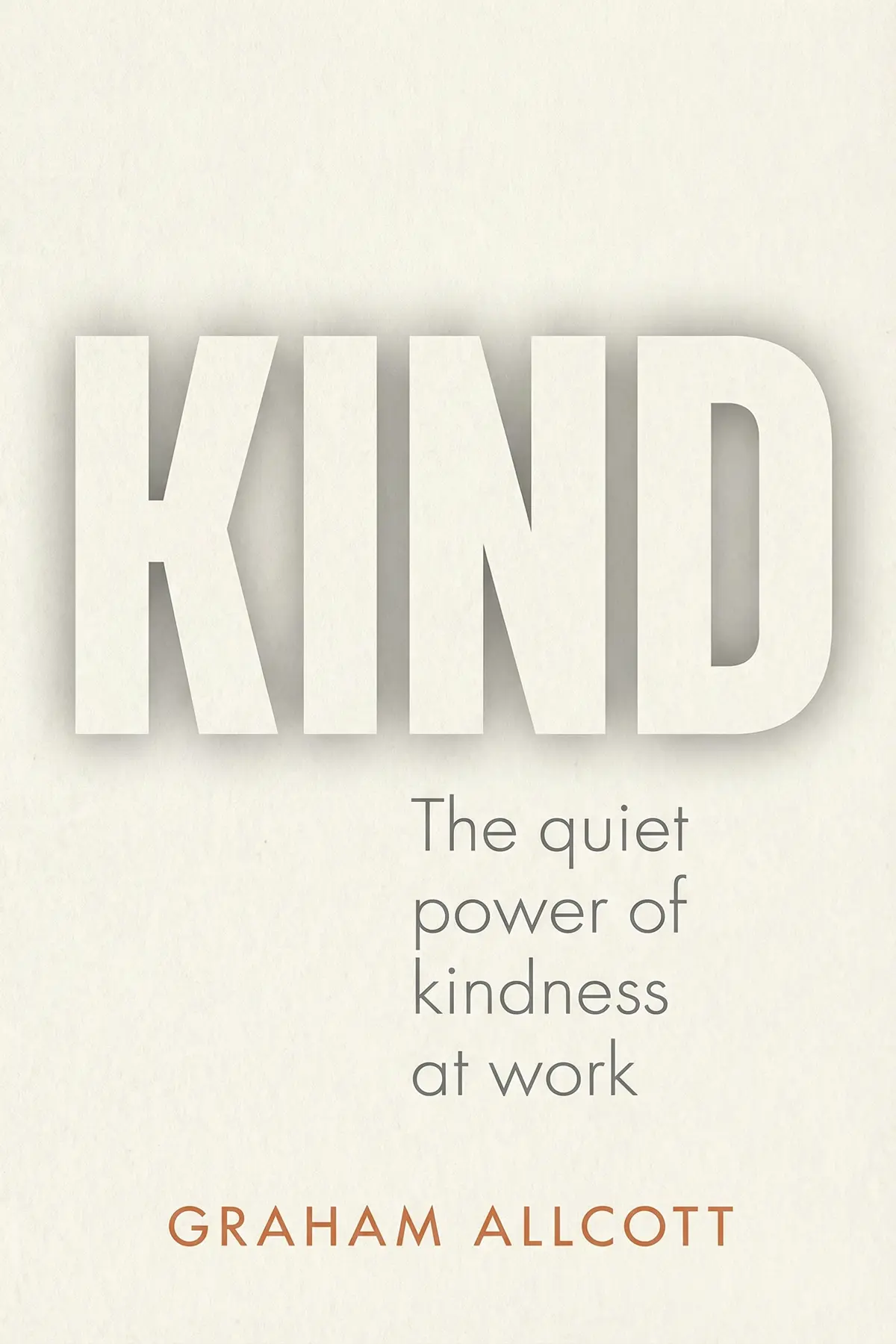
KIND: The Quiet Power of Kindness at Work
Graham Allcott
Learn to manage attention rather than time with the productivity ninja approach. This guide offers a framework to conquer email, organize tasks, and maintain calm amidst modern workplace chaos.
2 min 20 sec
We have all been there: staring at a screen with dozens of tabs open, a phone buzzing with notifications, and a physical to-do list that seems to grow faster than we can cross things off. The standard advice often tells us to just try harder. We are told to wake up an hour earlier, skip our lunch breaks, or find new ways to squeeze more minutes out of an already packed day. But there is a fundamental flaw in this approach. These well-meaning tips assume that our main problem is a lack of time. In reality, in a world where work follows us home on our smartphones and emails arrive by the hundreds, time is not the only thing we are running out of. We are running out of focus.
Traditional productivity hacks often feel like trying to hold back the tide with a plastic bucket. If your role is fast-paced and demanding, simply starting your day thirty minutes earlier is not going to make a dent in the mountain of tasks ahead of you. This is where we need to change our entire perspective. Instead of trying to be a superhero who can do everything perfectly and never tires, we should aim to become something more practical and effective: a productivity ninja.
Becoming a ninja does not mean you have to learn martial arts or carry physical weapons. Instead, it is about developing a specific set of elite skills and a highly focused mindset. It is about being agile enough to pivot when things go wrong and ruthless enough to protect your mental energy from distractions. Over the course of this summary, we are going to explore a framework that moves away from the impossible dream of time management and toward the practical reality of attention management.
We will walk through the CORD model, a systematic approach to handling everything life throws at you. You will discover how to reach the elusive goal of inbox zero, why your to-do list might actually be hindering your progress, and how to align your most difficult work with the times of day when your brain is actually sharpest. By the end of this journey, the goal is not just to help you work faster, but to help you work smarter so that you can worry less and enjoy what you do.
3 min 17 sec
Forget the impossible ideal of being a perfect superhero. Discover why consistency, agility, and a ruthless focus on priorities make the ninja mindset the ultimate tool for workplace survival.
2 min 59 sec
Stop trying to find more hours in the day and start managing your focus. Learn to map your energy cycles to match your hardest tasks with your peak performance windows.
3 min 04 sec
Don’t let your email be a source of constant dread. Explore a simple, tactical folder system that turns your inbox into a landing pad rather than a permanent storage locker.
2 min 43 sec
Your brain is for having ideas, not storing them. Learn the CORD model’s first step to declutter your mind by gathering every task into one physical or digital tray.
3 min 02 sec
Discover why most to-do lists fail and how to use the ‘Organize’ phase of CORD to transform vague goals into specific, verb-driven actions grouped by location.
2 min 53 sec
Productivity isn’t just about doing; it’s about thinking. Learn how weekly and daily reviews keep your systems sharp and ensure you are working on the right things.
2 min 58 sec
In the final ‘Do’ phase of CORD, learn how to minimize ‘setup costs’ and use variety to keep boredom—the ninja’s ultimate enemy—at bay.
2 min 55 sec
Round out your training with three specific tools: Monotasking, the Pomodoro technique, and the Power Hour. Learn how to handle even the most dreaded tasks with ease.
2 min 10 sec
As we wrap up our journey into the world of the productivity ninja, it is important to remember the core shift we have discussed: moving from managing your time to managing your attention. We live in an era where the demands on our focus are infinite, but our mental energy is not. By adopting the ninja mindset—staying calm, being ruthless with distractions, and remaining agile—you can navigate even the most chaotic work environments without losing your mind.
The CORD model provides the structure you need to make this a reality. By capturing every thought, organizing them into actionable and context-based lists, regularly reviewing your progress, and executing with focus, you create a system that works for you rather than against you. You no longer have to worry about what is slipping through the cracks because you have built a ‘second brain’ that holds all your commitments and ideas.
One final piece of wisdom to carry with you is Parkinson’s Law: work expands to fill the time available for its completion. If you give yourself a whole day to write a simple email, it will take you all day. If you give yourself fifteen minutes, you will get it done in fifteen minutes. Be intentional with the constraints you set for yourself. Don’t just give a task ‘as much time as it needs’; decide how much attention it deserves and set a boundary.
Becoming a productivity ninja is not about reaching a destination where you never struggle again. It is a practice. There will be days when your system breaks down or you lose your focus, and that is perfectly okay. The goal is to have the tools and the mindset to get back on track quickly. Start today by clearing your inbox or doing a brain dump of all your current tasks. Once you experience the clarity of a managed mind, you won’t want to go back. Take these techniques, sharpen your ‘weapons,’ and start achieving more by doing less.
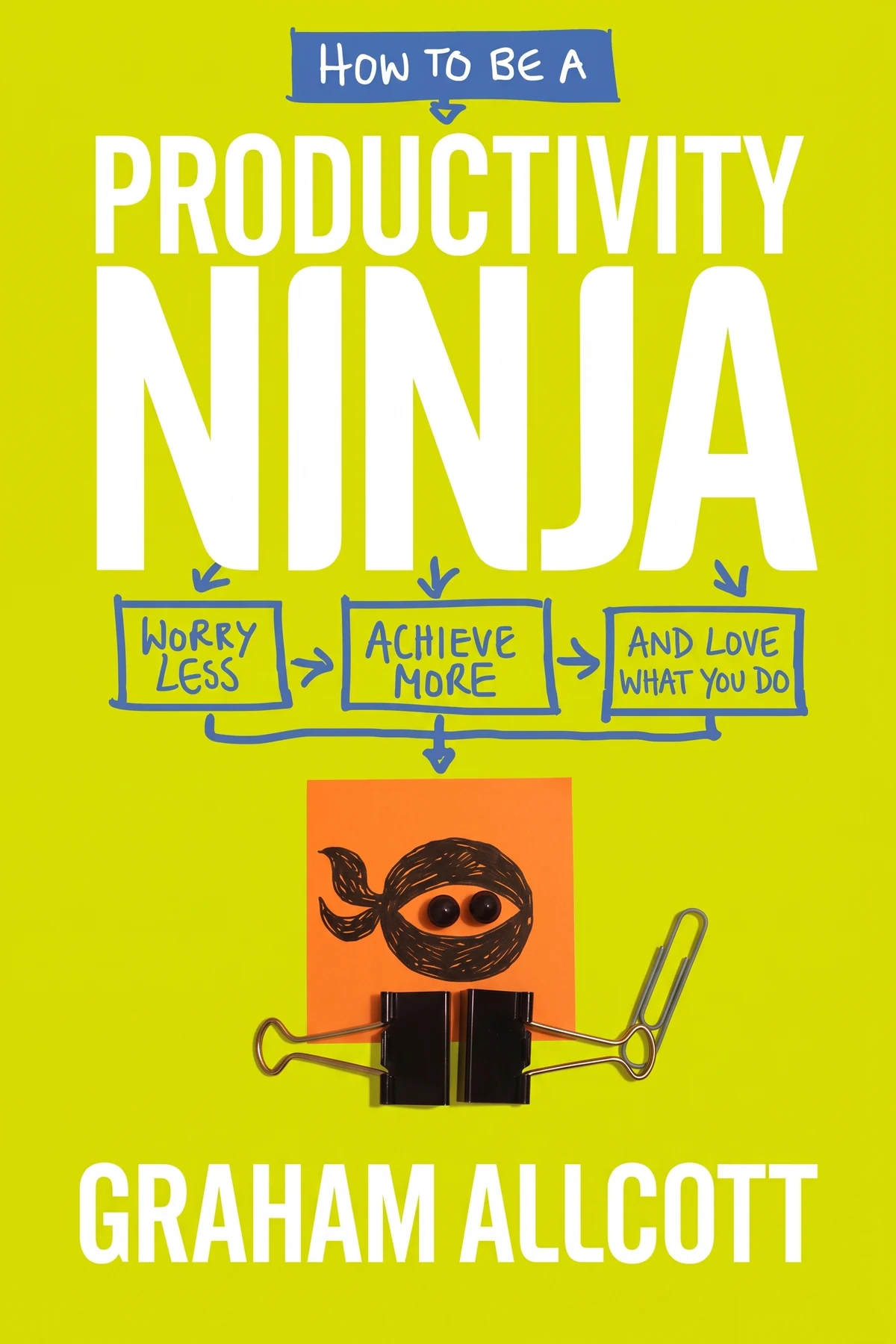
Modern work is characterized by a relentless stream of digital interruptions and shifting priorities. How to Be a Productivity Ninja argues that traditional time management is no longer sufficient in this fast-paced environment. Instead, Graham Allcott introduces the concept of attention management and the ninja mindset, focusing on being agile, ruthless, and prepared. The book provides a practical system known as the CORD model—Capture, Organize, Review, and Do—to help readers move from feeling overwhelmed to being in total control. By treating your attention as a finite currency and utilizing specific workflow hacks, you can achieve inbox zero and manage complex projects without the stress of forgotten tasks. The ultimate promise is a more efficient professional life that leaves room for personal enjoyment.
Graham Allcott is one of the UK’s best-known productivity experts. In addition to authoring books like How to be a Productivity Ninja and How to be a Study Ninja, Allcott is founder of the productivity consultancy Think Productive and host of the podcast Beyond Busy.
Graham Allcott
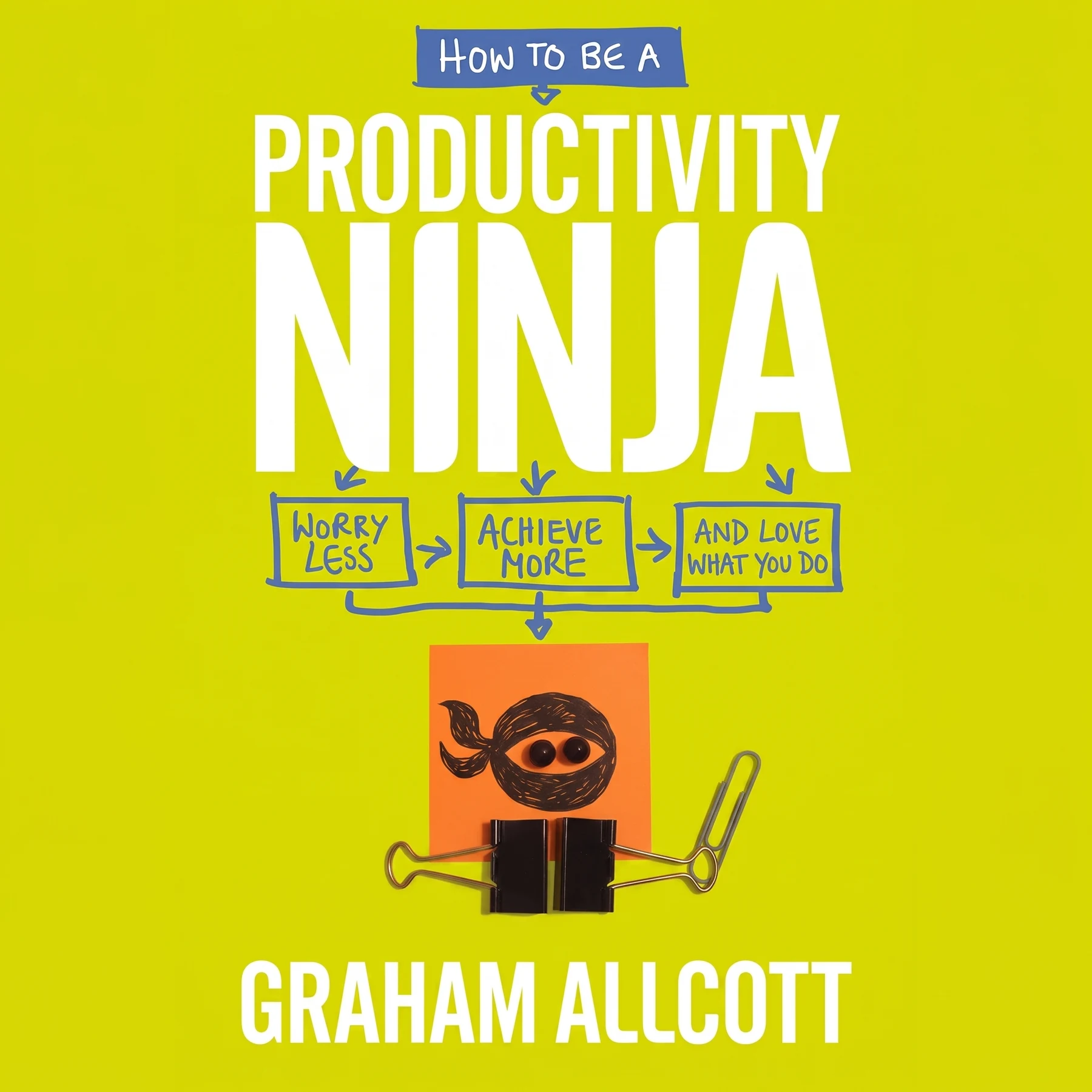
Listeners find the guidance in this book useful, with one individual noting its effectiveness in helping target specific areas for improvement. Furthermore, the work earns acclaim for its practical strategies and productivity-focused material, with one listener emphasizing the way it simplifies concepts into distinct steps. That said, listeners hold conflicting views concerning how easy the text is to read.
This is hands down the best practical working framework I have ever implemented in my career. I’ve read dozens of these books, and most of them give you a temporary psychological boost that disappears by Monday morning. This one is different because it focuses on the "how-to" rather than just the "why," digging deep into the mechanics of daily workflow. Being "ruthless" with my time and "mindful" of my energy levels has allowed me to handle a workload that previously felt impossible. If you are a manager in a fast-paced environment where demand always exceeds capacity, this book is a masterpiece. It doesn't just sell you dreams; it gives you the actual tools to survive and thrive.
Show moreProductivity is a learned skill, and this book is the ultimate training manual for reaching elite levels. By focusing on attention management instead of time management, the author hits on the most important aspect of modern work. We all have the same twenty-four hours, but how we use our 'proactive attention' is what sets high achievers apart. The tactical advice on how to set up a 'second brain' and manage complex projects using the 5-milestone model is incredibly clear. I’ve bought copies for my entire team because the shift in mindset is just that powerful. It’s not just about doing more; it’s about being more mindful of where your energy goes.
Show morePicked this up during a particularly stressful month at work, and it’s been a total game-changer. The idea that you should be a 'Ninja'—agile, prepared, and ruthless—really resonated with my need to cut through the noise of constant meetings. I love how the book breaks everything down into small, actionable steps rather than just lecturing about high-level concepts. Specifically, the advice on how to handle 'emotional fallout' from a massive to-do list was something I hadn't seen addressed elsewhere. It’s a very human look at productivity that acknowledges we aren't robots. If you’re willing to actually do the work of setting up the systems, the rewards are well worth the effort.
Show moreThe chapter on proactive versus inactive attention cycles completely changed how I plan my Tuesdays. Instead of forcing myself to do deep work at 2 PM when I’m naturally crashing, I now save my mindless admin for that slump. It’s such a simple realization, but seeing it mapped out alongside the 'stealth mode' concept made it click for me. My only real complaint is that the author assumes everyone has the luxury of ignoring their phone for hours at a time. In reality, most of us have bosses who expect a quicker response than the book suggests. Still, the core framework is very actionable and provides a great toolkit for anyone feeling overwhelmed by their to-do list.
Show moreWow, I didn't expect a productivity book to be this fun, even if it is a bit intense. The 'Boss and Worker' mode is a fantastic way to look at task management because it separates the high-level planning from the actual execution. I've started dedicating my first hour to 'Boss mode' to set the stage for the rest of my day, and it’s helped my focus immensely. The book is definitely dense, and some of the sections on the 'second brain' felt a bit repetitive if you’ve read Tiago Forte. However, the tone is encouraging and the "ninja" theme keeps things from getting too dry or academic. It’s a very practical guide for anyone needing to reclaim their focus in a noisy world.
Show moreGraham Allcott delivers a punchy, highly detailed guide that manages to make organization feel almost exciting. I particularly liked the focus on 'stealth mode'—turning off notifications and using headphones as a visual 'do not disturb' signal. These aren't necessarily new ideas, but the way they are integrated into the ninja philosophy makes them easier to adopt. To be fair, the book is quite long and could have probably been edited down by about fifty pages. Some of the metaphors feel a bit forced after a while, but the underlying advice is rock solid. It’s a great resource for anyone who feels like they’re constantly drowning in tasks.
Show moreFinally got around to reading this after seeing it on several 'must-read' lists, but the experience was mixed. The writing style is a bit jarring, jumping from intense metaphors to very specific, almost pedantic instructions on email folders. I appreciated the emphasis on attention management rather than just time management, as that shift in perspective is genuinely useful. However, the layout of the book makes it a bit of a chore to get through; it's dense and the flow feels somewhat disjointed at times. Personally, I think the advice on 'Inbox Zero' is great, but the rest of the framework felt a bit bloated. It's a solid 3-star read that offers some value if you have the patience to filter through the fluff.
Show moreAs someone who struggles with a constant influx of emails, I was drawn to the sections on ruthlessness. Not gonna lie, the chapter on email management is probably the only reason I didn't return this book. Allcott breaks down the process of clearing an inbox into manageable steps that actually make sense for a busy professional. That said, the rest of the "Ninja" philosophy felt a bit too aggressive for my taste, and some of the drawings were more distracting than helpful. The book is definitely aimed at a specific type of corporate manager who has total control over their calendar. If you’re an entry-level employee or in a service role, a lot of this just won’t apply to your daily reality.
Show moreEver wonder if productivity books are just getting more complicated for the sake of it? Frankly, that's how I felt about the 5-milestone model and the endless lists of lists presented here. I found many of the suggestions to be overly complex and remarkably less practical than other books in the genre, like Hyper Focus. While the concept of protecting your attention is sound, the actual execution described feels like you'd spend more time managing your system than actually doing work. To be fair, there are a few decent ideas buried under the 'stealth mode' fluff, but it's hard to dig them out. It’s a lot of noise for very little signal if you’re already familiar with basic productivity blogs.
Show moreThis book felt like a massive waste of time for anyone who doesn't work in a traditional corporate office. Look, the "ninja" theme is cute for about five minutes, but the metaphors eventually become a distraction from the lack of substance. Allcott suggests letting every single call go to voicemail so you can call back "midway through the conversation," which is just ridiculous advice in my line of work. If I ignored every call, I wouldn't have a job by next Tuesday. The "Boss and Worker" mode distinction is also a bit of a stretch when you’re a freelancer or a student with unpredictable deadlines. Truth is, most of these strategies are just rehashed versions of Getting Things Done but wrapped in a sillier package. I tried to stick with it for the sake of the drawings, but the logic just didn't hold up.
Show moreAUDIO SUMMARY AVAILABLE
Get the key ideas from How to Be a Productivity Ninja by Graham Allcott, plus 5,000+ more titles in English and Thai.