
18 min 03 sec
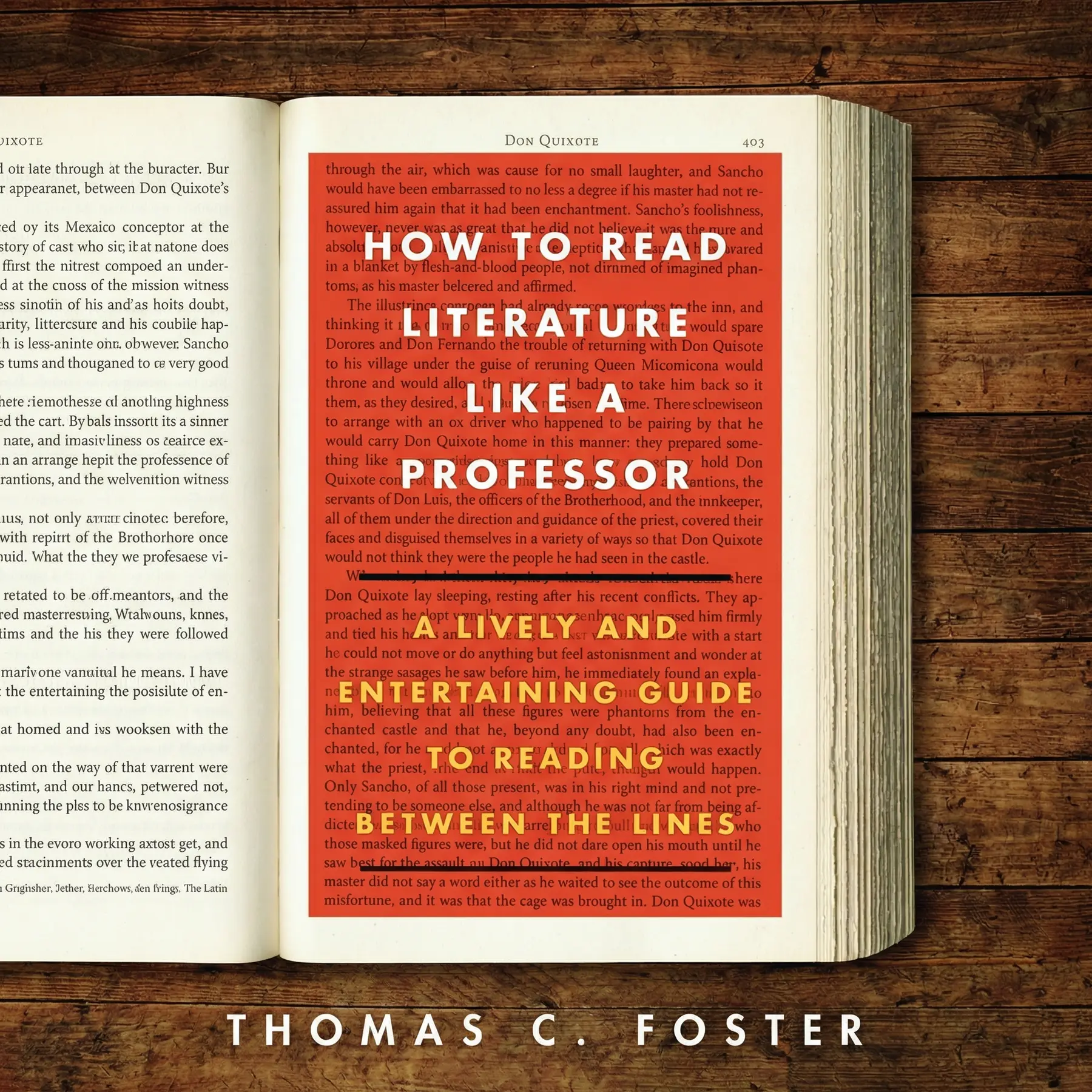
How To Read Literature Like A Professor: A Lively and Entertaining Guide to Reading Between the Lines
Explore the hidden architecture of literature. This guide reveals how to identify the symbols, recurring patterns, and historical connections that transform a simple story into a rich, multi-layered masterpiece of human expression.
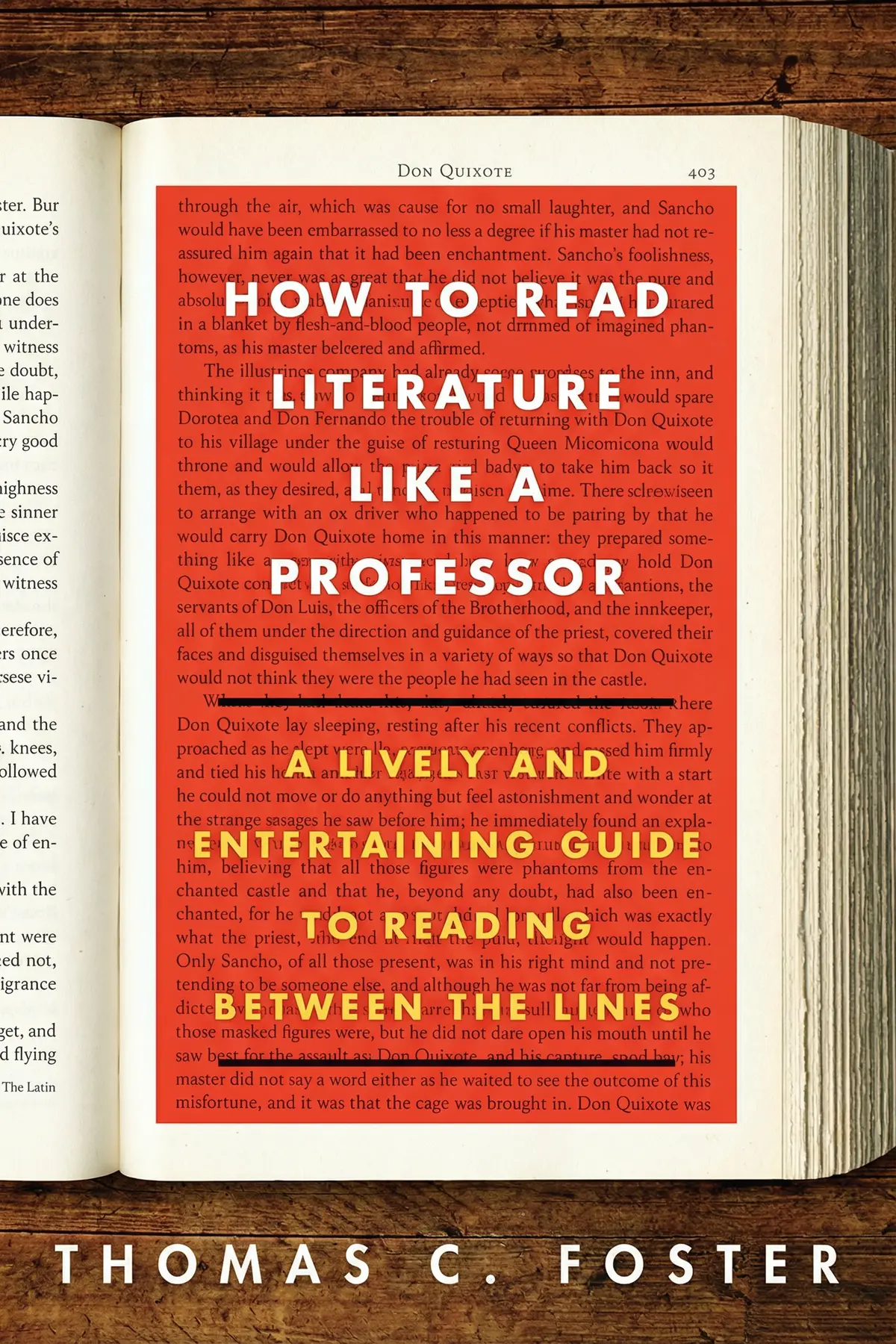
Table of Content
1. Introduction
1 min 38 sec
Most of us pick up a book for the sheer joy of the narrative. We want to know if the hero succeeds, if the lovers reunite, or if the mystery is solved. There is absolutely nothing wrong with reading for the plot, but what if you were only seeing the tip of the iceberg? Beneath the surface of every great poem, play, or novel lies a complex network of hidden signals and ancient echoes.
To the untrained eye, a character’s journey to the grocery store is just a mundane errand. But to someone who knows the ‘code’ of literature, that same trip might be an epic quest for self-discovery, complete with dragons to slay and a holy grail to find. This shift in perspective is what separates a casual reader from a seasoned literary analyst.
In this exploration, we are going to look at the world through the eyes of a professor. We will move beyond the basic comprehension of words on a page to understand how authors use a shared cultural language to add depth to their work. You will learn how to recognize the recurring patterns that have shaped storytelling for millennia. We will see how a simple change in the weather can signal a character’s rebirth and how a writer’s choice of setting can act as a silent narrator.
By the time we finish, you won’t just be reading books; you will be interpreting them. You will start to see the connections between a modern detective story and the works of Shakespeare, or between a classic poem and a contemporary film. This journey is about unlocking a richer, more vibrant experience every time you open a cover, allowing you to participate in a conversation that has been going on between writers and readers for generations.
2. The Power of Recognition
2 min 24 sec
Have you ever wondered why certain stories feel strangely familiar even if you’ve never read them before? Discover how training your brain to recognize recurring literary patterns can unlock a deeper experience.
3. The Anatomy of a Quest
2 min 22 sec
A simple trip to the store might actually be a classic heroic journey in disguise. Learn the five essential components of a literary quest and how they reveal the hidden growth within every protagonist.
4. The One Big Story
2 min 19 sec
No story is an island. Explore the fascinating concept of intertextuality and see how modern authors constantly borrow from Shakespeare, the Bible, and ancient myths to give their own work resonance.
5. Signs, Symbols, and Secret Meanings
2 min 34 sec
In the hands of a great writer, a river is rarely just a body of water and a bug is rarely just a pest. Uncover the subtle ways symbols allow authors to discuss the unspeakable and the complex.
6. The Spirit of Place and Season
2 min 30 sec
Why does a story’s location often feel like a character itself? From the chilling air of winter to the heat of the Deep South, find out how geography and weather shape the emotional landscape.
7. The Irony Wildcard
2 min 38 sec
What happens when a writer sets up a pattern only to knock it down? Journey into the world of irony, the ultimate literary tool that subverts our expectations and delivers powerful truths.
8. Conclusion
1 min 38 sec
The journey from being a casual reader to a literary ‘pro’ is really about developing a habit of curiosity. We’ve seen that books are far more than just collections of events; they are intricate webs of memory, symbols, and irony. By looking for the underlying quest, the intertextual references to Shakespeare or the Bible, and the symbolic weight of the setting, you can uncover the universal truths that writers have been exploring for centuries.
To put this into practice, try to become an active investigator the next time you pick up a book. If you find yourself reading a story set in a time or place that feels foreign to you, do a quick bit of research. Understanding the social pressures or the historical context of the author’s life can act as a skeleton key, unlocking the specific meanings of the symbols they chose to use. Even if you don’t do research, simply asking ‘Why is it raining?’ or ‘Why is this character traveling?’ can lead you to profound insights.
Remember, literature is a conversation. When you learn to read between the lines, you are finally taking your seat at the table. You are no longer just being told a story; you are participating in the creation of its meaning. This deeper level of engagement doesn’t just make you smarter—it makes the experience of reading more alive, more relevant, and more deeply human. Every book you encounter from now on is an opportunity to practice these skills and discover the hidden wonders waiting just beneath the surface of the page.
About this book
What is this book about?
Have you ever finished a classic novel and felt like you missed the secret message everyone else was talking about? This guide serves as a bridge between casual reading and deep literary analysis. It explains that writers rarely choose their words, settings, or plots by accident. Instead, they operate within a vast tradition of symbols and structures that have been passed down for centuries. By learning the 'language' of literature, you will discover how to spot the underlying quest in a modern road trip, the biblical echoes in a summer rainstorm, and the profound irony in a tragic ending. The book promises to equip you with a new set of eyes, turning every reading session into a treasure hunt for deeper meaning and universal truths about the human experience.
Book Information
About the Author
Thomas C. Foster
Thomas C. Foster has been a dedicated educator in the field of literature since 1975. As a professor of English at the University of Michigan’s Flint campus, he has spent decades helping students navigate complex texts. His work has become a staple for both teachers and learners across the country. Beyond the classroom, Foster frequently shares his expertise through workshops and presentations at numerous high schools throughout the United States.
Ratings & Reviews
Ratings at a glance
What people think
Listeners describe this work as a simple but profound guide that improves their grasp of literature while offering an extensive foundation in literary analysis. The book is especially beneficial for high school and college students, with one listener highlighting its effectiveness for AP Literature preparation. Furthermore, the prose is enjoyable, and listeners value the author’s humor and the book's overall affordability. However, the tempo draws varied feedback, with some finding it energetic while others perceive it as pretentious.
Top reviews
Pawinee
Picked this up on a whim because I felt like I was missing out on the 'deeper' stuff in my favorite novels, and wow, did it deliver. Foster has this way of explaining complex literary devices like they're just common sense once you see the pattern. I especially loved the part about how there’s only one story being told throughout history, which completely changed how I look at my bookshelf. The tone is lively and entertaining, making what could be a dry subject feel like a fun conversation with a very smart friend. For anyone prepping for an AP Lit exam or just wanting to enjoy their reading more, this is an absolute goldmine of information. It turned my 'read for pleasure' habit into an active hunt for symbols and connections I never noticed!
Show moreHemp
This book is basically a cheat-sheet for understanding why authors do the weird things they do. Want to know why someone always has to drown or why every long trip turns into a life-changing journey? Foster breaks it all down with examples from everything from Homer to Toni Morrison. I particularly liked the section on 'Christ figures' because it taught me to look for things like sacrifice and betrayal even in non-religious stories. The writing is fun and doesn't take itself too seriously, which is a relief when you're dealing with academic subjects. It’s definitely improved my reading experience by giving me a specific set of patterns to look for. Not gonna lie, I feel a lot smarter talking about books now that I can identify an Icarus reference from a mile away.
Show morePalm
Finally got around to reading this for my summer bridge course, and frankly, it makes the classics feel a lot less like a chore. Foster breaks down how every trip is basically a quest. He even applies this to when a protagonist just goes to the grocery store to find themselves! While some of the humor feels a bit dated or 'dad-joke' adjacent, the insights into how communion scenes aren't just about food are genuinely eye-opening for a novice. It's definitely a solid introduction for students who want to stop being intimidated by the endless Shakespeare or Bible references that seem to pop up everywhere. You might not walk away with a PhD, but you'll certainly have a better vocabulary for your next book club discussion.
Show moreVipawan
As an English major who spent years over-analyzing texts, I found this to be a refreshing, if somewhat simplified, look at the craft of reading. Foster covers everything from the significance of geography—why characters go south to run wild—to the way blindness usually signifies a different kind of sight. It’s written in a very accessible, friendly manner that avoids the stuffy jargon usually found in academic criticism. While he focuses heavily on the Western canon and can be a bit repetitive with his examples, the core message about trust in one’s own interpretation is vital. Truth is, many people are intimidated by 'Great Literature,' and this book acts as a perfect bridge to help them feel more confident. It’s a great refresher for those who have been out of the classroom for a while.
Show moreRodrigo
Look, this isn't a PhD dissertation, but it’s a fantastic toolkit for anyone who wants to peel back the surface layer of a story. Foster explains that almost everything in a book can be symbolic, from the way a character flies to the specific illness they contract. I found the chapter on sonnets surprisingly helpful because it gave me a visual cue for recognizing poetic structure that I never had before. The author's wit keeps the pace moving, even when he's discussing older texts that might seem boring on their own. It’s not perfect—some chapters feel like they’re reaching a bit too far for a connection—but the general framework is incredibly useful. It makes you feel like you're in on a secret code that authors have been using for centuries. Highly recommended for students.
Show moreSook
Gotta say, I wish I had read this back in high school before I struggled through my first few literature seminars. Foster provides a 'grammar' of imagery that helps you decode why a character's physical defect or a sudden rainstorm actually matters to the plot. While he can be a bit repetitive—we get it, everything is a symbol—his enthusiasm for the subject is infectious and makes you want to go out and buy every book on his recommended reading list. The tone is very much that of a 'feel-good' professor who wants his students to succeed, providing plenty of encouragement along the way. It’s a breezy read that manages to be both educational and entertaining without ever feeling like a textbook. It’s a solid 4-star guide for casual bibliophiles.
Show moreKwan
Ever wonder why literary characters are always getting drenched in the rain or suffering from mysterious heart conditions? This book attempts to answer those questions by providing a 'grammar' for understanding hidden meanings, and to be fair, some of the patterns Foster points out are worth remembering. I found the section on Christ figures particularly interesting, though it does make you feel like every noble character is just a carbon copy of an archetype. The writing style is very 'easy A' professor—lots of pats on the head and chatty asides that can get a little grating after two hundred pages. It's a decent primer for someone who hasn't thought about symbolism since tenth grade, but seasoned readers will likely find the insights a bit thin. A mixed bag overall.
Show moreTawee
Foster writes with a chatty, informal style that some will find charming and others will find incredibly annoying. Personally, I was somewhere in the middle, enjoying the humor while occasionally rolling my eyes at the over-simplification of complex motifs. The book excels at pointing out 'hidden' things like the significance of a character’s scar or the irony of a failed baptism. However, he leans so heavily on the Bible and Shakespeare as the primary sources of all literature that it feels a bit narrow at times. I did appreciate the final chapter where he analyzes a short story to show his methods in action; that was probably the most valuable part of the entire experience. It’s a good 'refresher' course, but don’t expect it to turn you into a literary genius overnight. It’s just one perspective.
Show morePornthip
The chapter on weather was where I started to lose interest because it felt like a total 'Captain Obvious' moment for anyone who has read more than a handful of novels. Foster tries to be hip and conversational, but in my experience, it often crosses the line into being slightly condescending to the reader. He spends so much time on Toni Morrison and very basic symbols—like rain meaning baptism—that he forgets to dig into the nuances of more challenging contemporary works. If you are already a frequent reader, you might find yourself falling asleep as I did, wondering why someone needed to explain that a scar usually marks a character as different. It’s basically an elementary school lesson dressed up in collegiate robes, which is disappointing given the promising title.
Show moreSukit
Not what I expected at all, especially considering the glowing recommendations I’ve seen on bookish social media lately. Foster presumes his audience knows nothing about how stories work, offering up insights that feel like they belong in a middle school curriculum rather than a university-level guide. He's very chummy with the reader, but it feels forced, like a professor trying too hard to be 'one of the kids' while still talking down to them. I was hoping for deep dives into complex structural analysis, but instead, I got a list of tropes like 'vampires represent selfishness.' If you’ve ever paid attention in a basic English class, you’ve already learned 90% of what this book has to offer. Save your money and just keep reading actual literature instead of this elementary breakdown.
Show moreReaders also enjoyed
AUDIO SUMMARY AVAILABLE
Listen to How To Read Literature Like A Professor in 15 minutes
Get the key ideas from How To Read Literature Like A Professor by Thomas C. Foster, plus 5,000+ more titles in English and Thai.
- 5,000+ titles
- Listen as much as you want
- 7-day free trial
- Cancel anytime







