
Afropean: Notes From Black Europe
Johny Pitts
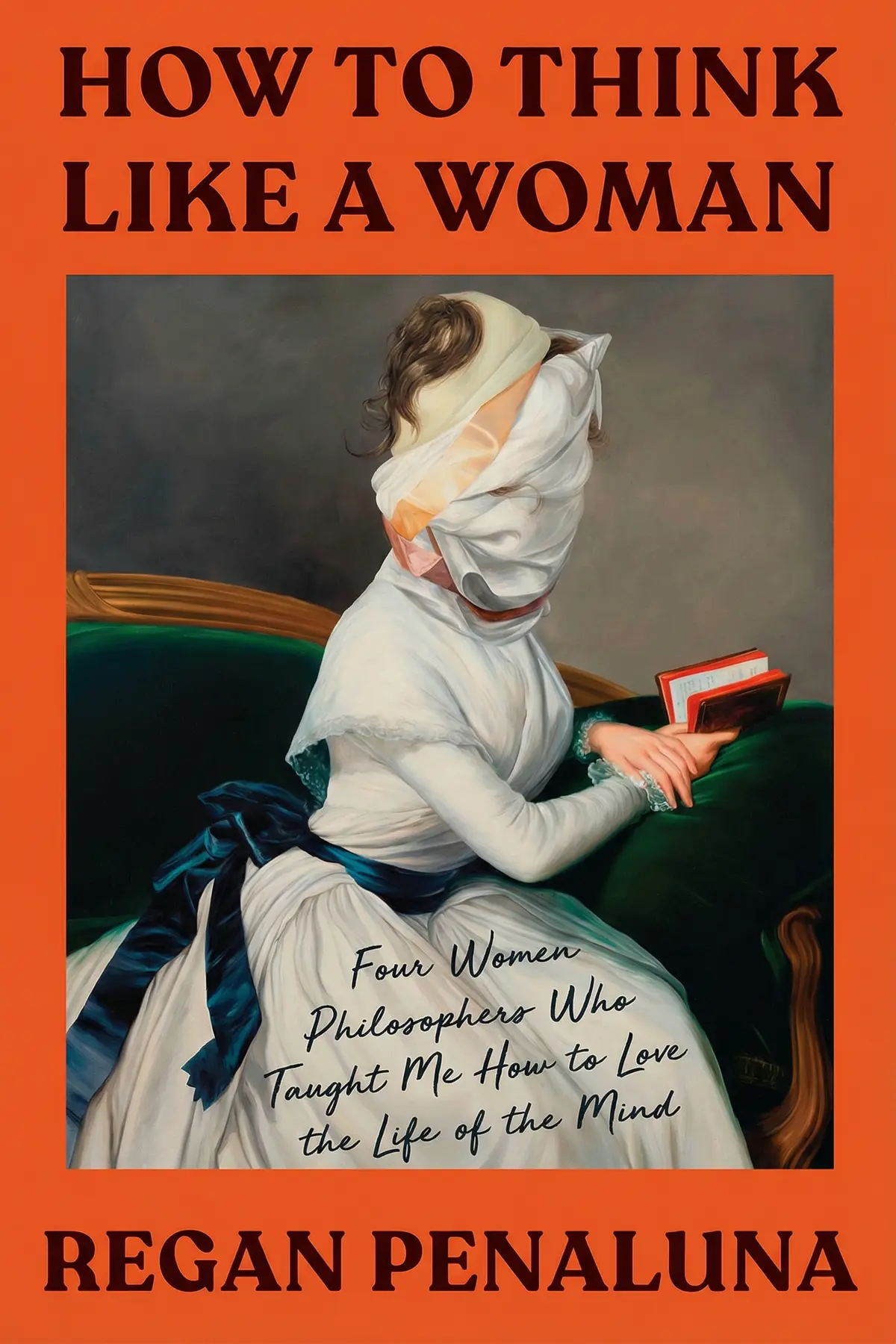
Regan Penaluna blends memoir and history to recover the lost voices of female philosophers, challenging the male-dominated canon and exploring how women’s perspectives transform our understanding of the intellectual life.
1 min 48 sec
Have you ever walked through a grand library and wondered whose voices were left off the shelves? For most students of philosophy, the curriculum feels like an endless procession of men with long beards, from the ancient Greeks to the Enlightenment giants. We are taught that philosophy is the pursuit of universal truth, a journey of the mind that transcends the physical body. Yet, as Regan Penaluna discovered during her own grueling journey through academia, this supposedly universal field has a very specific, and very intentional, gender problem.
In this BookBits summary of How to Think Like a Woman, we are going to explore a narrative that is part intellectual history and part personal recovery. Penaluna takes us through her experience as a woman trying to find her place in a discipline that often felt like it was designed to exclude her. But this isn’t just a story of frustration; it’s a story of discovery. By reaching back into the archives, Penaluna uncovers a hidden lineage of women who were asking the same big questions as their male counterparts, often with even greater courage because they had to fight for the right to think at all.
We will meet four extraordinary women—Mary Astell, Damaris Masham, Mary Wollstonecraft, and Catharine Cockburn—who refused to let their intellects be silenced by the domestic expectations of their eras. Through their lives, we’ll see how the very act of thinking as a woman becomes a revolutionary gesture. This journey is about more than just correcting the historical record; it’s about understanding how our view of human nature changes when we finally listen to the voices that have been pushed to the margins for centuries. Let’s begin by looking at the deep-seated biases that made this recovery mission so necessary in the first place.
2 min 47 sec
Discover how the pillars of Western philosophy, from Aristotle to Kant, built a discipline that systematically dismissed women’s capacity for reason, creating a cycle of exclusion that persists.
2 min 41 sec
Follow the daring journey of a 17th-century woman who moved to London with savings sewn into her dress to argue that women are inherently rational beings.
2 min 29 sec
Explore the life of a thinker who balanced household duties with complex intellectual debates, arguing that love and social connection are essential to human reason.
2 min 31 sec
Witness the revolutionary impact of a woman who turned her personal struggles with love and independence into a fierce defense of gender equality.
2 min 31 sec
Learn how a brilliant playwright and philosopher navigated a seventeen-year retreat into motherhood without losing her intellectual identity.
2 min 00 sec
The journey through the lives of Mary Astell, Damaris Masham, Mary Wollstonecraft, and Catharine Cockburn brings us back to the central question: what does it mean to think like a woman? Through Regan Penaluna’s exploration in How to Think Like a Woman, we see that it isn’t about having a ‘different’ kind of brain or a ‘feminine’ style of logic. Instead, thinking like a woman means thinking from a position of resistance. It means pursuing the truth while being fully aware of the social and physical structures that try to limit your reach. It means refusing to accept a definition of ‘human nature’ that was written without your input.
These four women were not just ‘female versions’ of famous male philosophers. They were pioneers who expanded the boundaries of what philosophy could talk about. They brought the domestic sphere, the experience of motherhood, the dynamics of romantic love, and the systemic reality of oppression into the light of rational inquiry. By doing so, they made philosophy more complete and more human. They proved that the intellect does not exist in a vacuum; it is always tied to a life lived in a specific body and a specific time.
As we close this summary, the takeaway is clear: the history of ideas is far richer and more diverse than the traditional canon would lead us to believe. Reclaiming these voices isn’t just a matter of historical fairness; it’s a way to enrich our own thinking today. Whether you are navigating the halls of academia or the challenges of everyday life, these women offer a model of intellectual courage. They remind us that the life of the mind is a birthright, one that must be claimed and defended with every thought we think and every word we write. By looking back at where we’ve been, we gain the clarity to see where we need to go—toward a future where the ‘universal’ search for truth finally includes us all.
How to Think Like a Woman is a deep dive into the systemic exclusion of women from the history of Western philosophy. Regan Penaluna takes readers on a journey through her own academic disillusionment, eventually finding solace and inspiration in the forgotten works of four remarkable women: Mary Astell, Damaris Masham, Mary Wollstonecraft, and Catharine Cockburn. The book promises a radical reframing of what it means to lead a life of the mind. It moves beyond simply adding women to a list of famous names; instead, it examines how these thinkers navigated the unique challenges of their gender—from domesticity and motherhood to social derision—while producing profound insights into reason, virtue, and equality. By blending personal memoir with historical biography, Penaluna offers a path for modern readers to reclaim an intellectual heritage that was nearly erased, proving that the female experience is not an obstacle to philosophy but a vital lens through which to view the world.
Regan Penaluna is a writer, editor, and philosopher who holds a master’s degree in journalism and a PhD in philosophy. Her feature writing has been recognized by the Atlantic as one of 100 Exceptional Works of Journalism, and her debut book, How to Think Like a Woman, was named a New York Times Editors’ Choice.
Listeners find the book highly accessible and stimulating, characterizing it as a wonderful selection with deep, perceptive material.
What an absolutely vital piece of writing. It is enraging to realize how much intellectual history has been stolen from us through the deliberate erasure of women. Penaluna writes with a sharp, clear-eyed anger that I found totally infectious. I loved the way she took down the 'great thinkers' like Aristotle for their blatant bigotry. The book isn't just a dry history; it’s a living, breathing struggle to find a place for oneself in a world that wasn't built for you. The blend of memoir and biography worked perfectly for me because it showed that these issues aren't just historical—they are happening right now in lecture halls across the country. Every woman who has ever felt 'less than' in an intellectual space needs to read this immediately.
Show morePicked this up on a whim and couldn't put it down. It is such a refreshing change of pace from traditional philosophy books. Penaluna doesn't just present these women as statues; she shows them as real, messy humans who had to navigate incredible obstacles to be heard. I particularly loved the section on Mary Wollstonecraft. The author doesn't try to smooth out the contradictions in her life, which made her feel so much more relatable. This book made me angry, inspired, and curious all at once. It’s a great read for anyone who wants to understand how the history of thought has been shaped—and distorted—by the exclusion of half the population. Seriously, eat my ass, Aristotle. Five stars for the attitude alone.
Show moreFinally got around to reading this and it's a total game-changer. The way we teach philosophy is so broken, and this book highlights exactly why. It’s not just that women were excluded; it’s that the very definition of 'reason' was built to keep them out. Penaluna’s voice is clear, witty, and deeply personal. I loved how she used her own experiences to illustrate the insidious effects of sexism. It’s a great read that manages to be both educational and deeply emotional. I finished it feeling like I finally had a lineage of thinkers I could claim as my own. Highly recommended for anyone interested in intellectual history.
Show moreAs a former philosophy student, I found this book incredibly validating. Penaluna does a fantastic job of highlighting the "male glance" that dominates academia, making it clear why so many women feel like outsiders in their own field. The recovery of voices like Mary Astell and Damaris Masham is handled with a sense of urgency that I really appreciated. However, the narrative balance felt a bit off at times. While the personal memoir sections about her PhD journey and divorce were relatable, they occasionally overshadowed the philosophical analysis. I wanted a deeper dive into the actual arguments these women made against their male contemporaries. Still, it’s a thought-provoking read that exposes the deep-seated misogyny in the canon. It’s about time we stopped treating Aristotle’s views on women as a minor footnote.
Show moreEver wonder where all the women were while the 'Great Men' were busy defining human nature? This book provides a much-needed answer. Penaluna brings figures like Mary Astell and Damaris Masham into the light, showing how they fought for the right to education long before the formal feminist movement took off. I found the historical sections absolutely fascinating and well-researched. The author’s writing style is engaging and avoids the stuffiness you usually find in academic non-fiction. My only minor complaint is that the structure felt a bit disjointed in the middle, and I noticed a few typos in the French phrases. Despite that, it’s an insightful read that challenged me to rethink everything I learned in my undergrad classes. It’s a great addition to any feminist’s bookshelf.
Show moreI'm so glad I chose the audiobook version of this, as the narration was excellent. Penaluna does a fantastic job of weaving the historical with the personal, creating a narrative that feels both scholarly and intimate. The way she describes her struggles in graduate school really resonated with me—the feeling of being 'too much' and 'not enough' all at once. The research into these forgotten women is top-notch, and it’s genuinely shocking to see how their ideas were stolen or ignored. While I would have liked more intersectional analysis earlier in the book, I appreciate that she acknowledges her own limitations and the whiteness of her primary subjects. It’s a readable, necessary, and ultimately very moving book.
Show moreThe chapter on Mary Wollstonecraft alone is worth the price of admission. I’ve read a few biographies of her, but Penaluna brings a unique perspective by focusing on her philosophical contributions rather than just her scandalous personal life. To be fair, the book does lean heavily into the author's own life story, which might not be for everyone. At times, the memoir felt like it was treading water. But the core message—that we need to diversify the canon to truly understand human thought—is undeniable. The writing is sharp, and the research into Mary Astell and Catherine Cockburn is fantastic. It’s a provocative and insightful work that definitely sparked some long conversations in my book club. A solid 4-star read.
Show moreLook, I really wanted to love this, but I ended up with very mixed feelings. On one hand, the biographical sketches of these forgotten female thinkers are vital and well-researched. Learning about Catherine Trotter Cockburn was a highlight for me. On the other hand, the memoir aspect felt somewhat self-indulgent. I found the sections focusing on the author's 'demon of self-doubt' to be a bit repetitive and, frankly, a little exhausting. It felt more like a personal catharsis than a rigorous exploration of philosophy. The writing is accessible, which is a plus, but the connection between the historical figures and the author's personal life felt forced in several chapters. It's an important book for the history of feminism, but perhaps not the definitive philosophical work I was hoping for.
Show moreThere is a lot to admire here, but I found the execution a bit uneven. The premise of weaving the author's life with the lives of four 17th and 18th-century philosophers is brilliant in theory. In practice, however, some of the connections felt thin. I enjoyed learning about the 'woman question' and the blatant plagiarism by male contemporaries, but the memoir portions often felt like they belonged in a different book. Specifically, the details about the end of the author's marriage didn't always serve the larger philosophical points she was trying to make. I also wished for more discussion on the link between the denigration of women and the natural world. It’s a decent primer on overlooked thinkers, but it leaves some of the most interesting questions unanswered.
Show moreThe truth is, this felt more like a therapy session than a philosophical inquiry. I picked this up expecting a rigorous look at the ideas of Mary Wollstonecraft and others, but instead, I got pages and pages of the author’s personal grievances. Sexism in academia is real, and it’s a problem worth discussing, but the tone here often veered into self-pity. There was a strange tendency to blame every personal mistake or bad relationship on the patriarchy, which felt like a reach. Also, the writing lacks depth when it actually comes to the philosophy. She mentions several mystics and thinkers but barely scratches the surface of their logic. If you're looking for a memoir of an existential crisis, you might like this, but if you want to actually learn how to think like a woman philosopher, look elsewhere.
Show moreJohny Pitts
bell hooks
William B. Irvine

Fay Bound Alberti
Nigel Warburton

Daniel Goleman
AUDIO SUMMARY AVAILABLE
Get the key ideas from How to Think Like a Woman by Regan Penaluna, plus 5,000+ more titles in English and Thai.







