
17 min 26 sec
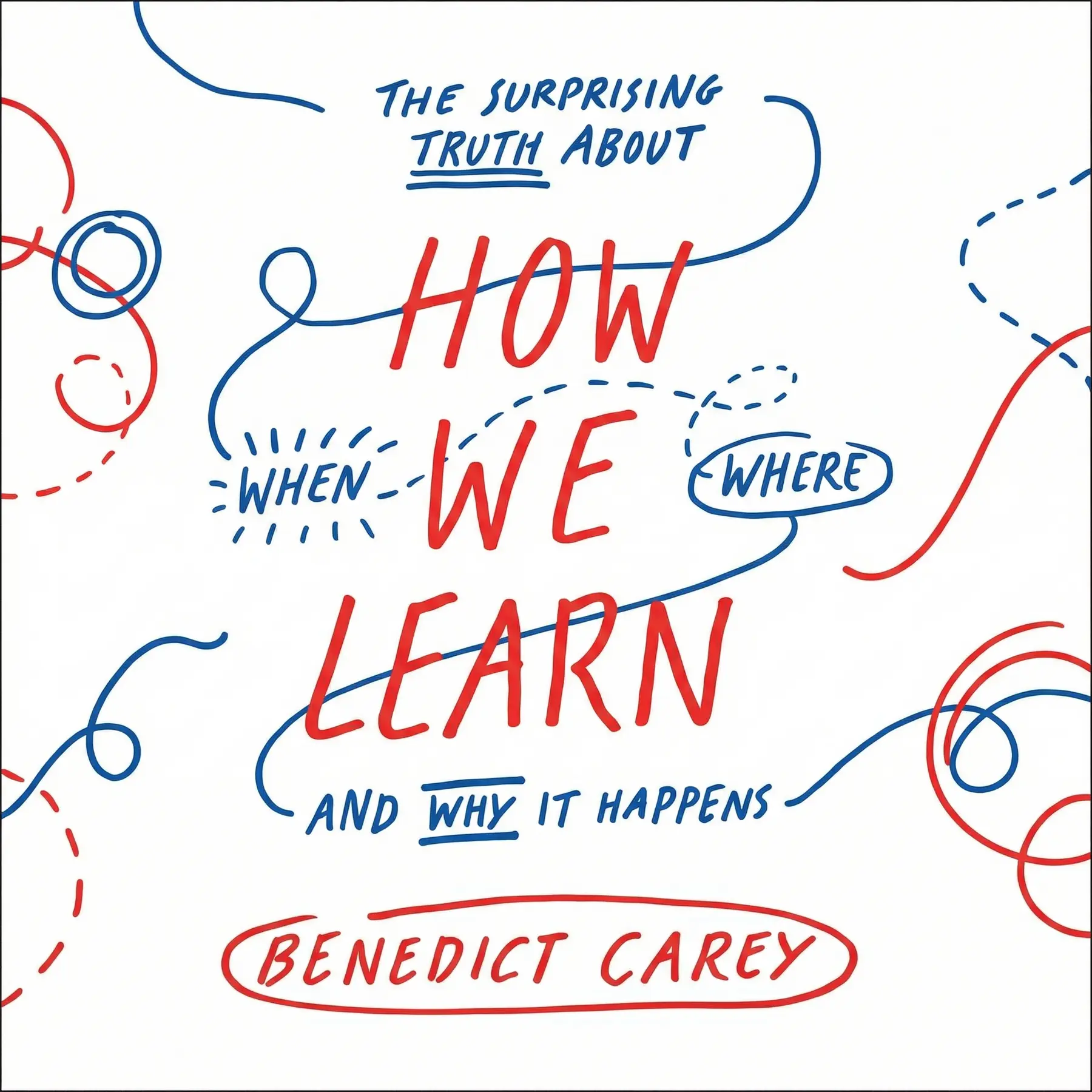
How We Learn: The Surprising Truth About When, Where and Why It Happens
Benedict Carey challenges traditional study methods in How We Learn, revealing how brain science can help us retain information more effectively through techniques like spacing, varied environments, and strategic rest.
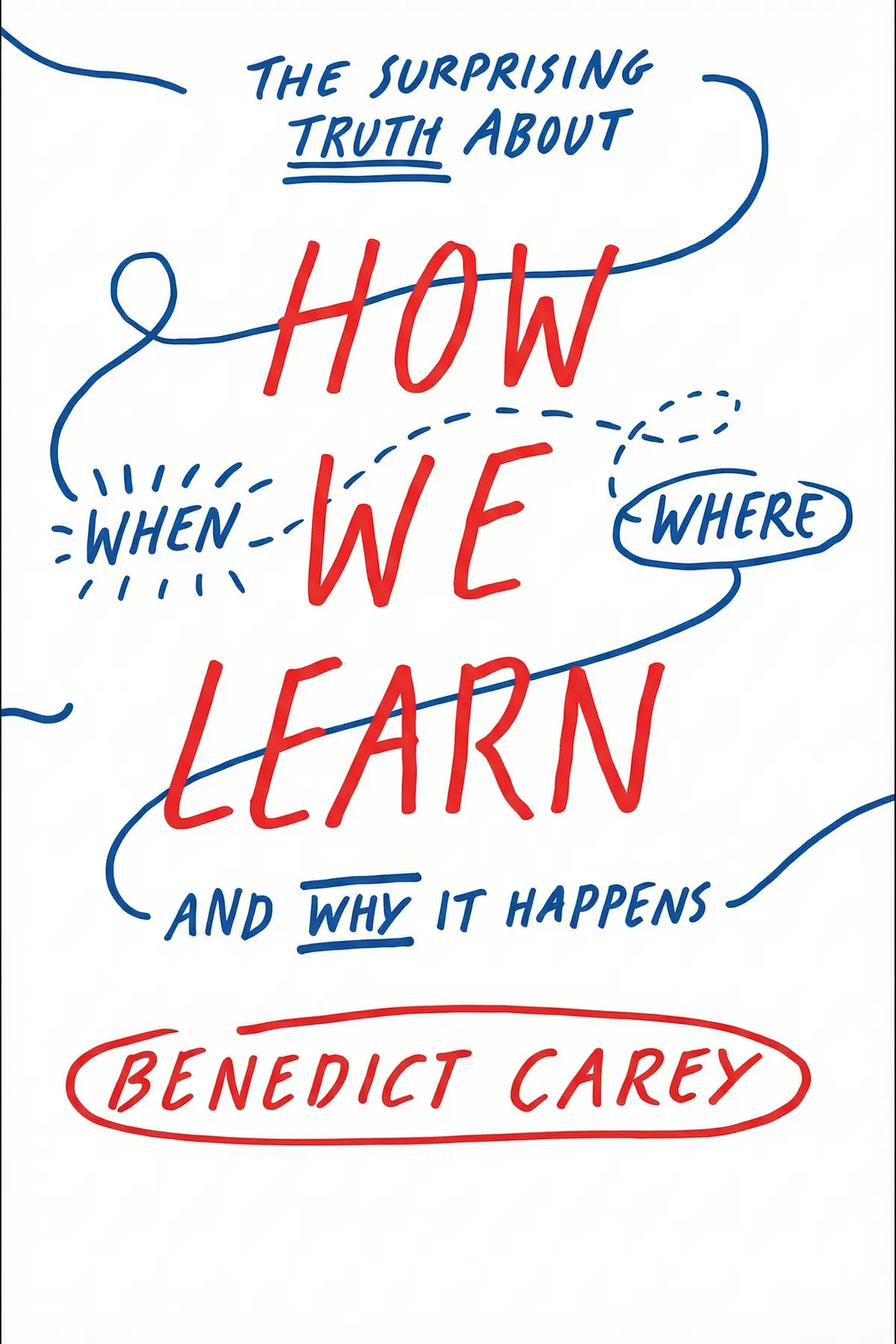
Table of Content
1. Introduction
1 min 33 sec
Most of us have a very specific image in our minds when we think about what it means to study. We imagine a student hunched over a desk in a silent library, perhaps late at night, fueled by caffeine and pure willpower. We’ve been told for generations that focus requires isolation, that repetition requires a single-minded obsession, and that learning is primarily a matter of discipline. But what if almost everything we’ve been taught about the ‘correct’ way to learn is actually wrong?
In this exploration of Benedict Carey’s work, we are going to dive deep into the fascinating machinery of the human brain to discover a far more effective—and often more relaxed—way to acquire new skills and knowledge. Whether you are trying to master a new language, prepare for a professional certification, or simply remember names at a social gathering, understanding the ‘when, where, and why’ of learning can change your life.
The central throughline of this journey is that our brains are not like computer hard drives that simply record data. They are living, breathing biological organs with their own quirks and preferences. By learning to work with these biological tendencies rather than fighting against them, we can make information stick more permanently with less struggle. We’ll look at why sleeping is actually a form of studying, why the environment you choose matters more than you think, and why taking a break might be the most productive thing you do all day. Let’s start by looking at the physical foundation of it all: the brain itself.
2. The Biological Architecture of Memory
2 min 03 sec
How does a thought become a physical part of your brain? Discover the incredible journey of information as it travels from neurons to long-term storage.
3. The Essential Role of Sleep in Consolidation
2 min 01 sec
Think you’re being productive by pulling an all-nighter? Learn why your brain needs rest to actually lock in the facts you’ve been studying.
4. Environmental Cues and the Power of Context
1 min 51 sec
Why staying in one ‘study cave’ might be hurting your performance. Explore the surprising ways your surroundings help you remember.
5. The Spacing Effect: Timing Your Learning
1 min 54 sec
Forget the last-minute cram session. Discover the biological reason why spreading out your study time leads to much better long-term retention.
6. Testing as a Tool for Discovery
1 min 52 sec
What if tests weren’t just for grading, but were actually the best way to learn? Learn why self-quizzing is the ultimate memory booster.
7. The Strategic Value of Interruption
1 min 41 sec
Procrastination is usually seen as a vice, but strategic breaks can actually spark breakthroughs. Discover the ‘Zeigarnik Effect.’
8. Interleaving: The Power of Mixed Practice
1 min 52 sec
Is practicing one skill at a time really the best way to improve? Learn why ‘mixing it up’ creates more versatile and durable skills.
9. Developing Perceptual Intuition
1 min 34 sec
How do experts make split-second decisions? Explore how perceptual learning can help you develop a ‘sixth sense’ in any field.
10. Conclusion
1 min 05 sec
As we wrap up our look at How We Learn, the most important lesson is that learning is a dynamic, biological process, not a mechanical one. We have seen that the brain thrives on variety, rest, and active engagement. We’ve discovered that our best work often happens when we are sleeping or when we are struggling to recall a difficult fact.
If you want to apply these insights today, start by embracing the ‘slow’ way. Don’t fear the struggle of a practice test; welcome it. Don’t feel guilty about taking a nap or a walk when you’re stuck; recognize it as a vital part of the incubation process. Change your environment, mix up your subjects, and stop the marathon cram sessions. By aligning your habits with the natural architecture of your mind, you can transform the way you acquire knowledge, making the journey of learning not just more effective, but far more enjoyable. Mastery is within your reach—not through harder work, but through smarter, more human-centric habits.
About this book
What is this book about?
Many of us grew up with rigid ideas about how to study: find a quiet desk, stick to a strict schedule, and focus on one thing at a time. But what if those rules are actually holding you back? In this summary, we explore the revolutionary insights of science reporter Benedict Carey, who argues that our brains are far more sophisticated and unconventional than we give them credit for. The book promises to dismantle the myths of 'cramming' and 'quiet zones,' replacing them with evidence-based strategies that mirror how the mind naturally operates. You will learn how the physical architecture of the brain—from the hippocampus to the neocortex—dictates the best way to encode information. By the end of this journey, you will have a toolkit of practical habits, including the benefits of strategic interruptions, the surprising role of sleep in creativity, and the power of testing yourself even before you know the material. Whether you are a student, a professional, or a lifelong learner, this exploration offers a path to working with your brain instead of against it.
Book Information
About the Author
Benedict Carey
Benedict Carey is a science reporter for The New York Times and has penned a number of books, including Poison Most Vial and The Unknowns.
Ratings & Reviews
Ratings at a glance
What people think
Listeners find the material highly educational, with one listener highlighting the abundance of evidence-based illustrations, and they value its user-friendly take on the science of learning. The structure is well-organized, and listeners consider the ideas both clear and stimulating, effectively debunking typical misunderstandings. They describe it as a pleasant experience with strong anecdotes, though perspectives on the narrative quality are divided.
Top reviews
Weera
Finally, a book that validates my messy habits by explaining the power of interleaving and spaced repetition. In my experience, most advice tells you to focus on one thing until you master it, but Carey proves that mixing it up is actually superior. The idea that forgetting is a functional part of building stronger memories blew my mind. I have started applying the 1/3 study to 2/3 rehearsal ratio he suggests, and the results are already visible in my daily workflow. It is an incredibly accessible guide for anyone who wants to stop fighting against their brain’s natural rhythms and start working with them. If you want to maximize your time, ignore the old-school rules and lean into the chaos. This is easily one of the best books on learning science I have ever found.
Show moreWanida
Ever wonder why a good night’s sleep seems to magically solve the math problem you were struggling with the night before? Truth is, Carey explains this phenomenon through the lens of memory consolidation and REM cycles in a way that is both fascinating and practical. I loved the concept of the "left brain interpreter" and how our minds construct narratives even when information is missing. This isn't just a book for students; it is a manual for anyone who uses their brain for a living. The chapters on "incubation" and "percolation" are absolute game-changers for creative professionals who feel like they are constantly hitting a wall. Sleep is not a waste of time. It is actually the moment your brain organizes your world. This changed my entire perspective on rest.
Show moreDuang
Carey has a way of making high-level cognitive science feel like a casual conversation over coffee. The most fascinating section for me was on "interleaving," which is the idea that practicing different skills in one session is better than repetitive drills. It is counter-intuitive, but the data he presents is hard to argue with, especially regarding motor skills and academic learning. By forcing the brain to constantly adjust to new types of problems, we build a deeper level of mastery. This book is an essential read for teachers, coaches, or anyone trying to pick up a new hobby in their spare time. It turns everything we know about practice on its head. I am recommending this to everyone in my study group. Truly enlightening stuff.
Show moreGun
As someone who always felt guilty for procrastinating, Carey's insights into the "percolation" of ideas felt like a personal redemption. He breaks down the science of why our brains need those breaks to actually solve complex problems. To be fair, some of the historical context regarding clinical trials felt a bit dry, but the payoff in practical strategies is immense. I particularly appreciated the discussion on varying your study environment to avoid being tied to a specific desk or room. It is a relief to know that my restless nature might actually be an asset to my learning process rather than a hindrance. If you have ever felt stuck, this book provides a roadmap for letting your subconscious do the heavy lifting. I am definitely going to experiment with his suggestion of changing up locations during my work week.
Show moreOtt
After hearing about the "spacing effect" for years, it was refreshing to see the actual data behind it presented so clearly here. Personally, I found the breakdown of the "Four Bahrick Study" to be one of the most compelling parts of the entire book. It is a bit denser than your average self-help title, but the structured approach to explaining how we retain information makes it worth the effort. My only gripe is that the author downplays the initial effort required before "distraction" becomes useful. You still have to put in the hard work first. That is a detail that could easily be missed if you are reading too quickly. Regardless, the advice on self-quizzing and avoiding the illusion of knowing is worth the price of admission alone.
Show moreAnchalee
This book changed the way I look at my own "failures" during self-testing, showing they are actually vital steps in the learning process. Not gonna lie, I used to hate getting questions wrong on practice exams. Now I see those moments as the best way to destroy the fluency illusion that plagues so many students. Carey’s tone is conversational and light, which makes the complex neuroscience of "perceptual intuition" much easier to digest. It is packed with research-backed examples. These challenge the traditional "sit still and focus" mantra we were all taught in school. Even if you only apply two or three of these techniques, you will see a massive improvement in your ability to recall information. It’s an empowering read for anyone who has ever felt like they were bad at studying.
Show moreMichael
Picked this up on a whim and was pleasantly surprised by how much it challenged my existing study habits. To be honest, I always thought that a quiet, dedicated study space was the gold standard, but Carey argues that environmental variety is actually the key to robust memory. The advice to vary your location or even the time of day you study is so simple yet backed by decades of research. While the book can be a bit chatty at times, the core message is powerful. Our brains are evolved for foraging, not just rote memorization. It is a thought-provoking look at the "lazy" habits we usually try to suppress. I wish I had read this back in college; it would have saved me so many nights of useless cramming.
Show moreBoss
The writing style in this one is definitely an acquired taste. It is almost like a spongecake that has way too much air and not enough substance at times. Gotta say, while the research is clearly there, the author often buries the lead under a mountain of chatty personal anecdotes and long-winded histories of scientists. I found myself skimming through the parts about split-brain surgery just to get to the actual tips for retention. The section on the "fluency illusion" was a standout, though, explaining why we often think we know material better than we do. It is a decent read if you have the patience for his storytelling, but it will not be for everyone. I think a more direct approach would have served the scientific content better.
Show moreLars
The first chapter started strong with some wild stories about epilepsy surgery and the brain's internal storyteller, but then it got a bit muddy. Look, I understand that forgetting is supposedly "good" for us, but the way it was explained in Chapter Two left me more confused than enlightened. I had to go back and re-read several sections just to find the actual takeaway among all the anecdotes. There is some brilliant advice in here about pre-testing and the value of ignorance, but you really have to dig for it. It feels like a 50-page toolkit trapped inside a 250-page narrative, which can be frustrating for busy readers. It is informative, certainly, but the organization left a lot to be desired for a book about efficiency.
Show moreJoseph
Not what I expected at all, and frankly, it was a bit of a slog to get through even half of it. I was looking for a concise guide on how to study better. Instead, I got a memoir-style dive into the history of psychology. There are just too many irrelevant personal stories that distract from the core scientific principles he is trying to convey. If you want the same information without the fluff, I would suggest picking up "Make It Stick" instead. It is much more direct. It does not spend chapters wandering around the point before finally arriving. I appreciate the effort, but the signal-to-noise ratio is just too low for my liking. It feels like the book is trying too hard to be approachable.
Show moreFeatured in
Readers also enjoyed
AUDIO SUMMARY AVAILABLE
Listen to How We Learn in 15 minutes
Get the key ideas from How We Learn by Benedict Carey, plus 5,000+ more titles in English and Thai.
- 5,000+ titles
- Listen as much as you want
- 7-day free trial
- Cancel anytime







