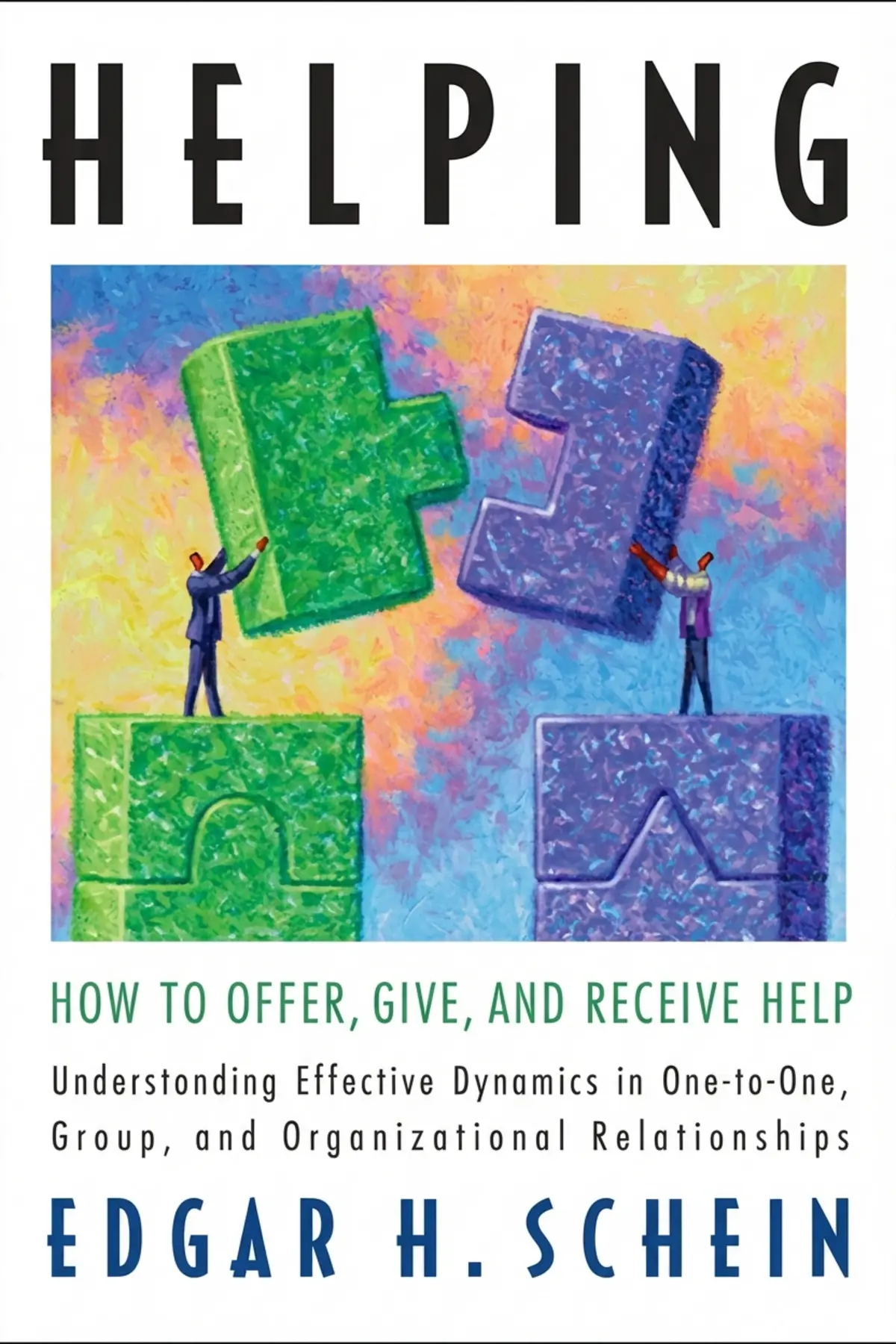
Helping: How to Offer, Give, and Receive Help
Edgar H. Schein
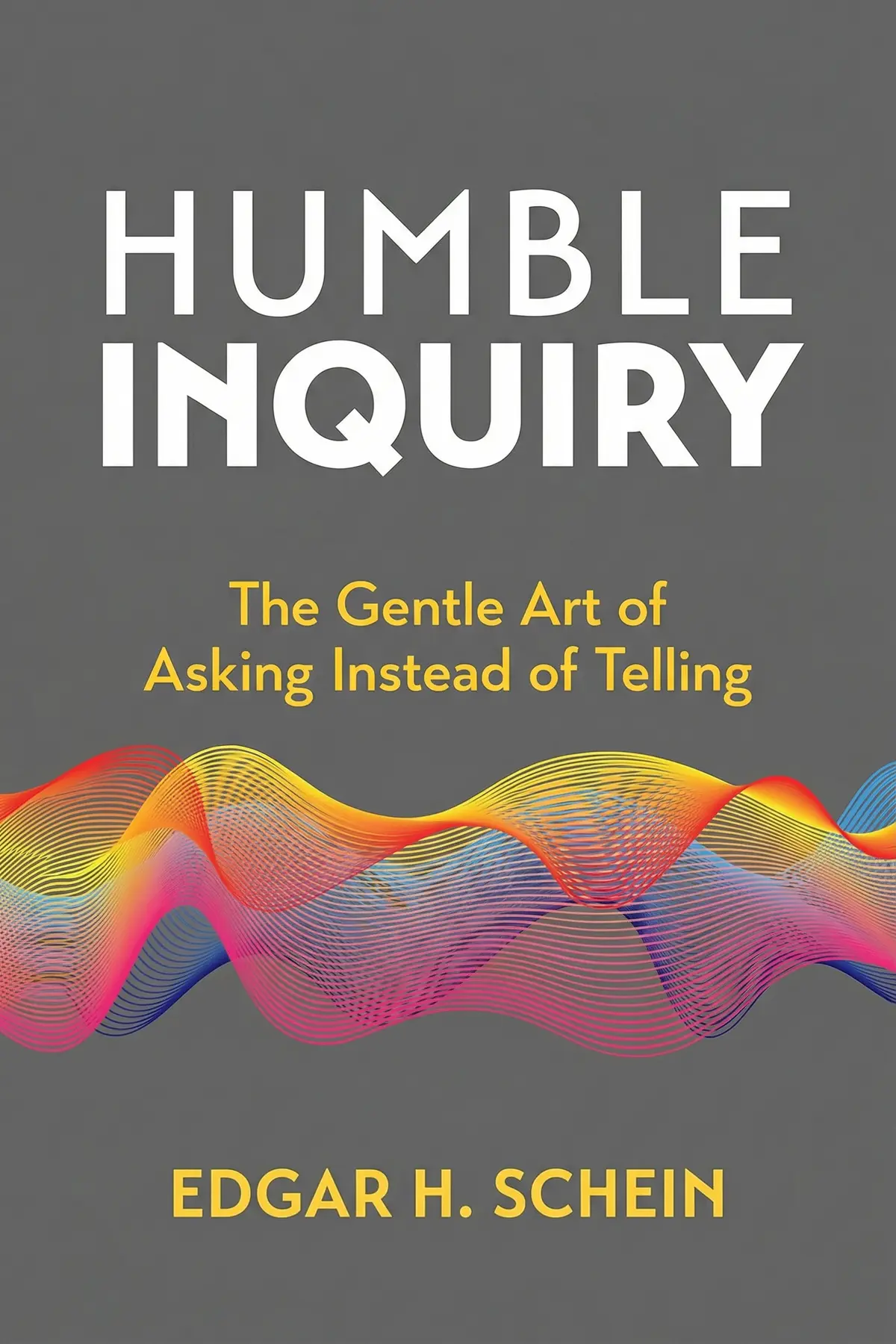
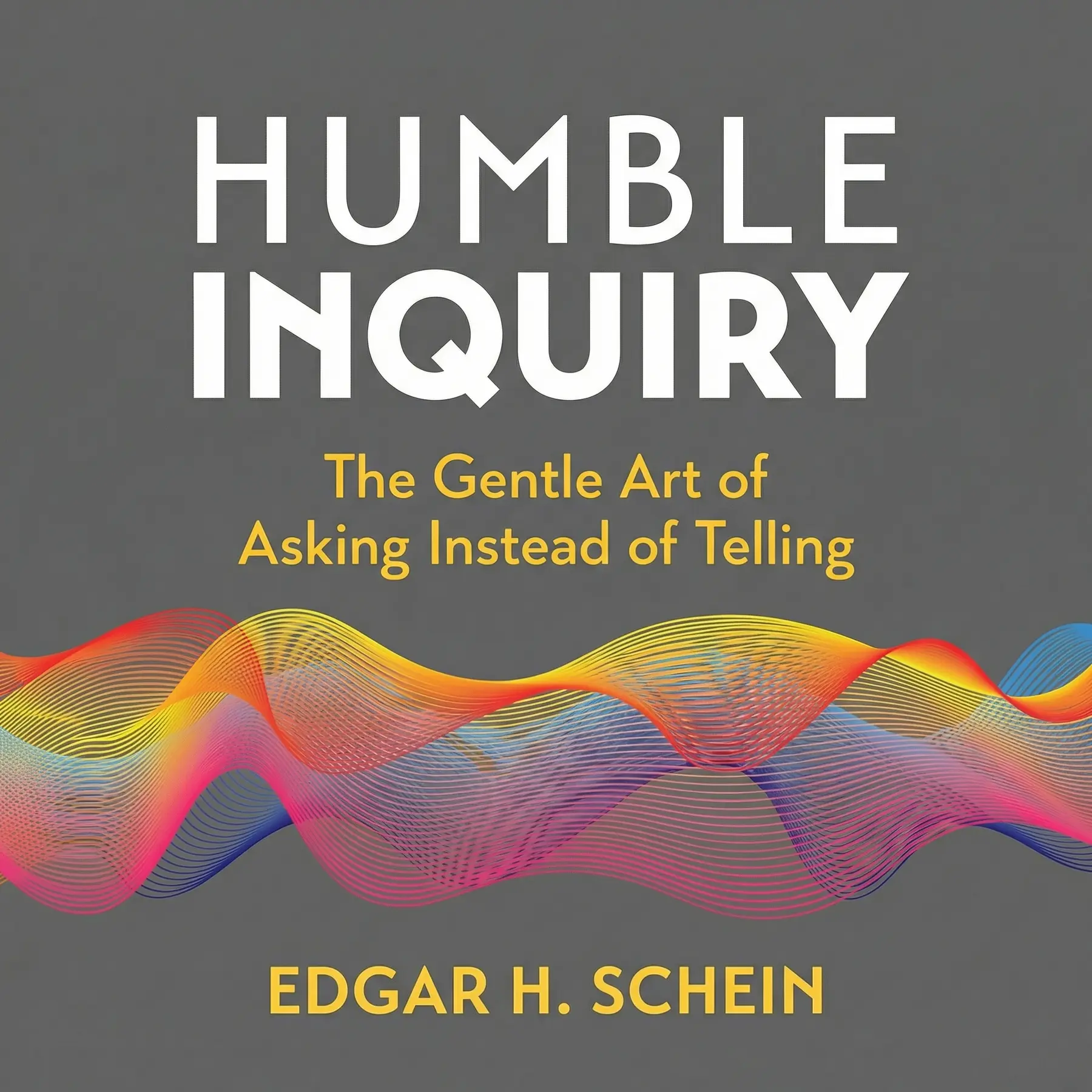
Humble Inquiry explores how the simple act of asking questions with genuine curiosity can transform professional leadership and personal relationships by fostering trust, openness, and more effective collaboration in a fast-paced world.
2 min 06 sec
We have all been there. You are sitting in a meeting, or perhaps standing in your kitchen, and someone in a position of authority—maybe a boss, a parent, or a teacher—starts telling you exactly what you’ve done wrong and how you need to fix it. The tone is sharp, the direction is clear, and the effect is almost instantaneous: you shut down. You might nod along, but internally, you’ve stopped contributing. You feel judged, perhaps even a bit resentful, and you certainly aren’t feeling inspired to do your best work. Now, contrast that with a moment where someone approached you with a genuine question. Instead of a command, they asked for your perspective. They wanted to know what you were seeing, what you were feeling, or how you would solve the problem at hand. In that moment, you likely felt seen, valued, and energized.
This is the core of what Edgar H. Schein calls Humble Inquiry. In a world that prizes fast answers and decisive commands, we have largely forgotten the gentle art of asking. We live in a society that rewards ‘telling.’ We think that to be a leader is to have all the solutions and to delegate tasks with absolute certainty. But as Schein argues, this ‘do-and-tell’ approach is increasingly out of step with the complexities of the modern world. Whether we are trying to manage a multi-billion dollar corporation, navigate a sensitive family dynamic, or simply connect with a friend, the quality of our relationships is determined by how well we listen and how humbly we inquire.
Over the course of this summary, we are going to explore why our traditional methods of communication often fail us and how we can rebuild them from the ground up. We will look at the different ways we ask questions and how subtle shifts in our tone and intent can change the entire dynamic of a room. We’ll examine the cultural and psychological barriers that make us afraid to say ‘I don’t know’ and why embracing a bit of vulnerability is actually the ultimate sign of strength. The goal isn’t just to be better talkers, but to be better connectors. By the end, you’ll see how a simple shift in focus—moving from what you can say to what you can ask—can open doors you didn’t even know were closed.
2 min 22 sec
Discover why the quality of a team’s output is entirely dependent on the psychological safety and the depth of the relationships between its members.
2 min 17 sec
Learn how true humility and genuine curiosity form the backbone of effective leadership and mutual respect.
2 min 48 sec
Explore the different ways we ask questions and how to choose the right style for every situation.
2 min 15 sec
Understand why our modern obsession with task completion and efficiency often destroys the very communication we need to succeed.
2 min 15 sec
Examine how our subconscious awareness of social standing dictates who we listen to and who we ignore.
2 min 17 sec
Discover how to overcome personal biases and build stronger connections by leading with vulnerability and pausing before judging.
1 min 55 sec
As we wrap up our look at the art of Humble Inquiry, it is worth reflecting on just how radical this idea really is. In a society that is constantly shouting for attention and demanding fast results, the act of slowing down to ask a sincere question is a form of quiet rebellion. It is a rejection of the idea that our worth is measured only by our status or the number of tasks we can check off a list. Instead, it posits that our greatest value lies in our ability to connect with, learn from, and support one another.
Edgar H. Schein’s message is ultimately one of hope. It suggests that even the most dysfunctional teams and the most strained relationships can be healed through a commitment to curiosity. By recognizing our own dependencies and acknowledging that we don’t have all the answers, we actually become more powerful. We unlock the collective intelligence of those around us, and we create environments where people are excited to contribute their best ideas.
The path forward is simple, though not always easy. It starts with a pause. The next time you feel the urge to tell someone what to do, or the next time you find yourself making a quick judgment about a colleague’s behavior, stop. Take a breath and ask a question instead. Try to see the world through their eyes for just a moment. Ask what they are working on, how they are feeling, or what they think the next step should be.
When you make Humble Inquiry a habit, you’ll find that the world begins to open up in unexpected ways. You’ll catch the errors before they become disasters. You’ll find common ground with people you thought were your opposites. Most importantly, you’ll build the kind of trust that survives long after the current project is finished. Communication is the lifeblood of human connection, and through the art of the humble question, you can ensure that lifeblood flows freely in every part of your life.
Most of us spend our lives being rewarded for having the answers. In the workplace, we are told that to lead is to direct, and to succeed is to command. However, this culture of telling often creates barriers that stifle innovation and lead to catastrophic errors. Humble Inquiry challenges this traditional power dynamic by introducing a different way of communicating. It suggests that the most powerful tool a leader or friend can possess is not a directive, but a question asked with true humility. This book provides a framework for building deeper relationships through the art of asking. It promises to help readers move beyond the transactional nature of modern work and into a space of mutual respect and psychological safety. By learning to value the perspectives of others and acknowledging our own dependency on those around us, we can unlock higher levels of team performance and personal fulfillment. It is a guide for anyone looking to bridge the gap between authority and authentic connection.
Edgar H. Schein is the Society of Sloan Fellows Professor of Management Emeritus at the Massachusetts Institute of Technology. Throughout a distinguished career, he has earned numerous awards for his contributions to the field of organizational development. He is also the author of several influential books, including Organizational Culture and Leadership and The Corporate Culture Survival Guide.
Edgar H. Schein
Listeners note that although views are mixed regarding the work's basic tone and redundancy, it offers deep wisdom on developing genuine connections using respect and curiosity. Listeners value the emphasis on "humble inquiry" as a vital method for encouraging collaboration and psychological safety in top-down structures. Furthermore, they appreciate the useful differences highlighted between various ways of asking questions, with one listener mentioning that the author's specific definition of trust is particularly impactful. They also describe the text as a fast, approachable guide that acts as a beneficial reminder for individuals managing complicated social interactions.
Schein’s definition of trust—not being embarrassed or taken advantage of—hit me like a ton of bricks. It’s so simple yet explains exactly why so many work relationships feel hollow and transactional. This book isn't just about communication. It’s about the vulnerability required to actually lead people effectively. I've read plenty of business books, but few address the ego as directly as this one does. The 'gentle art of asking' is something I realize I’ve been neglecting. I focus too much on being the 'expert' who has all the answers. By admitting what we don’t know, we empower our teams to step up. The examples, from surgical teams to cultural differences, illustrate how vital this is for preventing disaster. This is a must-read for anyone who wants to move beyond surface-level management. It changed me. It’s essential.
Show moreWow, what a deceptively simple yet profound little guide. I’ve been a fan of Edgar Schein for years, and this book feels like the perfect culmination of his thoughts on human systems. He tackles the 'one-upmanship' culture of Western business and offers a way out through authentic curiosity. I love that he doesn't just give you a list of questions to ask, but focuses on the attitude you must have. If you aren't genuinely curious, the questions won't work. They will sound like a script. The book is short enough to finish in an afternoon. I’ve been thinking about it for weeks. It’s especially relevant today as we navigate complex, interdependent tasks that no one person can solve alone. If you want to foster a culture of innovation and trust, start here. It’s brilliant. It's practical. It's deeply human.
Show moreAs someone who struggles with 'telling' instead of 'asking,' I appreciated the clear distinctions between different inquiry styles. Schein teaches us to navigate situational propriety with grace. The way he breaks down trust as a form of social equity is fascinating. We often think of trust as something that just happens. He shows it is built through the small, humble acts of drawing others out. The advice to 'slow down' and 'listen to the other person's answer' sounds basic. Yet so few of us actually do it in our daily lives. I found the section on how individualism gets in the way of teamwork to be particularly biting and true. This isn't just a business book. It’s a manual for better relationships in general. I’ll be keeping this in my bag for constant reference. Truly excellent.
Show moreEver wonder why your team stays silent during meetings? Schein answers this by exploring the power of genuine interest in others. He demonstrates that 'telling' is a status-seeking behavior that often shuts down honest feedback from those who actually know what is happening on the ground. I loved the section on building relationships based on curiosity rather than just task-orientedness. In my experience, most corporate failures happen because people are afraid to look 'ignorant' by asking questions. This book encourages us to embrace that ignorance. It’s a short, accessible read. It hits hard on the necessity of psychological safety. My only gripe is that it feels a bit repetitive toward the end, but the central message is too important to ignore. We need more 'humble inquiry' and less 'confrontational inquiry' in our workplaces today. It is a solid guide.
Show morePicked this up on a whim before a big project kick-off, and it was exactly the refresher I needed. The book is deceptively simple but offers profound insights into how we interact with those 'below' us in a hierarchy. I particularly enjoyed the discussion on how status influences what information gets shared within an organization. Schein's 'humble inquiry' is about asking questions to which you don't already know the answer. That sounds easy. In a fast-paced environment, it’s incredibly difficult to master. The truth is, we are trained to provide answers, not ask questions. I appreciated the updated sections on digital communication and AI. They made the concepts feel more current. It’s a quick, punchy read that I’ll likely revisit when I feel myself slipping back into a 'telling' mindset. Highly recommended for new managers. Great stuff.
Show moreAfter hearing about 'psychological safety' for years, it was enlightening to see the actual mechanics of how to build it through questioning. Schein makes a compelling case that our culture’s obsession with 'telling' is a major barrier to effective collaboration. The book isn't long, but it manages to categorize different types of inquiry in a way that is very useful for self-reflection. I found the distinction between process-oriented and diagnostic questions to be a total game-changer for my one-on-ones. While some of the advice is certainly found elsewhere, the way Schein ties it to status and relationship-building is unique. He challenges the reader to slow down and observe situational cues before speaking. It’s a practical, humble little book that advocates for a more civil and curious world. It’s not perfect. It’s very helpful.
Show morePersonally, I found the core message valuable but the delivery quite dry and repetitive. Schein argues that building authentic bonds through curiosity is the antidote to organizational silence, which I agree with. The highlight for me was his specific definition of trust—believing the other person won't embarrass or humiliate you. That resonated deeply because I’ve seen how a lack of psychological safety kills innovation. However, the book circles back to the same points so often that I found my mind wandering by the halfway mark. It’s a very short read, which is great, but it still felt like it could have been a series of blog posts. To be honest, I preferred his work on process consulting more. It’s a decent refresher if you’re heading into a high-stakes leadership role. Don’t expect a life-changing paradigm shift. It's okay.
Show moreThe premise is solid, though the author tends to repeat himself throughout the later chapters. Schein’s distinction between 'humble inquiry' and 'diagnostic inquiry' was helpful for me to realize how often I jump straight into problem-solving mode without listening. That said, the book lacks the 'how-to' depth I was looking for. Look, the ideas are sound. They feel like common communication tips you’d find in any basic management course. The focus on American individualism was an interesting touch, yet it didn't quite bridge the gap into making this a definitive guide for me. I appreciated the emphasis on slowing down and actually listening to the answers you receive. It’s a gentle reminder to check your ego at the door. It might not offer enough 'new' information for seasoned leaders. It’s a quick airport read.
Show moreThis felt more like a long-form essay stretched into a book than a fully realized manual on communication. While Edgar Schein is clearly a legend in organizational culture, much of the content here feels redundant after the first thirty pages. To be fair, the concept of 'humble inquiry' is vital. Leaders must grant status to subordinates to get the real truth. However, the writing gets bogged down in an 'it slices, it dices' vibe that makes the later chapters feel like filler. If you have ever read Stephen Covey, you already know the gist: seek first to understand, then to be understood. I struggled with the tone, which felt directed at a very specific type of old-school, out-of-touch manager who thinks they know everything already. It's a quick read. That is its saving grace. But I wanted more depth and fewer anecdotes about OR teams. Common sense.
Show moreFrankly, I expected more from a 'distillation of 50 years of work' than just being told to be nice to people. The book focuses heavily on status and hierarchy, suggesting that superiors should acknowledge the expertise of their reports. Is that really a groundbreaking revelation? Truth is, the author spends too much time repeating the same basic message about curiosity without offering enough practical, actionable steps for modern, fast-paced teams. While I liked the opening example about telling someone something they already know, the rest of the book failed to deliver much else. It feels dated. It feels out of touch with how agile, flat organizations actually function today. It isn’t necessarily wrong, but it’s certainly not novel. If you want a quick primer on not being a jerk, maybe it’s worth two hours of your time. Otherwise, just ask a question.
Show more
Joseph A. Maciariello

Deborah Gruenfeld
Mike Michalowicz
AUDIO SUMMARY AVAILABLE
Get the key ideas from Humble Inquiry by Edgar H. Schein, plus 5,000+ more titles in English and Thai.