


18 min 47 sec
Hyperefficient: Optimize Your Brain to Transform the Way You Work
Hyperefficient explores how to align modern work habits with brain science. By understanding cognitive rhythms and shifting between mental gears, you can maximize intellectual output while avoiding the burnout of traditional productivity.
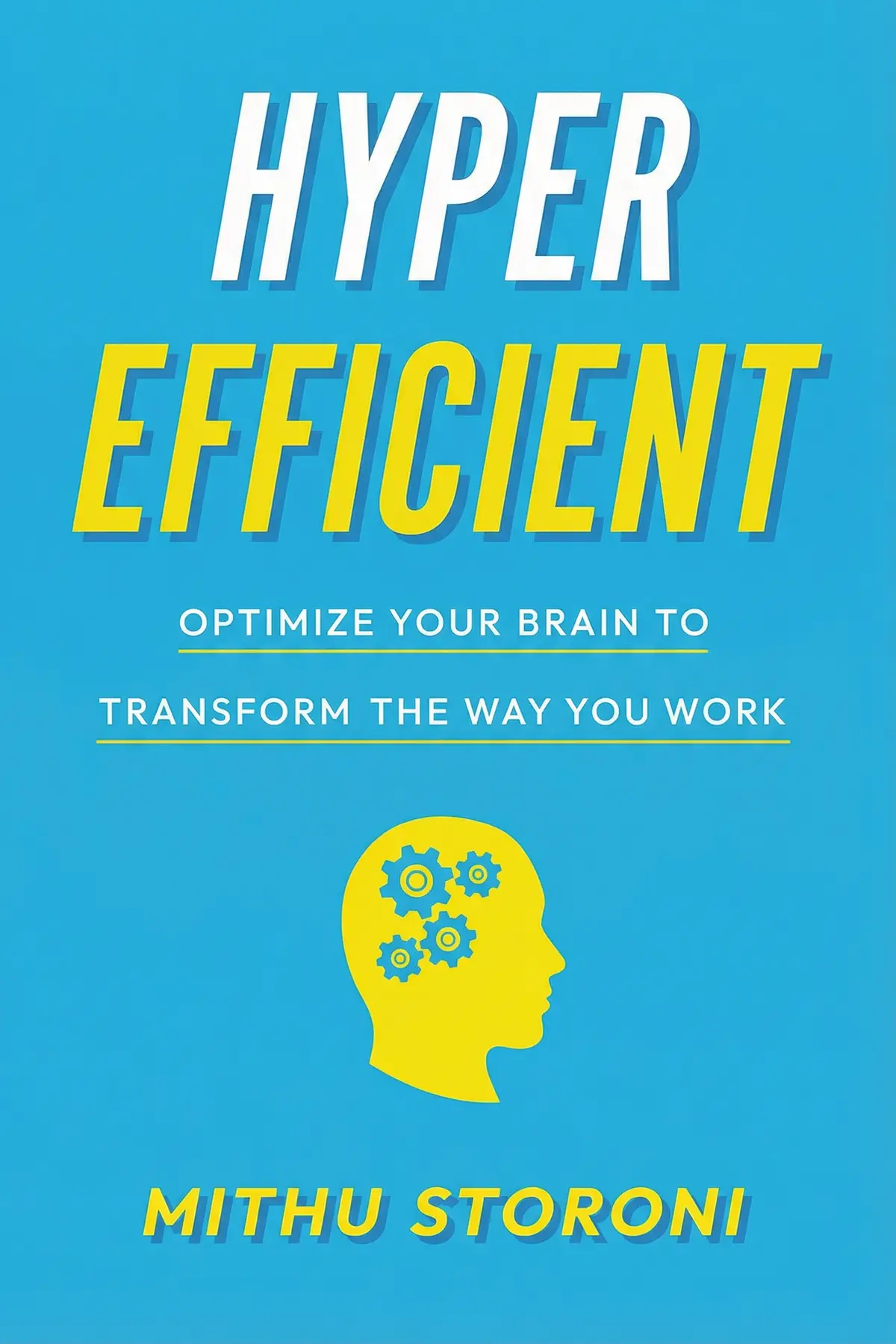
Table of Content
1. Introduction
1 min 59 sec
We have all experienced that moment in the mid-afternoon where the mental fog sets in. You might be staring at a spreadsheet or a blank document, and despite your best efforts to push through, your brain simply refuses to cooperate. You might reach for a third cup of coffee or try to force yourself to focus for just one more hour, but the returns are diminishing. This frustration isn’t a personal failing; it is a biological signal.
The problem lies in a fundamental mismatch between how we think we should work and how our brains actually function. We are currently living in a knowledge economy, yet we are still using productivity models designed for the industrial age. Back then, efficiency was about how many widgets you could produce in an hour on a factory line. Today, efficiency is about the quality of your decisions, the depth of your focus, and the novelty of your ideas. You cannot force a breakthrough the same way you can force a physical task.
In this exploration of Mithu Storoni’s work, we are going to look at the science of cognitive performance. We will move away from the idea that we should be constantly busy and toward a more sophisticated understanding of mental energy. You will discover that the brain has different operational modes, or gears, and that the secret to being truly efficient isn’t about working more hours—it’s about matching the right task to the right mental state. We will explore how our ancestors’ habits still influence our cognitive capacity today and how you can design a workday that respects your biological limits while expanding your intellectual horizons. Let’s dive into how you can become truly hyperefficient by working with your brain instead of against it.
2. The Power Law of Productivity
2 min 53 sec
Discover why the secret to modern high performance actually lies in the survival strategies of our ancient hunter-gatherer ancestors and their rhythmic approach to work.
3. Navigating the Three Mental Gears
3 min 00 sec
Your brain doesn’t just have one speed. Learn how to identify and switch between the three primary states of cognitive operation to match your work to your mind.
4. Understanding Your Cognitive Personality
3 min 03 sec
Are your mental gears ‘springy’ or ‘stiff’? Discover how your unique neurological makeup dictates the ideal environment for your peak performance.
5. The Strategic Art of Taking Breaks
2 min 56 sec
Not all rest is created equal. Learn why the timing and nature of your breaks are just as important as the work itself for maintaining high-level focus.
6. Cultivating the Creative Mindset
3 min 08 sec
Creativity isn’t a gift for the few; it’s a cognitive state that can be engineered by learning how to expand and contract your field of focus.
7. Conclusion
1 min 48 sec
The path to becoming truly hyperefficient isn’t about discovering a new app or a better calendar system. It is about a fundamental shift in how you relate to your own biology. We have seen that our brains are not designed for the constant, flat-line effort that modern work life often demands. Instead, we thrive when we respect the power law of rhythm—alternating intense, focused efforts with genuine, restorative rest.
By identifying your mental gears and understanding your specific gear personality, you gain the power to navigate your workday with intention. You can stop fighting against the moments of Gear 1 daydreaming and start using them as the creative fuel they are. You can recognize when you are slipping into the frantic, error-prone state of Gear 3 and use strategic breaks to bring yourself back to the productive focus of Gear 2.
True productivity is not about how many hours you sit at your desk. It is about the quality of the energy you bring to those hours. As you move forward, try to listen more closely to your brain’s signals. When focus feels effortless, lean in. When your mind begins to wander, don’t punish yourself—instead, take it as a sign that it’s time to shift gears. By aligning your work habits with your neurological design, you won’t just get more done; you will do better work, find more creative solutions, and protect your mental well-being for the long haul. The goal isn’t just to be more efficient; it’s to be sustainably, brilliantly hyperefficient.
About this book
What is this book about?
The modern workplace often treats the human brain like an industrial machine, expecting constant, linear output. However, our biology doesn't work that way. Hyperefficient examines the neuroscientific foundations of productivity to show that true efficiency comes from working with our internal rhythms rather than against them. This summary provides a roadmap for optimizing cognitive performance. It explains the concept of different mental gears—from deep focus to creative rest—and how to navigate between them. By learning how to time your most difficult tasks and when to take restorative breaks, you can transform your work life into a sustainable, high-performance journey that prioritizes mental well-being alongside professional success.
Book Information
About the Author
Mithu Storoni
Mithu Storoni is a University of Cambridge-trained physician, neuroscience researcher, and ophthalmic surgeon. Her expertise in neuroscience and real-world applications of cognitive research have positioned her as a thought leader in optimizing workplace efficiency and health.
Ratings & Reviews
Ratings at a glance
What people think
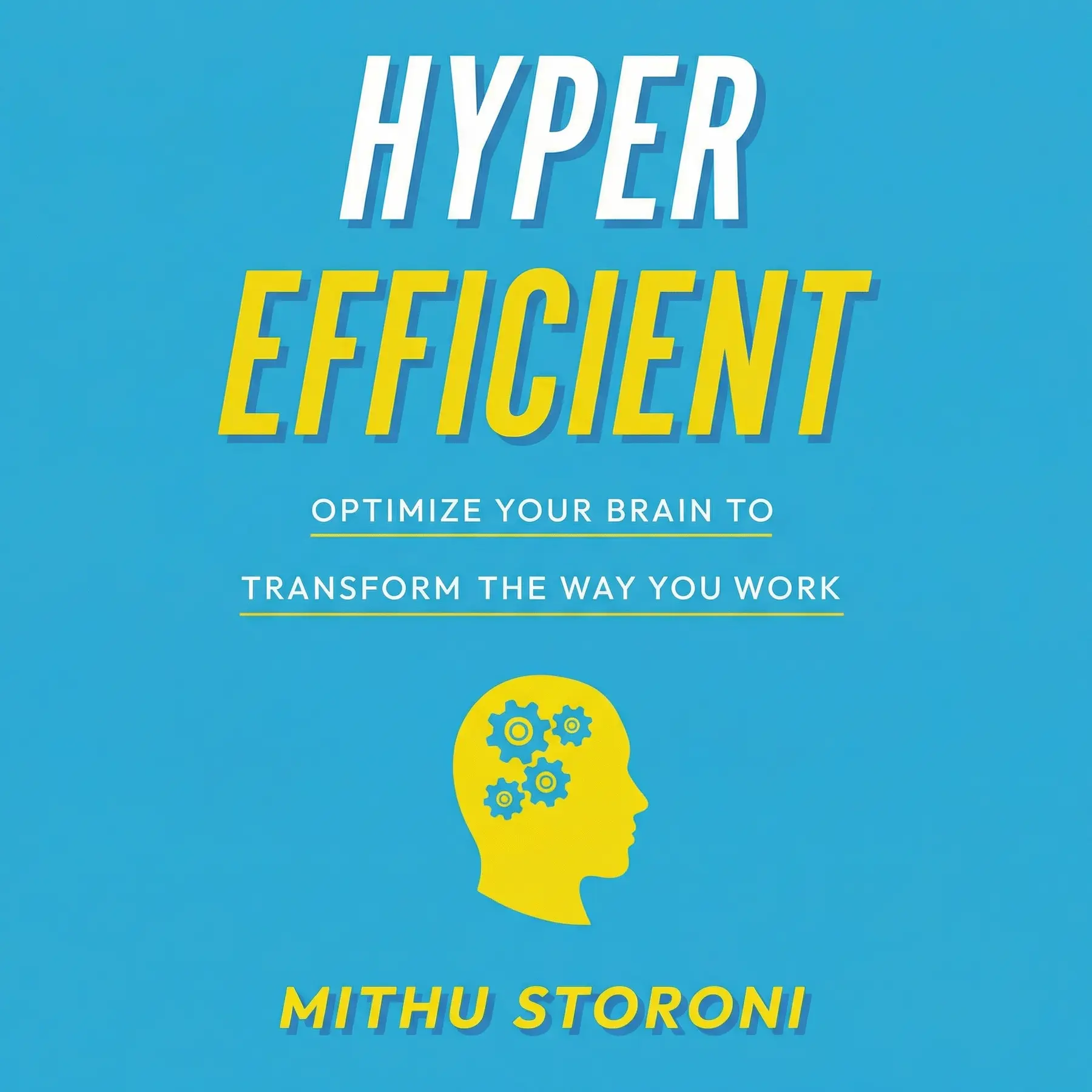
Listeners find that while some feel the content relies too heavily on technical jargon, many value its distinctive biological strategy for enhancing productivity and focus. Listeners prize the "cognitive gears" framework and work-rest intervals designed to sync tasks with the brain's natural cycles, with one listener mentioning the book’s neurodivergent-affirming perspective for those with ADHD. Additionally, they appreciate the practical guidance on regulating mental energy, with one listener emphasizing the success of the 90-minute focused work blocks. Furthermore, they note that identifying one’s "gear personality" helps in customizing a work setting that optimizes results while protecting against burnout.
Top reviews
Gung
Finally, a productivity book that actually understands neurodivergence and doesn't just preach the 'hustle harder' mantra. As someone with ADHD, Storoni’s explanation of 'springy gears' versus 'stiff gears' was a total revelation for my self-image. Most advice assumes we all have the same engine, but this book respects our biological differences and provides a roadmap for managing them. I’ve started implementing the 90-minute high-focus Gear 2 sessions followed by intentional Gear 1 breaks, and the difference in my mental fatigue is night and day. It’s inclusive, scientifically grounded, and moves away from the toxic industrial-era expectation of constant, linear output. This isn't just about doing more; it is about working in harmony with your own brain chemistry. Truly a breath of fresh air for anyone who feels broken by traditional corporate schedules.
Show morePaiboon
Wow, this was a surprisingly deep dive into the mechanics of the human brain that actually changed my daily routine. I’ve been following the 10/13 business book recommendations, and this one stands head and shoulders above the rest of the recent productivity releases. The concept of 'gear personality' helped me realize why I thrive in high-pressure environments while my colleagues seem to crumble. Understanding that I have 'stiff gears' allowed me to stop fighting my nature and start engineering my environment for better stimulation. Storoni manages to bridge the gap between complex neuroscience and daily professional life with remarkable ease. It’s not just another book about time management; it is a manual for cognitive energy management. I’ve already recommended this to my entire management team to help them understand employee burnout better.
Show moreUbolwan
As someone who works in a high-stakes environment, the breakdown of Gear 3 was incredibly validating for my daily experience. This book moves beyond the simplistic 'work-rest' binary and offers a nuanced look at how different mental states serve different purposes. I loved the exploration of how Darwin and Einstein used rhythmic bursts of activity rather than the continuous labor we expect today. The idea that we need to actively relax our minds to transition out of high-energy focus is something I had never considered. Since reading, I’ve been much more intentional about my 90-minute blocks and the specific types of breaks I take. It has completely transformed the way I approach my to-do list and manage my team's expectations. This is essential reading for knowledge workers who want to thrive without burning out their brains.
Show moreWit
The biological approach here is what sets it apart from your typical hustle-culture manual found in the airport bookstore. Instead of just telling you to wake up at 5 AM, Storoni explains how to sync your hardest tasks with your brain’s natural high-energy states. I found the section on Gear 3—that rapid, reflexive mode for urgent tasks—to be particularly insightful for my high-stress job. The book challenges the outdated idea that we should be equally productive every hour of the eight-hour workday. My only gripe is that some of the academic studies felt a bit repetitive by the halfway mark. Still, the framework for alternating between tranquil and high-energy states has significantly improved my creative output this month. It’s a thoughtful, well-researched guide for any serious knowledge worker.
Show moreHazel
Ever wonder why some days you’re a machine and others you’re a vegetable? This book explains that phenomenon through the lens of cognitive gears and it is actually quite fascinating. I particularly enjoyed the distinction between Gear 1 and Gear 2, especially regarding how to use 'boredom' to fuel lateral thinking. While the prose can be a bit academic at times, the underlying message about protecting our mental energy is vital for the modern age. I’ve started timing my breaks to hit that 15-to-25-minute sweet spot, and I’m noticing I don't feel as 'wired' at the end of the day. It’s a very practical guide once you peel back some of the heavier scientific terminology. It certainly gave me a lot to think about regarding my own work-rest rhythms.
Show moreAey
Picked this up on a whim and the concept of 'stiff gears' vs 'springy gears' changed how I view my office setup. Personally, I’ve always felt guilty for needing a little bit of chaos to get started, but now I know I just have a specific cognitive style. The book provides a great framework for understanding why we can't maintain peak Gear 2 focus for eight hours straight. I appreciate how the author integrates the power law of work-rest cycles into a modern professional context. Some of the research felt a bit dense, and the tone is definitely more 'textbook' than 'self-help,' which might put some people off. However, the advice on using light movement or reading to shift back to Gear 1 is incredibly effective. It’s a solid 4-star read for anyone interested in the science of performance.
Show moreBenjamin
After hearing the buzz about Mithu Storoni, I dove in with high hopes for a total life overhaul. Look, the core concepts like the power law of work-rest cycles are definitely solid and backed by interesting research. However, the writing style is quite dense, and the constant labeling of mental states as different 'gears' became more confusing than helpful after a while. I appreciated the insight into how our ancestors worked in bursts, but I wanted more practical applications for a modern office setting. To be fair, the book is brilliant at explaining the 'why' behind our cognitive limitations, yet it falls a bit short on the 'how.' It’s a decent read if you love neuroscience, but it might feel like a slog if you’re just looking for quick hacks.
Show moreSurasit
In my experience, books that try to reinvent productivity usually end up just giving new names to old ideas. Storoni does a bit of that here with the gear system, but the neurobiological focus adds a layer of depth that's missing elsewhere. The middle section about evolutionary patterns dragged on a bit too long for my taste, almost losing me entirely. But I stuck with it, and the final chapters on tailoring your workspace to your gear personality were quite valuable. It’s a mixed bag—partly groundbreaking science and partly a repetitive academic lecture. If you are a fan of 'Deep Work,' you will find some overlap here, but with more emphasis on brain chemicals. Not a total game-changer, but definitely worth a skim for the specific actionable insights on focus.
Show moreMonthon
Not what I expected when I picked this up to fix my workflow. Truth is, a lot of the 'Hyperefficient' framework feels like repackaged common sense hidden under a thick layer of scientific jargon. Do we really need to call a resting state 'Gear 1' to understand that taking a walk helps the brain reset? I found the examples regarding Chinese companies monitoring employee brain waves to be more than a little disturbing rather than inspiring. While the biological perspective on why we burn out is interesting, the actual 'how-to' advice is buried under pages of historical anecdotes about hunter-gatherers. It’s a very dry read that struggles to maintain a cohesive narrative throughout the chapters. If you have read any modern productivity book, you have likely heard the advice about 90-minute blocks before.
Show moreAstrid
I’ll be blunt: this could have been a three-page PDF or a decent LinkedIn post. The author spends an enormous amount of time on the history of hunter-gatherer societies to justify very basic productivity tips. We all know that breaks are good and that constant distractions make it hard to focus on complex tasks. The 'gears' jargon felt like an unnecessary attempt to make common sense sound like a proprietary system. Frankly, I found the book incredibly dry and had to force myself to finish it just to see if it got better. It didn't. There are much better books on deep work and focus that don't rely on such horrific examples of employee monitoring. Save your time and just look up a summary of the 90-minute work cycle instead.
Show moreReaders also enjoyed
AUDIO SUMMARY AVAILABLE
Listen to Hyperefficient in 15 minutes
Get the key ideas from Hyperefficient by Mithu Storoni, plus 5,000+ more titles in English and Thai.
- 5,000+ titles
- Listen as much as you want
- 7-day free trial
- Cancel anytime







