
A River in Darkness: One Man’s Escape from North Korea
Masaji Ishikawa
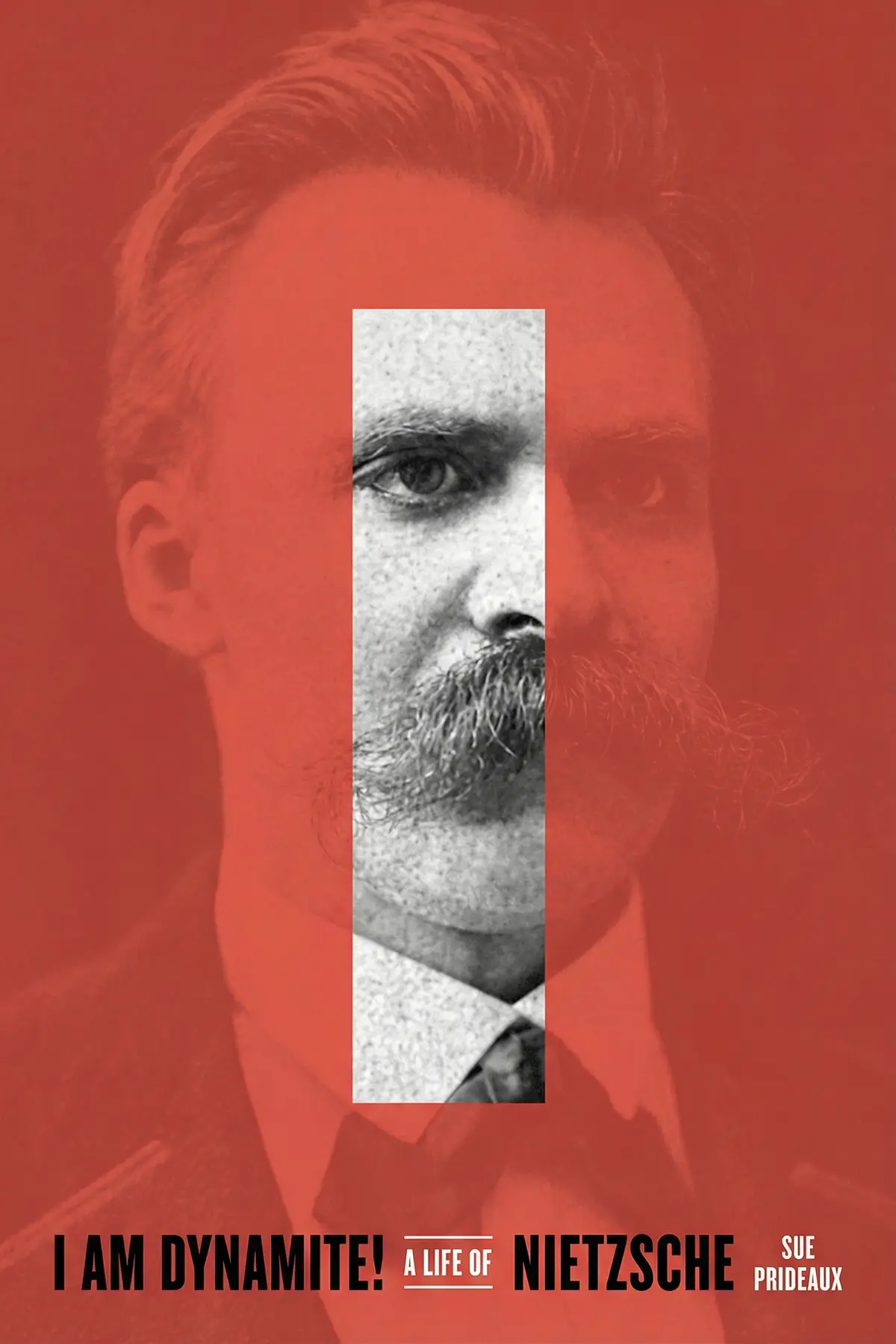
Uncover the tumultuous life of Friedrich Nietzsche, from his meteoric academic rise and intense friendship with Richard Wagner to his tragic mental collapse and the posthumous manipulation of his revolutionary philosophy.
1 min 32 sec
Friedrich Nietzsche once famously claimed that he was not a man, but dynamite. It was a bold, perhaps prophetic statement from a figure who spent much of his life in quiet, sickly obscurity, yet whose ideas would eventually explode across the landscape of twentieth-century thought. To understand the explosive power of his work, we have to look past the mustache and the fierce reputation to find the person underneath: a man of immense sensitivity, devastating loneliness, and profound physical suffering.
This is the story of a life that was as dramatic as the philosophy it produced. It begins with a young academic wunderkind who seemed destined for a traditional career, only to see him break every mold and alienate almost everyone he loved. We follow him through the idyllic landscapes of Switzerland and the lonely hotel rooms of Italy, watching as he grapples with the decline of old certainties and the birth of a terrifying new world.
Throughout this journey, we’ll see how Nietzsche’s most famous concepts—the death of God, the Superman, and the will to power—weren’t just abstract ideas, but were forged in the fires of his personal experiences. We will also confront the tragic reality of his final years, during which his legacy was seized and distorted by those who sought to use his name for their own dark purposes. By the end, we’ll see why Nietzsche remains one of the most misunderstood and essential figures in the history of human thought, and how his life was a testament to the cost of thinking truly for oneself.
2 min 29 sec
Witness the rapid rise of a brilliant young scholar whose career was fueled by intense intellect and a childhood marked by both family tragedy and early academic excellence.
2 min 28 sec
Step into the lush world of Lake Lucerne, where a young professor found a second family and the inspiration for his first, world-shaking philosophical work.
2 min 32 sec
Follow Nietzsche’s transition from an established academic to a solitary wanderer, a change that sparked a radical new style of philosophical exploration.
2 min 15 sec
Explore a rare and volatile moment of romantic and intellectual passion that ultimately left Nietzsche broken-hearted but philosophically ignited.
2 min 32 sec
Delve into the core of Nietzsche’s most famous and challenging ideas, where he declared the end of an era and the arrival of a new human ideal.
2 min 39 sec
Uncover Nietzsche’s boldest attacks on traditional ethics, where he questioned the very concepts of good and evil to find a more honest way of living.
2 min 22 sec
Observe the final, frantic year of Nietzsche’s creative life, where brilliant insight and growing delusions collided before a tragic collapse.
2 min 24 sec
See how Nietzsche’s powerful ideas were curated and twisted by his sister, creating a version of his philosophy that he would have likely detested.
1 min 55 sec
The life of Friedrich Nietzsche is a haunting reminder of the cost of genius. He was a man who lived at the extremes of human experience, from the heights of intellectual ecstasy at Lake Lucerne to the depths of physical pain and mental isolation. He saw himself as a pioneer, an explorer of the human condition who was willing to venture into the dark places where others feared to tread. And while his life ended in a decade of tragic silence, the echoes of his ‘hammer’ continue to resonate through our culture today.
His story teaches us that true independence of thought is a lonely and often dangerous path. Nietzsche stood against the grain of his time, challenging the very foundations of how we understand right and wrong, meaning and purpose. He didn’t offer easy answers; instead, he demanded that we take responsibility for our own values and that we have the courage to create meaning in a world that often seems devoid of it.
As we reflect on his journey, we must also remember the caution he offered. He knew that his ideas were like dynamite—capable of clearing away old obstacles, but also capable of causing immense destruction if handled by the wrong hands. The manipulation of his legacy by his sister is a sober warning about how easily the truth can be warped. But if we return to his actual words, we find a philosopher who, despite all his suffering, remained passionately in love with life. He reminds us that even in the face of the void, we have the power to live boldly, to think deeply, and to say ‘yes’ to existence. Nietzsche’s life was an explosion that changed the world, and the task of understanding its aftermath is a challenge that each generation must take up for itself.
This biography explores the existence of one of history's most provocative thinkers, Friedrich Nietzsche. It traces his journey from a precocious young professor in Basel to a nomadic, solitary figure wandering the Alps and Italian coastlines. The narrative examines his complex relationships, most notably with the composer Richard Wagner and the intellectual Lou Salomé, and shows how these personal triumphs and betrayals shaped his most famous works. The book also clarifies the core tenets of Nietzsche's philosophy, including the death of God, the arrival of the Superman, and the will to power. Crucially, it addresses how his ideas were later distorted by his sister, Elisabeth, to serve nationalist and anti-Semitic agendas. By peeling back the layers of myth and propaganda, this account reveals the sensitive, suffering, and brilliant man behind the explosive philosophical hammer.
Sue Prideaux is an acclaimed biographer known for her deep dives into the lives of influential cultural figures. In addition to her work on Friedrich Nietzsche, she has authored award-winning biographies of the painter Edvard Munch and the playwright August Strindberg. Her books are celebrated for their meticulous research and narrative storytelling.
Listeners find this biography to be a superb resource for grasping Nietzsche’s life, with one person highlighting how it dispels common misconceptions about the philosopher. Additionally, the work is celebrated for its spirited writing and rich level of detail. Nonetheless, views on its clarity are split; while some describe it as eminently readable, others report that it is not easy to follow.
Sue Prideaux has a remarkable gift for transforming dense historical figures into breathing humans. This biography completely dismantles the common fallacies portraying Nietzsche as a proto-Nazi or a raving, incoherent monster. Instead, we see a lonely man struggling with "softening of the brain" and a family that largely betrayed his legacy for their own gain. I was particularly struck by the descriptions of his physical agony; it's horrifying to read about the nitrate of silver and corrosive clismas he endured. Prideaux writes with a vibrant prose that prevents the tragedy from feeling purely oppressive. If you’ve only ever seen the fierce stare in those famous photographs, this book provides the necessary context to understand the vulnerability behind the philosopher's mask. It is an essential tool for grasping the genuine Zarathustra.
Show moreWow, this was a punch to the gut. I was familiar with the philosophy, but I had no idea how much his sister, Elisabeth, actively poisoned his reputation while he was incapacitated. Prideaux doesn’t hold back when describing how Elisabeth turned her brother into a "ghostly exhibit" for her own social climbing. To be fair, I expected a dry academic text, but this reads more like a tragic novel with a very dark ending. The meticulous research into his final years in the asylum at Jena is both haunting and necessary. It’s infuriating to see how his work was twisted by the very nationalism he despised. Every student of philosophy needs to read this to understand the human cost of being misunderstood by posterity.
Show moreAs someone who has always been intimidated by Nietzsche, I found this biography to be a perfect entry point. Prideaux writes with a dry, often openly comic style that makes the philosopher feel approachable and even relatable. She captures the "Amor fati" spirit perfectly—the idea of finding joy in the face of inevitable suffering. The book excels at showing the disconnect between his "master morality" and his actual, gentle demeanor in real life. He wasn't a monster; he was a man who loved intelligent women and suffered from crushing migraines. The chapter on his mental collapse in Turin is written with such grace that it’s impossible not to feel for him. Truly a phenomenal piece of biographical writing that balances the intellectual and the personal with ease.
Show moreThe chapter on Nietzsche's time as a young professor in Basel is worth the price of admission alone. Imagine being a genius at 24 but already sensing the "softening of the brain" that claimed your father. This dread permeates the entire narrative, giving his quest for "emancipatory insanity" a tragic urgency. Prideaux’s ability to link his physical symptoms to his creative outbursts is impressive and makes his writing feel more grounded. I also appreciated the deep dive into his relationship with Cosima Wagner, which adds a layer of erotic tension rarely discussed in philosophy classes. This is a big, ambitious book that somehow manages to stay intimate. It’s easily one of the best biographies I’ve read in years. I couldn't put it down.
Show moreFinally, a biography that treats Nietzsche as a human being rather than a saint or a martyred symbol. Prideaux captures the tragic irony of his life: a man who preached the "Übermensch" but was often too sick to leave his bed. The way she handles the "Raskolnikov effect" among the younger generation of his time was fascinating context for his sudden fame. It’s a devastating read in many ways, especially once Elisabeth takes control of the archive. You see the slow-motion train wreck of his legacy being hijacked by the very people he would have hated most. The prose is sharp, the research is exhaustive, and the emotional impact is lasting. This is how all biographies should be written—with a mix of skepticism and deep empathy.
Show moreEver wonder what was going on in the head of the man who declared God dead? This book dives deep into the intellectual firestorm of Friedrich’s life, particularly his intense and ultimately doomed friendship with Richard Wagner. The granular level of detail regarding their fallout—including those nasty rumors Wagner spread about his health—was incredibly eye-opening. While the writing is undeniably energetic, I must admit the pacing felt a bit uneven in the middle sections. Sometimes the sheer volume of names and obscure German intellectuals made it a challenging chronology to follow. Nevertheless, the way Prideaux handles his relationship with Lou Salomé is masterful and deeply empathetic. It paints a portrait of a man who was desperately seeking connection but was perhaps too "dynamite" for his own social circles. It’s a strong 4-star read for me.
Show morePicked this up on a whim after hearing it was the definitive life of Nietzsche, and it mostly lives up to the hype. The author does a fantastic job explaining why he chose Zarathustra as his prophet, linking it back to the Persian idea of the conflict between light and dark. It really helped clarify the origins of his post-Basel independent thinking. My only gripe is that the book assumes a bit too much prior knowledge of 19th-century German politics at times. Personally, I found some of the sections on the Franco-Prussian war a bit dense to wade through. However, the anecdotes about his statelessness and his love for Italy bring a lighter, much-needed dimension to his character. It’s a meticulously crafted biography that rewards patient readers.
Show moreAfter hearing so many misconceptions about the "will to power," I’m glad I finally read this. It clears up the mess his sister made and puts his work back into its proper, anti-nationalist context. The book is quite long and the print is small, so it’s not exactly a light beach read. However, the vivid descriptions of Sils-Maria and the Engadine mountains make you want to go there yourself. Frankly, the medical history alone is worth it for the insight into how primitive 19th-century medicine actually was. The fact that he could write anything at all while being treated with mercury and opium is a testament to his sheer willpower. It’s a 4-star book because while it’s dense, it’s also undeniably rewarding.
Show moreLook, I really wanted to love this given the rave reviews, but I struggled with the structure. The author is clearly an expert, and the book is an excellent source for understanding the man's daily life, yet the readability is hit-or-miss. One moment you're reading a lively account of his travels in Switzerland, and the next you're lost in a dense historical thicket of minor characters. I felt like the philosophical analysis was sometimes sacrificed for the sake of biographical trivia. That said, the way she debunks the Nazi associations is brilliant and long overdue. It’s a decent enough reference, but maybe not the best choice if you're looking for a quick or easy-to-follow introduction to his actual ideas.
Show moreIn my experience, biographies of this length often struggle to maintain momentum, and this one is no exception. While the content is undeniably detailed and the research is top-notch, it occasionally feels like a slog through every single letter he ever wrote. I appreciate the effort to break down myths about his supposed antisemitism—which he clearly loathed—but the middle chapters on his various Alpine hikes became repetitive. It’s a very scholarly work, which is great for specialists, but the average reader might find it hard to follow the threads of his shifting relationships. If you want a deep dive into the 19th-century European zeitgeist, you'll love it. If you want a concise summary of Nietzsche, you might find yourself skimming.
Show moreMasaji Ishikawa
Ben Macintyre
William B. Irvine
James Shapiro
Nigel Warburton

John Rawls
AUDIO SUMMARY AVAILABLE
Get the key ideas from I Am Dynamite! by Sue Prideaux, plus 5,000+ more titles in English and Thai.







