
16 min 02 sec
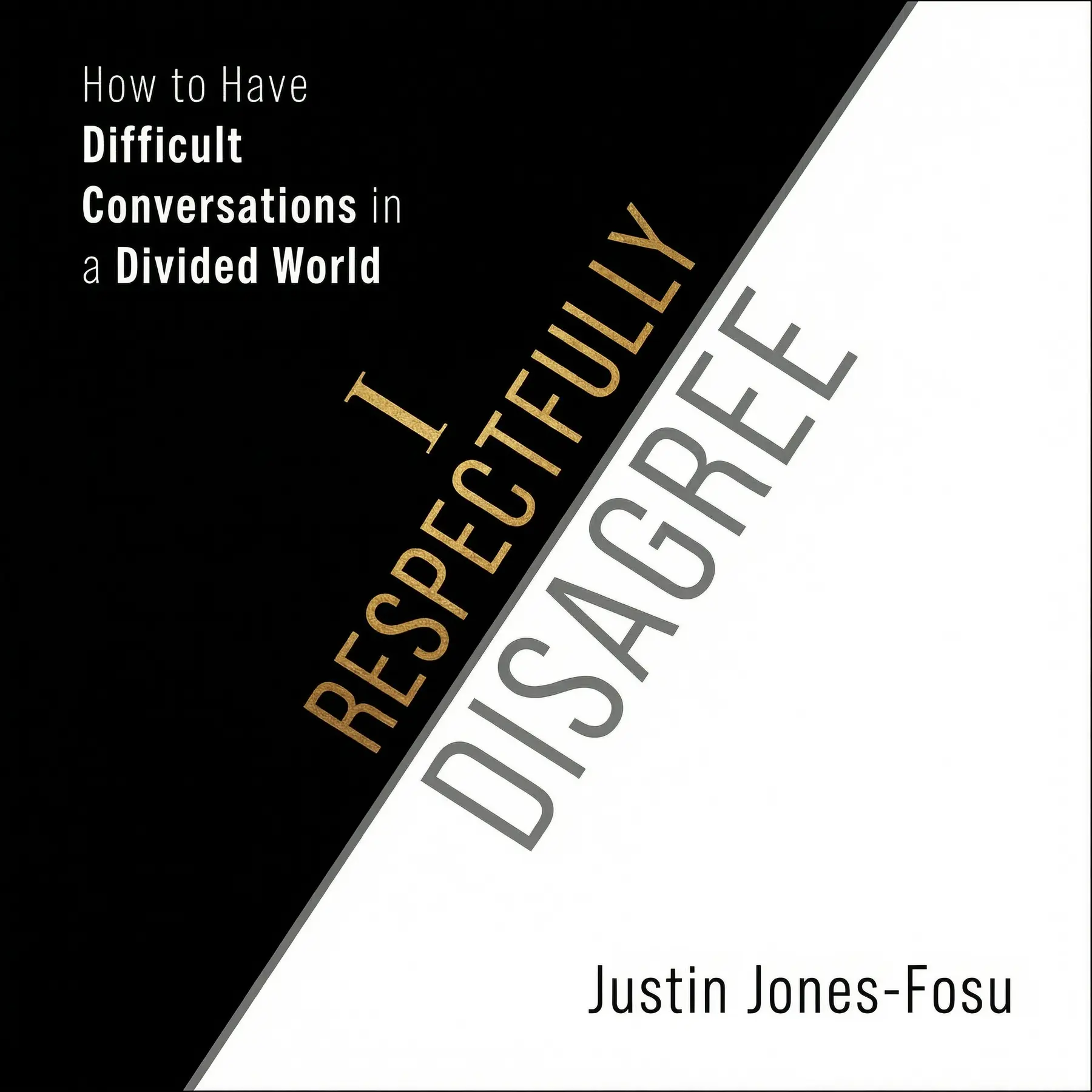
I Respectfully Disagree: How to Have Difficult Conversations in a Divided World
Learn to navigate today’s polarized environment with a framework for respectful conflict. This summary explores five key pillars for turning disagreements into opportunities for connection and mutual growth.
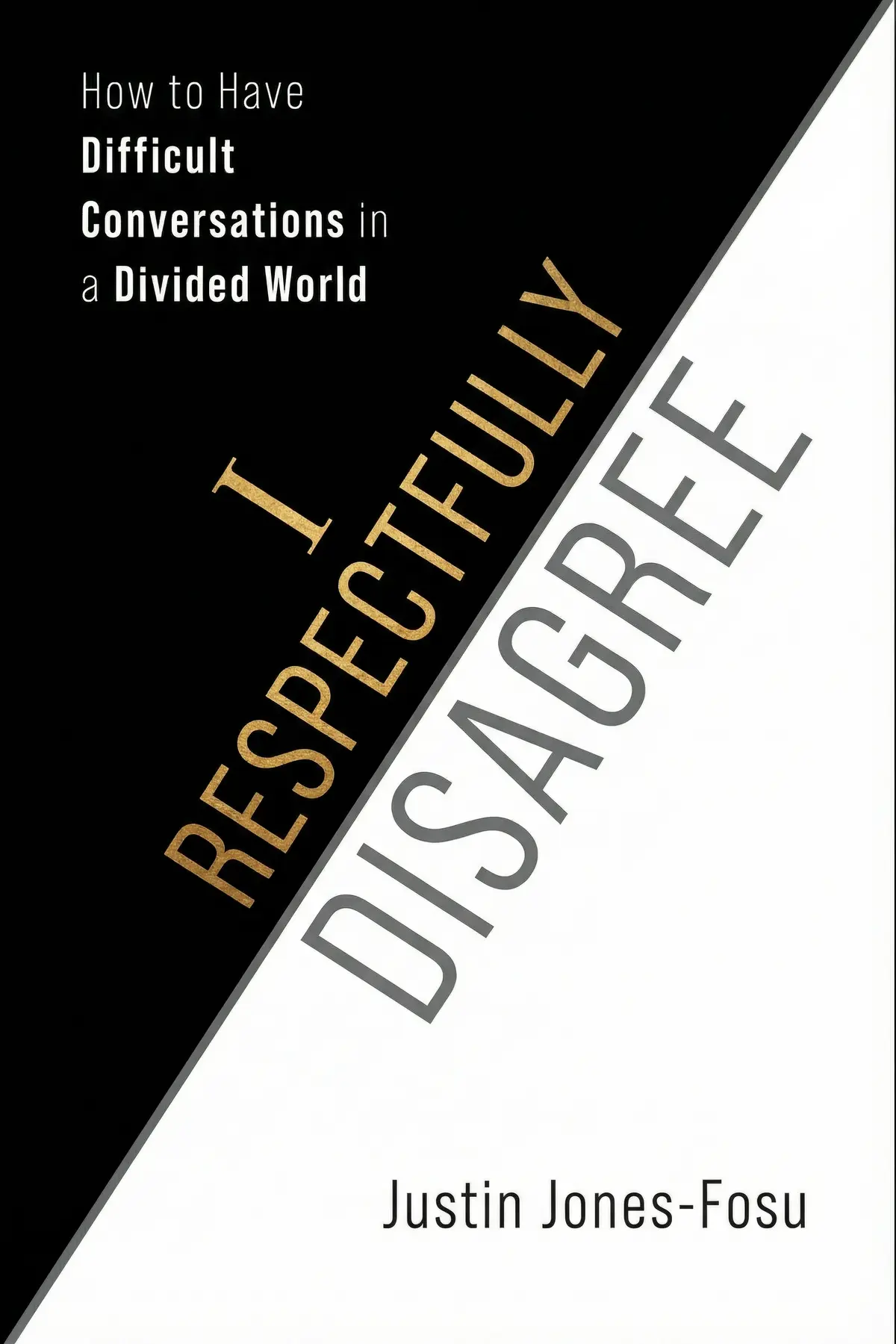
Table of Content
1. Introduction
1 min 50 sec
In the modern landscape, it often feels as though the ground beneath us is shifting, pushing us further away from our neighbors, colleagues, and even our friends. There is an undeniable sense of polarization that permeates our social and political discourse. When we look at the data, the reality is quite stark. Research from the Pew Research Center highlights a troubling trend: many people today view those who hold opposing political beliefs through an extremely negative lens. We don’t just disagree anymore; we categorize the ‘other side’ as being inherently lazy, lacking in morals, or stubbornly closed-minded. This isn’t just a local phenomenon or a quirk of a specific political cycle; it’s a global trend that is tearing at the fabric of our communities and impacting millions of lives.
But here is the central question: Does a difference of opinion have to result in a breakdown of human connection? Does a conflict of ideas inevitably lead to the end of a relationship? Justin Jones-Fosu suggests that it doesn’t have to be this way. The goal isn’t to eliminate disagreement—after all, a world where everyone thinks exactly the same would be stagnant—but to change how we respond when those disagreements arise. The throughline of this exploration is the concept of responding to conflict with deep-seated respect.
In the journey ahead, we are going to look at how we can stop fearing disagreements and start seeing them as opportunities. We’ll move past the simplistic and often ineffective strategies we’ve relied on for years and instead embrace a more nuanced, empathetic approach. The aim is to move from a place of division to a place of constructive dialogue. By the time we’re done, you’ll see that it is entirely possible to stand firm in your beliefs while simultaneously honoring the dignity and humanity of the person standing across from you. It’s about building bridges in a world that seems intent on building walls.
2. The Limitation of Agreeing to Disagree
2 min 28 sec
Explore why the common escape hatch of “agreeing to disagree” often fails to build real understanding and why a new model of “Golden Respect” is required.
3. Understanding the Roots of Conflict
2 min 31 sec
Discover how your personal history and psychological biases, known as Life Disagreement Markers, shape how you handle every argument you face today.
4. Challenging Your Perspective Through Cognitive Reframing
2 min 20 sec
Learn how to break out of your intellectual bubble by using cognitive reframing to rethink your assumptions about those you disagree with.
5. The Student Mindset and the Power of Curiosity
2 min 26 sec
Moving from a ‘teacher’ to a ‘student’ can save your relationships. See how listening for comprehension transforms heated debates into learning sessions.
6. Seeking the Gray and Practicing Respectful Inquiry
2 min 44 sec
Life isn’t black and white. Discover why embracing nuance and changing the way you ask questions is the final step in mastering difficult conversations.
7. Conclusion
1 min 43 sec
As we wrap up our look at the principles found in Justin Jones-Fosu’s work, it is clear that the path to a less divided world doesn’t require us to give up our deeply held beliefs. It doesn’t ask us to pretend that differences don’t exist or to use the phrase “agree to disagree” as a way to escape uncomfortable truths. Instead, it calls us to a higher standard of engagement. It asks us to adopt the five pillars as a framework for our lives.
First, we must challenge our own perspectives, using cognitive reframing to see the human being behind the opinion. Second, we must adopt the student’s mindset, listening to comprehend rather than to counter. Third, we must lead with curiosity, using the phrase “tell me more” to unlock the stories of others. Fourth, we must seek the gray, rejecting the binary traps of our modern age in favor of nuance and collaboration. And finally, we must agree to respect, treating this respect as a gift we give freely because of our shared humanity.
Think of these pillars as the foundation of a bridge. They require effort to build and constant maintenance to stay strong, but the result is a connection that can span even the widest ideological gaps. The next time you find yourself in a heated discussion or facing a viewpoint that feels alien to you, remember the drum circle. Seek harmony, choose your words with care, and remember that every person you meet is a teacher if you are willing to be a student. By transforming our disagreements into opportunities for growth, we can move through this divided world with grace, empathy, and an unshakable respect for one another. That is the true power of a respectful disagreement.
About this book
What is this book about?
We live in an era defined by deep divides, where political and social differences often lead to dehumanization and broken relationships. This book offers a way out of the deadlock. It provides a practical, five-pillar model designed to help individuals engage in difficult conversations without sacrificing their values or their relationships. The core promise is that by shifting our mindset from competition to collaboration, we can transform conflict into a bridge rather than a barrier. You will discover why the common phrase “agree to disagree” is often a conversational dead end and how to replace it with a more active, respectful approach. The summary covers the psychological markers that influence how we argue, the importance of maintaining a student’s mindset, and the power of seeking complexity in a world that often demands simple binary choices. By the end, readers will have the tools to foster empathy and open-mindedness, even when the stakes are high and the opinions are vastly different.
Book Information
About the Author
Justin Jones-Fosu
Justin Jones-Fosu is a renowned speaker, author, and entrepreneur who focuses on purposeful living and inclusive leadership. Drawing from a business and ethics background, he uses a blend of insight and humor to help people and organizations navigate diversity and create deep connections. His work is dedicated to challenging existing viewpoints, promoting empathy, and encouraging more respectful dialogue across all areas of life.
Ratings & Reviews
Ratings at a glance
What people think
Listeners find this work both enlightening and accessible, serving as a manual for handling conflict and building authentic relationships. Its hands-on methodology is well-regarded; one listener remarks that it supplies concrete tools for the everyday, while another notes the value of its five-pillar framework for challenging dialogues. The guide earns praise for its empathetic spirit and relatable anecdotes.
Top reviews
Vipawan
Picked this up because our social climate feels so toxic lately, and I was genuinely surprised by how much I needed the "Golden Respect" concept. Unlike the transactional respect we usually talk about, Jones-Fosu argues for a version that is rooted in our own internal convictions. It is an absolute game-changer for navigating holiday dinners or heated office meetings where you feel your patience thinning. To be fair, I was worried it would be another fluff-filled self-help book, but the five-pillar framework provides a solid backbone for the entire read. The stories about his own upbringing make the advice feel grounded rather than preachy. Truth is, we often treat disagreements like wars to be won, but this book shifts the goalpost toward understanding. It’s a timely and compassionate guide that I’ll be recommending to my entire team at work.
Show moreSupaporn
The chapter on “Golden Respect” completely changed my perspective on what it means to acknowledge someone's humanity during a fight. Jones-Fosu argues that respect shouldn't be something earned through good behavior, but rather a standard we hold ourselves to regardless of the other person's actions. This reframing is incredibly powerful because it puts the control back in your hands during a heated disagreement. I also loved the specific technique of saying "Thank you, because..." to show genuine appreciation for a different perspective. It’s a simple shift, but it has already made my conversations with my partner much more productive and less defensive. Not gonna lie, I teared up a bit reading some of the personal stories included here. This book is a rare blend of heart and practical strategy that is desperately needed in 2024. Highly recommended for everyone.
Show moreChanon
Finally got around to reading this, and the "Tortoise Principle" is exactly what my communication style needed to hear. In our world of instant gratification, we often expect our relationships to improve overnight after one conversation. This book reminds us that meaningful change is slow and requires constant, small adjustments over a long period. The writing style is very conversational and engaging, making it a quick read that stays with you long after you close the cover. I found the section on "disrespectful agreement" particularly convicting because I often choose silence just to keep the peace. Jones-Fosu explains why that's actually a cop-out that prevents true understanding from ever happening. It is a challenging book that pushes you to be more authentic while remaining deeply kind. Every family should have a copy of this on their shelf.
Show moreAhmed
Justin Jones-Fosu has written a guide that feels incredibly timely for our current polarized world. The way he breaks down complex interpersonal dynamics into the five-pillar framework makes the content very digestible for the average reader. Personally, I found the chapter on power dynamics and the story of Jonathan to be the most impactful section of the book. It serves as a stark reminder of how authority can accidentally stifle the very innovation it tries to foster by silencing dissent. While some of the advice feels a bit basic if you have already studied mediation, the author’s warm style carries the message forward effectively. The book focuses on actionable tools rather than just abstract theories, which I deeply appreciated. It’s a solid resource for anyone trying to bridge divides without losing their own sense of authenticity.
Show moreDimitri
Ever wonder why workplace disagreements feel like such a minefield these days? This book tackles that head-on by exploring how we can disagree respectfully without sacrificing our professional relationships or our personal values. The story of Jonathan, the leader who mistook dissent for a lack of respect, really resonated with my own experiences in corporate America. It highlights the dangerous ego traps that many of us fall into when we are in positions of power. Jones-Fosu’s five-pillar framework is easy to remember and even easier to apply to daily interactions. To be fair, some of the analogies are a bit cheesy, but the underlying message is too important to ignore. It’s an insightful read that provides tangible tools for making meaningful connections in a world that seems determined to keep us apart. Definitely worth the time.
Show moreMingkwan
To be fair, I went into this expecting a dry academic text, but I was pleasantly surprised by the warmth and compassion of the writing. The five-pillar framework is a great way to structure the messy reality of human disagreement into something manageable. I especially appreciated how the author used relatable anecdotes from his own life to illustrate how these principles work in practice. The focus on empathy and perspective-taking is central, but it’s backed up by actual tactics you can use in the moment. My only minor gripe is that some sections feel a little bit like they are repeating the same thesis in different words. However, the message is so vital for our current social climate that a little repetition might actually be necessary for it to sink in. It’s an excellent guide for navigating tough conversations with grace and confidence.
Show moreKavya
After hearing about the BIBA win, I decided to see if the advice actually held up in real-life scenarios. I’ve since tried the "Golden Respect" approach during a particularly tense meeting at work, and the results were actually quite impressive. By focusing on my own internal standards of respect, I stayed calm while others were losing their cool, which changed the entire energy of the room. The book is filled with these kinds of practical, tangible tools that you can start using almost immediately. I think the five pillars offer a great roadmap for anyone who feels overwhelmed by the polarization we see on the news every day. While the writing can be a bit repetitive in the middle chapters, the core message is incredibly valuable. It’s a heartfelt and actionable guide that helps us see disagreements as opportunities rather than barriers.
Show moreNarong
As someone who works in conflict resolution, I found most of these concepts to be fairly foundational and perhaps a bit overly simplified. That being said, the Tortoise Principle is a refreshing take on how we approach changing our long-term communication habits. It emphasizes that small, consistent efforts are far more valuable than trying to fix a relationship with one grand, sweeping gesture. The writing is accessible and the tone is very encouraging, which makes it a great entry point for people who find confrontation terrifying. I did feel that some of the anecdotes were a bit sanitized to fit the narrative, though they still served their purpose. It’s a decent 3.5-star book that offers a few tactical nuggets of wisdom even if the overall framework isn't revolutionary. It is probably best suited for those just starting their journey into better communication.
Show moreOn
Look, the intention behind this book is clearly noble, but the execution left me wanting much more from the author. I felt like I was reading a 200-page version of a concept that could have been summarized in a lengthy blog post or a single podcast episode. The central points are repeated constantly, which makes the middle section of the book feel like it's dragging through repetitive mud. Frankly, if you’ve read any basic books on active listening or empathy, you might find yourself skimming large portions of this text. While the "Golden Respect" idea is a nice sentiment, it doesn’t quite justify the repetitive nature of the chapters that follow. It isn't a horrible read, but it definitely feels like it was stretched thin to meet a specific word count for publication.
Show moreWittaya
Not what I expected based on the high praise I saw online. While the author seems like a wonderful and genuine person, the content of the book felt very surface-level to me. It felt like a collection of inspirational blog posts rather than a deep dive into the psychology of disagreement. Frankly, I was hoping for more rigorous strategies for dealing with truly difficult or toxic people, rather than just general advice on being nicer. The framework is okay, but it lacks the depth I was looking for in a professional development book. If you are already someone who values empathy, you probably won't find many new insights here. It’s a fine book for a beginner, but for me, it just felt repetitive and a bit too simplistic for the complexities of today's world.
Show moreReaders also enjoyed


AUDIO SUMMARY AVAILABLE
Listen to I Respectfully Disagree in 15 minutes
Get the key ideas from I Respectfully Disagree by Justin Jones-Fosu, plus 5,000+ more titles in English and Thai.
- 5,000+ titles
- Listen as much as you want
- 7-day free trial
- Cancel anytime







