
27 min 45 sec
Indistractable: How to Control Your Attention and Choose Your Life
By Nir Eyal
Discover how to reclaim your focus and master your attention. This guide explores the psychological roots of distraction and provides a practical framework for building a life aligned with your true values.
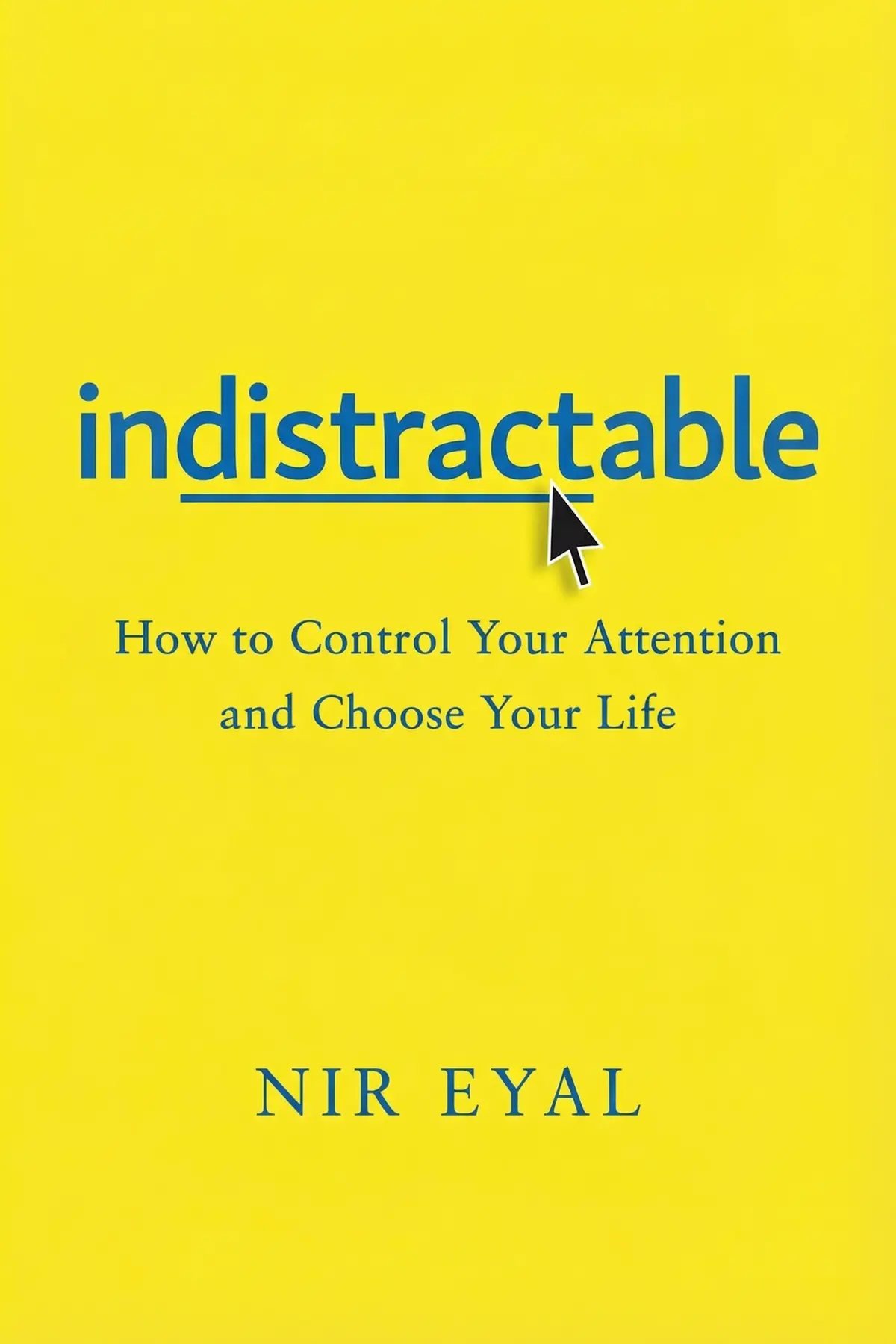
Table of Content
1. Introduction
2 min 18 sec
In our modern world, we often feel like we are constantly being pulled in a thousand different directions. We start the day with the best of intentions, planning to finish that important project, spend quality time with our family, or finally tackle that personal goal. Yet, by noon, we find ourselves mindlessly scrolling through social media or trapped in an endless loop of responding to non-urgent emails. We feel busy, but we don’t feel productive. We feel connected, but we don’t feel present. We often blame our smartphones, our bosses, or the fast-paced nature of the twenty-first century for this state of affairs. But what if the problem—and the solution—lies deeper than just the devices in our pockets?
This is the starting point for a journey into the concept of becoming indistractable. It is a word that describes a new kind of superpower: the ability to do what you say you will do. It is about closing the gap between your intentions and your actions. When we lose our focus, we aren’t just losing time; we are losing the ability to live the lives we want to lead. Whether you are an aspiring author trying to find time for your manuscript, a business leader aiming for deep strategic thinking, or a parent wanting to be truly there for your children, the ability to command your own attention is the foundation upon which everything else is built.
In the following sections, we are going to explore a comprehensive framework for regaining control. We will move past the surface-level complaints about technology and look at the evolutionary psychology that makes us prone to diversion. We will look at practical, actionable strategies to manage both the internal feelings that drive us away from our work and the external interruptions that break our concentration. From the way we organize our digital desktops to the way we communicate with our colleagues and our children, this is a roadmap for building a more intentional life. The goal isn’t just to be more productive at work; it is to ensure that you are the one choosing where your life goes, rather than letting your distractions choose for you. Let’s begin by looking at where distraction truly begins.
2. The Internal Roots of Distraction
3 min 02 sec
Think your phone is the only reason you can’t focus? Discover why the real source of distraction is actually an escape from internal discomfort.
3. Reimagining Your Internal Triggers
3 min 34 sec
Instead of fighting your feelings, learn to observe them like a scientist to neutralize their power over your attention.
4. The Power of Timeboxing Your Values
3 min 06 sec
Stop living by a to-do list and start living by a calendar. Learn how to turn your values into a concrete schedule.
5. Hacking Back External Triggers
2 min 57 sec
From office interruptions to the seductive pull of the inbox, learn practical ways to silence the world’s ‘pings’ and ‘dings.’
6. Streamlining Your Digital Life
2 min 37 sec
Turn your devices from masters into servants by decluttering your screens and using technology to block technology.
7. Using Pacts to Stay the Course
2 min 42 sec
When willpower fails, precommitments prevail. Discover the three types of pacts that can lock you into your best intentions.
8. Fixing the Distracted Workplace
2 min 17 sec
Is your office making you lose your mind? Explore how to foster a culture of focus by addressing psychological safety.
9. Raising Indistractable Children
2 min 44 sec
Instead of just banning screens, learn how to help your kids manage their own attention by fulfilling their core psychological needs.
10. Conclusion
2 min 28 sec
As we wrap up this exploration of focus and attention, it’s worth remembering that becoming indistractable is not a destination, but a continuous practice. It is a journey of self-discovery where you learn to navigate the complexities of your own mind and the demands of the modern world. We have seen that the path to focus starts by looking inward, acknowledging the uncomfortable feelings that drive us to seek diversion, and learning to sit with those feelings rather than fleeing from them. We have learned the importance of turning our values into a concrete schedule, hacking back the external cues that disrupt our flow, and using the power of precommitments to protect our future selves.
If there is one practical, immediate step you can take today, it is the ‘ten-minute rule.’ The next time you feel the overwhelming urge to check your phone or dive into a distracting website, tell yourself that you can—but not right now. Commit to waiting just ten minutes. During those ten minutes, you can either continue with your current task or simply sit with the urge and observe it. Very often, you will find that by the time the ten minutes are up, the ‘itch’ has passed, and you are back in the flow of your work. This simple technique builds the ‘focus muscle’ that will serve you for a lifetime.
In the end, the ability to control your attention is the ability to control your life. In a world that is constantly trying to sell you something, distract you with something, or outrage you with something, being indistractable is a quiet but powerful act of rebellion. It is the way you reclaim your time, your productivity, and your relationships. It is how you ensure that, when you look back on your life, you see a story that you wrote yourself, one intentional moment at a time. Now, take a breath, set your intentions, and go forth to choose your life.
About this book
What is this book about?
In an era of constant digital pings and overflowing inboxes, maintaining focus has become a rare and vital skill. This summary breaks down the core philosophy of Nir Eyal’s approach to becoming indistractable. It moves beyond the simple 'tech is bad' narrative, instead diving into the internal triggers—the uncomfortable emotional states—that drive us to seek diversion. The promise of this work is a comprehensive toolkit for personal and professional agency. You will learn how to schedule your time based on your values rather than your to-do list, how to hack back the external triggers that interrupt your flow, and how to use precommitments to stay on track. By understanding the intersection of psychology and technology, you can stop being a victim of your devices and start choosing your life.
Book Information
About the Author
Nir Eyal
Nir Eyal is a writer, consultant, and lecturer whose work focuses on the psychology behind habit-forming technology. He is the author of the best-selling book Hooked: How to Build Habit-Forming Products (2014). Eyal is also an active angel investor and has taught at the Stanford Graduate School of Business.
Ratings & Reviews
Ratings at a glance
What people think
Listeners find the content both actionable and backed by research, offering specific strategies to sharpen focus and minimize distractions. The writing is accessible and enjoyable, utilizing a clear style that maintains listener interest from start to finish. Many value the research-based perspectives and motivating tone, with one listener mentioning how the book assisted them in managing their time more effectively.
Top reviews
On
Picked this up during a particularly bad week of procrastination, and it actually changed my perspective on why I check my phone. Not gonna lie, I expected another lecture on how 'technology is evil,' but Eyal argues that the problem is actually our internal discomfort. He uses ACT theory and psychological research to show that distraction is often just a way to escape boredom or anxiety. While some of the case studies felt a little long-winded, the actionable steps for time-blocking my schedule were incredibly helpful for my workflow. I especially loved the section on identity and how viewing yourself as 'indistractable' changes your behavior. It is a well-researched, inspiring read that goes beyond surface-level tips. I've already recommended it to several coworkers who struggle with Slack notifications.
Show moreEli
Finally got around to reading Eyal’s work and was surprised by how much psychological depth he brings to the table. The concept that time management is actually pain management was a lightbulb moment for me. It forced me to look at the underlying reasons why I reach for my phone during difficult tasks. While the book repeats itself a bit in the middle chapters, the summary points at the end of each section are helpful for retention. I’ve started timeboxing my entire day, including leisure time, and it has weirdly made me feel more free rather than restricted. The research-backed approach makes the advice feel much more legitimate than your standard self-help fluff. It’s an essential guide for anyone living in the digital age, even if some parts feel a bit familiar.
Show moreOrawan
Wow, the framework here is incredibly practical and goes beyond the usual 'digital detox' nonsense you find in most self-help books. Eyal provides a comprehensive guide that tackles distraction from four different angles: internal triggers, external triggers, planning, and pacts. I found the section on workplace culture particularly enlightening, especially the idea that 'always-on' expectations are a sign of a dysfunctional organization. I found the section on children slightly less relevant for me personally, but the workplace advice was top-tier. The book is straightforward and easy to navigate, with clear summaries that prevent you from getting lost in the theory. If you feel like your day is constantly hijacked by other people's priorities, you need to read this. It’s one of the few productivity books I’ll actually keep on my shelf for reference.
Show moreNong
This book provides a solid roadmap for reclaiming your attention in an age where everything feels designed to steal it. To be fair, I already knew that checking my phone was a problem, but Eyal dives deeper into the 'why' behind our habits. The 10-minute rule—waiting ten minutes before giving in to a distraction—is a simple yet effective tool I started using immediately. His writing style is conversational and fast-paced, which makes the research-heavy sections much easier to digest. I did feel that some of the advice on timeboxing was a bit basic if you’ve already read productivity classics like Deep Work. However, the focus on internal triggers and pain management offered a fresh perspective I haven’t seen elsewhere. It is a very practical guide for anyone feeling overwhelmed by their digital life.
Show moreRung
The chapter on identity was the real standout for me, especially the idea that we act according to who we believe we are. Nir Eyal manages to be both encouraging and realistic about how difficult it is to stay focused today. In my experience, most productivity books ignore the emotional side of work, but this one leans into the idea of willpower as an emotion rather than a finite resource. The concrete advice on how to 'hack back' external triggers—like those annoying open-office interruptions—was particularly relevant to my career. My only gripe is that the tone can get a bit preachy at times, especially when he discusses parenting and screen time. Still, the research is top-notch and the summary points at the end of each chapter make it easy to revisit the key takeaways.
Show moreSiraporn
As someone who struggles with a constant need for digital dopamine, I appreciated the conversational yet data-driven tone of the writing. The book is filled with practical tips that aren't just about 'unplugging' but about managing your relationship with technology. I found the section on 'pre-commitments'—like using apps to lock yourself out of certain sites—to be a total game-changer for my writing sessions. To be fair, the irony of the author's previous book isn't lost on me, but he addresses it well enough. The text is easy to read and entertaining, keeping me engaged even through the more technical psychological explanations. It’s a solid 4-star read that offers a lot of value if you actually take the time to implement the exercises he suggests.
Show moreAnucha
Not what I expected from a tech guy, but Eyal really dives into the root causes of our behavior instead of just blaming devices. He uses the 'leaves on the stream' method to help readers deal with uncomfortable thoughts, which was a surprisingly mindful touch. The book is well-researched and provides very concrete advice on how to handle everything from office meetings to raising children in a digital world. Personally, I found the 10-minute rule to be the most effective strategy for my daily life. Some of the anecdotes about his personal life felt a bit unnecessary and slowed the pace down. However, the overall message is incredibly empowering. It’s not about being a hermit; it’s about making sure your time is truly your own.
Show morePawinee
After hearing so much hype, I found the core concepts to be useful but heavily padded with filler that could have been condensed. The distinction between traction and distraction is a helpful framework, and I appreciate the emphasis on scheduling your values rather than just your tasks. Look, the advice is sound, but do we really need a whole chapter on why we should talk to our spouses? It felt like the author was trying too hard to make a simple concept feel revolutionary. The 10-minute rule and the focus on internal triggers are the real gems here. Everything else felt like a repeat of every other self-help book on the market right now. It’s a decent introductory text for beginners, but seasoned productivity nerds might find it a bit elementary.
Show moreJiraporn
Ever wonder why the guy who taught Silicon Valley how to build addictive apps is now selling us the cure? It feels a bit like a tobacco executive writing a book on how to quit smoking, which made it hard for me to fully trust the messenger. The truth is, most of this could have been a single, well-structured blog post instead of a full-length book. You’ll find the usual advice: delete social media, turn off your notifications, and use a calendar. While the 10-minute rule is a decent takeaway, the rest felt like a collection of ideas from better books like Atomic Habits or The Path of Least Resistance. It’s not that the advice is bad, it’s just incredibly repetitive and simplified. If you are already familiar with digital minimalism, you can probably skip this one.
Show moreDimitri
Frankly, this was a massive disappointment that basically tells you to turn off notifications and use a calendar. I found the writing to be incredibly boring and the instructions so basic that they felt insulting to a modern reader. Do we really need a Stanford professor to tell us that we should spend less time on Facebook if we want to get work done? It’s all filler around two or three decent points that you could find in a five-minute YouTube summary. After the first few chapters, the book loses all its momentum and just repeats the same 'pain management' mantra over and over. You are honestly much better off reading Deep Work if you want actual strategies for focus. This felt like a hollow attempt to capitalize on a problem the author helped create.
Show moreFeatured in
and 1 more
Readers also enjoyed
AUDIO SUMMARY AVAILABLE
Listen to Indistractable in 15 minutes
Get the key ideas from Indistractable by Nir Eyal, plus 5,000+ more titles in English and Thai.
- 5,000+ titles
- Listen as much as you want
- 7-day free trial
- Cancel anytime







