
5 min
Indivisible: How to Forge Our Differences Into a Stronger Future
Indivisible explores the invisible narratives and cultural myths that shape our worldviews. By questioning long-held beliefs and stereotypes, it offers a roadmap for fostering a more inclusive and truthful society.
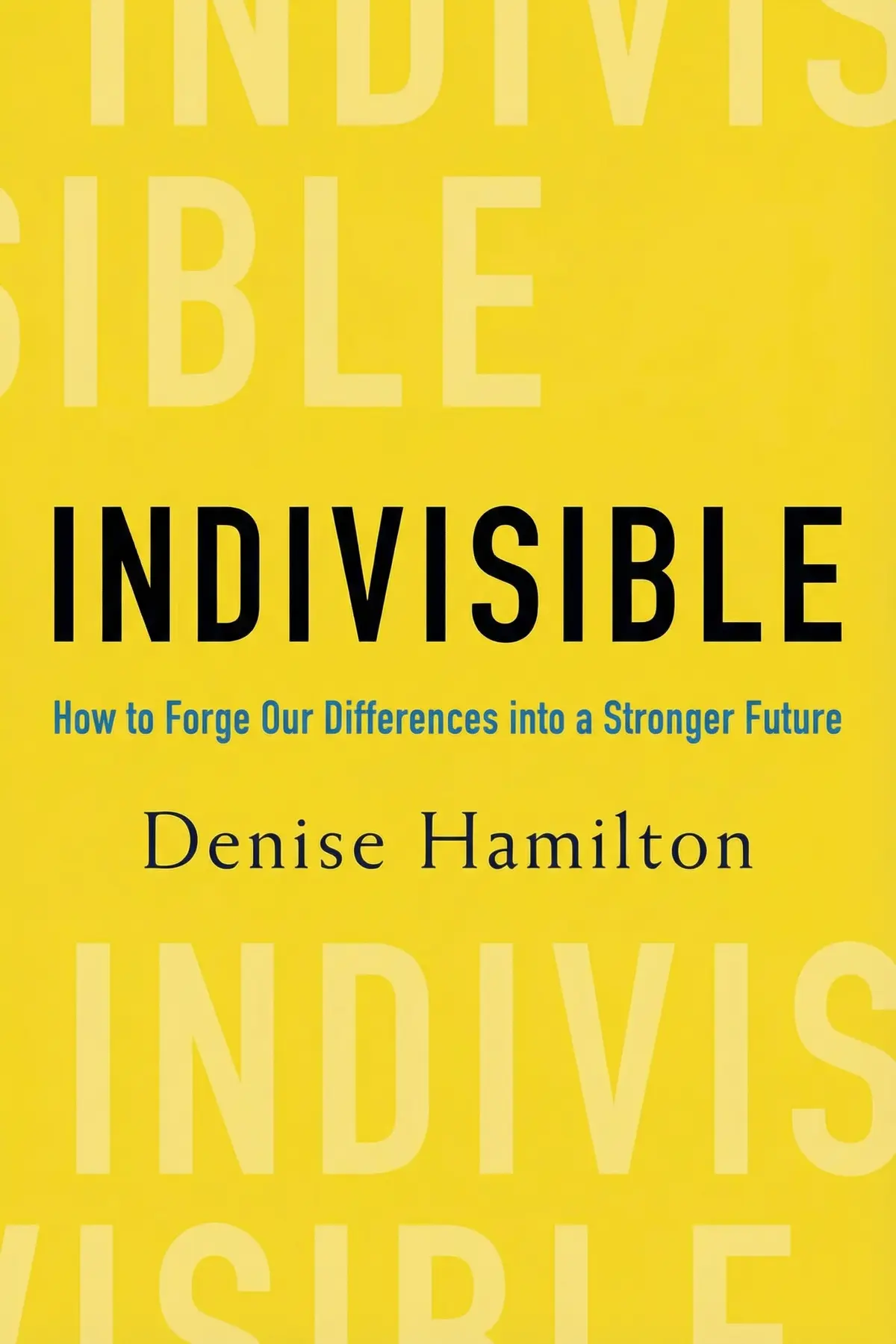
Table of Content
1. Introduction
51 sec
We often think of our perspectives as something we’ve chosen independently, a collection of truths we’ve gathered through our own life journey. But in reality, our worldview is more like a tapestry woven from the stories we’ve been told since birth. These narratives—whether they come from our families, our schools, or our culture—act as a lens through which we interpret everything. But what happens when that lens is smudged or distorted?
Indivisible challenges us to look directly at that lens, to pull at the loose threads of our most cherished myths, and to ask ourselves if what we believe is actually true or simply convenient. By doing so, we don’t just find clarity; we find the potential for a more unified and inclusive society. We begin to see how the stories we tell define the world we build.
2. Uncovering the Scaffolding of Our Beliefs
1 min 08 sec
Ever wonder why we hold certain historical truths so dearly? It turns out that the stories we were taught in childhood might be built on shaky ground, requiring us to look closer at what we believe.
3. The Subtle Impact of Cultural Storytelling
1 min 09 sec
From fairy tales to history books, the media we consume crafts our expectations of ourselves and others. Learn how these deep-seated narratives influence our societal roles and biases.
4. Seeking Truth in a World of Misinformation
1 min 13 sec
In an era of constant digital noise, discerning fact from fiction is more than a skill—it’s a necessity for progress. Discover how challenging the status quo can lead to massive societal shifts.
5. Conclusion
39 sec
Re-evaluating the stories that define us is a difficult journey, but it is a necessary one. The path to a truly unified society begins with the individual’s willingness to deconstruct their own biases. By peeling back the layers of myths and stereotypes, we move toward a more authentic understanding of our shared humanity. It’s about trading simple, exclusionary narratives for a more complex, honest truth. This is an actionable step toward building a world where we are no longer separated by the stories we tell, but united by the truth we uncover together.
About this book
What is this book about?
Indivisible is a deep dive into the architecture of the human mind and how it is constructed by the stories we consume. We often go through life believing that our values and opinions are entirely our own, yet this book reveals how they are frequently the product of historical myths, media biases, and childhood narratives. From the inaccuracies in the history we are taught to the subtle gender roles embedded in fairy tales, the book exposes how these stories can create division and systemic inequality. The promise of this work is one of transformation. It suggests that by developing the courage to scrutinize these narratives, we can move past our preconceived notions and biases. It encourages us to embrace nuance and seek out marginalized perspectives that have been erased by the dominant culture. Through this process of re-examination, we can dismantle the falsehoods that keep us apart and begin to build a society that is truly unified. It is a call to move toward a more authentic and inclusive way of living by changing the very stories we tell ourselves.
Book Information
About the Author
Denise Hamilton
Denise Hamilton is an author, speaker, and consultant who is deeply interested in exploring how societal narratives and personal identity intertwine. Her professional work focuses on the vital importance of re-examining these stories to foster greater inclusivity and understanding among diverse groups of individuals.
Ratings & Reviews
Ratings at a glance
What people think
Listeners find the material accessible and relevant, with one noting that it is essential reading for politicians and thought leaders. They value its functional method for fostering solid connections, and one listener characterizes the guide as a "stellar pragmatic blueprint to true unity." The work earns high marks for its inspirational quality, with one listener drawing attention to its fresh solutions to human challenges.
Top reviews
Samart
Denise Hamilton offers a stellar pragmatic blueprint for anyone tired of the constant polarization in our current climate. By digging into the myths we take for granted—like the weirdly specific detail about George Washington’s teeth—she forces the reader to question what else we’ve gotten wrong about our history. To be fair, some of the corporate-speak can feel a bit dry if you aren't in a leadership role. However, the core message about forging differences into a stronger future is undeniably timely and necessary. It is a quick read, but the implications of her 'indivisible' philosophy stayed with me long after I closed the back cover. I’d recommend this to anyone looking for a fresh perspective that moves beyond the typical political shouting matches we see every day.
Show moreKenji
Finally got around to reading this after hearing Denise on a podcast, and it didn't disappoint in terms of providing actionable strategies. While some DEI books get bogged down in abstract theory, this one feels grounded in the reality of the modern workplace and the challenges of human connection. The truth is, the Airbnb example she uses to explain the radical shift in trust was a lightbulb moment for me. It perfectly illustrates how quickly our 'unimaginable' norms can transform when we are willing to embrace new perspectives. I did notice a few small production errors and name misspellings throughout the text, which was a minor distraction. Regardless of those small flaws, the book stands as a vital resource for anyone trying to navigate diversity with actual empathy.
Show moreSomboon
Wow, this was such an educational and easy-to-consume guide for moving toward a more cohesive society. Hamilton manages to bridge the gap between high-level social commentary and practical, everyday actions that anyone can take to foster inclusion. I particularly loved the 'indivisible' toolkits at the end of the chapters, as they provide a clear path forward for corporate settings. Look, the book does rely heavily on American history and cultural touchstones, which might be a bit of a hurdle for global readers, but the universal themes of empathy and dialogue still shine through. It’s a stellar pragmatic blueprint that should be required reading for anyone in a leadership position. This book doesn't just point out the problems; it actually offers the fresh solutions we desperately need right now.
Show morePhichai
After hearing the author’s interview, I was eager to see if the book lived up to her spoken insights. It’s definitely a quick read, which is a plus for busy professionals, though I felt the interview actually had a bit more 'teeth' than the written text. That said, the way she deconstructs the myths that shape our understanding is masterfully done and serves as a critical step toward true unity. I think the best audience for this book is likely those who are struggling to find a path forward without feeling like they are sliding backward on progress. The bottom line is that Hamilton provides a way to forge our differences into a source of strength rather than a barrier. It's an inspiring call to action.
Show moreThida
This book is a must-read for any politician or community leader who is actually serious about fostering a sense of national unity. Hamilton doesn't shy away from the hard truths, like the fact that choosing justice is often more important than maintaining an uncomfortable and hollow peace. I love how she uses the Airbnb story to show that we are capable of radical shifts in trust if the right framework is in place. Truth is, we often get stuck in our own bubbles, and 'Indivisible' provides the tools to burst those bubbles safely and productively. The writing style is engaging and the data presented feels nicely objective while still being deeply human. This is the kind of book you want to keep on your desk.
Show moreTeng
Ever wonder why our attempts at unity often feel like they’re just stalling out? Hamilton’s work suggests it’s because we haven't actually addressed the underlying grief and narratives that keep us separated. I found the section on 'Process Unresolved Grief' to be particularly moving and much more profound than I expected from a standard business-style book. Personally, I did find some of the broad generalizations about 'what we do' as a society a bit presumptive, as they didn't always reflect my own experiences. Still, her call to choose justice over peace is a powerful challenge to the status quo that most 'thought leaders' usually try to avoid. It’s a compelling exploration of how we can build real trust in a world that feels increasingly fragmented.
Show moreSue
The chapter on making things right really resonated with me, especially the way Hamilton rephrases traditional concepts of reconciliation. It’s fascinating to see how she weaves in various cultural and even biblical metaphors, like the 'body made of many members,' to illustrate her points on interdependence. In my experience, most books on this topic tend to be either too academic or too emotional, but this hits a nice middle ground that feels objective yet empathetic. Not gonna lie, I was a bit annoyed by a few typos in the names of prominent figures, which felt like a slight oversight in the editing process. Despite that, the emphasis on inclusionary practices in the workplace is both timely and deeply practical for today's environment.
Show moreAnong
Picked this up because I was looking for a fresh take on how to handle the deep divides we see in our communities and workplaces today. The author’s argument that diversity is a source of innovation rather than just a challenge to be managed is a welcome shift in tone. To be fair, the book’s structure feels very 'consultant-heavy,' with neatly packaged chapters that sometimes simplify incredibly complex social issues. However, the practical approach to building strong relationships through dialogue and empathy is something we could all use more of. I found her discussion on how falsehoods pose challenges to the very fabric of society to be particularly chilling and accurate. It’s a thought-provoking read that encourages you to engage with those who hold opposing viewpoints.
Show moreTantipat
Not what I expected at first, as I thought it would be a more standard DEI manual, but it turned out to be a much more philosophical exploration of American identity. I appreciated the way she questioned the stories we tell ourselves, though the 'wood teeth' anecdote about Washington is a bit overplayed in these types of books. Gotta say, the author’s 'we' statements sometimes felt like she was projecting her own views onto the reader, which can be a bit polarizing in itself. But if you can get past that, there is a wealth of knowledge here regarding how to move forward cohesively in a fractured world. It’s especially good for those who might be feeling 'DEI fatigue' and need a reminder of why this work matters.
Show moreBee
As someone who works in the equity space daily, I had mixed feelings about some of the author's more unsettling admissions. Specifically, her initial indifference toward certain statistics—like the high rate of male suicide—was a difficult pill to swallow and felt counterproductive to the goal of true inclusion. Frankly, if we are going to build an 'indivisible' future, we cannot afford to be indifferent to the suffering of any group, regardless of the DEI lens we are using. The book is definitely structured for a more general audience, perhaps boomers or those new to these concepts, rather than seasoned practitioners. While the toolkits provided are helpful, the heavy reliance on American cultural anecdotes might make it less relatable for an international reader. It’s a decent starting point, but it lacks the nuance required for deeper systemic analysis.
Show moreReaders also enjoyed

A Room of One’s Own
Virginia Woolf
Abolish Rent: How Tenants Can End the Housing Crisis
Tracy Rosenthal
Abortion: Our Bodies, Their Lies, and the Truths We Use to
Jessica Valenti

Afropean: Notes From Black Europe
Johny Pitts
All About Love: New Visions
bell hooks

A Bigger Prize: How We Can Do Better Than the Competition
Margaret Heffernan
AUDIO SUMMARY AVAILABLE
Listen to Indivisible in 15 minutes
Get the key ideas from Indivisible by Denise Hamilton, plus 5,000+ more titles in English and Thai.
- 5,000+ titles
- Listen as much as you want
- 7-day free trial
- Cancel anytime







