
16 min 11 sec
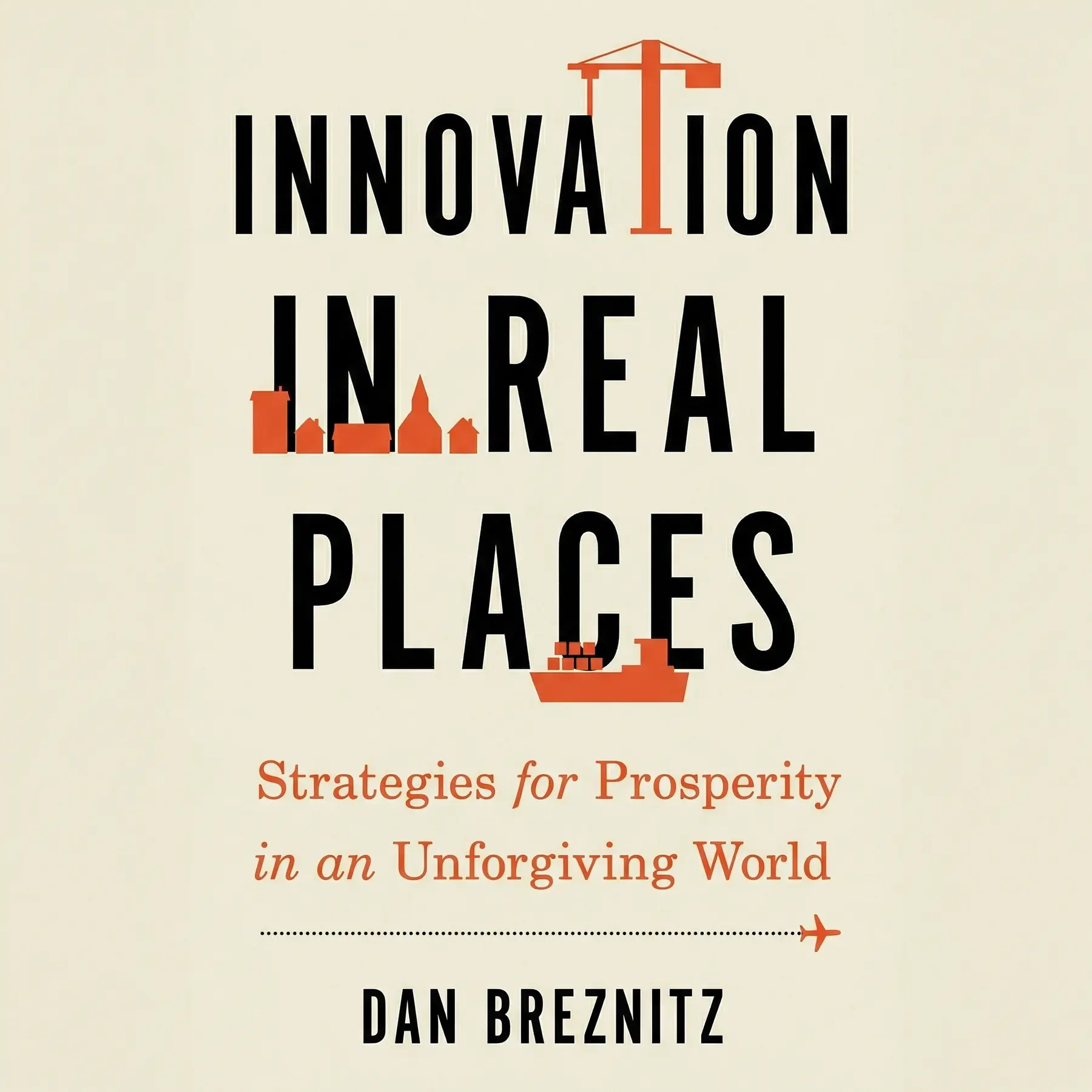
Innovation in Real Places: Strategies for Prosperity in an Unforgiving World
By Dan Breznitz
Innovation in Real Places challenges the obsession with Silicon Valley-style startups, offering a practical framework for cities to achieve sustainable prosperity by specializing in specific stages of the global production chain.
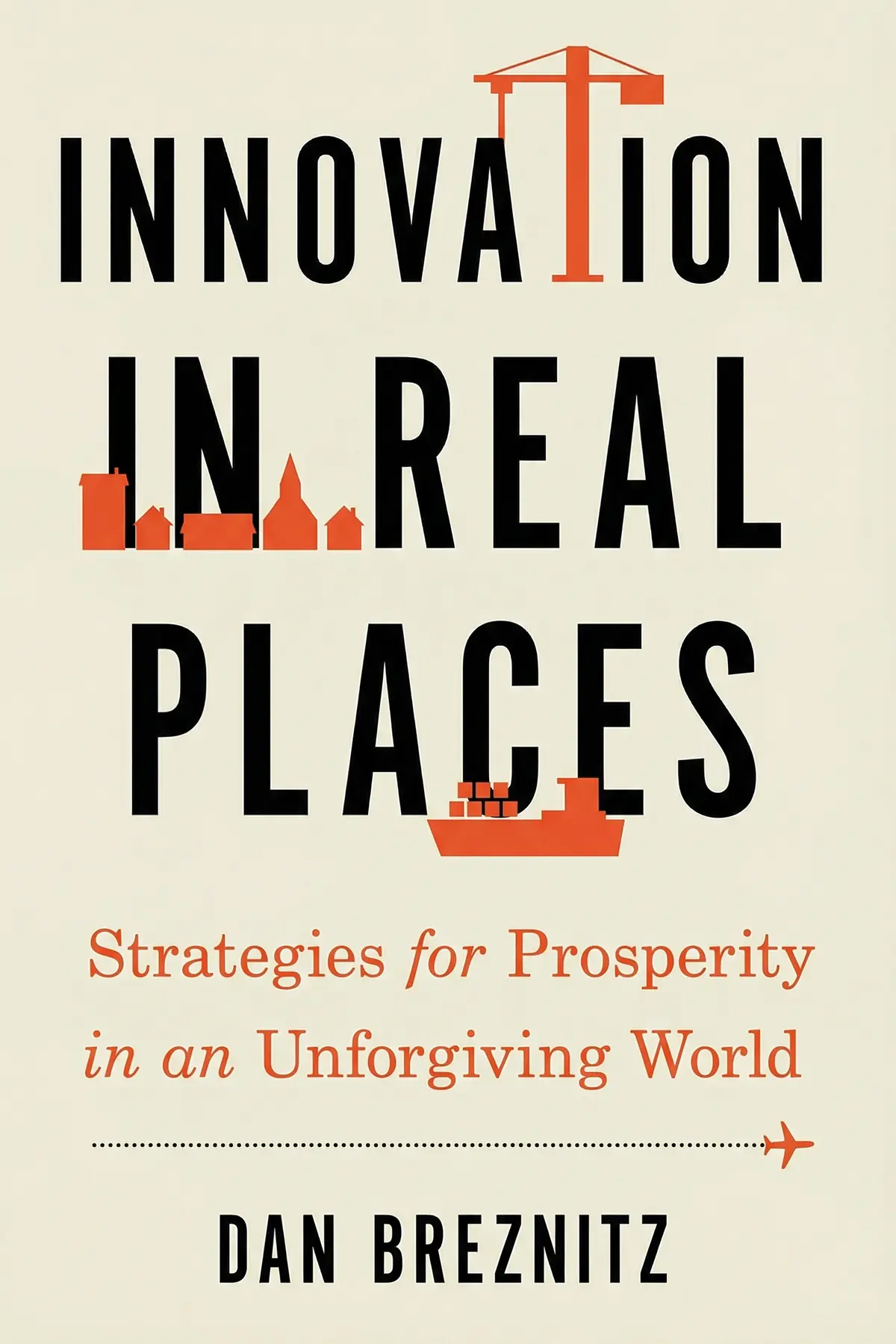
Table of Content
1. Introduction
1 min 51 sec
Every year, mayors, governors, and national leaders across the globe look toward a small patch of land in Northern California with a mix of envy and desperation. They want what Silicon Valley has: the billion-dollar companies, the venture capital influx, and the reputation for being the birthplace of the future. The word ‘innovation’ has become a catch-all solution for every economic woe, promised as the ultimate engine for growth and vitality. But what if we’ve been looking at innovation through a tiny, distorted keyhole? What if the very model we are told to emulate is actually a trap for most communities?
In this exploration of Dan Breznitz’s work, we are going to look at why the standard ‘startup-centric’ advice often leaves cities worse off than when they started. We will uncover the hidden reality of how global production actually works and why the most successful regions aren’t necessarily the ones inventing the newest gadgets. Instead, they are the ones that have mastered a specific stage of the process—whether that’s refining a design, improving a manufacturing technique, or perfecting a supply chain.
Through this lens, we’ll see that prosperity doesn’t require every town to have a tech unicorn. True growth comes from understanding the ‘real places’ we live in—their history, their skills, and their unique potential to contribute to a world that is constantly making things. This isn’t just about economics; it’s about a more inclusive way to build a future where more people can actually participate in and benefit from the march of progress. Let’s dive into a more grounded, realistic, and ultimately more hopeful vision of what innovation can be.
2. The Failure of the Silicon Valley Clone
2 min 31 sec
Trying to replicate the world’s most famous tech hub often leads to rising inequality and a loss of local talent rather than long-term prosperity.
3. Deconstructing the Myths of Innovation
2 min 25 sec
Widespread misconceptions about new gadgets and venture capital obscure the true drivers of economic progress and sustainable development.
4. The Evolution of Global Production
2 min 30 sec
The decline of traditional manufacturing doesn’t mean the end of local industry, but rather a shift toward specialized roles in a global network.
5. Mastering the Four Stages of Innovation
2 min 47 sec
Economic value is created across four distinct phases, and regions can find success by excelling in areas far beyond basic invention.
6. Cultivating Local Capabilities and Resilience
2 min 28 sec
The secret to lasting growth lies in investing in local skills and infrastructure rather than offering subsidies to distant corporations.
7. Conclusion
1 min 39 sec
As we look toward the future, it is time to retire the idea that every city needs to be a mini-Silicon Valley to be successful. That narrow vision of innovation has served a few people very well, but it has left many more behind, creating fragmented societies and unstable economies. The real lesson of our time is that innovation is a broad, multifaceted process that happens in every corner of the world, in every industry, and at every stage of production.
Prosperity in the modern world comes from a clear-eyed understanding of what a community can realistically achieve. It means looking at the four stages of innovation—novelty, design, incremental improvement, and production—and choosing a path that matches local strengths. It means moving away from the lure of ‘easy’ growth through venture capital and subsidies, and instead doing the hard, long-term work of building local skills and specialized infrastructure.
Ultimately, the message is one of empowerment. You don’t need a billion-dollar breakthrough to have a thriving local economy. By focusing on excellence in a specific capability, any ‘real place’ can find a secure and prosperous position in the global network. The future of manufacturing and innovation isn’t just happening in a few elite tech hubs; it’s happening wherever people are finding ways to do things better, faster, and more efficiently. By embracing this broader, more practical vision, we can create an economy that works for more people, in more places, for the long haul.
About this book
What is this book about?
For decades, local leaders have chased the dream of becoming the next major tech hub, often with disastrous results for their local economies. Innovation in Real Places dismantles the myth that high-tech startups are the only path to growth. Instead, it argues that true economic vitality comes from understanding how and where a community can fit into the global innovation lifecycle. Dan Breznitz explains that innovation isn't just about the "eureka" moment of invention. It spans everything from design and incremental improvement to high-volume manufacturing. By identifying and nurturing specific local capabilities, regions can build resilient economies that provide good jobs and long-term stability rather than just fueling short-term venture capital gains. This book provides a roadmap for realistic, inclusive growth in an increasingly unforgiving global market.
Book Information
About the Author
Dan Breznitz
Dan Breznitz is a Professor at the University of Toronto who studies innovation policy. He is the author of several acclaimed books on innovation and technology, including Innovation and the State, The Run of the Red Queen, and The Third Globalization.
Ratings & Reviews
Ratings at a glance
What people think
Listeners find this work to be a thought-provoking and revitalizing analysis of current innovation strategies that disputes the standard fixation on copying the Silicon Valley approach. They value the author’s four-stage innovation model, which highlights how local communities can achieve success through production and steady enhancements instead of focusing solely on original breakthroughs. Furthermore, the audience appreciates the varied international examples provided, with one listener describing the book as a "splash of cold water" for leaders looking for an easy path to expansion. Though some listeners suggest the content leans closer to scholarly theory than practical business guidance, they also observe that it offers an intelligent and vital guide for developing fairer economic plans.
Top reviews
Look
Finally, someone has the guts to tell city planners that they shouldn't all try to be the next Silicon Valley. Breznitz provides a refreshing perspective by arguing that the 'Silicon-Hyphen' obsession is actually damaging to local economies because it ignores their unique strengths. I was particularly fascinated by his breakdown of the four stages of innovation, especially the idea that Stage 4 production and assembly can be just as 'innovative' as Stage 1 novelty. The truth is, most cities aren't built for high-risk VC-backed tech, and forcing that model creates massive inequality. This book is a must-read for anyone who cares about building a more equitable and sustainable local economy. It’s not just a critique; it’s a roadmap for finding prosperity in 'real places' that aren't Palo Alto.
Show moreAndrei
Ever wonder why 'Silicon Alley' or 'Silicon Forest' never quite lived up to the hype? Breznitz explains that these regions often fail because they focus on Stage 1 novelty without considering who actually gets employed or where the profits go. I loved the deep dive into the 'three dysfunctionals' at the end, even if that section felt a bit more hurried than the rest. The way he describes the drain of R&D centers on local talent pools was particularly eye-opening for me. Frankly, this is the most sensible book on technology policy I've read in a long time. It challenges the reader to think about what kind of growth they actually want for their community. If you're tired of hearing the same buzzwords about 'disruption,' pick this up immediately.
Show moreJob
What an incredibly smart and necessary book for our current economic moment! Breznitz dismantles the myth that innovation is just about high-tech startups and VC funding, showing that real prosperity often comes from more 'mundane' stages like production and component improvement. His analysis of the Shenzhen model was especially brilliant, highlighting how a region can thrive by mastering the complexity of global supply chains. I found his writing style to be punchy and engaging, even when dealing with complex topics like intellectual property regimes. This isn't just another business book filled with empty optimism; it's a rigorous, globally-minded look at why our current system is broken and how we might actually fix it. It really changed the way I look at my own city’s development plans.
Show moreBoy
After hearing so much hype about this book in policy circles, I finally sat down with it and I’m glad I did. Breznitz manages to be both a realist and an optimist at the same time. He doesn't sugarcoat how hard it is to build a thriving innovation ecosystem, but he also shows that it's possible if you stop chasing the wrong goals. The distinction he makes between invention (the 'idea') and innovation (the 'usage') is a masterclass in clarity. Personally, I think the most important takeaway is that we need to define what growth should look like for our specific communities before we start writing checks to multinational corporations. It's a deep, thoughtful, and ultimately very hopeful book that avoids the usual cliches of the genre.
Show moreElla
As someone who has spent years in economic development, I found this to be a much-needed splash of cold water for the industry. We spend so much time chasing the 'flashy' side of tech—the inventions and the patents—that we forget innovation is really about the process of using ideas to improve products. Breznitz brilliantly illustrates how places like Shenzhen and Taiwan found their own paths through production engineering and component innovation rather than just trying to copy the US model. My only real gripe is that the final chapters on IP and data felt a little tacked on and could have used a more thorough edit. Regardless, the core message is vital. We need to stop looking for magic formulas and start doing the hard work of building local ecosystems that actually serve the citizens living there.
Show moreGun
The chapter on Israel was interesting, but overall the book felt a bit more like a theory-heavy lecture than a practical guide. Breznitz argues that we shouldn't just focus on gadgets, which I agree with, but his solutions for 'real places' are often vague and difficult to implement. I appreciate the focus on Stage 2 and 3 innovation—it's high time we stopped looking down on production engineering—but I still left the book wondering what the first step should be for a struggling town. To be fair, he does say there's no silver bullet, but some more concrete frameworks for current-day application would have been nice. It’s a good read for students of history or policy, but perhaps less useful for a business owner trying to scale.
Show moreScarlett
Picked this up on a whim and was pleasantly surprised by how much it challenged my assumptions about the tech industry. Look, we’ve all been told that if we just build enough incubators and attract enough R&D centers, the local economy will magically boom. Breznitz proves that this is often a lie that leads to higher inequality and social fragmentation. He uses examples from Italy to Taiwan to show that there are multiple paths to success, most of which don't involve winning the venture capital lottery. The book is well-structured, though I do agree with other reviewers that the editing in the final section on data policy was a bit sloppy. Still, the four-stage framework alone is worth the price of admission. It’s a solid 4 stars for me.
Show moreSam
This book might be a goldmine for university students, but for anyone working in the private sector, it feels a bit like a graveyard of old strategies. Breznitz is undoubtedly an expert in hindsight, dissecting why certain regions failed to become the next 'Silicon-Something,' yet he offers very little in the way of actionable advice for current professionals. To be fair, the theoretical framework regarding the four stages of innovation is solid and well-researched. However, the prose is often dense, and the constant repetition of case studies makes the middle section a real slog to get through. If you are a politician looking for a quick fix or a silver bullet, you won’t find it here. It is a respectable academic text that unfortunately lacks the punch needed to change how things work on the ground today.
Show moreRiley
Not gonna lie, I have mixed feelings about this one. On one hand, the distinction Breznitz makes between invention and innovation is probably the most important lesson any aspiring policymaker could learn. He is a great thinker, and his critique of the current IP system is absolutely spot on. On the other hand, the book feels like it could have been about 100 pages shorter without losing any of its impact. The author spends way too much time on repetitive examples of companies that succeeded years ago, which makes it feel a bit dated in parts. It is a smart policy book, for sure, but the dry academic tone might be a turn-off for some. I’d recommend it for the concepts, but be prepared to skim some of the more redundant sections.
Show morePalm
Honestly, I found this to be a pretty frustrating experience. While the author is clearly knowledgeable, the book reads like a collection of hindsight-driven observations that don't translate well to the real world. He spends a lot of time telling you what not to do—like trying to replicate Silicon Valley—but the 'strategies' he proposes for alternative innovation are frustratingly abstract. In my experience, professionals need more than just a history of why things went wrong; they need a clear path forward. The prose is quite dense and academic, making it a bit of a chore to get through the middle chapters. It might be a fine choice for a graduate seminar on economic history, but if you're looking for actionable insights for your business or local startup scene, you'll likely be disappointed.
Show moreReaders also enjoyed

1929: Inside the Greatest Crash in Wall Street History--and How It
Andrew Ross Sorkin


23 Things They Don’t Tell You About Capitalism
Ha-Joon Chang

A Little History of Economics
Niall Kishtainy
A Splendid Exchange: How Trade Shaped the World
William J. Bernstein


AUDIO SUMMARY AVAILABLE
Listen to Innovation in Real Places in 15 minutes
Get the key ideas from Innovation in Real Places by Dan Breznitz, plus 5,000+ more titles in English and Thai.
- 5,000+ titles
- Listen as much as you want
- 7-day free trial
- Cancel anytime







