

60 Seconds & You’re Hired!
Robin Ryan
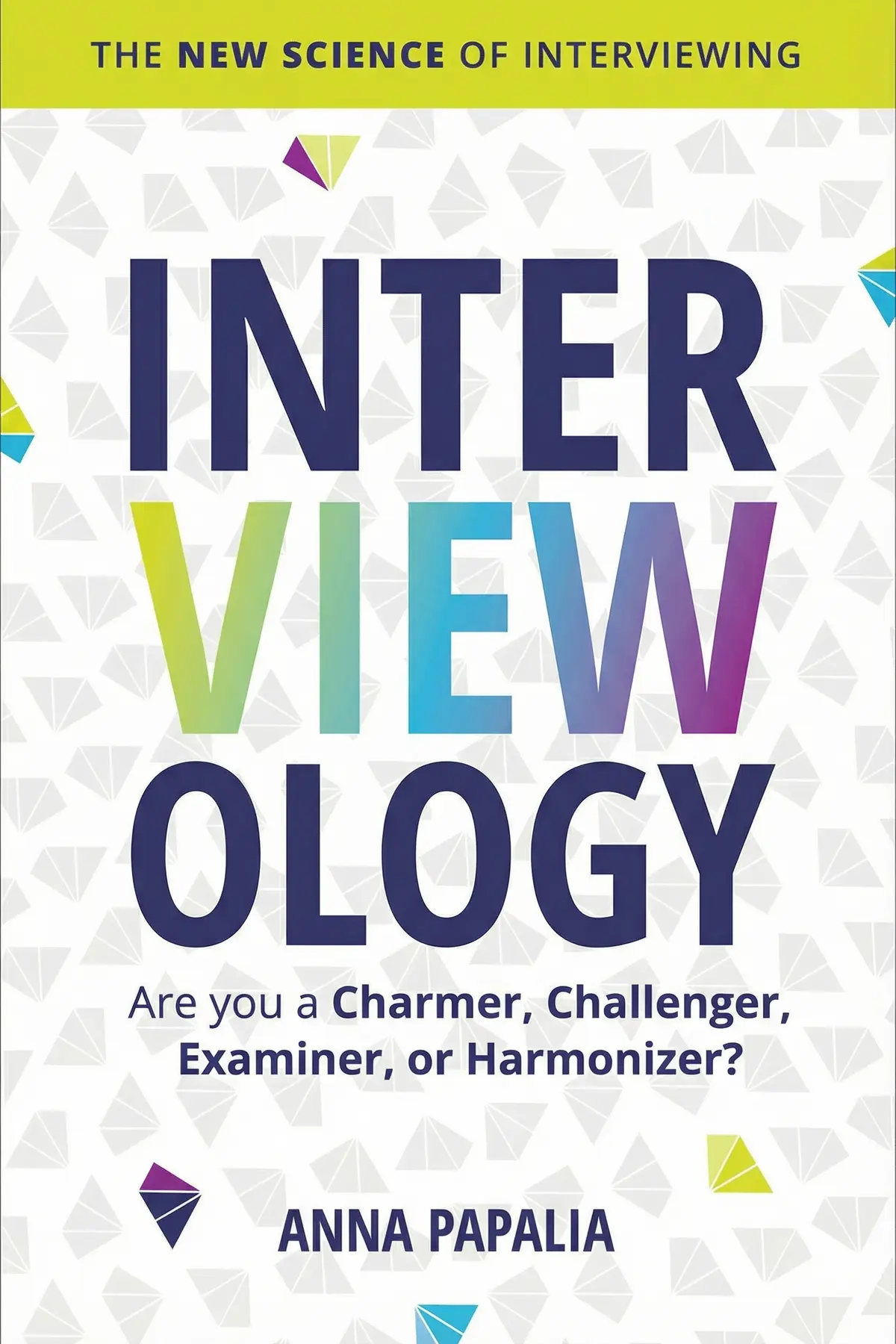
Unlock your career potential by identifying your unique interviewing archetype. This guide moves beyond generic advice to provide a personalized framework for succeeding in job interviews based on your natural personality.
2 min 00 sec
Have you ever walked out of a job interview feeling like you played a character rather than being yourself? Perhaps you felt like you talked too much, or maybe you realized too late that you didn’t mention your most impressive accomplishments. Most of us treat interviews as a nerve-wracking test where we have to guess the ‘right’ answers. But what if the secret to a great interview isn’t about following a universal script, but about understanding your own unique psychology?
In the world of professional development, we often hear about learning styles or management styles, but we rarely talk about our interviewing styles. We tend to assume that there is one ‘correct’ way to be a candidate or a hiring manager. This one-size-fits-all approach is exactly why so many talented people struggle to land the roles they deserve, and why so many companies struggle to hire the right talent.
Anna Papalia spent years on both sides of the hiring table, observing thousands of interactions as a recruiter and a coach. She noticed that when people failed to get the job, it wasn’t always because they weren’t qualified. Often, it was because they were trying to force themselves into a mold that didn’t fit their natural tendencies. This realization led to the development of a new science of interviewing.
By categorizing the ways people interact during the hiring process into four distinct archetypes—the Charmer, the Challenger, the Examiner, and the Harmonizer—we can finally stop guessing and start strategizing. This journey isn’t just about learning a few new tips; it’s about deep self-awareness. It’s about recognizing how you show up in the room, how others perceive you, and how you can bridge the gap between who you are and what the role requires. Over the next few sections, we are going to break down these four profiles, exploring how each one functions and how you can use this knowledge to transform your career trajectory. Whether you are looking for your next big break or trying to build a world-class team, the insights ahead will change the way you look at every professional conversation you’ll ever have.
2 min 18 sec
Discover how a shift from generic advice to personalized archetypes can fix the broken interview process and help you embrace your natural professional identity.
2 min 11 sec
Learn how the Charmer uses rapport to win over rooms, but also why they must learn to back up their personality with hard evidence to avoid being seen as insincere.
2 min 12 sec
Explore the direct and probing world of the Challenger, and find out how they can balance their need for truth with the social requirements of the modern workplace.
2 min 18 sec
Understand the logic-driven approach of the Examiner and why they must learn to tell the story behind the data to connect with their audience.
2 min 24 sec
See how the Harmonizer’s natural ability to adapt makes them great team players, while learning the strategies they need to advocate for their own value.
2 min 05 sec
As we wrap up our exploration of the different interviewing styles, it becomes clear that there is no ‘perfect’ way to interview. Each of the four profiles—the Charmer, the Challenger, the Examiner, and the Harmonizer—possesses unique strengths that are vital to a healthy workplace. The Charmer brings energy and connection; the Challenger brings integrity and critical thought; the Examiner brings precision and logic; and the Harmonizer brings empathy and collaboration.
The real power of this framework isn’t in pigeonholing yourself or others into a single box. Instead, it’s about the freedom that comes from self-awareness. When you know your default style, you are no longer a victim of your own habits. You can walk into a room and say to yourself, ‘I know I tend to focus too much on data, so today I’m going to make a conscious effort to tell a human story,’ or ‘I know I want everyone to like me, so I’m going to make sure I don’t leave without mentioning my specific technical achievements.’
This knowledge also changes the way we view ‘failure’ in the hiring process. Sometimes, an interview doesn’t go well simply because of a style clash. A Challenger interviewer might be put off by a Charmer candidate, or an Examiner manager might find a Harmonizer candidate too vague. By recognizing these dynamics, we can take the sting out of rejection and use it as a learning tool to refine our approach for the next time.
The throughline of Anna Papalia’s work is that authenticity, when tempered with adaptability, is the ultimate professional superpower. You don’t have to change who you are to get the job; you just have to understand how to present who you are in a way that the other person can hear. As you move forward in your career, keep these profiles in mind. Use them to understand your colleagues, your bosses, and most importantly, yourself. When you master the science of interviewing, you aren’t just getting better at getting jobs—you’re getting better at navigating the human world of work. Take these insights, identify your style, and go into your next professional conversation with the confidence that you are exactly where you need to be.
Job interviews are often treated as a generic hurdle where everyone is expected to follow the same set of rules. However, this approach ignores the reality of human personality. This summary explores the groundbreaking framework developed by Anna Papalia, which identifies four distinct interviewing styles: the Charmer, the Challenger, the Examiner, and the Harmonizer. By understanding which style you naturally inhabit, you can learn to leverage your innate strengths while correcting the blind spots that might be holding you back. The promise is a more authentic and successful interview experience. Whether you are a candidate trying to land a dream role or a hiring manager looking for the perfect fit, these insights provide the tools to navigate the complex social dynamics of the interview room with precision and confidence.
Anna Papalia is a keynote speaker, career influencer, and the CEO of Interviewology. Drawing from her extensive experience as a former Director of Talent Acquisition and career coach, Papalia is recognized as a thought leader in interviewing techniques, and has influenced thousands of clients across various industries.
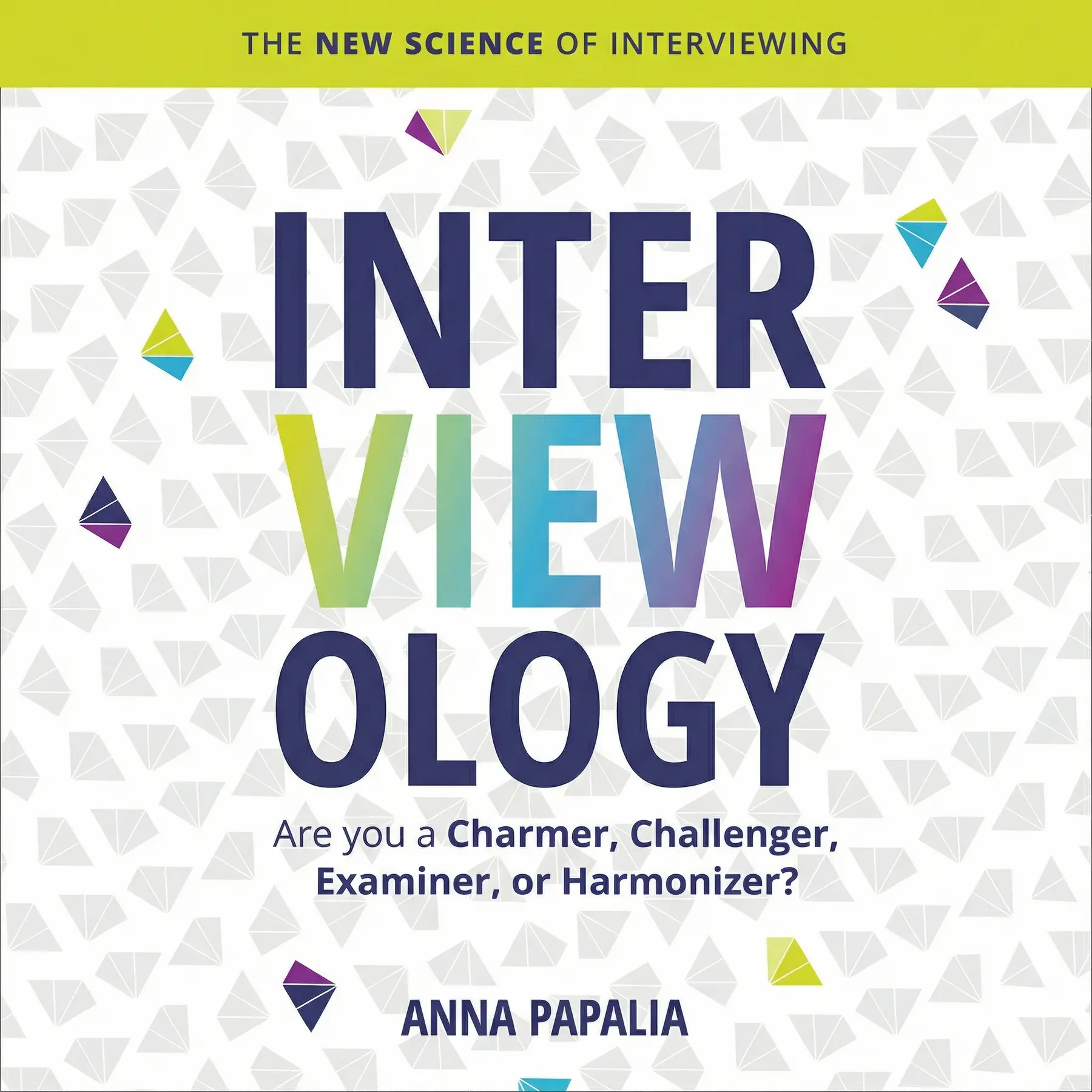
Listeners find this guide exceptionally useful for polishing their interview techniques and value how easy it is to digest, with one listener highlighting it as a fast read for those looking for work. Additionally, the material offers useful perspectives, with one listener noting that it aids in comprehending various styles of interviewers. Nevertheless, opinions on the writing style are varied, with one listener calling it well written while another considers it too wordy.
This book changed how I see the entire hiring process from both sides of the desk. I used to think I was failing interviews because I wasn't "polished" enough, but it turns out I'm just a "Challenger" who values truth over small talk. Understanding that my skepticism isn't a flaw but a style was incredibly validating. Anna Papalia provides a roadmap for how to tone down the intensity without losing your soul. The chapter on "Charmers" was also eye-opening; it helped me realize why some of my colleagues get hired so fast even if they lack technical depth. It’s a fast-paced, insightful read that ditches the tired, old interview cliches we’ve all heard a thousand times. If you want to stop guessing and start performing with actual confidence, buy this immediately.
Show moreInterviewology stands head and shoulders above the typical business books that churn out the same tired advice about firm handshakes and eye contact. As a long-time observer of the corporate world, I find Papalia’s categorization of the four interview styles—Charmer, Challenger, Examiner, and Harmonizer—to be a fresh and necessary evolution. It’s a quick read for job seekers, but don’t let the brevity fool you; the insights are deep. The author’s background at Temple University clearly informed the practical nature of the advice. Frankly, it’s rare to find a book that speaks so effectively to both the person being interviewed and the one conducting it. Whether you are looking to land your dream job or build a better team, this is an essential addition to your professional library.
Show moreAfter hearing Anna Papalia on a podcast, I knew I had to grab "Interviewology" to help with my career transition. What I love most is the focus on authenticity. Most career coaches tell you to act like a specific "perfect candidate," but this book tells you how to be the best version of yourself. The "Charmer" section helped me realize I was oversharing in interviews to get approval. Using the STAR method to ground my stories has made a massive difference in how professional I sound. The book is well-written and easy to digest in a weekend. It’s refreshing to see someone acknowledge that interviewing is a two-way street of discovery. Highly recommended for anyone who feels like they’re performing a character during interviews.
Show moreFinally got around to reading this before my big mid-level management interview, and I found it surprisingly helpful. Truth is, I’ve always been an "Examiner" who focuses way too much on facts and figures while forgetting to actually connect with the human across the table. Papalia’s breakdown of how to balance technical prowess with personal stories really resonated with me. I will say that about thirty percent of the book feels like it's written specifically for HR professionals and hiring managers rather than the candidates themselves. Those parts were a bit of a slog to get through. Regardless, the core message about authenticity and knowing your natural tendencies is powerful stuff. It’s a well-written resource that I’ll likely revisit the next time I’m back on the job market.
Show moreAs someone who struggles with nerves during interviews, the "Harmonizer" section was a literal lifesaver for my confidence. I’ve always been the type to mirror the interviewer and try to fit in, which usually means I forget to talk about my own wins. The specific advice on setting boundaries and owning my successes really helped me pivot during my last round of meetings. Personally, I think the book is quite readable and moves at a good clip, although some chapters felt a little repetitive. It’s definitely more than just a manual; it’s a psychological deep dive into how we communicate under pressure. I didn’t do the paid test because I felt I could identify my style just by reading the descriptions. Very glad I picked this up!
Show moreEver wonder why you clash with certain interviewers even when you’re perfectly qualified? This book finally gave me the answer. I’m a textbook "Challenger," and I’ve definitely been guilty of being too confrontational when I should have been building rapport. Papalia explains how to use active listening to balance out that natural skepticism. The prose is clear and the "science" behind it is explained in a way that doesn't feel overly academic. I do wish there were more "Action" steps for the Examiner type, as that section felt a bit shorter than the others. Overall, though, it’s a solid resource. Not gonna lie, it actually helped me land a job last week by changing how I handled the small talk at the beginning.
Show moreIs it just me, or does "Interviewology" feel a bit like putting everyone into tiny, restrictive boxes? I appreciate what Anna Papalia is trying to do by moving away from generic advice, but labeling every human being as either a Charmer, Challenger, Examiner, or Harmonizer feels reductive. Humans are far more complex than a single archetype allows for in a high-pressure workplace setting. The writing style is accessible enough, though it gets a bit wordy in the middle sections when discussing corporate recruiting history. I did find the advice for "Harmonizers" to use more "I" statements instead of "we" statements to be a solid takeaway. Look, if you need a basic framework to understand your habits, this is a decent starting point. Just don't expect it to capture the full nuance of your professional personality.
Show moreTo be fair, there are some gold nuggets of wisdom hidden in here, but you have to dig through a lot of fluff to find them. The book is somewhat wordy and tends to repeat the same core concepts about the four styles over and over again. I understand the "New Science" branding, but at times it felt more like marketing than hard data. I liked the specific behavioral questions suggested for recruiters—it gave me a good idea of what to expect as a candidate. However, I was disappointed that the book didn't include a way to self-score the assessment without going to an external website. It’s a "mid" experience overall—not terrible, but certainly not the revolutionary tool the title suggests. Good for a quick skim if you’re bored.
Show morePicked this up thinking it would be a comprehensive guide, but I was quickly let down. While the theory about the four interview styles is intriguing, the book feels like an elaborate sales pitch for a $70 online assessment. You buy the book, yet you still have to pay a hefty fee to actually find out your "official" type? That’s incredibly frustrating. To be fair, the descriptions of the Charmer and the Examiner are detailed, but the lack of a free self-assessment tool within the pages makes it feel incomplete. I was looking for actionable help, not a paywall. If you can ignore the upsell, there is some decent advice on how to structure responses using the STAR method. However, for most job seekers on a budget, this might feel like a bait-and-switch. It's a quick read, but the value proposition is definitely skewed.
Show moreNot what I expected at all. I DNF’d this at around 40% because it felt less like a helpful guide and more like a long-form brochure for the author’s consulting business. Every time I started to get into a chapter, it would reference the "Interviewology Profile" that I hadn’t paid for. Why isn't the test included in the price of the book? It feels predatory to charge for the book and then demand $70 more for the actual tool you need to make the book useful. The writing is fine, but the structure is frustrating. If you’re a hiring manager with a big budget, maybe this is for you. For a regular person just trying to find a job, it feels like a waste of time and money.
Show moreRobin Ryan

Marianne Cantwell
AUDIO SUMMARY AVAILABLE
Get the key ideas from Interviewology by Anna Papalia, plus 5,000+ more titles in English and Thai.







