
13 min 49 sec
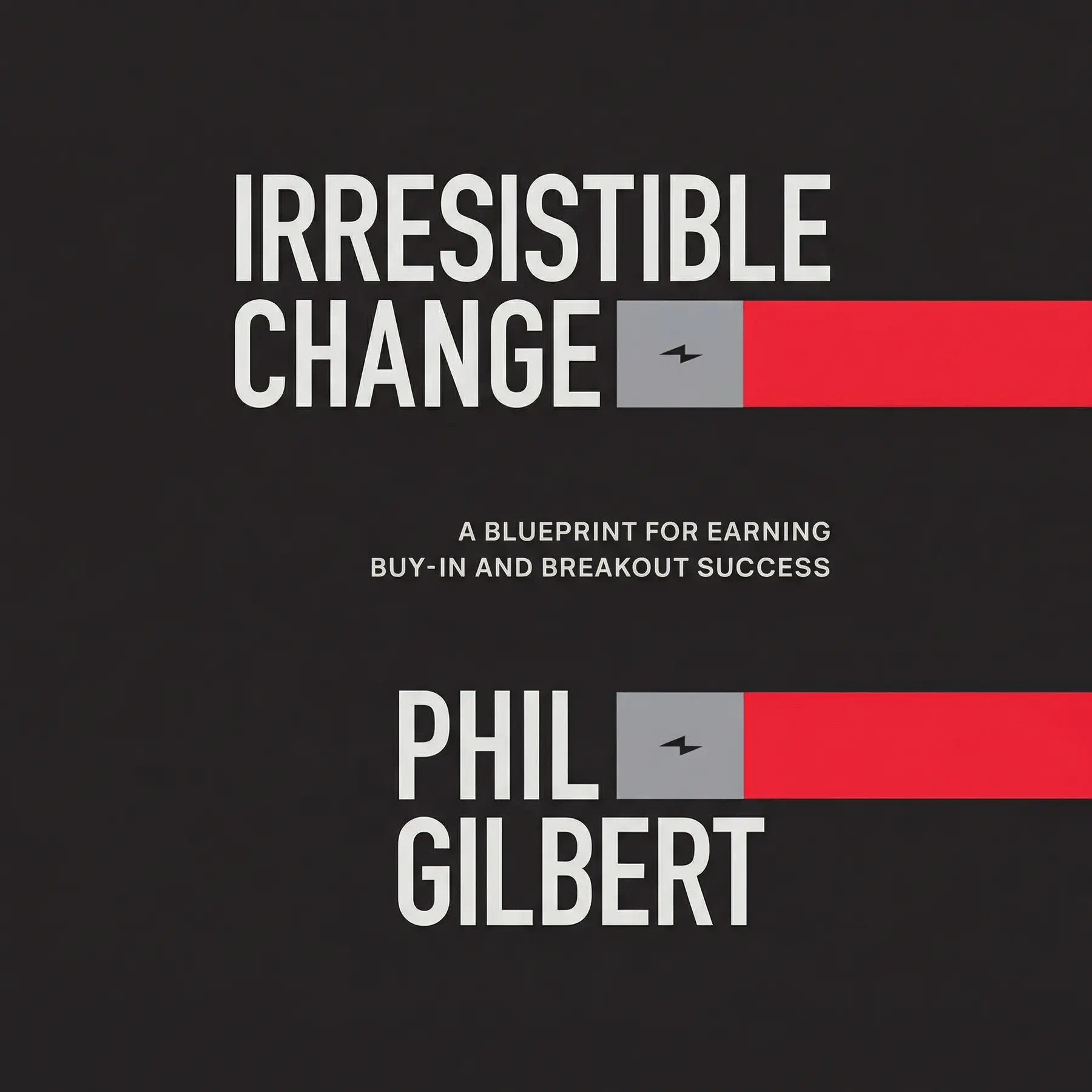
Irresistible Change: A Blueprint for Earning Buy-In and Breakout Success
By Phil Gilbert
Irresistible Change explores how to drive organizational transformation by treating change as a premium product. Learn to build trust, hack cultural systems, and create a brand that teams actually want to adopt.
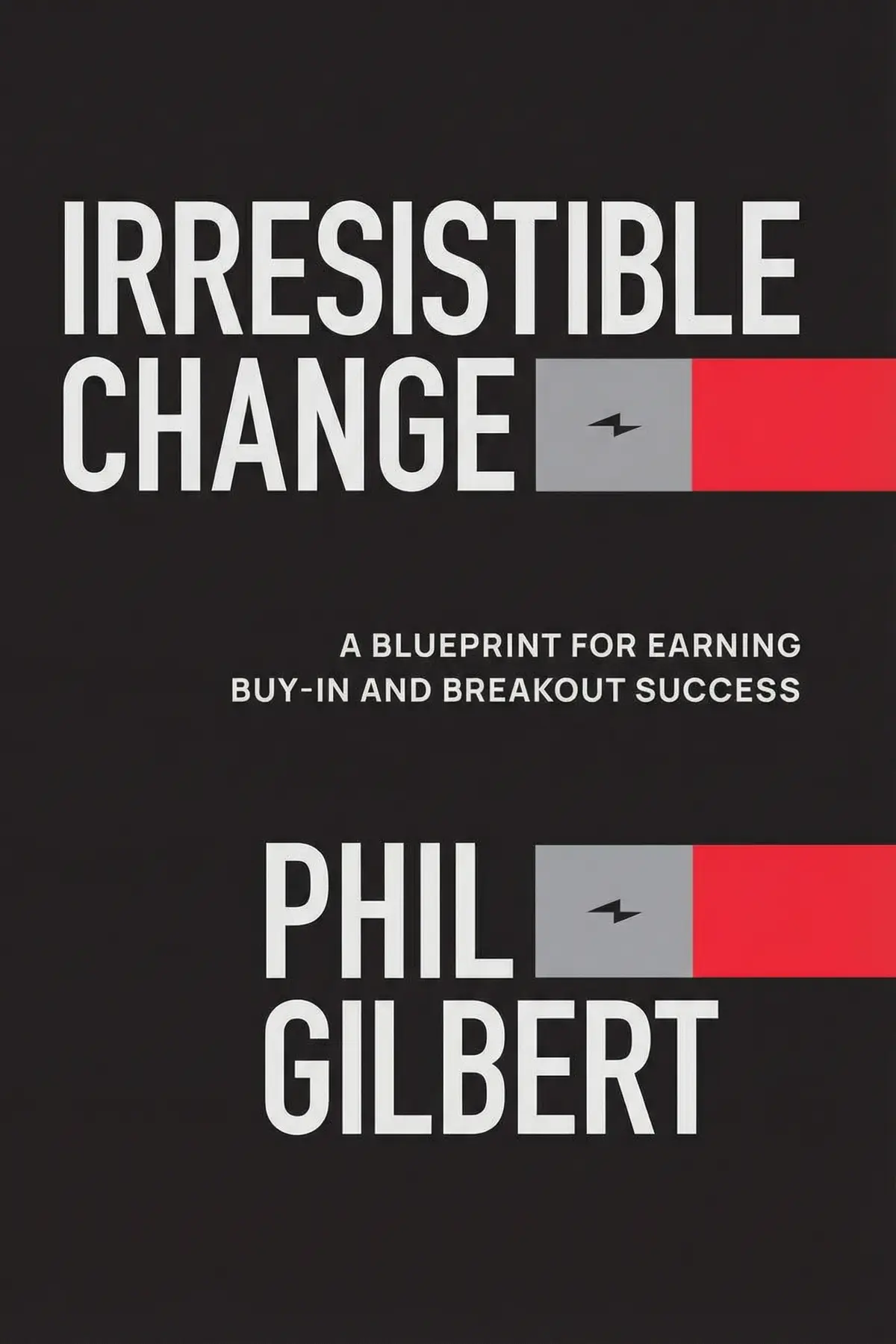
Table of Content
1. Introduction
1 min 42 sec
Think about the last time your company announced a major transformation. Maybe it was a move to a new project management style, or perhaps a total overhaul of the departmental structure. If you’re like most people, your first reaction wasn’t excitement—it was probably a mixture of skepticism, exhaustion, and perhaps a little bit of annoyance. We’ve been conditioned to view ‘change’ as a corporate buzzword that usually means more work with fewer results.
But here is the reality: people don’t actually hate new ideas. They don’t wake up in the morning determined to sabotage progress. The resistance we see in offices every day isn’t a flaw in human nature; it’s a failure of leadership. When transformation is handed down as an order, it breaks the most important element of any working relationship: trust. If a leader demands that you change your entire workflow without proving that it makes your life better, they are essentially asking for a blind leap of faith. And in a high-stakes business environment, blind leaps are dangerous.
The throughline of our exploration today is that change shouldn’t be a mandate; it should be an invitation. To make change truly irresistible, you have to stop acting like a drill sergeant and start acting like a product designer. You have to create something so obviously valuable, so well-supported, and so prestigious that your teams don’t just accept it—they demand it. Over the next few chapters, we are going to look at how to stop fighting your company’s culture and start working with it. We’ll learn how to build credibility by starting small, how to protect your team from the ‘organizational antibodies’ that try to kill innovation, and how to rewire the very systems that govern how work gets done. By the time we’re finished, you’ll see that the secret to a successful transformation isn’t force; it’s the art of earning buy-in.
2. Treating Transformation as a Marketplace
2 min 04 sec
Discover why corporate mandates often fail and how shifting your perspective to a customer-focused model can turn skeptical employees into enthusiastic early adopters.
3. The Power of Starting Small but Complete
2 min 09 sec
Scaling too quickly is a common pitfall. Learn why it’s better to perfect one small team’s experience before attempting a company-wide rollout.
4. Creating an Exclusive and Trustworthy Brand
2 min 14 sec
Branding isn’t just for marketing departments. Understand how a carefully crafted identity can give your transformation initiative legitimacy and allure.
5. Hacking the Cultural Operating System
2 min 06 sec
Training individual skills is rarely enough to stick. Explore how to identify and rewire the systemic ‘plumbing’ that keeps your organization stuck in the past.
6. Providing Air Cover and Structural Protection
2 min 04 sec
Every organization has an immune system that attacks new ideas. Learn how to shield your change team from bureaucracy so they can focus on delivering results.
7. Conclusion
1 min 30 sec
As we wrap up this look at Irresistible Change by Phil Gilbert, the core message is clear: the most effective way to change an organization is to stop trying to force it. Transformation is a marathon of trust-building, not a sprint of mandates. By shifting your mindset to a marketplace model, you acknowledge that your employees’ buy-in must be earned through the delivery of real, tangible value.
Remember the key steps we’ve covered: start small and comprehensive to build a ‘chair’ that actually works. Use the power of premium branding to create a sense of excellence and exclusivity that draws people in. Don’t just train individuals; hack the cultural operating system to make sure the company’s internal plumbing supports the new way of working. And finally, build a shield around your team to protect them from the organizational antibodies that naturally resist anything new.
Real change is hard work, and it requires a combination of strategic patience and relentless discipline. But when you stop pushing against the culture and start providing a path that is genuinely better, the resistance begins to melt away. The goal is to reach a tipping point where the momentum of the new way of working becomes self-sustaining. When you make the future look more attractive than the past, you don’t just achieve a temporary shift—you create a transformation that is truly irresistible. Now, take a look at your own organization: what is the one ‘chair’ you can build this week to start proving that a better way is possible?
About this book
What is this book about?
Have you ever wondered why most corporate transformations feel like an uphill battle against a brick wall? Irresistible Change argues that the traditional top-down mandate is a recipe for failure because it ignores the fundamental human need for trust and value. Instead of forcing new policies on a skeptical workforce, this guide suggests a radical shift: treat your change initiative like a high-end product launch. The promise of this book is a practical framework for making transformation feel not like a burden, but like an opportunity that employees are eager to join. It moves beyond the typical advice of 'better communication' and dives into the structural mechanics of culture. You will discover how to prove your concepts with small, high-impact teams, how to navigate the organizational 'antibodies' that try to kill new ideas, and how to rewire the underlying systems—like HR and finance—that keep the status quo in place. By the end, you will understand how to build a transformation strategy that earns its way into the hearts and minds of your organization.
Book Information
About the Author
Phil Gilbert
Phil Gilbert is a seasoned leader recognized for steering one of the most significant cultural shifts in the corporate world. As the General Manager of Design at IBM, he oversaw a transformation involving nearly 400,000 employees across 180 countries. His innovative approach to changing how people work has earned academic recognition at Harvard Business School. Additionally, his leadership has been showcased in major publications such as The New York Times and Fortune magazine, and he was a central figure in the documentary film The Loop.
Ratings & Reviews
Ratings at a glance
What people think
Listeners find the writing accessible and mentally stimulating, with one person observing that it is especially well-suited for middle and upper management. They value the strategies for execution, as one listener points to the systematic methodology and another mentions the advice on how to scale organizational shifts within a rigid environment.
Top reviews
Anthony
This book provides a masterclass in how to inject design thinking into an organization that has grown too rigid for its own good. Truth is, most 'change initiatives' are just corporate buzzwords, but Phil Gilbert shows the grit behind the actual transformation at IBM. I was particularly fascinated by the roles of 'Magic People' and 'Advocates'—these aren't just job descriptions; they are the lifeblood of any scaling effort. While the text is a bit heavy on IBM-specific history at times, the tactical frameworks for empowering teams are universal. If you are trying to move a mountain in a software-driven world, this is your lever. It’s a rollicking, thoughtful, and deeply instructive guide that proves culture can be redesigned if you treat it like a product.
Show moreOscar
Ever wonder how a massive, rigid tanker like IBM actually turns around? Irresistible Change is the roadmap. Phil Gilbert doesn’t just talk about the 'why' of change; he dives deep into the 'how' with a street-wise perspective that middle and upper managers will find incredibly refreshing. I loved the emphasis on treating change as a product that needs its own brand. It makes so much sense! The writing is straightforward and accessible, avoiding the usual fluff that plagues the business section of the bookstore. Gotta say, seeing how the design thinking concepts spread like a tsunami across various business units was both inspiring and highly practical. It’s a must-read for anyone facing the current AI transformation wave.
Show moreNim
Finally, a business book that treats change like a product rather than a chore. Phil Gilbert has a way of making complex cultural shifts feel attainable and, dare I say, irresistible. I’ve read my fair share of management theory, but this feels different because it’s rooted in a real-world, massive-scale success story. The concept of making teams the 'unit of change' instead of individuals changed my entire perspective on leadership. It’s contagious! The book is clearly written and provides an actionable game plan for anyone looking to foster a more collaborative team environment. It’s more than a success story; it’s a toolkit for the modern age of technology and service pivots.
Show moreChloe
Wow, I was genuinely surprised by how much heart is in these pages. Phil Gilbert’s devotion to his team and the process of design shines through every chapter. It’s not just about bottom lines; it’s about making employees feel seen and empowered. I particularly enjoyed the journey of his friend accepting a massive role without knowing exactly how to do it—it felt very human and relatable. The book is an incredible ride through a pivotal moment in tech history. It’s instructive without being preachy and analytical without being cold. For anyone who thinks corporate culture is impossible to change, this book is the evidence you need to keep fighting for better design standards.
Show moreSkylar
Look, if you're tired of hearing 'culture eats strategy' without a roadmap on how to fix it, buy this. Irresistible Change gives you the actual tactics. I’ve worked in several large companies where change initiatives died in the boardroom, and after reading this, I finally understand why. Phil Gilbert explains how to 'infect' change throughout a rigid structure by using champions and advocates. The writing is wise, street-wise, and avoids the usual terminology that makes your eyes glaze over. It’s a fantastic guide to the 'how' of implementing change at scale. Highly recommended for middle managers who are stuck between executive demands and team realities. This book will give you the tools to bridge that gap effectively.
Show moreVilaiporn
After hearing so much buzz about the 'IBM revival,' I wanted to see the blueprint. This book delivered. It’s a powerful account of how design thinking can transform even the most legacy-heavy organizations. What struck me most was the idea of 'Irresistible Change'—creating a shift so beneficial that people want to be part of it rather than being forced into it. The stellar results Phil achieved at IBM are admirable, but the coaching he offers the reader is the real prize. It’s a short, wise, and clearly written guide that feels especially relevant in today's era of rapid AI transformation. If you want your team to be more than just a cog in the machine, read this.
Show moreTang
Picked this up on a whim for my management team, and it’s already sparking discussions. The way Phil Gilbert frames change as a brand-building exercise is brilliant. Honestly, I didn't expect a book about IBM to be such a 'rollicking ride,' but the narrative style is very engaging. It’s an excellent resource for leaders who need to move away from disjointed approaches and toward unified, design-led solutions. The focus on 'Magic People' helped me identify the key players in my own organization who can help drive our next pivot. It’s a street-wise, practical, and deeply encouraging look at what is possible when you empower your people. Don't let the corporate title fool you; this is a human-first book.
Show moreTanawan
As someone who has spent two decades in software services, I found the historical context here fascinating, even if I disagreed with a few minor points on the 2005 PC business transition. The core of the book, however, is pure gold. Phil Gilbert captures the dynamism required to revive a legacy brand. The focus on 'empowered design thinking' isn’t just theory—it’s a structured change process that can be replicated in smaller companies too. My only gripe is that the middle chapters get a little dense with organizational charts, but the payoff in the final sections is worth it. It’s an engaging and thought-provoking look at how to make change stick when everyone else is resisting it.
Show moreYuki
Not all heroes wear capes; some just figure out how to scale design thinking across global business units. I appreciated the historical deep dive into the Watson-Noyes legacy, as it set the stage for why the 2012 revival was so critical. Personally, I found the frameworks for scaling change to be the most valuable part of the book. It’s not just 'fluff'—it's a tactical manual. I did notice a couple of repetitive points in the latter half of the book, but the sheer volume of actionable advice makes it easy to overlook. It’s a great, accessible read for anyone in the software or services industry. Phil Gilbert’s passion for design as a collaborative problem-solving tool is truly contagious.
Show moreBunyarit
To be fair, the level of detail Phil Gilbert goes into is both a blessing and a curse. On one hand, you get an incredibly thorough look at the IBM transformation from 2012 onwards, which is useful for scholars of design. On the other hand, the pacing occasionally drags when discussing the minutiae of corporate management functions. I found the 'Magic People' sections very insightful, but I wish there were more examples outside of the IBM bubble. It’s a good read for engineers and high-level leaders, but it might feel a bit overwhelming for a casual reader looking for quick tips. That said, the wisdom regarding design thinking as a problem-solving approach is undeniable, even if the delivery is sometimes a bit dense for my taste.
Show moreReaders also enjoyed

A Year with Peter Drucker: 52 Weeks of Coaching for Leadership Effectiveness
Joseph A. Maciariello




Acting with Power: Why We Are More Powerful Than We Believe
Deborah Gruenfeld

All In: How Great Leaders Build Unstoppable Teams
Mike Michalowicz
AUDIO SUMMARY AVAILABLE
Listen to Irresistible Change in 15 minutes
Get the key ideas from Irresistible Change by Phil Gilbert, plus 5,000+ more titles in English and Thai.
- 5,000+ titles
- Listen as much as you want
- 7-day free trial
- Cancel anytime







