
15 min 03 sec
It Worked for Me: In Life and Leadership
Explore the timeless leadership principles of Colin Powell. This summary reveals how a blend of optimism, strict accountability, and deep empathy can transform organizational culture and drive personal success in any field.
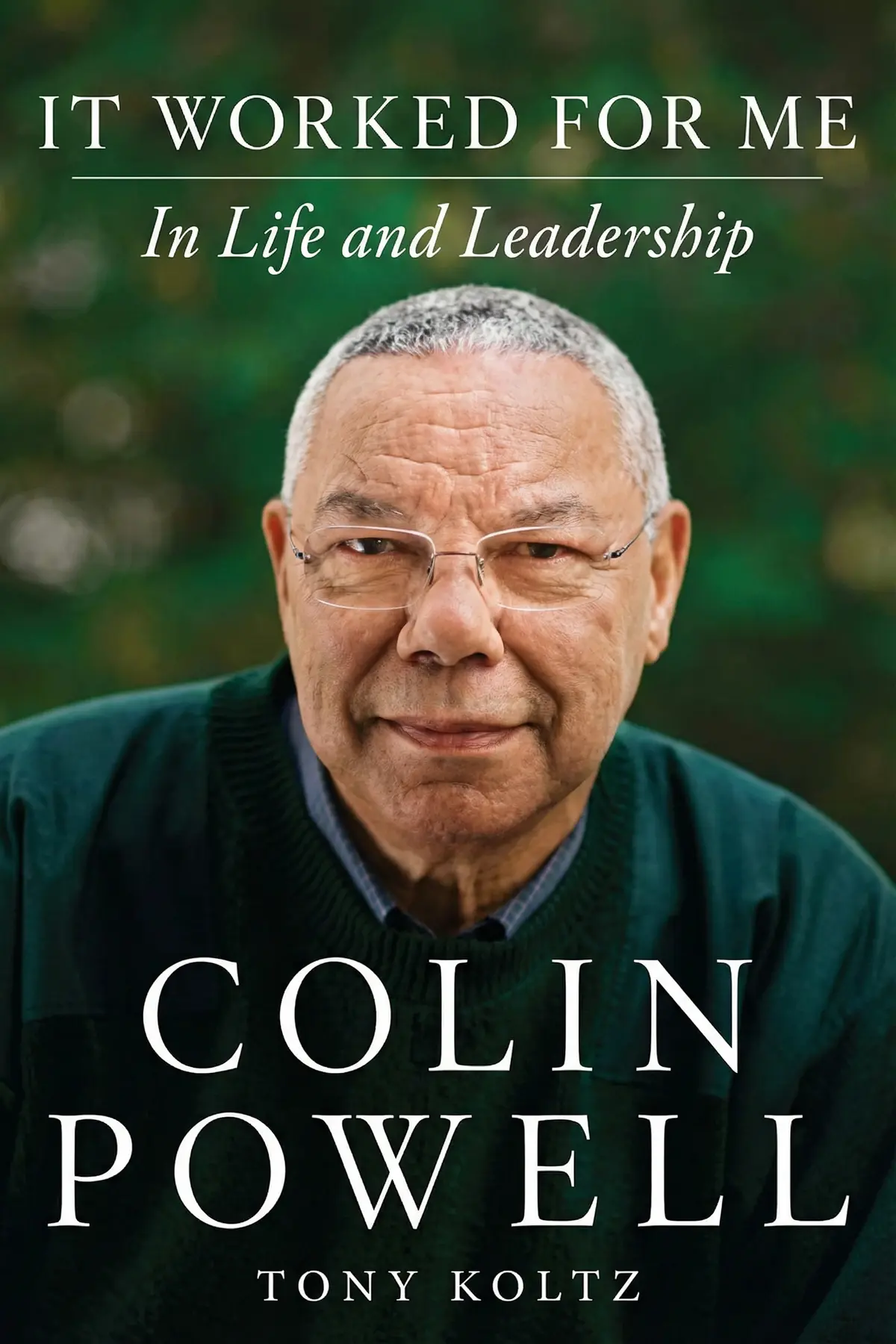
Table of Content
1. Introduction
1 min 55 sec
Imagine standing at the helm of one of the world’s most powerful organizations. Every decision you make has the potential to ripple across the globe, affecting thousands, if not millions, of lives. In such a high-stakes environment, what is the internal compass that keeps you steady? What are the rules you live by when the pressure is at its peak and the path forward is obscured by the fog of uncertainty?
This is the world Colin Powell inhabited for decades. From his time as a four-star general to his tenure as the first African American secretary of state, Powell navigated the complexities of leadership at the highest possible levels. But as we explore the insights in his book, It Worked for Me, you will find that great leadership isn’t about grand, abstract theories. Instead, it is built on a foundation of very practical, human-centric habits. It is about how you treat the person at the front desk, how you handle a mistake when you’re clearly in the wrong, and how you maintain a sense of hope when everyone else is ready to give up.
Powell’s approach is a blend of military discipline and deep empathy. He suggests that a truly effective leader is a multifaceted individual—part strategist, part communicator, and part mentor. Over the course of this summary, we will walk through the specific traits and behaviors that define this kind of excellence. We’ll look at his famous thirteen rules, examine the importance of taking full ownership of your responsibilities, and discover why trust is the most powerful tool in any manager’s kit.
Whether you are leading a small team in a startup, managing a large corporate department, or simply looking to lead yourself more effectively, these lessons offer a roadmap. The throughline here is simple yet profound: leadership is a performance art. It requires constant practice, a willingness to learn from failure, and above all, a commitment to the people who follow you. Let’s dive into the core principles that helped shape one of the most respected leaders of our time.
2. A Foundational Mindset for Leadership
2 min 33 sec
Discover the psychological framework that keeps a leader grounded, from the power of perpetual optimism to the vital importance of separating your ego from your office.
3. The Weight of Ownership and the Art of the Exit
2 min 24 sec
True ownership means inheriting every problem you find—and knowing exactly when to walk away completely. Discover why the best leaders make themselves obsolete.
4. Building a Foundation of Trust and Respect
2 min 32 sec
Your team’s loyalty isn’t earned through authority—it’s built through small acts of kindness and the willingness to trust them with real responsibility. Discover how treating people with genuine dignity transforms them into your greatest asset.
5. The Strategic Approach to Problem Solving
2 min 00 sec
Stop seeing problems as interruptions—they’re actually proof your team trusts you. Discover why speed, transparency, and letting others lead the solution are the real marks of exceptional leadership.
6. Mastering Communication Through Meetings
2 min 05 sec
Your meetings are bleeding your team’s time. Learn why the right format—from quick huddles to structured briefings—transforms information flow into organizational alignment and genuine human connection.
7. Conclusion
1 min 34 sec
As we wrap up our look at the leadership philosophy of Colin Powell, the picture that emerges is one of a leader who is as disciplined as he is compassionate. We’ve seen that being at the top isn’t just about giving orders; it’s about creating a culture of excellence. This starts with your own mindset—maintaining optimism even when the odds are stacked against you and ensuring that your ego never gets in the way of the truth. It continues with a radical sense of ownership, where you accept responsibility for every challenge you inherit and every decision you make.
But perhaps the most lasting lesson from It Worked for Me is the emphasis on the human element. A leader’s real power doesn’t come from their rank or their title; it comes from the trust and respect they build with their team. By treating people with kindness, empowering them with trust, and providing them with the tools they need to succeed, you create an organization that is far greater than the sum of its parts. You learn to see problems as opportunities to demonstrate support and meetings as a way to forge deeper connections.
Ultimately, Powell’s wisdom serves as a reminder that leadership is a service. You are there to provide direction, to solve problems, and to help others reach their full potential. If you can master the balance between the hard skills of strategy and the soft skills of empathy, you will find that you don’t just achieve your goals—you build a legacy. As you move forward in your own career, ask yourself: How am I building trust today? How am I projecting optimism? And how am I preparing the people around me to lead when my time is done? By putting these principles into practice, you can lead with the same integrity and effectiveness that defined one of the great leaders of our era.
About this book
What is this book about?
What does it take to lead at the highest levels of government and the military? It Worked for Me offers an intimate look at the core principles that guided Colin Powell’s storied career. Rather than focusing on complex theories, the book centers on practical, battle-tested wisdom that applies to managers, executives, and anyone seeking to inspire others. The narrative explores how a leader must balance the hard requirements of the job—such as decisiveness and preparation—with the essential human elements of trust, kindness, and respect. Through a series of personal anecdotes and reflections, the book promises to provide a framework for professional development. It covers everything from Powell’s famous thirteen rules of leadership to the nuances of running effective meetings and solving organizational crises. Listeners will gain insights into the "Pottery Barn rule" of accountability, the importance of the After-Action Review, and the necessity of knowing when to step aside for the next generation. Ultimately, it is a guide to becoming a leader who not only achieves results but also earns the unwavering loyalty of their team.
Book Information
About the Author
Colin Powell
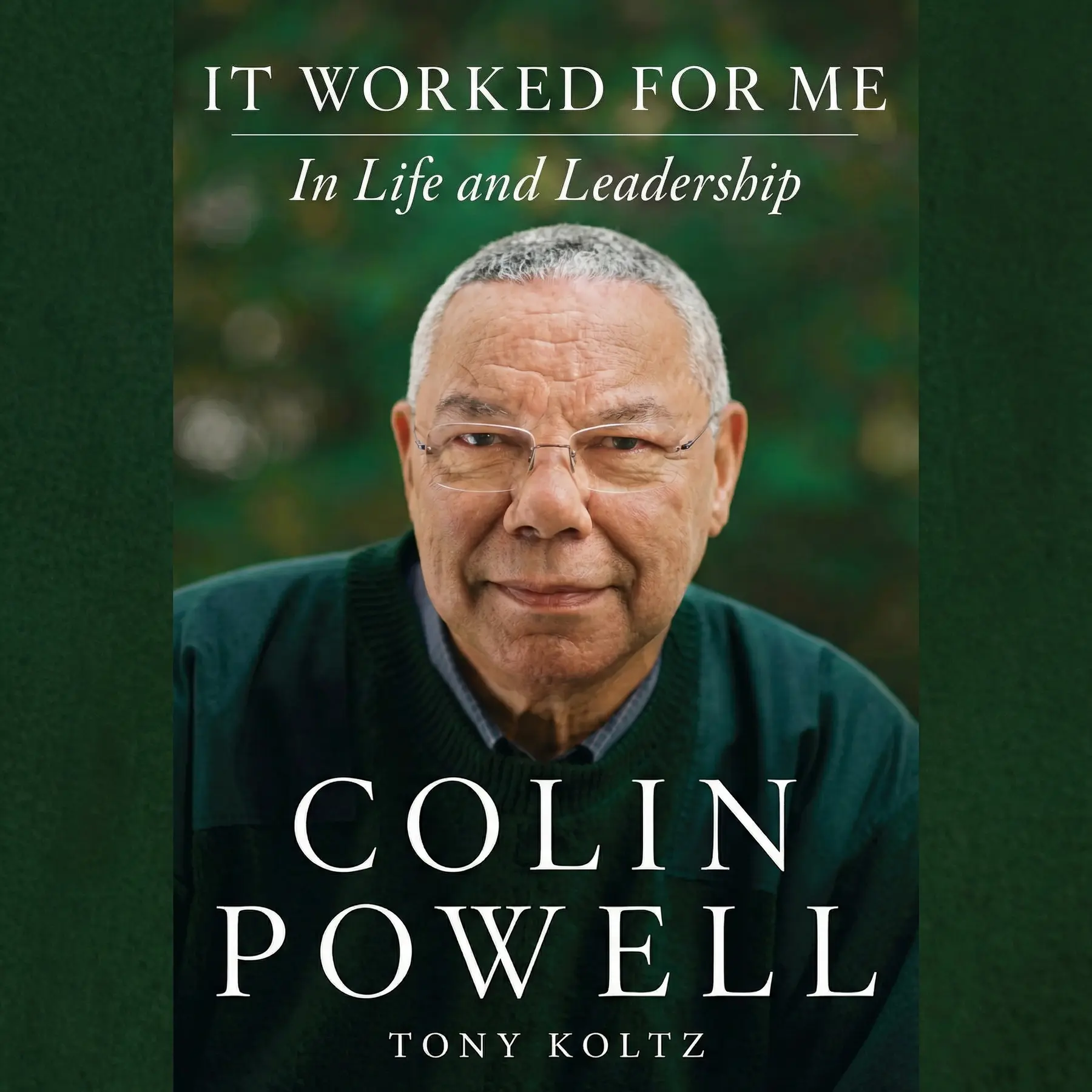
Colin Powell was a distinguished four-star general in the United States Army and served as the first African American secretary of state. His long career in public service and the military provided the foundation for his leadership philosophy. In 1995, he coauthored the New York Times best seller My American Journey with Joseph E. Persico. Tony Koltz is a prolific writer who has coauthored several military-focused works, including The Battle for Peace, Shadow Warriors, and Battle Ready, and has also authored books for children.
Ratings & Reviews
Ratings at a glance
What people think
Listeners find this book effortless to digest and packed with useful life lessons, calling it essential reading for everyone. It serves as a valuable reference for those in leadership roles, providing intriguing perspectives on management philosophy, and listeners appreciate the captivating anecdotes and polished writing. Furthermore, they consider the material both motivating and relevant, with one listener mentioning how it carries over into daily life.
Top reviews
Taweesak
Colin Powell’s wisdom is presented in a way that feels like a conversation with a mentor over coffee rather than a lecture from a world leader. I found his 'thirteen rules' to be surprisingly grounded, offering actionable advice that isn't just for those in uniform. While some of the military jargon can get a bit thick, the core messages about taking responsibility and trusting your team are universal. It is rare to find a book that manages to be both profoundly inspirational and intensely practical at the same time. The stories from his early days in the Bronx were particularly moving, showing that the man he became was built on a very human foundation. Every manager should keep a copy of this on their desk for those days when leadership feels impossible. It is a genuine must-read for anyone navigating a career in any field.
Show moreFah
Finally got around to this after seeing it on several 'must-read' lists, and it did not disappoint. Powell has a way of cutting through the nonsense to get to the heart of what makes an organization function properly. His anecdotes about the 'junk in the trunk' and how to handle problematic subordinates are both humorous and incredibly insightful. I've read plenty of leadership books that are full of abstract theories, but this one is refreshingly concrete and focused on results. It felt like a masterclass in diplomacy and human relations from someone who actually lived through the highest stakes imaginable. Not gonna lie, I found myself highlighting passages on nearly every single page to revisit later. This is exactly the kind of touchstone for leaders that we need in today's increasingly chaotic corporate landscape. Highly recommended.
Show moreManika
Ever wonder how a four-star general handles the day-to-day stress of the White House without losing his sanity? This book provides those answers through a series of engaging and often funny stories that highlight Powell's unique perspective on human nature. I particularly liked his advice on digital leadership and how to handle the influx of information in the modern age. It is inspirational to see how he maintained his core values while serving under multiple administrations with wildly different ideologies. The '13 Rules' are now taped to my monitor as a daily reminder of how to behave professionally. Frankly, it’s one of those rare books that actually makes you want to be a better person in your own career. I would recommend this to anyone from a new intern to a seasoned CEO. It is truly well-written content.
Show moreSayan
After hearing the General narrate the audiobook version, I found myself appreciating the nuances of his delivery even more than the text itself. He has a way of making high-level diplomacy feel like common sense, which is a rare talent in public service. The way he describes his relationship with his wife, Alma, adds a lovely personal touch that rounds out his public persona. It’s an engaging read that avoids the dry, academic tone often found in leadership manuals. You get the sense that he truly cares about the people who served under him at every level of his career. Personally, I found the chapter on his UN presentation to be honest, even if it was painful to revisit. This book is a must-read for anyone who values integrity and clear-headed decision-making in a complicated world.
Show moreRotjanee
As someone who has always been fascinated by modern history, this peek into the General's philosophy was quite rewarding. Powell doesn't shy away from the 'blot' on his record—the UN speech regarding Iraq—though he approaches it with the measured tone of a soldier rather than a politician. The chapter on February 5, 2003, offers a glimpse into the pressures he faced, even if it doesn’t provide the total closure some critics might want. Most of the book focuses on leadership basics that are easy to overlook in the rush of daily business. His emphasis on small details and looking after your people resonated with me deeply. It’s a well-written series of vignettes that remind us that character is the most important tool in any leader’s kit. This is a very solid addition to his legacy.
Show moreChanpen
The tone is very folksy and approachable, which makes the heavier leadership concepts significantly easier to digest during a commute. Powell shares stories ranging from his early childhood to his time in the White House, all with a humility that is quite refreshing. He focuses heavily on the idea that success is a collective effort rather than an individual achievement. This isn't a dense political biography, but rather a guide for people who want to improve their daily interactions with others. To be fair, some of the advice is a little bit basic—things like 'check your ego at the door'—but sometimes we need those reminders. The writing is crisp and the chapters are short enough to read in small bursts. It serves as an excellent companion to his earlier autobiography and offers practical life lessons for everyday situations.
Show moreWatcharee
Truth is, this feels less like a traditional autobiography and more like a collection of hard-won life lessons from a seasoned veteran. I appreciated how Powell talked about his mistakes just as much as his successes, which gave the book an authentic feel. His 'Pottery Barn Rule'—you break it, you own it—is something I’ve started implementing with my own team at work. There are definitely moments where the military structure he describes feels a bit dated compared to modern flat organizations. Still, the underlying principles of trust, loyalty, and clear communication are absolutely timeless and applicable across any field. It is a quick read that packs a punch, provided you aren't looking for a detailed political exposé. I found it quite satisfying and easy to apply to my everyday life.
Show moreCharlotte
I wasn't sure what to expect from a political figure, but this was surprisingly human and relatable in its approach. Powell manages to distill decades of high-level experience into simple, effective strategies that anyone can use to improve their professional life. I especially enjoyed the stories about his love for cars, as they showed a side of him that felt very down-to-earth. While I agree with other reviewers that the military focus can be a bit heavy-handed, the leadership philosophy is solid. It’s well-written and moves at a brisk pace, never lingering too long on any one anecdote. Not every lesson will work for every person, but there is enough variety here that everyone will find something useful. It’s a great touchstone for those looking to lead with more empathy and clarity.
Show moreNutnicha
The military hierarchies he discusses don't always translate perfectly to my specific professional environment in higher education. Truth is, many of his insights rely on a chain of command that simply doesn't exist in the civilian world where collaboration and consensus are the primary drivers. I enjoyed the anecdotes about his time in the State Department, but I often found myself questioning how to apply his 'Pottery Barn Rule' to a non-combat situation. The writing style is undeniably easy to read and the general's voice comes through clearly in every chapter. However, the lack of a chronological structure made it difficult to follow the overall arc of his career development. It is a decent collection of essays, but it felt a bit too superficial for my taste. I wanted more depth than just folksy aphorisms.
Show moreAey
This book left me wanting so much more regarding his time as Secretary of State and the decisions surrounding the Iraq War. Look, I understand it’s intended to be a book about leadership lessons, but you can’t simply brush over such a massive historical moment with folksy aphorisms. The stories felt fragmented and the lack of a clear timeline made the reading experience quite confusing at times. I struggled to see how his military-centric advice would work for anyone who isn't operating in a strictly top-down hierarchy. It felt like a collection of stump speeches rather than a deeply reflective memoir that grapples with the complexity of his legacy. While he seems like a decent man, the content here is just too light to justify the praise it has received. I was bored for large stretches of it.
Show moreReaders also enjoyed
7 Powers: The Foundations of Business Strategy
Hamilton Helmer

A Bigger Prize: How We Can Do Better Than the Competition
Margaret Heffernan
A Year with Peter Drucker: 52 Weeks of Coaching for Leadership Effectiveness
Joseph A. Maciariello
AUDIO SUMMARY AVAILABLE
Listen to It Worked for Me in 15 minutes
Get the key ideas from It Worked for Me by Colin Powell, plus 5,000+ more titles in English and Thai.
- 5,000+ titles
- Listen as much as you want
- 7-day free trial
- Cancel anytime







