
19 min
Let’s Talk: Make Effective Feedback Your Superpower
Let’s Talk provides a research-backed blueprint for mastering workplace feedback. Learn how to transform difficult conversations into opportunities for growth, motivation, and stronger professional relationships through empathy and clarity.
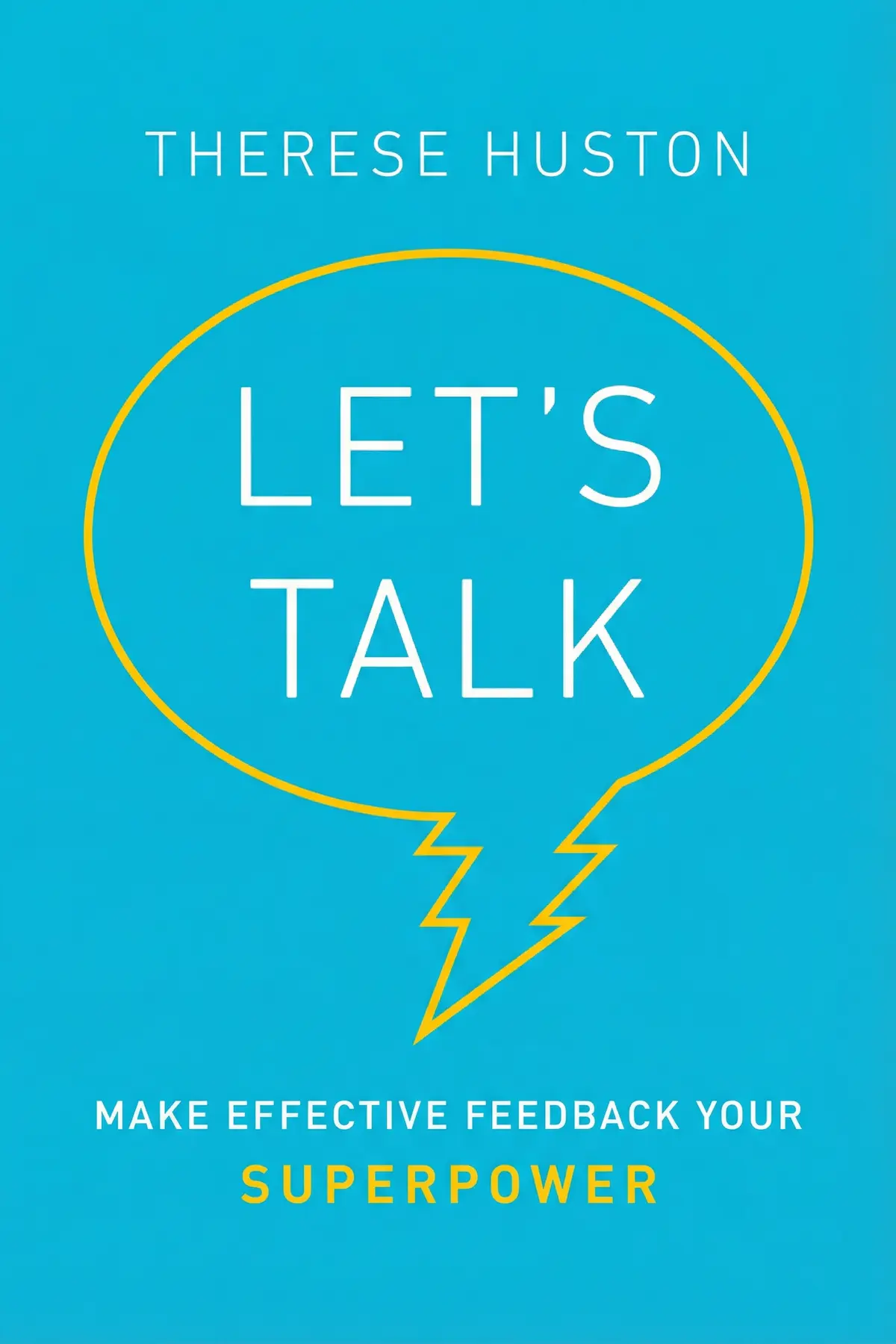
Table of Content
1. Introduction
1 min 40 sec
Every manager knows that the heartbeat of a successful company is the morale of its people. When your team is inspired, the work flows, deadlines are met, and the culture thrives. But there is a persistent hurdle that even the most seasoned leaders struggle with: the art of giving feedback. It often feels like a tightrope walk. If you are too harsh, you risk crushing someone’s spirit; if you are too vague, the work never gets better. Most leaders are left to figure this out through painful trial and error, often wondering if their words are actually making an impact or just creating more tension.
In this summary of Therese Huston’s insights, we are going to explore how to turn those awkward, draining conversations into your greatest leadership tool. Feedback shouldn’t be a chore that you dread or a box you check once a year during an annual review. When done correctly, it is the primary way you build a resilient, high-achieving team. We will look at how to distinguish between different types of feedback so you never give the wrong advice at the wrong time. We will also dive into the psychological triggers that make people defensive and, more importantly, how to bypass them.
The goal here is to shift your perspective. Instead of seeing feedback as a series of positive or negative statements, we will view it as a dynamic system of appreciation, coaching, and evaluation. You will learn why your intention matters just as much as your delivery, and why listening might actually be the most important part of speaking. By the end of this journey, you will have a toolkit for handling everything from glowing praise to the kind of sensitive conversations that usually keep managers up at night. Let’s begin by looking at how to categorize the messages you send to your team.
2. Categorizing Feedback for Clarity
2 min 28 sec
Discover why most feedback fails because it mixes signals, and learn the three specific categories every manager must master for maximum impact.
3. Adopting a Mindset of Growth and Compassion
2 min 21 sec
Learn how to avoid the mental traps that turn managers and employees into adversaries during feedback sessions.
4. The Importance of Stating Your Intentions
2 min 13 sec
Explore the psychological power of clarifying your ‘why’ to lower defenses and build a bridge of safety.
5. Mastering Relational Listening
1 min 59 sec
Shift from being a ‘BS detector’ to an empathetic listener to ensure your feedback is actually received.
6. The Strategy of High-Impact Praise
2 min 12 sec
Learn the magic ratio of praise to criticism and how to distinguish between ‘Me-strengths’ and ‘We-strengths’.
7. Navigating the Stress of Negative Feedback
2 min 14 sec
Explore techniques for delivering hard truths without triggering a cognitive shutdown in your team members.
8. Eliminating Surprises Through Regularity
2 min 15 sec
Learn why the annual review is not enough and how frequent check-ins can prevent minor issues from becoming disasters.
9. Conclusion
1 min 38 sec
The journey to becoming a feedback superpower begins with a simple shift in focus: from the message you want to send to the person who needs to receive it. We have explored the vital importance of categorizing your feedback into appreciation, coaching, and evaluation to ensure your intentions aren’t lost in translation. We’ve seen how a growth mindset and a commitment to relational listening can break down the walls of defensiveness that so often plague workplace communication. And we’ve learned that the most successful teams rely on a high ratio of praise to criticism, specifically highlighting those ‘we-strengths’ that bind a group together.
Feedback is not a weapon to be used for correction, nor is it a shield to hide behind during annual reviews. It is a bridge. It is the primary way you tell your employees that their work matters, that their growth is a priority, and that you are invested in their future. By making your good intentions known and checking for understanding at every turn, you eliminate the fear and uncertainty that drain productivity and stifle creativity.
As you move forward, remember the ‘Ask more, tell less’ rule. The next time you sit down with a team member, instead of jumping straight into your observations, try asking, ‘What is the biggest challenge you are facing right now?’ This small shift invites them into the process and signals that you are a partner, not just a judge. High-quality feedback is a skill that takes time to master, but the rewards—a motivated, loyal, and high-performing team—are more than worth the effort. Start today by looking for one ‘we-strength’ to praise, and watch how the atmosphere of your workplace begins to transform.
About this book
What is this book about?
Many leaders view feedback as a daunting obligation or a checkbox on a performance review, but Let’s Talk reframes it as a fundamental management superpower. The book addresses the common anxieties surrounding workplace communication, offering a clear structure to differentiate between praising, coaching, and evaluating. By focusing on the psychology behind how people hear and process information, it provides a roadmap for building trust and ensuring that advice is actually implemented. The promise of this guide is a more engaged, motivated, and productive workforce. It moves beyond generic management advice to explore the nuances of human connection, such as the importance of relational listening and the specific ratio of praise to criticism that drives high performance. Whether you are delivering a promotion or addressing a delicate personal issue, the strategies here aim to reduce stress and foster a culture where everyone knows exactly where they stand and how they can improve.
Book Information
About the Author
Therese Huston
Dr. Therese Huston is an expert in cognitive psychology, having earned both her MS and PhD from Carnegie Mellon University. She served as the founding director of Seattle University’s Center for Excellence in Teaching and Learning. A prominent voice in professional development, she has contributed to the New York Times and the Harvard Business Review and has shared her insights at organizations like Amazon, Microsoft, and Harvard Business School. She is also the author of Teaching What You Don't Know and How Women Decide.
Ratings & Reviews
Ratings at a glance
What people think
Listeners view this as a premier guide for giving feedback, with one listener pointing out the volume of psychological data and research included. They value how accessible the writing is, and one listener mentions that it is a required read for those in team leadership roles.
Top reviews
Nannapat
This book is a masterclass in how to stop putting people on the defensive during performance reviews. I always struggled with employees shutting down, but Huston explains that it’s often because we lead with 'why' questions that feel like an interrogation. Switching to 'what'—as in, 'what is the real challenge here for you?'—has completely shifted the energy in my one-on-ones. To be fair, some of the corporate anecdotes feel a bit stiff, but the psychological data backing her methods is undeniable. It’s rare to find a business book that is this readable while remaining grounded in actual research. It really pushes you to be on the other person's side.
Show moreMadison
Picked this up on a whim after a mentor recommended it, and frankly, it’s one of the most useful leadership guides I’ve encountered in years. The way Huston breaks down feedback into three distinct buckets—appreciation, coaching, and evaluation—is a total game-changer for clarity. Most of us muddle these together, leaving the employee confused about whether they're being fired or just given a tip. The research-heavy approach makes the advice feel credible rather than just another collection of feel-good platitudes. It’s an essential toolkit for anyone who wants to build a culture of high performance and high trust. I've already started asking more follow-up questions.
Show moreBella
As someone who manages a large, diverse team, I found this book to be an absolute gift for navigating the nuances of fair evaluation. Huston provides a clear framework for stating your intentions upfront so that the person across from you doesn't feel like they're being blindsided by a messenger they can't trust. I’ve already started implementing the 'nine questions in fifteen minutes' rule, and the depth of conversation has improved dramatically. The truth is, most of us talk too much and listen too little during these meetings. This book gives you the courage to stop talking and start asking the right things to get the root of the issue.
Show moreManee
After hearing so much buzz about this title, I finally dove in and was pleasantly surprised by how much data is packed into such a readable format. It’s a rare blend of a pep talk and a rigorous tool kit that addresses the anxiety we all feel when we have to deliver tough news. The focus on listening relationally—really hearing the other person's side of the story before jumping to a critique—is something I wish I’d learned a decade ago. It helps you become the leader you wish you had. If you want to be the boss that people actually want to work for, read this book and keep it close.
Show moreRung
Finally got around to reading this, and it’s a brilliant resource for anyone who wants to improve their interpersonal dynamics. Huston’s advice to state your good intentions clearly at the start of a difficult talk is so effective at lowering defenses. I also found the section on avoiding 'why' questions to be extremely practical; asking 'what' instead really does help uncover the root cause of an issue without making the employee feel attacked. The book is dense with psychological research, but it never feels like a textbook. It’s compassionate, clear, and focused on growth. Every team leader should have a copy of this on their desk for regular reference.
Show moreEvelyn
Ever wonder why your well-intentioned feedback often blows up in your face? Therese Huston argues it’s because we focus too much on the error and not enough on the human being trying to navigate it. I loved the concept of 'siding with the person' rather than siding with the problem. It sounds like a small distinction, but it changes the entire script from a lecture to a collaborative coaching session. My only gripe is that the book is a bit repetitive in the middle sections, but the 'main takeaways' graphics at the end of each chapter are incredibly helpful for a quick refresh. Definitely a solid guide for new managers.
Show moreCherry
The chapter on 'siding with the problem' alone is worth the price of admission for this book. It’s such a simple shift to move from 'you did this wrong' to 'how can we tackle this obstacle together?' yet it’s so rarely practiced in the corporate world. Truthfully, I found some of the writing a bit dry in the more academic sections, but the practical scripts more than make up for it. I particularly appreciated the advice on how to mention awkward topics without making it weird by stating your intent early. It’s a very grounded, human approach to professional communication that avoids the usual buzzword-heavy fluff found in modern business books.
Show moreOoi
Look, giving feedback is miserable for almost everyone involved, but this book actually makes it feel manageable. I’ve read several books on this topic, but Huston’s approach feels more empathetic and less like an excuse to just be blunt. She emphasizes the importance of recognizing strengths that uplift the whole team, not just pointing out where someone missed the mark. I did find a few of the scenarios a little dated, almost as if they didn't account for the recent shift in workplace dynamics. However, the core psychological principles are timeless and incredibly well-researched. It’s a solid addition to any leader's library, especially for those looking to build leaders, not followers.
Show morePichaya
Not what I expected, and I have some mixed feelings about the execution here. While the book is billed as a modern guide to communication, many of the examples felt like they belonged in a 1990s boardroom with very rigid, top-down hierarchies. If you work in a flat organization or a startup where self-leadership is the norm, the 'manager-as-expert' vibe might rub you the wrong way. That said, the little summaries at the end of each chapter are excellent and distill the core advice into something usable. I’ll keep it on the shelf for those resumes, but I'll skip the more manipulative-sounding scripts that assume the boss is always right.
Show moreWanida
To be fair, there is some really solid advice here about navigating the difficulties of consistent feedback, but I struggled with the tone at times. Some of the strategies for 'guiding' a conversation felt a bit too close to micromanagement for my liking, assuming the manager always has the correct perspective and the employee needs to be led to a specific conclusion. I prefer a more horizontal leadership style where ownership is shared, and some of these examples felt a bit patriarchal. However, the actual tools—like the specific questions to ask and the chapter resumes—are definitely worth your time. It's a useful read if you filter it through your own context.
Show moreFeatured in
Readers also enjoyed
7 Powers: The Foundations of Business Strategy
Hamilton Helmer

A Bigger Prize: How We Can Do Better Than the Competition
Margaret Heffernan

A Year with Peter Drucker: 52 Weeks of Coaching for Leadership Effectiveness
Joseph A. Maciariello
AUDIO SUMMARY AVAILABLE
Listen to Let’s Talk in 15 minutes
Get the key ideas from Let’s Talk by Therese Huston, plus 5,000+ more titles in English and Thai.
- 5,000+ titles
- Listen as much as you want
- 7-day free trial
- Cancel anytime







