
14 min 42 sec
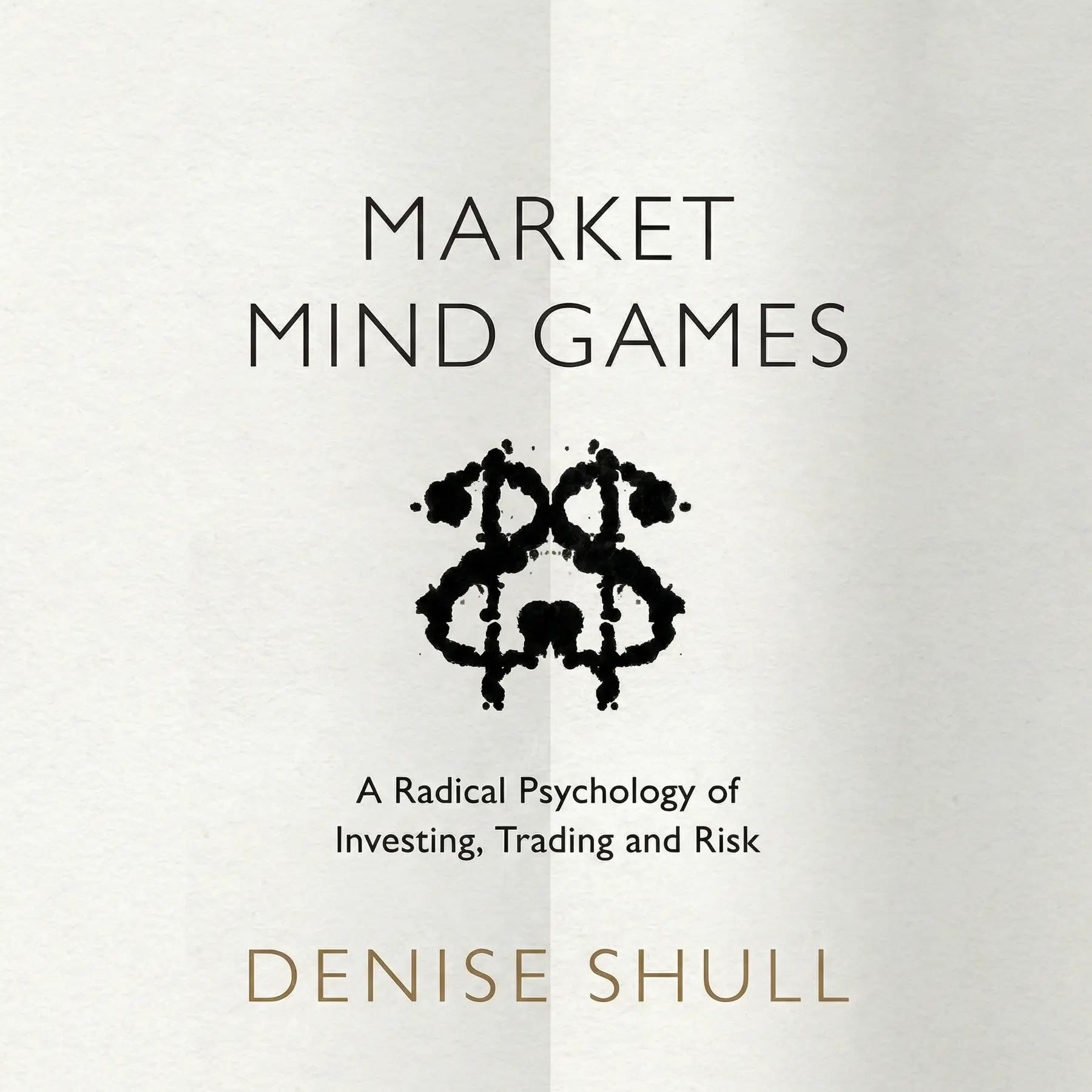
Market Mind Games: A Radical Psychology of Investing, Trading and Risk
By Denise Shull
Explore how emotional intelligence and psychological resilience transform financial decision-making. Learn to leverage your feelings as data to navigate market volatility and overcome the hidden biases that hinder trading success.
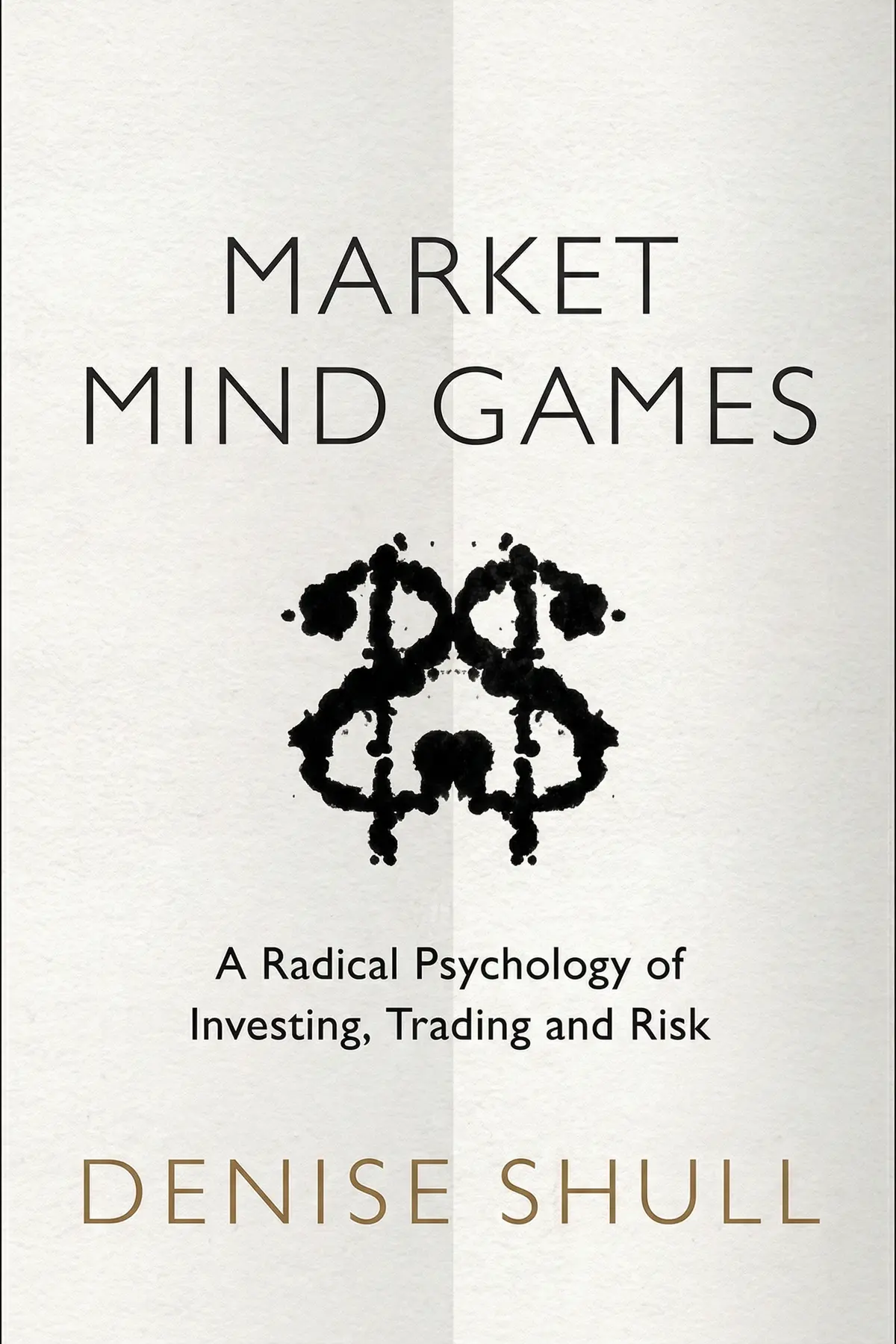
Table of Content
1. Introduction
1 min 29 sec
Have you ever wondered why, even with the most sophisticated software and a wealth of data at your fingertips, the market still manages to catch you off guard? It is a common frustration for traders and investors alike. We are taught that finance is a game of logic, a realm of cold, hard numbers where the most rational person wins. But if you have ever felt your heart race as a price ticker dropped or hesitated to pull the trigger on a trade that looked perfect on paper, you know there is more to the story.
In this exploration of Market Mind Games, we are going to challenge the traditional view of trading. We are moving away from the idea that emotions are the enemy of profit. Instead, we are going to look at how your feelings, perceptions, and even your personal history are the very things that define your success in the financial world.
Think of the market not just as a collection of prices, but as a vast, living sea of human emotion. Every price movement is the result of thousands of individuals making decisions based on their own fears, hopes, and expectations. To navigate this sea, you need more than a map of the past; you need a compass for the present. We will delve into how to build what we call psychological leverage, how to manage your mental energy, and how to decode the signals your brain is sending you. By the end of this journey, you will see that the most important chart you can ever read is the one inside your own mind. We are setting out to turn psychology from a hidden liability into your greatest strategic advantage.
2. The Limits of Logic and the Reality of Emotion
1 min 55 sec
Discover why relying solely on mathematical models can be a dangerous trap and how your emotions actually provide the missing pieces of the market puzzle.
3. Predicting the Collective Mind
1 min 41 sec
Explore the strategic power of understanding how other participants perceive the market, turning price movements into a study of human behavior.
4. Protecting Your Psychological Capital
1 min 55 sec
Learn why your physical well-being is a direct driver of your financial success and how to manage the mental energy required for high-stakes choices.
5. Navigating the Paradox of Regret
2 min 07 sec
Uncover the emotional mechanics of regret and how to prevent the fear of future dissatisfaction from sabotaging your current trades.
6. Developing Your Psychological Leverage
1 min 58 sec
Master the art of ‘reading the field’ and using self-awareness to gain a sustainable advantage that transcends technical market knowledge.
7. Uncovering the Fractal Patterns of the Mind
2 min 09 sec
Deepen your trading expertise by identifying the hidden emotional blueprints from your past that unconsciously dictate your financial future.
8. Conclusion
1 min 28 sec
As we conclude our journey through Market Mind Games, the overarching message is clear: your mind is the ultimate trading platform. We have seen that while data and models are useful, they are merely tools in the hands of a human operator who is deeply influenced by emotion, perception, and history. To be a truly successful trader, you must move beyond the illusion of pure logic and embrace the complexity of your own psychology.
By developing emotional intelligence, you turn your feelings from potential liabilities into high-speed data signals. By managing your psychological capital, you ensure that you always have the energy and clarity to perform at your best. And by uncovering the hidden fractal patterns of your past, you break free from the self-sabotaging behaviors that keep so many investors stuck in a cycle of frustration.
Mastering the market is, at its heart, a process of mastering yourself. It requires the courage to look inward and the discipline to treat your mental state with the same rigor you apply to your financial analysis. As you move forward, remember that every trade is an opportunity to practice this self-awareness. Don’t fear the volatility of the market; instead, learn to navigate the volatility of your own mind. When you align your inner psychology with your outer strategy, you create a foundation for lasting success and confidence in the face of any market challenge. Now, take these insights and begin the work of turning your mind into your most powerful financial asset.
About this book
What is this book about?
Market Mind Games introduces a revolutionary perspective on the world of finance, arguing that the greatest asset a trader possesses is not a complex algorithm, but their own mind. While traditional financial education emphasizes numbers, charts, and historical models, this guide reveals that these tools often fail because they ignore the human element. The book explores how emotions like fear, confidence, and regret are not obstacles to be suppressed, but vital signals that can be decoded to gain a competitive edge. By integrating insights from neuroscience and psychology, the narrative shows how to build psychological leverage and manage mental capital. Readers will discover the concept of fractal-emotional contexts—how past experiences shape present choices—and learn to anticipate market movements by understanding the collective psyche of other participants. The promise of the book is a path to clearer, more confident decision-making, allowing investors to move past analysis paralysis and impulsive reactions toward a disciplined, emotionally intelligent strategy for long-term market success.
Book Information
About the Author
Denise Shull
Denise Shull is a highly regarded performance coach and the visionary founder of The ReThink Group. She specializes in the psychology of decision-making and high-level performance within high-stakes environments, most notably in professional sports and the financial sector. Shull holds a master’s degree in neuropsychology, which allows her to bridge the gap between hard science and practical performance. By applying cutting-edge insights from neuroscience, she assists her clients in identifying and understanding the profound influence that emotions have on their professional decisions.
Ratings & Reviews
Ratings at a glance
What people think
Listeners find this work both captivating and profoundly perceptive, offering substantial practical advice and remarkable perspectives on their own psychology. Opinions on the writing quality are varied; some praise the prose while others describe it as subpar. Listeners report that the book boosts their trading success and sharpens their judgment, with one listener noting permanent changes in trading results. Despite some finding the sentence construction difficult to follow, listeners ultimately feel the content justifies the cost.
Top reviews
Wipawan
Denise Shull flips the script on the 'cold-blooded trader' myth by proving that our feelings are actually sophisticated data streams. While most gurus tell you to kill your ego, this book suggests we should listen to the underlying messages our bodies are sending during market volatility. I found the concept of 'psychological capital' particularly transformative for my daily routine. It’s not just about charts; it's about why you want to click the mouse in the first place. Some of the sentence structures are a bit clunky, but the core wisdom is undeniably profound. If you can push past the occasionally dense prose, you’ll find a blueprint for a much more resilient trading mindset. Understanding your own internal landscape is the ultimate edge in a world of algorithms.
Show moreKwan
Finally got around to reading this and I’m genuinely shocked by how much my trading performance has improved since applying the 'psychological leverage' plan. Shull nails the fact that we aren't robots; we are biological entities whose perceptions are filtered through a complex web of beliefs. I started journaling my physical feelings—like fatigue and hunger—and noticed an immediate correlation with my worst losing streaks. It turns out that 'sleep is an edge' isn't just a catchy phrase, but a fundamental truth of risk management. This isn't just about trading; it's a manual for understanding the games your mind plays on you every single day. Truly an essential read for anyone serious about the craft. The permanent changes in my results speak for themselves.
Show moreViroj
After hearing so many traders recommend this, I decided to dive in, and the concept of 'theory of mind' has completely changed my strategy. Instead of just looking at the charts, I’m now constantly asking what other participants are feeling and how they will likely react. Shull teaches you that the market is essentially a giant beauty contest of perceptions rather than a mathematical law. This shift from 'what is the fact' to 'what will others perceive' is where the real money is made. The book also emphasizes physical health as a prerequisite for good judgment, which is a lesson I learned the hard way. It’s a masterpiece of market psychology that deserves a spot on every serious trader’s shelf. Highly recommended for those willing to do the work.
Show moreLaddawan
As someone who has always struggled with the 'fear vs. confidence' spectrum, I found this deep dive into our subconscious drivers to be eye-opening. Shull argues that our market decisions are often just echoes of our past traumas and childhood relationships, which she calls 'fractal emotional contexts.' It sounds a bit 'woo-woo' at first, but the neuroscientific backing makes it feel grounded and legitimate. My only gripe is that the practical application steps are buried under layers of academic theory and narrative filler. However, the perspective shift regarding 'regret theory' alone made the purchase worth it for me. It’s a dense read, but it will definitely change how you view your P&L statement. You'll never look at a losing trade the same way again.
Show moreChloe
It’s refreshing to read a finance book that doesn’t sound like it was written by the same old 'alpha male' archetype. Denise Shull brings a much-needed psychological perspective to the table, focusing on emotional intelligence rather than just technical indicators. Look, the industry is obsessed with suppressing feelings, but she argues that this actually makes us more vulnerable to impulsive biases. I appreciated the sections on managing regret and how it drives us to make sub-optimal choices out of fear of missing out. The book is a bit wordy and could have benefited from a sharper editor, but the message remains powerful. It’s high time we acknowledged the human element in the markets. This book provides a fantastic bridge between neuroscience and actual trading floor reality.
Show moreFort
Ever wonder why you keep making the same trading mistakes even though you know better? This book suggests the answer lies in your early life experiences and how they shaped your current emotional triggers. Shull calls these 'fractal' patterns, and identifying them in my own life was a major 'aha' moment. The truth is, we are all just acting out old scripts in a new market environment. I’ve started using her advice to name my feelings as they arise, which oddly makes them much easier to manage. The sentence structure can be a bit of a nightmare at times, but the content is too good to ignore. It’s a solid 4 stars for the psychological depth and the courage to challenge standard industry dogma.
Show moreWillow
Picked this up after hearing it was a game-changer, but I have mixed feelings about the final product. On one hand, the insight that we should treat emotions as information rather than enemies is brilliant and very helpful. On the other hand, the writing style is remarkably confusing and often gets in its own way with circular logic. I kept waiting for a clear 'how-to' guide that never really materialized in the way I expected. It’s definitely not your typical trading book, which is refreshing, yet the narrative format with the lectures felt unnecessary. You can find the main gold nuggets by skimming the summary sections if you are short on time. It is a decent addition to the library, but not a mandatory one.
Show moreGoy
Not what I expected given the author's impressive background as a neuroscientist and former trader. While the core idea—that emotions are a necessary part of the decision-making process—is spot on, the delivery falls flat. She tries to emulate the 'business fable' style of books like 'The Goal,' but the characters aren't engaging enough to carry the theory. I found myself getting annoyed with 'Michael' and his constant realizations, which felt a bit staged and repetitive. To be fair, the psychological insights are top-tier, but you have to dig through a lot of rubble to find them. It's a decent read, but I probably wouldn't recommend it to someone looking for a quick fix. Take it slow and be prepared for some awkward sentence structures.
Show moreSukit
The premise of using neuroscience to master the markets sounded incredible, but the execution left me wanting to toss the book across the room. Shull insists on weaving this fictional narrative about a trader named Michael that feels totally forced and frankly quite boring. I spent more time skimming through repetitive dialogues than actually learning new strategies for my portfolio. To be fair, the idea that emotions are unavoidable is a good point, but it could have been a thirty-page PDF instead of this slog. The writing is just too disorganized to justify the 200+ pages of fluff. It’s a struggle to finish even if you’re a fan of the subject matter. There are better ways to learn about market psychology than this.
Show moreViolet
Wow, I really wanted to like this one, but the writing is just incredibly poor for such a high-level topic. Every other page is filled with references to 'Michael' and his simulated trading journey, which honestly felt like a waste of my time. The book is bloated to over 250 pages when the main points could have been summarized in a lengthy blog post or a podcast episode. I love the idea of using psychology to gain an edge, but the delivery here is just too disorganized and repetitive. If you are looking for clear, actionable steps without the fluff, you might want to look elsewhere. It’s a shame because the underlying concepts about emotional context are actually quite interesting and valid.
Show moreReaders also enjoyed




AUDIO SUMMARY AVAILABLE
Listen to Market Mind Games in 15 minutes
Get the key ideas from Market Mind Games by Denise Shull, plus 5,000+ more titles in English and Thai.
- 5,000+ titles
- Listen as much as you want
- 7-day free trial
- Cancel anytime







