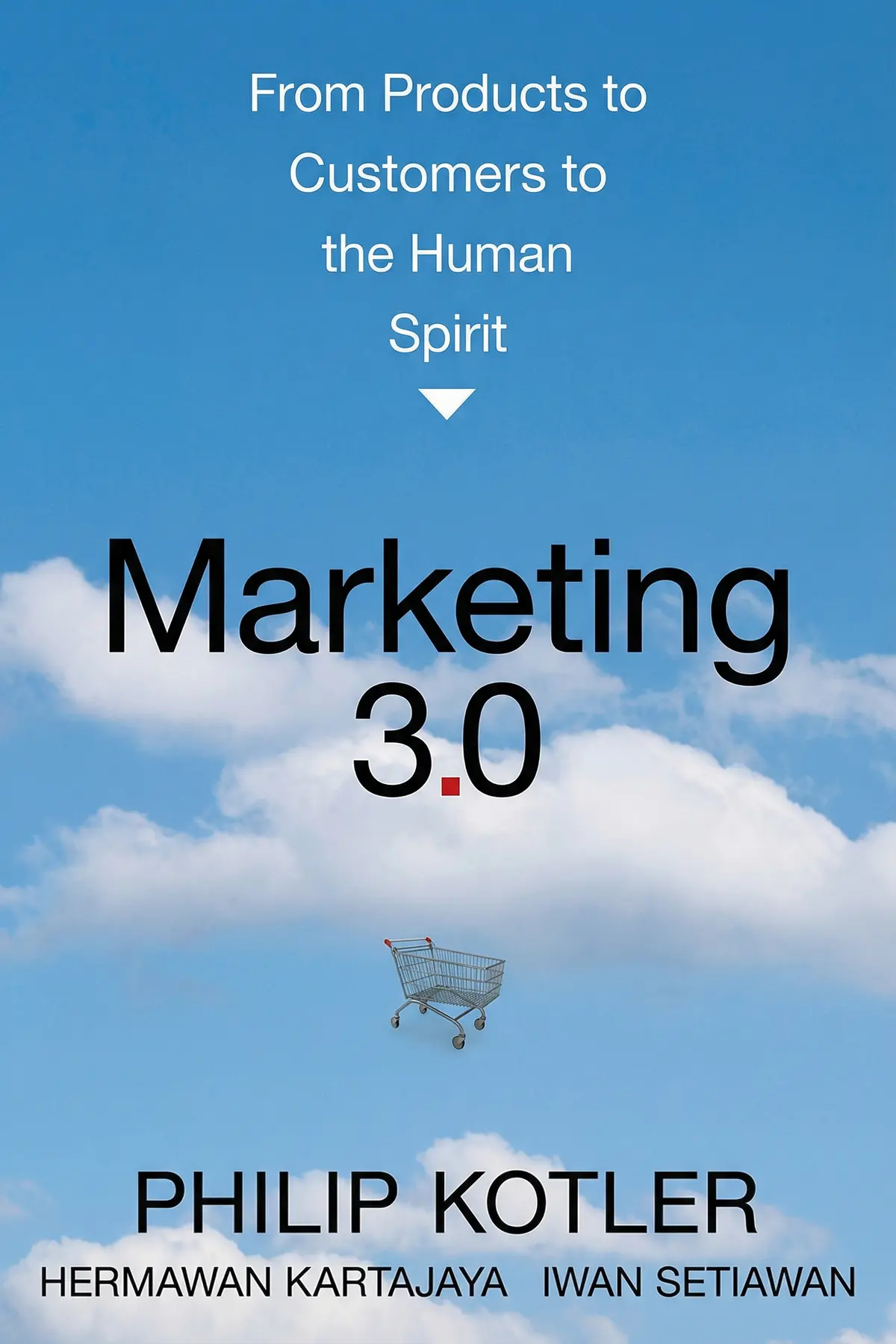
Marketing 5.0: Technology for Humanity
Philip Kotler
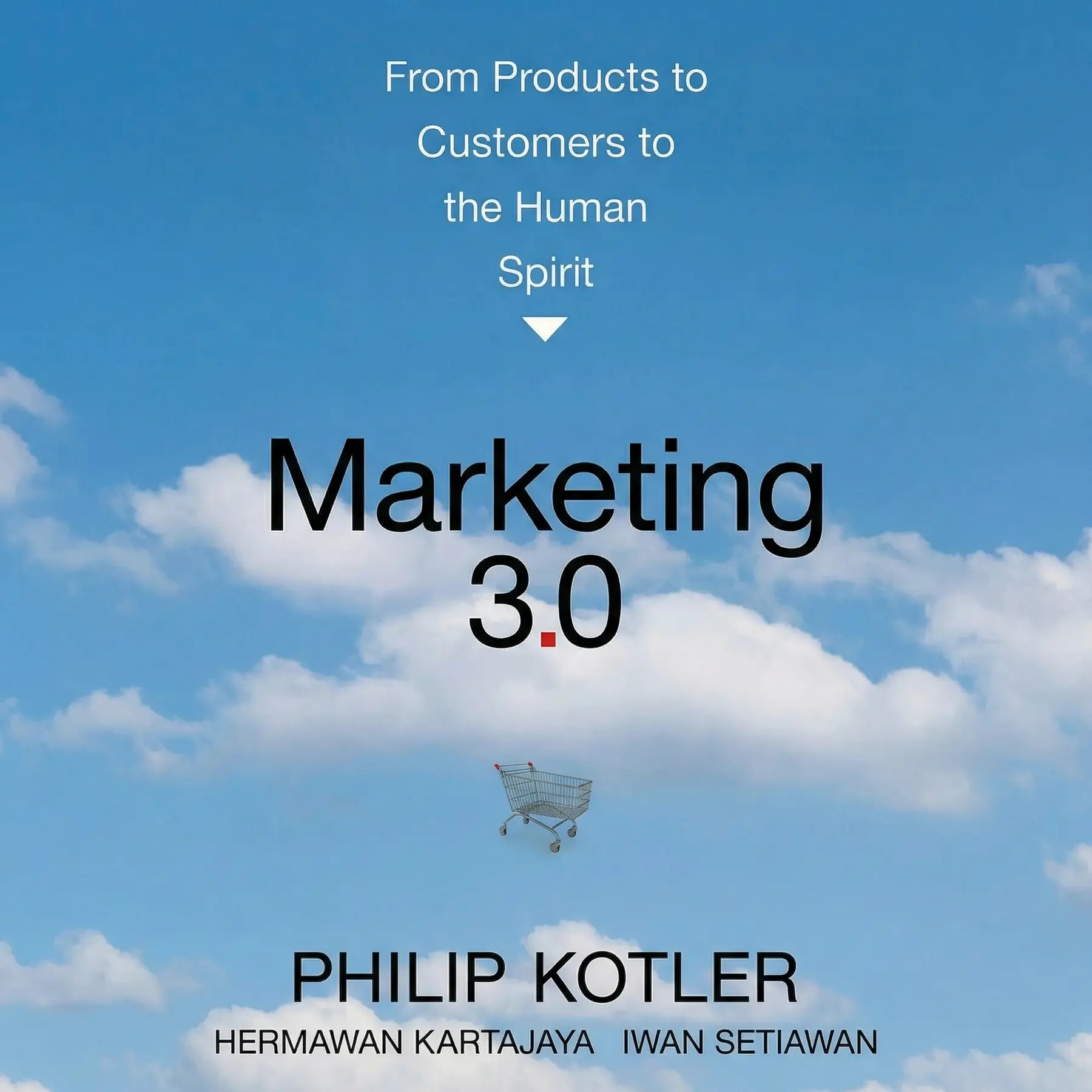
Marketing 3.0 examines the transition from product-centered and consumer-oriented strategies to a human-centric approach. It explains how businesses can thrive by aligning their values with the social and spiritual needs of modern consumers.
1 min 48 sec
In the modern landscape, it might seem like marketing has never been easier. We have sophisticated tools that can polish an image to perfection with a few clicks, and social media platforms that can broadcast a message to millions in a heartbeat. Decades of research have been distilled into handy playbooks, giving us the blueprints for success. Yet, despite these technological leaps, many businesses find themselves struggling to connect. There is a disconnect happening, and it’s because the person on the other side of the screen has changed.
Today’s consumers are no longer passive recipients of whatever a brand decides to put in front of them. They are smarter, more skeptical, and more connected than any generation before them. They have been bombarded with advertisements since birth, making them wary of empty promises. They don’t just want to buy a product; they want to participate in a story and support a cause. This shift has rendered traditional, old-fashioned marketing tactics increasingly ineffective. If a company continues to talk at people instead of with them, those people will simply tune out.
This brings us to a new paradigm: Marketing 3.0. This isn’t just a tactical update; it’s a complete reimagining of the relationship between a business and its customers. It suggests that the only way to succeed in this new era is to treat consumers as whole human beings—people with minds, hearts, and spirits. Over the course of this summary, we will explore how participation, creativity, and values-based integrity have become the new currency of the commercial world. We’ll see how companies like Google, Disney, and Timberland navigate these waters, and why your corporate culture might be the most important marketing tool you have.
2 min 27 sec
Discover how the rise of social media and open-source technology has turned consumers from quiet observers into active participants in the marketing process.
2 min 07 sec
Learn why the values of writers, artists, and designers are reshaping the market and why businesses must appeal to their spiritual needs.
2 min 21 sec
Explore a marketing framework that targets the human soul by combining identity, image, and integrity into a powerful brand presence.
2 min 15 sec
Discover why long-term success starts with a purpose-driven mission rather than just a set of financial objectives.
2 min 15 sec
Uncover the secrets to a powerful brand mission that changes lives and uses classic narrative elements to capture the public imagination.
2 min 12 sec
See why your employees are your most important brand ambassadors and how an authentic culture is the only way to maintain brand integrity.
2 min 20 sec
Learn how long-term thinking and ecological responsibility actually improve a company’s bottom line and future-proof the business.
1 min 53 sec
Discover how the focus of marketing has shifted from products and consumers to the profound needs of the human spirit.
1 min 36 sec
As we look toward the future, the message is clear: the era of treating customers as simple targets for sales pitches is over. The shift to Marketing 3.0 represents a profound change in how we view the relationship between commerce and society. We have moved from a world where companies could hide behind clever slogans to a world where transparency and integrity are the only paths to lasting success.
The core of this transformation is the recognition of the consumer as a whole human being. People want to participate, they want to create, and above all, they want to know that the brands they support are making the world a better place. By focusing on the 3i model—Brand Identity, Brand Image, and Brand Integrity—businesses can build a foundation of trust that is impossible to replicate with traditional advertising alone.
What can you do to start moving in this direction? Look at your company’s mission and ask if it truly transforms lives. Examine your corporate culture and see if your values are being lived out by every employee, from the front line to the executive suite. Consider how you can link your products to social causes that matter to your community. Remember, Marketing 3.0 isn’t just a strategy for selling more goods; it’s a philosophy for building a sustainable, meaningful organization that can thrive in the age of participation. By aligning your business goals with the human spirit, you don’t just win a customer; you contribute to a better world.
The world of commerce has shifted dramatically from the days of passive consumption. Today, we live in an era where technology allows every individual to be a vocal participant in the marketplace. Marketing 3.0 outlines how this evolution demands a new corporate philosophy—one that moves beyond mere functional benefits and emotional connections to reach the human soul. The book promises a roadmap for businesses to navigate a landscape defined by social media, a growing creative class, and a demand for radical transparency. By focusing on the 3i model—Brand Identity, Brand Image, and Brand Integrity—companies can build lasting trust. It covers the necessity of having a transformative mission, a sustainable vision, and values that are lived out by every employee. Ultimately, it shows that the most successful companies of the future will be those that treat consumers not just as buyers, but as whole human beings with hearts, minds, and spirits.
Professor Philip Kotler is a renowned figure in the field, often cited as a founding father of modern marketing and a former director of the American Marketing Association. He teaches at the Kellogg School of Management. Hermawan Kartajaya serves as the president of the World Marketing Association and founded the consulting firm MarkPlus Inc. Iwan Setiawan is the Chief Knowledge Officer at MarkPlus Inc., where he specializes in developing innovative marketing frameworks.
Philip Kotler
Listeners find the material accessible and value the way it clearly explains intricate subjects. The content is also seen as highly pertinent; one listener pointed out its suitability for both small startups and major corporations. Additionally, the writing style earns praise, with one listener describing the work as good common sense well-articulated. On the other hand, the marketing focus gets a divided response, as one listener felt it was too propagandizing.
What does it mean to market to the human spirit? Kotler moves beyond the traditional 4Ps to explore how companies can connect with consumers on a much deeper, almost spiritual level. This isn't just about selling a widget anymore; it is about proving that your brand stands for something greater than profit. The shift from product-centricity to human-centricity is articulated with such clarity that even those outside the industry will find it enlightening. Truth is, the book feels like a manifesto for a more compassionate form of capitalism. While some might roll their eyes at the mention of the 'soul' of the consumer, the logic behind value-driven marketing is undeniable in our connected age.
Show moreAfter hearing so much about the 'new wave' of technology, this book finally put those changes into a coherent framework that makes sense. The authors’ focus on the Southeast Asian market and the Indonesian context adds a refreshing global perspective that you don't usually see in American business books. It challenges the reader to look at emerging markets not just as places to extract profit, but as communities to empower through entrepreneurship. I loved the distinction between marketers as mere sellers and marketers as agents of socio-cultural transformation. Even if you don't agree with every philanthropic point, the intellectual exercise of 'unraveling the code of the soul' is worth the time spent reading.
Show moreThe chapter on targeting and segmentation in the 3.0 era is worth the price of the book alone for its sheer brilliance. It breaks down consumers into leaders of opinion and seekers of value in a way that feels incredibly modern and actionable. Personally, I found the discussion on how 'prosumers' are now shaping the future of brands to be the most prophetic part of the entire text. It is rare to find a business book that balances high-level philosophy with actual strategic tools like this. If you are a marketing director trying to justify a more ethical approach to your board, this book provides the exact vocabulary you need. Highly recommended for anyone who wants to stay ahead of the curve.
Show morePicked this up to see if Kotler still has the magic touch, and I wasn't disappointed by the strategic framework presented here. The evolution from Marketing 1.0 (product-centric) to 3.0 (human-centric) provides a necessary roadmap for anyone trying to navigate the current digital landscape. I especially appreciated the 10 credos listed toward the end; they serve as a solid foundation for building a brand that actually respects its customers. Though some of the examples feel a bit dated now, the core message about collaborative marketing and 'prosumers' remains highly relevant. It is a quick, well-articulated read that forces you to rethink the purpose of your mission and vision statements.
Show moreAs a startup founder, I found the core message about value-driven branding surprisingly applicable to small-scale operations. Many people assume this book is only for the CEOs of Fortune 500 companies, but the advice on building a 'social business enterprise' is vital for anyone starting out today. Kotler and his co-authors emphasize that transparency is no longer optional because social media has turned every customer into a critic. Frankly, the writing is straightforward and avoids the dense jargon that usually plagues business texts. I do think the environmental sections lean a bit too heavily into idealism, but the underlying strategy of treating customers as whole human beings is pure gold.
Show moreNot what I expected from a textbook-style guide, as it reads more like a visionary look at where society is heading. The authors do a fantastic job explaining why the old 'customer-centric' model is dying in favor of something that acknowledges the consumer's need for meaning. We are living in an era where people want to buy from brands that reflect their own values regarding poverty and sustainability. While I agree with some critics that the 'soul' talk can get a bit fluffy, the actual business case for CSR is well-defended. It is a short but incredibly dense saggio that offers plenty of food for thought for any modern professional.
Show moreKotler manages to take complex socio-cultural shifts and boil them down into common sense that any business owner can understand. Look, we all know that the internet changed everything, but this book explains *why* that change requires a fundamental shift in our corporate values. It’s not just about being 'green' for the sake of PR; it’s about aligning your company’s DNA with the needs of the planet. The chapters are structured logically, making it easy to skim for key insights or dive deep into the theoretical applications. My only minor gripe is that it occasionally feels like a long advertisement for the authors' consulting practices, but the content is too good to ignore.
Show moreEver wonder if big corporations actually care about the planet or if it's all just clever messaging designed to part us from our money? This book tries to convince you it's the former, but I walked away feeling like I'd just read a lot of environmental propaganda. While the evolution of the 4Ps is interesting from an academic standpoint, the actual application of 'Marketing 3.0' feels like a luxury for companies that are already profitable. Small businesses struggling to pay their staff double wages on holidays don't have the bandwidth for the philanthropy Kotler describes. It’s an easy read and well-written, but I found the tone to be a bit too optimistic and detached from reality.
Show moreThe idea of a 'soul' in marketing feels like a massive reach that ignores the reality of how business actually works. To be fair, Kotler is a legend, but this particular work feels like a collection of buzzwords about climate care and social responsibility stitched together. I found the section on 'corporate democracy' particularly hard to swallow, especially when you consider the bureaucratic nightmare of most multinational corporations. It’s a lot of empty talk that sounds great in a boardroom but fails to address the day-to-day grind of a real marketing department. If you enjoy reading idealistic propaganda about how every company should be a philanthropist, you might like this, but for me, it lacked practical teeth.
Show moreFrankly, the concept of 'corporate democracy' described here sounds more like a fantasy for business school grads than a reflection of real practice. I found the author’s obsession with The Body Shop and Cisco to be repetitive and honestly quite naive regarding how power functions in large organizations. Telling a marketing manager they need to worry about the 'soul' of the consumer is just a way to add more weight to an already overloaded department. Most people buy things because they need them or they like the design, not because the company is 'unraveling the code of the soul.' This felt like a collection of trendy media topics disguised as a serious marketing strategy, and it was a total disappointment.
Show moreAUDIO SUMMARY AVAILABLE
Get the key ideas from Marketing 3.0 by Philip Kotler, plus 5,000+ more titles in English and Thai.