

A Bigger Prize: How We Can Do Better Than the Competition
Margaret Heffernan
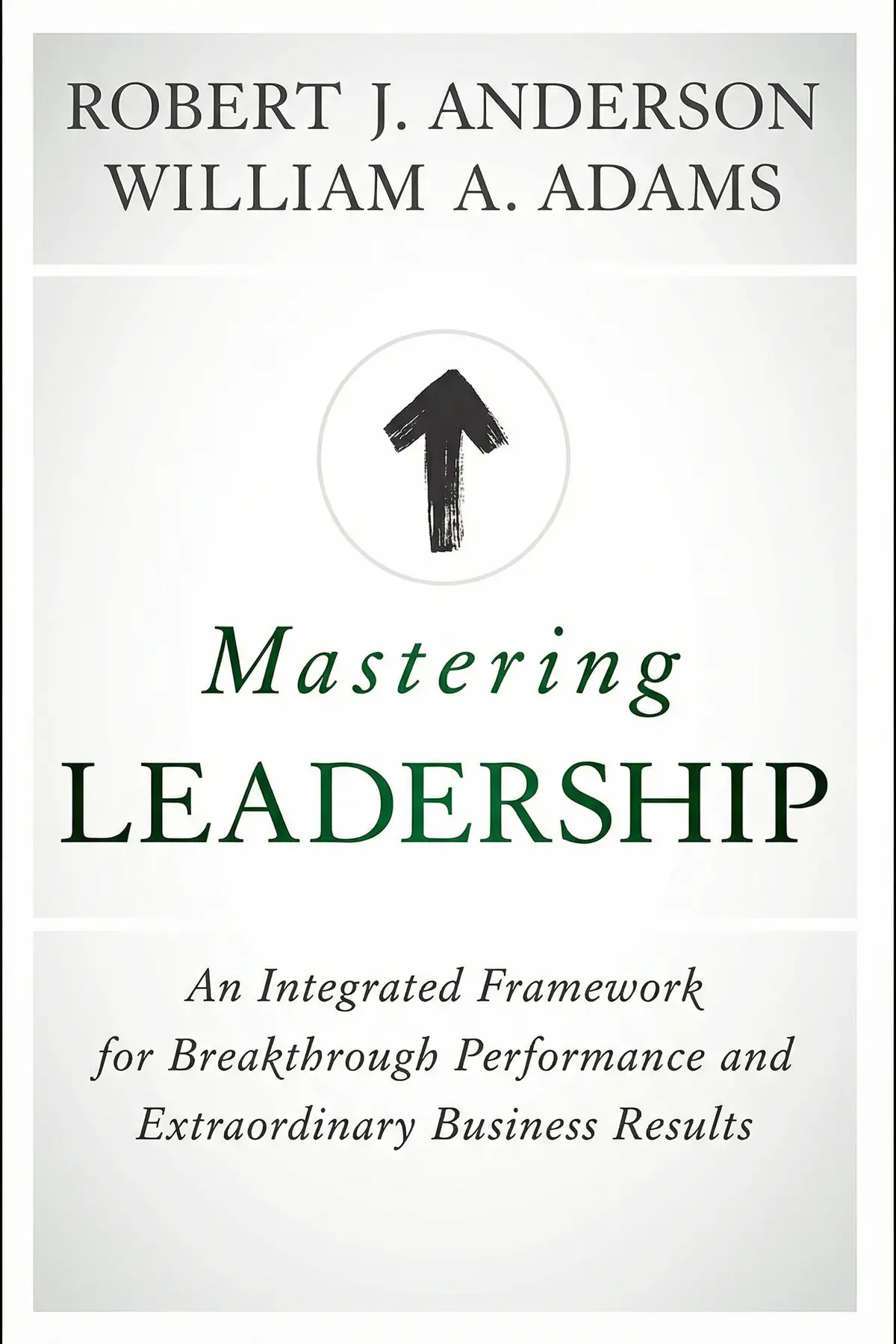
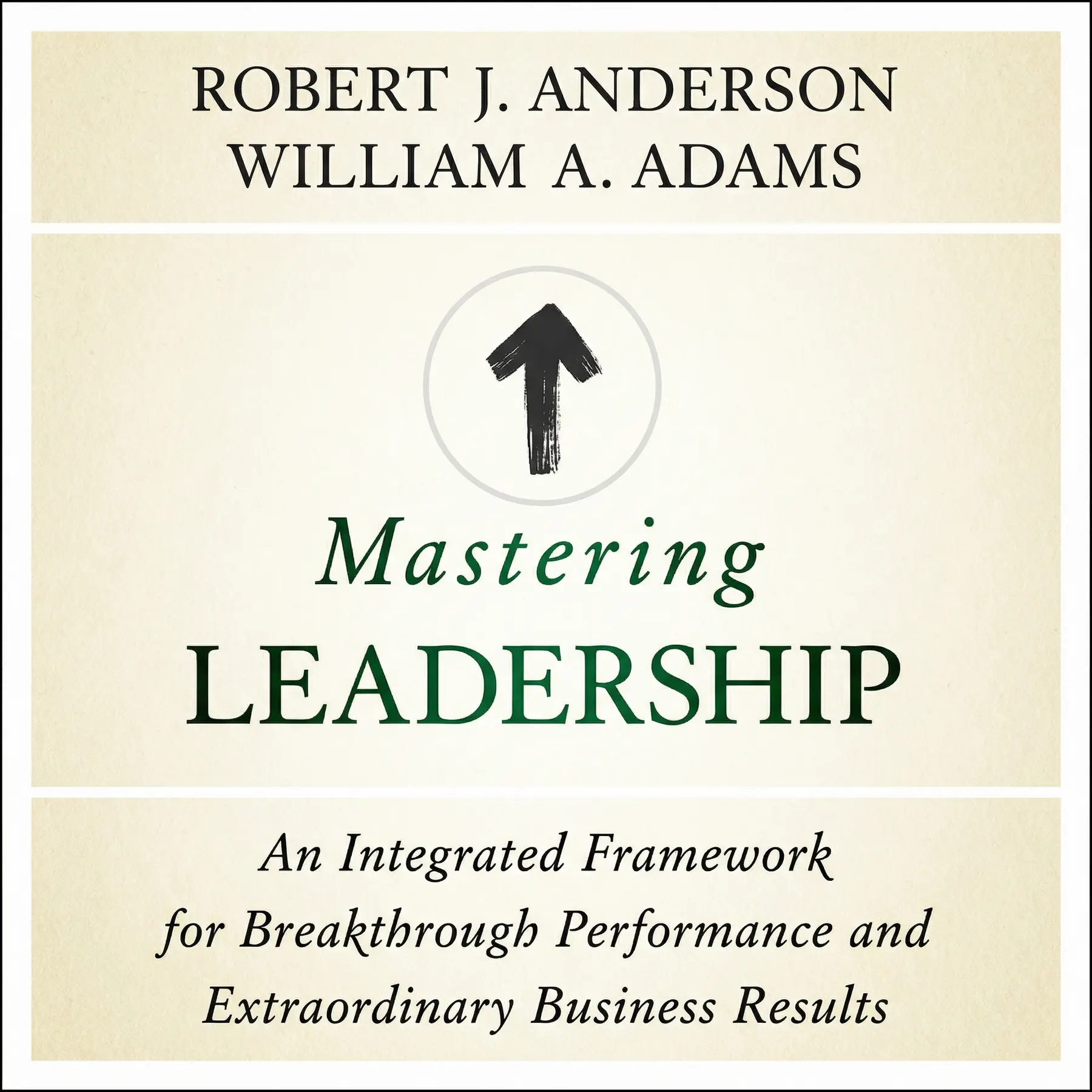
Mastering Leadership explores how personal inner transformation is the essential precursor to organizational success. It offers a framework for leaders to move from reactive, fear-based habits toward creative, purpose-driven effectiveness.
1 min 35 sec
When an organization begins to stall, the natural instinct for most executives is to look outward. We analyze the market, we tweak the supply chain, or we reconsider our pricing strategy. We might even blame the work ethic of our staff. But what if the real obstacle to growth isn’t external at all? What if the ceiling on your company’s performance is actually the limit of your own internal development? This is the core provocation behind Mastering Leadership.
In this exploration, we delve into the idea that leadership is not just a set of skills you acquire, but a state of being that you inhabit. To truly transform an organization, a leader must first undergo a profound personal transformation. We often think of leadership as something we do to others, but these insights suggest that great leadership is actually a process of self-mastery that radiates outward. By bridging the gap between our inner values and our outer actions, we can unlock levels of performance that are otherwise unreachable.
Over the course of this summary, we will look at how the unspoken expectations of your team can make or break your effectiveness. We will explore why playing it safe is often the most dangerous thing a leader can do, and how ancient myths can provide a roadmap for modern corporate challenges. You’ll see that the journey toward becoming a truly great leader isn’t about working harder—it’s about changing the very foundation from which you lead. This is about moving from a place of reaction and fear to a place of creation and purpose. Let’s begin this journey by uncovering the hidden promises that every leader makes.
1 min 59 sec
Explore the silent expectations that subordinates hold for their leaders and how failing to meet these unwritten contracts can lead to a perception of inadequacy.
2 min 01 sec
Understand why the effectiveness of the entire management group outweighs the brilliance of any single executive in driving business performance.
2 min 00 sec
Learn how the drive for personal safety can paradoxically undermine a leader’s ability to innovate and thrive in a disruptive market.
1 min 55 sec
Discover how the stages of ancient mythology mirror the difficult personal transformation required to reach the peak of leadership capability.
1 min 47 sec
Unlock the power of your true purpose by identifying the essential goals you cannot ignore and bringing bathroom-level honesty to the boardroom.
1 min 55 sec
Discover the final stage of leadership mastery where personal vision and organizational service blend into a powerful, systemic approach.
1 min 41 sec
As we conclude this exploration of Mastering Leadership, it’s clear that the path to breakthrough performance is an internal one. We’ve seen that being a leader is far more than a job title; it is a profound commitment to personal and collective growth. By understanding the hidden promises we make to our teams, we can begin to build a foundation of trust. By moving from a reactive, fear-based mindset to a creative, purpose-driven one, we unlock our true potential to innovate and inspire. And by striving for that rare integral stage, we can learn to serve the entire organization with wisdom and selflessness.
The throughline here is the integration of your inner world with your outer actions. Great leadership isn’t about having all the answers; it’s about having the courage to ask the right questions of yourself. It’s about recognizing that the culture of your company is a reflection of your own consciousness. If you want a more creative, resilient, and high-performing organization, you must first become a more creative, resilient, and high-performing human being.
As you move forward, remember that this is a journey, not a destination. You will face moments where you want to retreat into the safety of your old, reactive habits. In those moments, think back to your ‘Must’—the purpose that truly drives you. Don’t be afraid to bring your authentic self into every room you enter. The most effective leaders are those who are brave enough to be themselves and wise enough to put the needs of the whole above their own ego. By mastering yourself, you truly master the art of leadership. The transformation of your organization starts today, and it starts with you.
Mastering Leadership argues that the primary bottleneck in any organization is rarely the product or the market, but rather the internal limitations of its leaders. Authors Robert J. Anderson and William A. Adams present a roadmap for leaders to evolve through stages of maturity, moving from a self-protective reactive state to a visionary creative state, and finally to an integral state of leadership. The book promises that by integrating inner consciousness with outer competencies, leaders can achieve breakthrough performance. It covers the 'leadership promise,' the importance of collective leadership effectiveness, and how to use the 'Hero’s Journey' as a template for professional and personal growth. Ultimately, it provides a practical guide for aligning personal values with organizational goals to create sustainable, high-impact business results.
Robert J. Anderson is the Founder and Chief Development Officer of The Leadership Circle, a leadership-development organization. He is also the creator of The Leadership Circle Profile, an integrated leadership-assessment tool that has been used by thousands of businesses globally. William A. Adams is the CEO of Full Circle Group North America and CEO of The Leadership Circle. Over the last 35 years, Bill has advised executive teams and CEOs around the world, and has helped Fortune 500 corporations and start-ups tackle their business challenges.
Listeners value the framework for leadership growth, particularly how it merges effectiveness with consciousness. The quality of research also earns high marks; listeners note it draws from multiple study formats and serves as an excellent resource for persistent learning. Furthermore, listeners enjoy the book's flow, with one listener describing it as engaging for both the heart and mind. However, opinions on its financial worth are divided, with some considering it a great investment while others feel it is a waste of money.
Finally, a leadership book that actually feels grounded in rigorous research rather than just anecdotal fluff. Anderson and Adams have constructed a comprehensive model that bridges the gap between inner consciousness and outward effectiveness. I found the distinction between reactive and creative leadership styles particularly enlightening, as it gave me a vocabulary for patterns I’ve seen in my own career. Look, it’s a heavy read and definitely doesn't shy away from being a bit academic at times, but the depth is worth the effort. It’s rare to find a manual that addresses the ego's development so directly. To be fair, the authors do lean hard into their own 'Leadership Circle' product, but the insights stand on their own merit. This is built on various types of research and serves as an excellent source for continuous study.
Show moreMastering Leadership isn't your typical airport bookstore management guide. This is a deep dive into the soul of the leader. I’ve read dozens of these books, but this is the first one that successfully links consciousness with tangible business results. The authors argue that the inner game runs the outer game, and their research validates this in a way that is both liberating and inspiring. Truth is, it’s a bit of a marathon to get through the 15+ pages of notes I took, but I feel like a different person after finishing it. The way they map out the journey from reactive to creative mindsets is nothing short of brilliant. Absolutely essential for anyone serious about growth and understanding the underlying principles of consciousness in the workplace.
Show moreWow. This is hands down the best book on leadership I’ve ever encountered. The integration of psychology, business theory, and consciousness is masterfully done. What sets this apart is the sheer volume of research backing up their claims. It’s not just theory; it’s a proven model for effectiveness. I found the portraits of individual leaders and their journeys to be incredibly moving and relatable. The book challenged my core competencies and forced me to look at my leadership through a completely different lens. It’s lucid, well-paced, and genuinely life-changing if you’re willing to do the work. I’ll be re-reading this one for years to come. It truly is a breakthrough in the field.
Show moreThe integration of consciousness and organizational effectiveness presented here is a masterstroke. I picked this up hoping for some tips on team management, but I ended up with a total overhaul of my self-awareness. The authors' ability to blend metaphysical concepts with hard business data is impressive. Gotta say, I was skeptical of the 'oneness' talk at first, but in the context of high-performing teams, it actually makes sense. The book is compelling for both the heart and the mind, providing a clear roadmap for anyone looking to move beyond basic management into true mastery. It’s a large text, but the pacing keeps you engaged throughout. Highly recommended for executive-level study and those who appreciate research quality.
Show moreThe Leadership Circle assessment mentioned throughout the book is where the real value lies. If you aren't planning on taking the test or using their specific tools, the book might feel like one long advertisement. However, the theoretical framework regarding stages of ego development is fascinating. It helped me realize how many of my 'strengths' were actually reactive limiting drivers. The case studies are well-selected and provide a clear picture of how these principles apply to real-world executive challenges. I will say, the pacing is a bit uneven—some chapters fly by while others feel bogged down in diagrams. Still, it’s a compelling look at how personal growth dictates leadership capacity. It is a dense 80-200 page summary of years of coaching, distilled into a very usable format.
Show moreAfter hearing several colleagues rave about the 'Universal Model of Leadership,' I decided to give this a shot. It is certainly comprehensive. The authors do a great job of synthesizing various leadership theories into one cohesive map. I especially liked the section on how our internal assumptions create 'redundancy' in our decision-making structures—though I know some engineering purists take issue with their terminology. The book is well-organized and serves as an excellent source for continuous study. My only real complaint is that it can feel a bit repetitive. They hammer home the 'creative vs reactive' point so many times that I found myself skimming by the middle of the book. Solid 4-star material that justifies its length through quality of research.
Show moreThis text is quite dense, so don't expect a quick weekend read. I’m currently in a yearlong seminar where we use this as our primary text, and it’s been transformative for our cohort. The authors provide a very clear mirror for your own leadership shortcomings, specifically those pesky reactive drivers that hold us back. Not gonna lie, some of the diagrams are a bit overwhelming at first glance. You really have to sit with them to understand the 'tension resolutions' they discuss. It’s a very analytical approach to what is often considered a 'soft' skill. While the sales-y tone can be annoying, the underlying research is too good to ignore. Definitely worth the price of admission for the depth of insights into organizational effectiveness alone.
Show moreThere’s some decent stuff here, but you really have to dig through a mountain of 'sales pitch' energy to find it. They use words like 'breakthrough' and 'groundbreaking' so often it starts to feel like a late-night infomercial. My biggest gripe? The way they redefine engineering terms like 'redundancy' to fit their narrative; it’s just confusing and unnecessary. That said, once you strip away the 'mystical mumbo-jumbo' about Unity at the end, the core concepts regarding organizational effectiveness are solid. If you can handle the superfluous storytelling and the occasional Christian references, there’s a framework here that might actually help your team. It’s just not the revolutionary bible they claim it is. Personally, I found it a bit overpriced for what is essentially an advertisement for their assessment tool.
Show moreEver wonder why some leaders just seem to 'get it' while others struggle despite having all the right credentials? This book attempts to answer that, and for the most part, it succeeds. The authors focus on the evolution of leadership consciousness, which is a refreshing change of pace from standard 'how-to' manuals. However, the writing style is a bit verbose. To be fair, they could have cut about 50 pages of storytelling and still made their point effectively. Also, the prompts at the end of the chapters felt a little cheesy to me. 'How long has it been since your world was rocked?'—it feels a bit melodramatic. Good insights on people's reactive limiting drivers, but it needs a better editor to trim the fat and get to the nuts and bolts.
Show moreAs a veteran manager who prefers logic and direct strategy, the final sections of this book left me cold. The authors start with great research-backed insights into leadership competencies but eventually veer into what I can only call 'metaphysical twaddle.' This concept of 'Unity' where a leader loses their individuality sounds good on paper but lacks practical application in a corporate setting. Frankly, it felt like they ran out of data and filled the gap with philosophical fluff. I appreciated the earlier chapters on creative enabling drivers, but the 'car salesman' tone throughout made me skeptical. If you want hard-hitting management advice, look elsewhere; this is more about spiritual self-exploration than it is about actually running a company efficiently. Total waste of money for my needs.
Show moreMargaret Heffernan
Joseph A. Maciariello

Deborah Gruenfeld
Mike Michalowicz
AUDIO SUMMARY AVAILABLE
Get the key ideas from Mastering Leadership by Robert J. Anderson, plus 5,000+ more titles in English and Thai.







