
Age of Propaganda: The Everyday Use and Abuse of Persuasion
Anthony Pratkanis
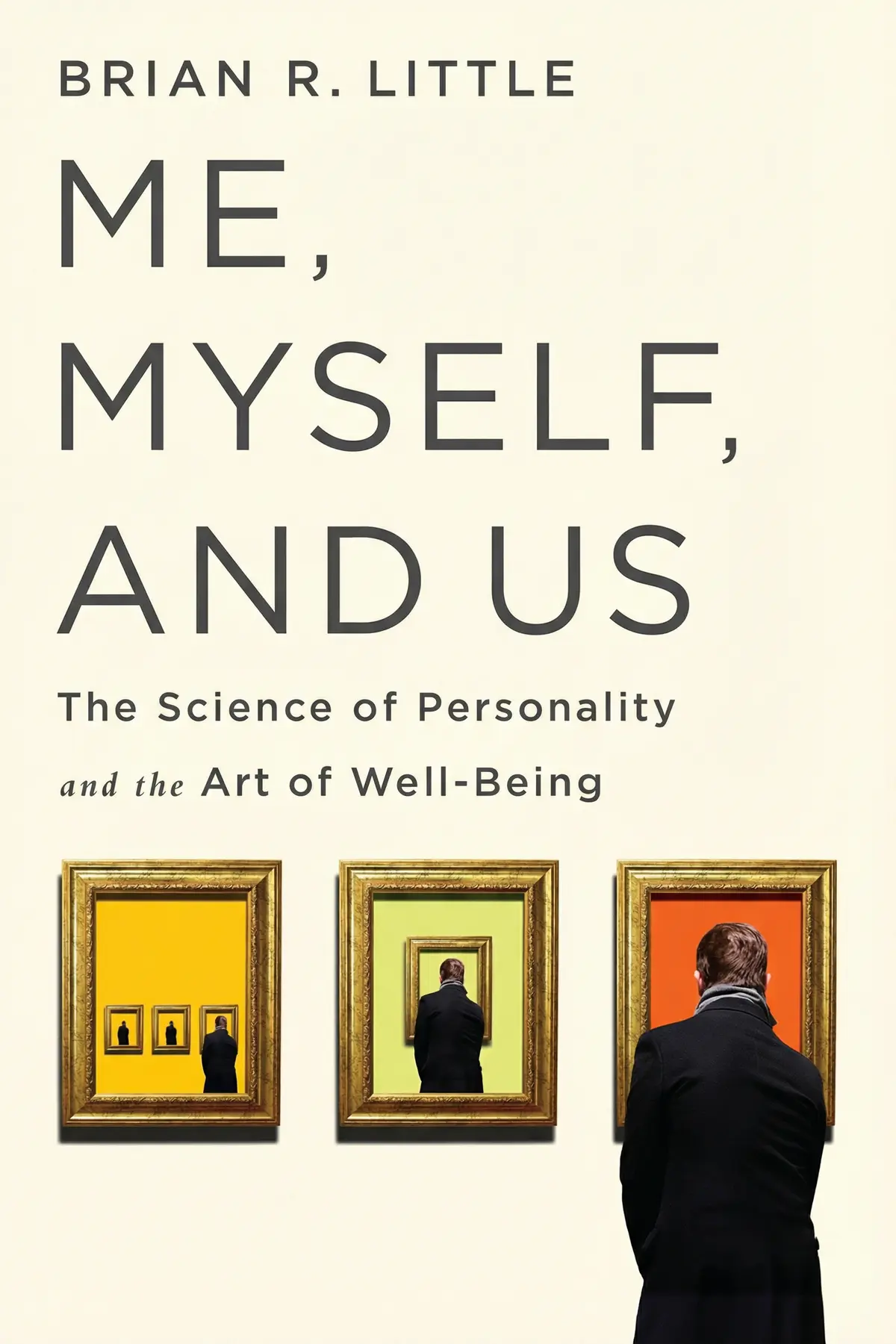
Me, Myself and Us explores the fascinating science of personality, revealing how our core traits, environments, and personal projects interact to shape who we are and who we can become.
1 min 42 sec
Who are you, really? It is a question that has occupied the minds of philosophers and poets for millennia, but in recent years, the field of personality psychology has begun to provide some truly concrete answers. We all have those moments where we surprise ourselves—perhaps a shy person suddenly finds the courage to lead a meeting, or a normally organized professional finds themselves lost in the creative chaos of a new hobby. We wonder if our personalities are a fixed set of traits, or if we have the agency to mold ourselves into someone new.
In this exploration of Me, Myself and Us, we are going to dive deep into the science of human character. We will look at why we make snap judgments about the people we meet at dinner parties and how those judgments act as a mirror for our own internal world. We will navigate the ‘Big Five’ traits that psychologists use to map the human psyche, from the drive of conscientiousness to the sensitivity of neuroticism.
But more importantly, we will discover that we aren’t just a collection of static traits. There is a third dimension to our personality—one that involves the projects and passions we choose to pursue. This is the ‘art’ of well-being that complements the ‘science’ of personality. We will learn that while our genes and our upbringing provide the starting point, our choices and the ‘free traits’ we adopt for the sake of love or work provide the path forward. By the end of this journey, you will have a clearer sense of the three different sources that fuel your behavior and how to balance them to live a more fulfilling life. Let’s begin by looking at the very first thing that happens when we interact with others: the creation of a first impression.
1 min 54 sec
Discover how the internal categories you use to judge others actually reveal more about your own psychological resilience and worldview than you might think.
1 min 56 sec
Unpack two major pillars of personality to see why being highly organized isn’t always an advantage and why professional success isn’t just for the ruthless.
2 min 25 sec
Explore how your levels of neuroticism, openness, and extraversion determine your creative potential and how you recharge your mental batteries.
2 min 02 sec
Delve into the distinction between your genetic hardware, your cultural upbringing, and the ‘free traits’ you use to achieve your most meaningful goals.
2 min 01 sec
Are you the same person in every situation, or do you adapt to fit your surroundings? Learn the science behind self-monitoring and how it impacts your relationships.
1 min 39 sec
Learn why a little bit of self-delusion can actually be a good thing for your health, as long as you know when to be a realist.
1 min 50 sec
Discover the ‘Three Cs’ of stress resistance and why your drive for success might be a double-edged sword for your heart health.
1 min 24 sec
As we have seen, the story of your personality is not written in stone. It is a dynamic, living narrative that draws from your biology, your culture, and your deepest personal commitments. We’ve explored how our personal constructs shape our view of the world and how the Big Five traits provide a foundation for our behavior. We’ve also seen that we have the incredible ability to use ‘free traits’ to rise above our natural tendencies when something truly matters to us.
The throughline here is one of empowerment and balance. You are not a prisoner of your genes. While you might be naturally introverted or prone to a bit of neuroticism, these are just the starting conditions. By understanding the mechanics of self-monitoring, the power of positive illusions, and the components of hardiness, you can navigate your life with more intention.
The most important takeaway is this: the art of well-being lies in the pursuit of ‘personal projects.’ When you dedicate yourself to work, causes, or people you truly care about, you find the meaning that fuels a happy life. But remember to be kind to yourself in the process. Recognize when you are acting out of character and give yourself the space to recharge. By balancing the ‘science’ of who you are with the ‘art’ of who you want to be, you can create a life that is both authentic and extraordinary.
Have you ever wondered why you act the way you do, or why some people seem to thrive in chaos while others need strict order? Me, Myself and Us delves into the complex mechanics of human personality, moving beyond simple labels to look at the scientific forces that drive our behavior. The book offers a roadmap to understanding the 'Big Five' personality traits and introduces the concept of 'free traits'—the moments when we step out of our natural comfort zones to pursue what matters most. By blending psychological research with practical insights, it promises to help listeners navigate their social worlds, manage stress more effectively, and strike a balance between their biological nature and their personal goals.
Dr. Brian Little is a distinguished psychology professor who has shared his expertise at several of the world's most prestigious institutions, including Carleton University, McGill University, the University of Oxford, and Harvard University. He is a recognized specialist in the field of personality psychology, dedicated to understanding the nuances of human character and well-being.
Listeners find the book an engaging and well-composed read that explores significant practical themes and intriguing new theories in personality psychology. They also enjoy the humor, with many laughing out loud, and one listener highlighting its unique take on the subconscious process. Even so, the writing's clarity is a point of contention, with some finding it accessible while others struggle to follow along.
Brian Little has a way of making complex psychological frameworks feel incredibly personal and approachable. I was particularly struck by his concept of "personal projects" and how they can override our innate biological tendencies. It’s refreshing to read a psychologist who doesn't view us as mere collections of traits but as active agents in our own lives. The humor sprinkled throughout is a delightful surprise, preventing the science from feeling too dry or inaccessible. While some sections on environmental psychology felt slightly less polished, the overall message about our "mutable selves" is empowering. You start to see your social interactions through a much clearer lens after finishing this.
Show moreWow, I didn't expect a book on personality science to make me laugh out loud in a public place. Brian Little is that rare academic who can deliver serious research on "personal constructs" with the timing of a stand-up comedian. I loved the exploration of how our environments, from city streets to quiet offices, interact with our core temperaments. This isn't just a list of traits; it's a guide to understanding the "why" behind our most confusing behaviors. By the end, I felt like I had a better handle on my own internal contradictions and a lot more empathy for the "disagreeable" people in my life. It’s a brilliant, humanistic look at what makes us tick.
Show morePicked this up on a whim and ended up rethinking my entire perspective on social identity. Most personality books want to put you in a box, but Little spends his time showing you how to climb out of one. His focus on "idogenic" traits—the personality we create through our commitments—is a profound defense of human free will. The writing is incredibly engaging, filled with self-deprecating humor and sharp observations about the human condition. I especially appreciated the nuanced take on "restorative niches" and why some of us need to hide in the bathroom during parties. It’s a rare book that manages to be both scientifically rigorous and deeply moving.
Show moreEver wonder why you're completely drained after a social event even if you were the life of the party? Little's explanation of "pseudo-extraversion" and the necessity of "restorative niches" was a lightbulb moment for me. He manages to bridge the gap between hard science and the lived human experience without falling into the trap of cheesy self-help tropes. The breakdown of the Big Five—Openness, Conscientiousness, Extraversion, Agreeableness, and Neuroticism—provides a solid foundation for understanding why we clash with certain people. My only real gripe is that he occasionally wanders off on long anecdotes that don't always feel strictly necessary to the point. However, the insight into "idogenic" traits—those we adopt to serve our values—is worth the price of admission.
Show moreThe chapter on "personal projects" alone makes this worth the cover price for anyone feeling stuck in a rut. Little shifts the focus from who we are to what we do, which is a vital distinction in the world of psychology. I found the discussion on "High Self-Monitors" versus "Low Self-Monitors" particularly illuminating for my own workplace dynamics. Truth be told, I struggled with some of the more academic jargon in the beginning, and the pacing is a bit uneven. But the "pseudo-extravert" concept—the idea that an introvert can act bold for the sake of a mission—is a game changer. It provides a scientific basis for the masks we all wear without calling us fake.
Show moreAs someone who has always identified as a "Low Self-Monitor," reading this was like finally getting a manual for my own brain. Little explains that some of us simply don't have the "social antenna" to adjust our behavior to every situation, and that's okay. The book provides a fantastic overview of the OCEAN model without making it feel like a boring list of definitions. While I found the section on environmental psychology a bit disjointed from the rest of the text, the overall insights are incredibly valuable. It’s much more than a self-help book; it’s a study in how to live more authentically. You’ll definitely walk away with a few "aha" moments.
Show moreThis book felt like a bit of a mixed bag for me, landing somewhere between a fascinating lecture and a dense university textbook. I appreciate Little’s mission to move beyond the deterministic nature of tests like the Myers-Briggs. He argues convincingly that we have the agency to act out of character to achieve what matters most to us. Yet, I found myself skimming several chapters where the data felt repetitive or overly technical for a general audience. The writing style is undeniably witty, but the structure sometimes lacks a clear, driving momentum. It’s certainly a respectable deep dive into personality science, but be prepared for some heavy lifting.
Show moreAfter hearing the author interviewed, I expected a more streamlined argument, but the book itself felt a little padded. The core ideas—specifically the "Big Five" and how we use free will to navigate them—are absolutely stellar. Little is clearly a master of his craft, and his warmth as a narrator is evident on every page. Unfortunately, the middle sections drag with long-winded stories that seem more like filler than essential evidence. I also had some questions about the inclusion of the marshmallow test, which has faced significant criticism in recent years. It’s a decent read if you have the patience, but I think the best insights could have been summarized in half the page count.
Show moreTo be fair, Little is clearly a giant in his field, but the writing here gets bogged down in academic weeds more often than not. I picked this up hoping for a clear-eyed look at modern personality theory, and while I got that, I also got a lot of fluff. Some of the data he cites, like the stuff on Type A personalities, feels a bit dated or at least highly debatable. He tries to balance the "biogenic" and "sociogenic" factors, but the transitions between these sections are often jarring. I did enjoy the bits about how coffee and alcohol affect introverts differently. Overall, it's an okay resource for psych students, but maybe a bit too dense for the casual reader.
Show moreFinally got around to finishing this, and while I appreciate the debunking of Myers-Briggs, some of the science felt a bit "yesterday." The author relies heavily on the Big Five, which is standard, but he treats controversial studies like the marshmallow test with a bit too much reverence. Look, the writing is clever and Little is obviously a brilliant guy, but the book lacks a cohesive through-line. It feels more like a collection of interesting essays than a unified argument. I enjoyed the anecdotes about his own life as an introvert, yet I wanted more rigorous defense of his model against its critics. It’s a solid three-star read for those curious about the field.
Show moreAnthony Pratkanis

Richard Wiseman

Steven C. Hayes
AUDIO SUMMARY AVAILABLE
Get the key ideas from Me, Myself and Us by Brian R. Little, plus 5,000+ more titles in English and Thai.







