
25 min 09 sec
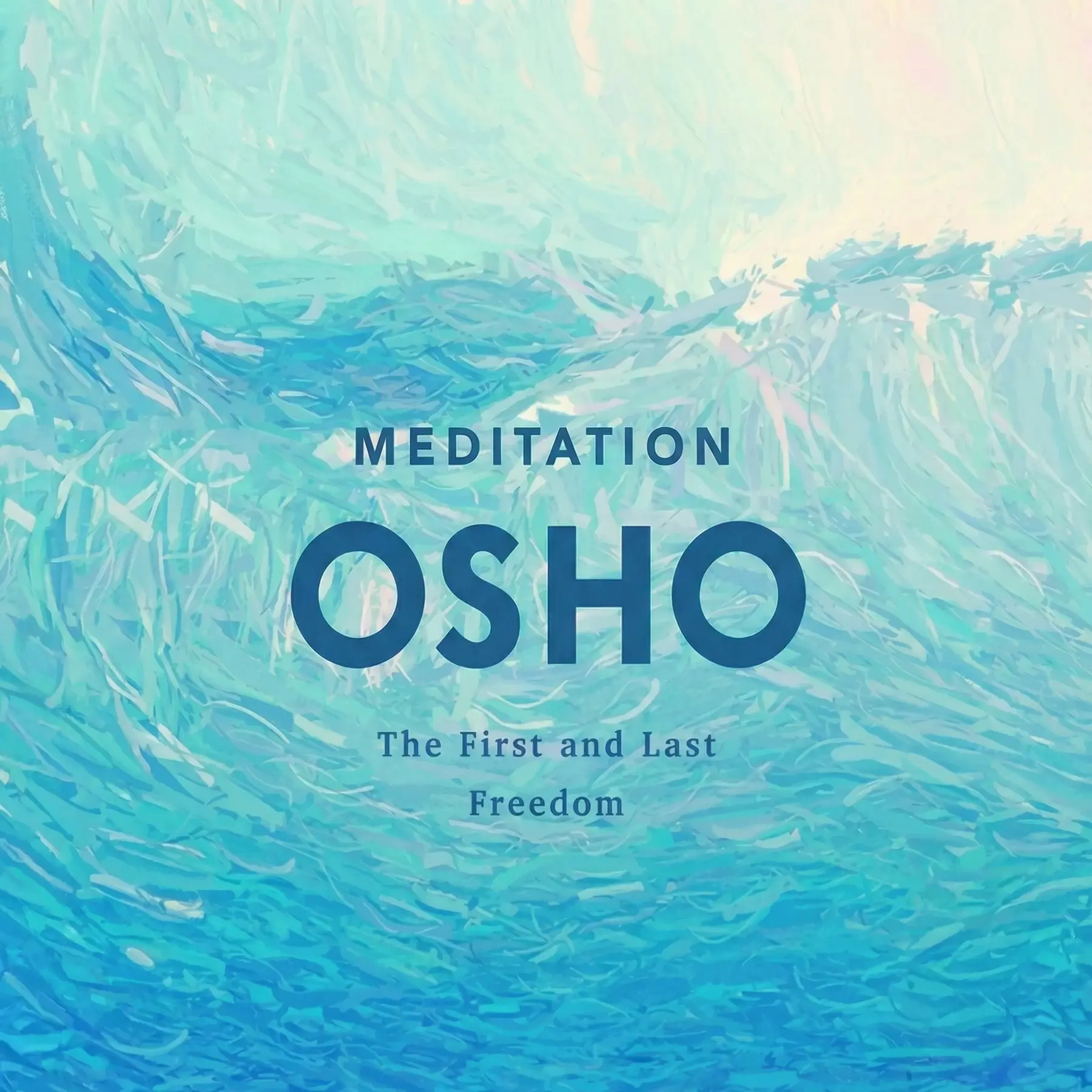
Meditation: The First and Last Freedom
By Osho
Explore Osho’s transformative approach to mindfulness through active techniques that break the ego’s grip. This guide offers practical methods to move from chaotic movement to profound, silent awareness and inner bliss.
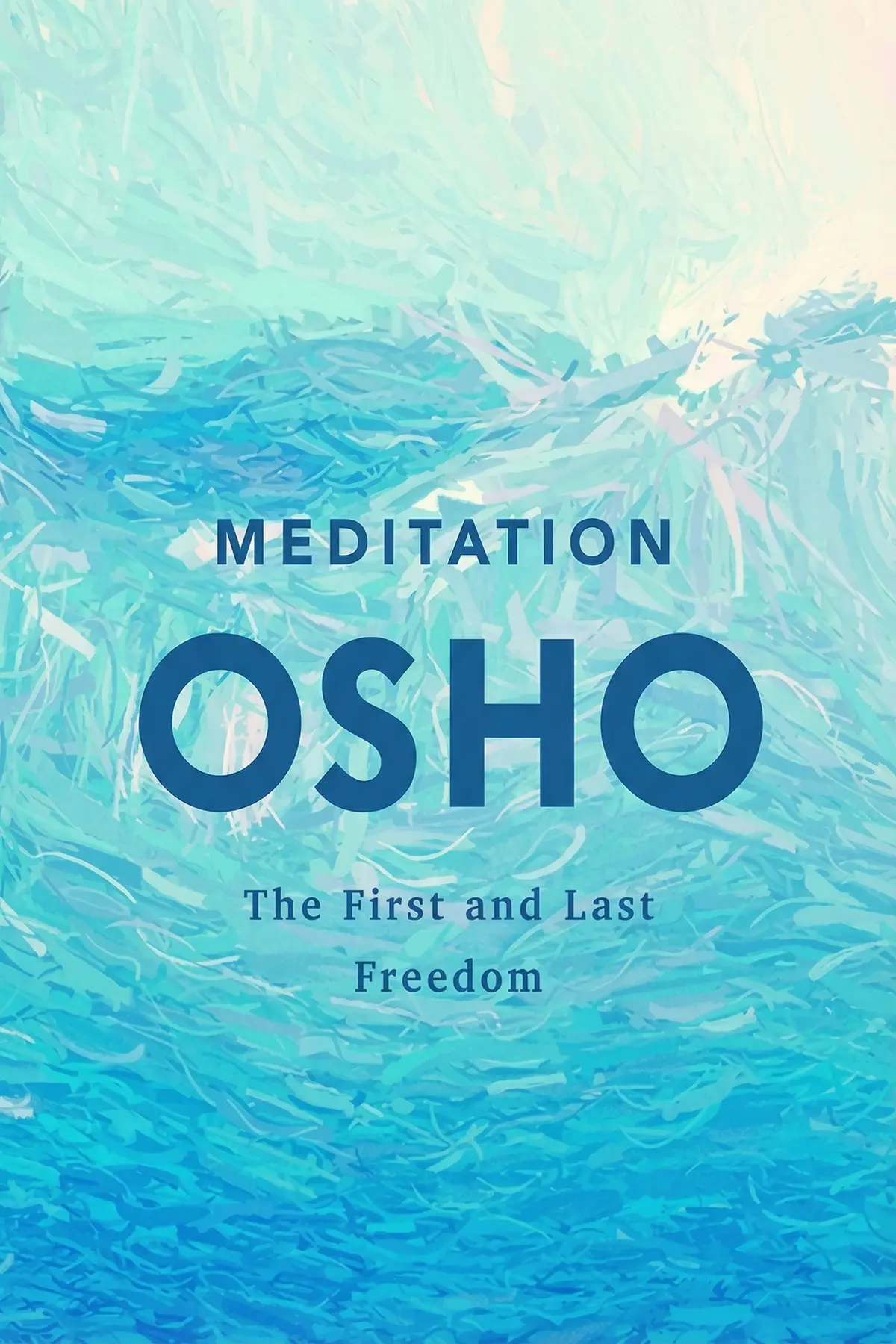
Table of Content
1. Introduction
1 min 22 sec
Imagine a form of meditation that doesn’t start with sitting still in a dark room, but with dancing, shouting, and exuberant movement. In the 1970s, the world was introduced to a spiritual approach that felt less like a chore and more like a celebration. This was the vision of Osho, a teacher who believed that the modern mind is too restless to simply ‘sit down and be quiet.’ He realized that before we can find the silence within, we often have to shake out the noise that has accumulated in our bodies and minds. This summary explores the philosophy and specific practices that turn meditation into a vibrant, living experience.
At its heart, the journey we are about to take is about one thing: awareness. It is about shifting from being a person who is constantly ‘doing’ things to being a ‘watcher’ who simply observes the flow of life. Whether you are walking through a crowded street, eating a meal, or engaging in a high-energy dance, there is a way to remain centered and unmoved. Through the following ideas, we will uncover how to dismantle the ego, connect with our physical selves, and eventually reach a state of bliss that Osho considers our natural birthright. We will look at techniques designed to exhaust the restless mind and open the heart, transforming the way we relate to the world around us. Let’s begin this exploration of the first and last freedom—the freedom to be truly present.
2. The Four Stages of Becoming a Watcher
3 min 07 sec
Moving toward enlightenment isn’t an instant jump but a gradual progression of awareness. Discover how observing your physical body leads to the ultimate awakening.
3. Establishing the Sacred Environment
2 min 30 sec
Meditation is more than a mental exercise; it is a physical commitment. Learn why choosing the right time and space is essential for a deep practice.
4. The Path of Dynamic Meditation
2 min 52 sec
Sometimes the only way to find stillness is to go through the storm. Explore the five-stage process of chaotic breathing and physical release.
5. The Rhythms of Kundalini and the Dance of Nataraj
2 min 33 sec
Meditation can be a dance of joy rather than a struggle of will. Discover how shaking and free movement can unlock hidden inner energy.
6. Vibrational Peace through Nadabrahma
2 min 34 sec
Sound can be a ladder to silence. Learn how the ancient power of humming and hand movements can harmonize your internal energy.
7. Integrating Awareness into Daily Life
2 min 55 sec
Meditation isn’t just for the cushion; it’s for the street, the gym, and even the office. Discover how to turn every action into a meditative act.
8. Gazing into the Extremes of Light and Dark
2 min 53 sec
The universe is a balance of opposites. Explore how staring into the vast sky or the deep night can dissolve the boundaries of the self.
9. Overcoming the Ego and the Thinking Mind
2 min 48 sec
The biggest hurdles to meditation are the very tools we use to navigate the world. Learn why the ego hates simplicity and how to bypass its control.
10. Conclusion
1 min 35 sec
As we reach the end of this journey into the art of awareness, we are reminded that meditation is not a destination, but a way of traveling. Osho’s techniques—from the chaotic intensity of Dynamic Meditation to the subtle vibrations of Nadabrahma—all serve a single purpose: to strip away the false layers of the ego and reveal the radiant ‘watcher’ within. We have seen that the mind’s complexity and the ego’s demand for productivity are the primary obstacles, but they can be bypassed through movement, sound, and a commitment to simply being.
The core throughline is that freedom isn’t something you acquire; it’s something you discover when you stop interfering with the flow of life. Whether you are gazing at the vastness of the sky or simply noticing the rise and fall of your belly as you breathe, you are tapping into a peace that is independent of external circumstances. This is the ‘first and last’ freedom because it is the foundation of all true happiness and the ultimate goal of the human experience.
As an actionable closing step, try the ‘one-month listening challenge.’ For one hour every single day, sit in a quiet place and do nothing but listen. Don’t label the sounds, don’t analyze them, and don’t try to ignore them. Just be a vessel for the soundscape around you. Those who have committed to this simple practice often report a profound shift in their perception of reality. By learning to listen to the world, you eventually learn to listen to the silence within yourself. Carry this awareness with you, and remember that every moment is an opportunity to be the watcher, perfectly still and perfectly free.
About this book
What is this book about?
Meditation: The First and Last Freedom is a comprehensive manual on reclaiming one’s true self from the noise of the modern mind. Rather than suggesting meditation is merely a quiet activity for the recluse, it presents a radical view where everything from dancing to breathing becomes a gateway to enlightenment. It bridges the gap between the frantic energy of contemporary life and the ancient need for spiritual stillness. The promise of the book is a path to becoming a 'watcher'—a state of consciousness where one observes thoughts and emotions without being swept away by them. By engaging in active, cathartic techniques, the reader learns to exhaust the physical and mental clutter that prevents true relaxation. It provides a toolkit for both structured sessions and integrated daily mindfulness, ultimately aiming to deliver the practitioner to a state of unshakeable internal peace and joy.
Book Information
About the Author
Osho
Osho, also known as Rajneesh, was a prominent spiritual leader and philosopher who rose to global fame in the late 20th century. Educated at the University of Sagar, where he earned an advanced degree in philosophy, he spent years traveling and teaching. He is best known for developing Dynamic Meditation and creating a global community of practitioners focused on liberation and mindfulness. He passed away in 1990.
Ratings & Reviews
Ratings at a glance
What people think
Listeners find the meditation guidance provided in this book beneficial, with one individual highlighting it as a superb entry point to Osho’s philosophy. They value the all-encompassing perspective, while one person notes that it catalogues various methods and practices. Listeners also describe the content as straightforward and accessible.
Top reviews
Hassan
Osho’s approach is wild and deeply unconventional compared to the quiet, stoic mindfulness most of us are taught in the West. Frankly, the idea of 'going crazy' as a cathartic prelude to silence was exactly the breakthrough I needed to clear my mental clutter. This book acts as a comprehensive guide that bridges the gap between ancient traditions and the frantic pace of our modern lives. It doesn't just ask you to sit still; it invites you to dance, scream, and shake until the ego finally lets go. While the writing is a bit repetitive, the sheer variety of techniques—from chakra work to breath and sound—ensures there is something for everyone here. I feel much more equipped to handle daily stress now that I view meditation as an active process rather than a passive chore.
Show moreMia
Wow, this really flipped my perspective on what it means to be silent and how we relate to ourselves. After hearing so much about the controversy surrounding Osho’s life, I was hesitant to dive in, but the content itself is undeniably powerful and transformative. The core message is that all changes in the world start with us accepting and loving our own messy, complicated nature first. Once you accept yourself, complete peace follows, which is ultimately what every person on this planet is searching for. The chapters on sound and light are particularly beautiful and offer a more sensory way to enter a meditative state. I’ve read a lot of self-help, but this feels more like a lived experience than a dry lecture. It’s a book I’ll keep on my nightstand for years.
Show moreMoo
Finally got around to finishing this massive compilation of Osho's talks and I am genuinely impressed by the depth of wisdom. This isn't just a manual; it's a mirror for the soul that forces you to confront your own distractions and ego. I loved how the book acknowledges that we need to do things differently than in the past because our modern minds are so much more restless. The techniques are designed to exhaust that restlessness so that true meditation can happen naturally without effort. Personally, I found the 'Nadabrahma' humming meditation to be the most effective for my daily stress. It’s a long journey through the pages, but the insights on peace and happiness are worth every minute. This book is a companion for future years.
Show moreLeah
In my experience, no other book captures the essence of meditation as a radical act of self-love as well as this one. Dejando a un lado su secta (setting aside the controversy), the actual teachings on awareness and the flow of energy are masterfully presented. I especially liked the encouraging tone regarding the 'chaotic' phases of the practice, as it makes the process feel much more human and less like a rigid performance. The book is easy to understand, yet it contains layers of meaning that I know I will be uncovering for a long time. It bridges the physical and the spiritual in a way that feels very practical for someone living a normal life. This is easily the most enriching thing I have read all year. Please, just read it with an open heart!
Show moreOoi
Ever wonder why sitting still feels so impossible when your brain is racing at a million miles per hour? This book answers that by acknowledging that we live in unprecedented times where old-school methods might not always work. Truth is, I found the section on dynamic meditation to be a total game-changer for my morning routine. The instructions are straight forward and easy to understand, even if the concepts themselves are quite radical for a beginner to grasp. My only real gripe is that the book is quite lengthy and could have been edited down significantly without losing the core wisdom. If you read it in diagonal, you can find the gems quickly without getting bogged down in the more rambling anecdotes. It’s a solid introduction to his philosophy.
Show moreNutnicha
Picked this up after years of traditional mindfulness practice and found it to be a refreshing, if slightly chaotic, change of pace. The book acts as the eye of the storm, providing a stable center where you can focus your discipline while the world spins around you. I loved the diverse approaches to meditation, especially the focus on touch and light/dark techniques which I hadn't encountered elsewhere. To be fair, some of the energy flow theories felt a bit abstract, but the practical results of the exercises are hard to deny. It’s an objective look at the mechanics of the mind that doesn't shy away from the messy parts of human nature. This is a great resource for anyone looking to expand their spiritual toolkit beyond just following their breath.
Show moreTim
To be fair, this book is more of a reflection on existence than a simple 'how-to' guide for sitting on a cushion. It encourages you to look at yourself in a completely different way and understand the deep connection between the body and the mind. The instructions on various techniques like the chakra and breath meditations are helpful, providing a clear roadmap for those who need structure. I did find that the book could have been half its size, as Osho tends to repeat the same points in multiple ways across different chapters. However, the variety of approaches ensures that you won't get bored or feel stuck in a rut. It’s a very comprehensive manual that serves as a great companion for a long-term practice. Definitely worth a read for the open-minded.
Show moreElise
Gotta say, I was pleasantly surprised by how straightforward and helpful this book turned out to be for my daily routine. It lists a staggering amount of different approaches and techniques, making it an excellent introduction to Osho's broader teachings for any newcomer. The sections on touch and sound were especially interesting, as they offer a more grounded way to practice awareness during mundane tasks. While I enjoyed the content, I do agree with other reviewers who mentioned it feels a bit repetitive in the middle sections. Just read it in diagonal when he starts rambling and you’ll get the most out of it. It’s a 4-star experience that provides a lot of value for someone looking to deepen their spiritual discipline. It really helps you respect yourself more.
Show moreKatya
As someone who struggles with generalized anxiety, I found that many of these practices seemed to invoke more tension than they actually relieved. Not gonna lie, the intense focus on kundalini-style energy and the 'catharsis' stages felt overwhelming and left me feeling more wired than calm. The book does provide a massive list of different approaches, which is helpful, but there just seemed to be too much going on in each specific practice. It felt like I was trying to do too many things at once rather than simply being present in the moment. I appreciate the historical context and the tips on awareness, but for a novice, this might be a bit too intense. It's a 3-star read for me because I still learned a lot about the history of the practice.
Show moreSamira
The chapter on 'going crazy' before meditating felt incredibly dangerous to me and honestly made me fear for my own mental stability. I felt if I didn't meditate precisely as he instructed, I would go insane or do something I’d regret. While the book is easy to understand, the tone is often pushy and creates a sense of urgency that is the opposite of peaceful. Look, I understand the concept of catharsis, but the way it's presented here felt more like a recipe for a breakdown than a path to enlightenment. There are some okay tips on awareness scattered throughout, but they are buried under a lot of questionable advice. I’m giving it two stars because the overview of meditation history was actually quite informative. Otherwise, it wasn't for me.
Show moreReaders also enjoyed
A Force for Good: The Dalai Lama's Vision for Our World
Daniel Goleman
A Return to Love: Reflections on the Principles of a Course in Miracles
Marianne Williamson
Abundance: The Inner Path to Wealth
Deepak Chopra

Alcoholics Anonymous
Alcoholics Anonymous World Services
A New Earth: Awakening to Your Life’s Purpose
Eckhart Tolle
Aflame: Learning from Silence
Pico Iyer
AUDIO SUMMARY AVAILABLE
Listen to Meditation in 15 minutes
Get the key ideas from Meditation by Osho, plus 5,000+ more titles in English and Thai.
- 5,000+ titles
- Listen as much as you want
- 7-day free trial
- Cancel anytime







